Quick Answer: Is an Electric Mazda Right for You?
Mazda's electrified offerings in 2026 center on the CX-70 PHEV (plug-in hybrid with ~26 miles of electric-only range) and the MX-30 EV, which remains limited to California-only availability with just 100 miles of EPA range. If you want a true battery-electric Mazda, the MX-30 is best suited as a second car for city commuting with reliable home charging. For most buyers — especially those who road-trip, live in cold climates, or lack home charging — the CX-70 PHEV or a competing long-range BEV (Hyundai Ioniq 5, Tesla Model Y) offers far more practical daily utility. Mazda has announced future dedicated EV platforms but nothing is on sale yet beyond the MX-30.
Mazda's Electrified Lineup in 2026: What You Can Actually Buy
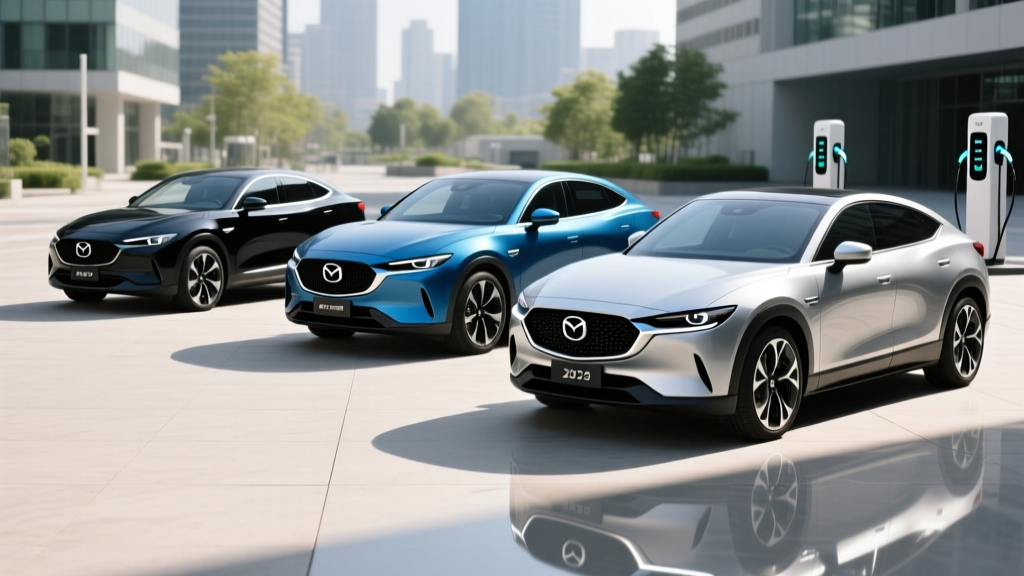
Mazda has historically been cautious about full electrification, investing instead in efficient gasoline engines (Skyactiv-X), mild hybrids, and plug-in hybrids. As of the 2026 model year, U.S. buyers looking for an electric Mazda have essentially two paths:
- MX-30 EV: A subcompact crossover with a 35.5 kWh battery, front-wheel drive, and an EPA-estimated 100 miles of range. Sold exclusively in California through select dealerships.
- CX-70 PHEV: A midsize two-row SUV pairing a 2.5-liter inline-4 with a plug-in hybrid system, delivering an EPA-estimated 26 miles of electric-only range and roughly 56 MPGe combined when the battery is charged.
Mazda has also confirmed a next-generation EV platform (often referred to in industry reports as a scalable architecture supporting both rear-wheel and all-wheel-drive layouts), but no specific U.S. model has been announced for sale as of early 2026. If you're researching "electric Mazda" for a purchase this year, the MX-30 and CX-70 PHEV are your options.
MX-30 EV: Range, Charging, and Real-World Ownership
| Spec | MX-30 EV (2026) |
|---|---|
| EPA Range | 100 miles |
| Real-World Range (highway/cold) | ~70–85 miles |
| Battery Capacity | 35.5 kWh (usable ~32 kWh) |
| Battery Chemistry | Lithium-ion (NMC) |
| Max DC Fast Charge | 50 kW (CCS) |
| 10–80% DC Charge Time | ~36 minutes |
| Level 2 Charge Rate | 7.2 kW |
| Level 2 0–100% Time | ~5 hours |
| Motor Output | 143 hp / 200 lb-ft torque |
| 0–60 mph | ~8.7 seconds |
| Drivetrain | Front-wheel drive |
| MPGe (combined) | 92 MPGe |
| Base MSRP | ~$34,110 |
| Battery Warranty | 8 years / 100,000 miles |
The MX-30's defining characteristic is its small battery. Mazda deliberately chose a 35.5 kWh pack to keep weight, cost, and lifecycle emissions down — a philosophical choice that makes the MX-30 a compelling city runabout but a poor fit for anyone who regularly drives more than 60 miles round-trip or takes highway road trips.
Charging curve reality: The MX-30's 50 kW peak DC charge rate is modest by 2026 standards (the Hyundai Ioniq 5 peaks at 240 kW; the Tesla Model Y at 250 kW). The small battery means 50 kW is roughly a 1.4C rate, so charging from 10–80% takes about 36 minutes. That's acceptable for a car you charge at home every night, but it makes road-trip DC charging stops feel slow relative to the short range gained.
The MX-30 uses a CCS1 connector for DC fast charging and a J1772 inlet for Level 2. With the industry's shift to NACS (Tesla's connector), Mazda has not announced a NACS retrofit adapter for the MX-30, meaning Tesla Supercharger access remains uncertain for this model.
CX-70 PHEV: The Plug-In Hybrid Alternative
| Spec | CX-70 PHEV (2026) |
|---|---|
| Electric-Only Range | 26 miles (EPA) |
| Battery Capacity | 17.8 kWh |
| Combined System Output | 323 hp / 369 lb-ft |
| MPGe (with charge) | 56 MPGe |
| MPG (gas-only, battery depleted) | ~25 mpg combined |
| Level 2 Charge Rate | 7.2 kW |
| Level 2 0–100% Time | ~2.5 hours |
| 0–60 mph | ~6.3 seconds |
| Base MSRP | ~$54,400 |
| Powertrain Warranty | 5 years / 60,000 miles |
| Hybrid Component Warranty | 8 years / 100,000 miles |
The CX-70 PHEV occupies a different lane entirely. It's a proper midsize SUV — think of it as a two-row CX-90 — with enough electric range to cover most daily commutes on battery power alone, plus a gasoline engine for unlimited road-trip flexibility. If your commute is under 20 miles round-trip and you charge at home nightly, you may go weeks without visiting a gas station.
For buyers researching an electric Mazda but who aren't ready for a short-range BEV, the CX-70 PHEV is the pragmatic bridge. You get EV-like daily driving with zero range anxiety, at the cost of maintaining both an electric powertrain and a gasoline engine.
Cost Breakdown: Electric Mazda vs. Gas and Competing EVs
| Annual Cost (15,000 mi/yr) | MX-30 EV | CX-70 PHEV | CX-5 (Gas AWD) | Hyundai Ioniq 5 (BEV) |
|---|---|---|---|---|
| Fuel / Electricity | ~$480 | ~$950 | ~$1,950 | ~$510 |
| Maintenance | ~$300 | ~$550 | ~$700 | ~$300 |
| Insurance (avg) | ~$1,500 | ~$1,650 | ~$1,300 | ~$1,550 |
| 5-Year Fuel Total | $2,400 | $4,750 | $9,750 | $2,550 |
| Purchase Price (base) | $34,110 | $54,400 | $29,990 | $42,900 |
Charging cost assumptions: Based on the U.S. residential average of ~$0.16/kWh (EIA data) for home Level 2 charging. Public DC fast charging at $0.35–$0.48/kWh will raise costs significantly if you rely on it. Gasoline calculated at $3.50/gallon and the CX-5's 26 mpg combined.
The MX-30's low purchase price and minimal fuel cost make it one of the cheapest vehicles to operate — if you can charge at home and your daily driving stays under 70 miles. The CX-70 PHEV's higher purchase price is offset partly by its flexibility and stronger performance, but it costs more to fuel than a pure EV.
Federal Tax Credit Eligibility (§30D)
Tax credit rules under IRS §30D are complex and change based on battery sourcing, MSRP caps, and buyer income limits. As of 2026:
- MX-30 EV: The MX-30 has historically not qualified for the full $7,500 federal credit due to battery component and critical mineral sourcing requirements. Some buyers may qualify for a partial credit or the $4,000 used-EV credit. Verify current eligibility on fueleconomy.gov before purchasing.
- CX-70 PHEV: PHEVs qualify under §30D if they meet the 7 kWh minimum battery capacity (the CX-70's 17.8 kWh pack clears this), but sourcing and MSRP rules still apply. The CX-70's MSRP exceeds the $80,000 SUV cap in higher trims, but base trims may qualify. Income caps apply: $150,000 single / $300,000 joint AGI.
Always confirm eligibility with a tax professional and check the IRS's updated clean vehicle credit list before finalizing a purchase. Point-of-sale transfer is available for qualifying vehicles, allowing the credit to reduce your purchase price at the dealer.
Who Should Buy an Electric Mazda — and Who Shouldn't
Decision Framework
Buy the MX-30 EV if:
- You live in California and can purchase from a participating dealer
- Your daily round-trip commute is under 60 miles
- You have reliable Level 2 home charging (garage or driveway)
- This is a second or third household vehicle
- You value Mazda's interior quality and driving dynamics at a low EV entry price
Buy the CX-70 PHEV if:
- You want EV-like commuting but take regular road trips beyond 100 miles
- You need a spacious midsize SUV with towing capability (up to 3,500 lbs)
- You lack consistent access to DC fast charging infrastructure
- You live in a cold climate where BEV range loss is a concern
Look at a competing BEV (Ioniq 5, Model Y, EV6) if:
- You need 250+ miles of range for a single-vehicle household
- You take road trips regularly and want 15–20 minute DC fast charging
- You want access to the Tesla Supercharger network (NACS-equipped vehicles)
- You live outside California and can't purchase an MX-30
Common Misconceptions About Electric Mazdas
| Myth | Fact |
|---|---|
| "Mazda doesn't make electric cars" | The MX-30 EV is a production BEV sold in California. The CX-70 PHEV is a plug-in hybrid sold nationwide. |
| "The MX-30 gets more range with the range-extender version" | The rotary range-extender variant is sold in Japan and Europe but is not available in the U.S. market. |
| "The CX-70 PHEV doesn't need to be plugged in" | You can drive it as a regular hybrid without plugging in, but you'll miss the 26 miles of cheap electric commuting and the 56 MPGe rating. Plugging in is where the savings come from. |
| "Mazda EVs get the $7,500 tax credit" | Credit eligibility depends on battery sourcing, MSRP, and buyer income. The MX-30 has limited qualification. Always verify on fueleconomy.gov. |
| "The MX-30 can use Tesla Superchargers" | The MX-30 uses a CCS1 connector and Mazda has not announced a NACS adapter for this model. Supercharger access is not available. |
Real-World Ownership Considerations
Home Charging Access
Both the MX-30 and CX-70 PHEV can charge on a standard 120V household outlet (Level 1), but at roughly 1–1.3 kW, a full MX-30 charge takes over 24 hours and a full CX-70 charge takes roughly 14 hours. For practical daily use, a Level 2 home charger (240V, 32–48 amp circuit) is strongly recommended. Budget $500–$1,800 for a quality Level 2 unit plus electrician installation, and potentially $1,500–$3,500 more if your electrical panel needs a 200-amp upgrade.
Cold-Weather Impact
The MX-30's small battery makes it particularly vulnerable to cold-weather range loss. Without a dedicated battery preconditioning system for DC charging (the MX-30 lacks active thermal preconditioning), winter fast-charging sessions will be even slower. Expect 30–40% range reduction in sub-freezing conditions. The CX-70 PHEV sidesteps this issue — when the battery is depleted, the gas engine takes over with no range penalty.
Maintenance Differences
The MX-30, like all BEVs, eliminates oil changes, spark plugs, and transmission fluid. Brake pad life is extended by regenerative braking — many EV owners report 80,000+ miles on original pads. You'll still need tire rotations, cabin air filter replacement, and windshield washer fluid. The CX-70 PHEV requires standard gasoline engine maintenance (oil changes, filters) in addition to hybrid system monitoring.
Insurance Costs
EVs and PHEVs typically carry 10–20% higher insurance premiums than comparable gas vehicles, driven by higher repair costs and specialized parts. Shop quotes from multiple insurers — some (like Geico and Progressive) offer EV-specific discounts that partially offset the premium gap.
Frequently Asked Questions
Will Mazda release a long-range electric SUV for the U.S. market?
Mazda has announced plans for a dedicated EV platform and has confirmed electrified vehicle expansion, but as of early 2026 no specific long-range BEV model has been announced for U.S. sale with confirmed specs or pricing. Industry reports suggest a midsize electric SUV is in development, potentially arriving for the 2027–2028 model year. Treat any range or pricing claims for unreleased models as preliminary.
Can I buy the MX-30 outside of California?
No. Mazda restricts MX-30 sales to California through participating dealerships. There is no indication of a broader U.S. rollout for the current-generation MX-30. If you're outside California and want a Mazda with a plug, the CX-70 PHEV is available nationwide.
How does the MX-30 compare to the Chevrolet Bolt EV or Nissan Leaf?
The MX-30's 100-mile range falls well short of the discontinued Bolt EV (259 miles EPA) and the Nissan Leaf (up to 212 miles for the SV Plus). Where the MX-30 differentiates is interior material quality, driving dynamics, and styling — Mazda's strengths. But purely on range and charging speed, competitors offer significantly more capability. For a used-EV buyer, a Bolt EUV or Leaf SV Plus offers far more practical range at similar or lower prices.
Is the CX-70 PHEV worth it over a standard CX-70 mild-hybrid?
If you can charge at home and your commute is under 26 miles, the PHEV will save roughly $800–$1,200 per year in fuel costs versus the mild-hybrid gas model. That pays back the PHEV's price premium in approximately 4–5 years, before accounting for potential tax credits. If you can't charge at home, the PHEV's extra weight and complexity offer no advantage — buy the mild-hybrid instead.
What charger do I need at home for a Mazda MX-30 or CX-70 PHEV?
Both vehicles accept a standard J1772 connector for Level 2 charging. A 32-amp Level 2 charger (7.7 kW output) is sufficient to match the vehicles' 7.2 kW onboard charger capacity. Recommended units include the ChargePoint Home Flex, Emporia Vue, or Tesla Wall Connector (with J1772 adapter). Have a licensed electrician evaluate your panel capacity before installation.