Quick Answer: Is the Electric Maybach Worth It in 2026?
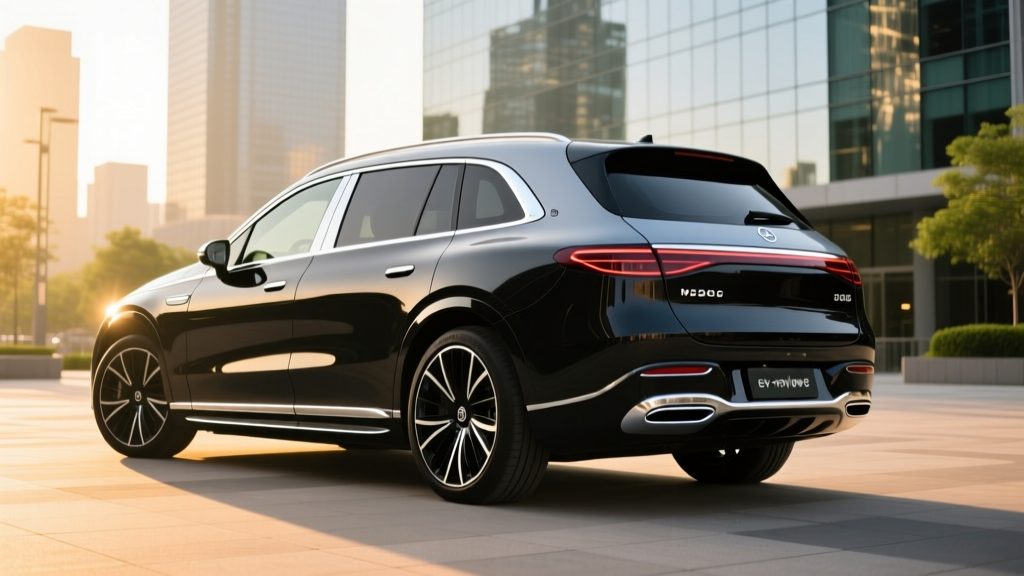
The 2026 Mercedes-Maybach EQS 680 SUV is the brand's first all-electric ultra-luxury vehicle, starting around $180,000 MSRP. It delivers an EPA-estimated 305 miles of range from a 108.4 kWh (usable) NMC battery, peaks at 200 kW DC fast charging (10–80% in approximately 31 minutes), and produces 649 horsepower with a 4.1-second 0–60 mph time. Compared to the gas-powered Maybach GLS 600, the EQS 680 eliminates fuel stops and offers near-silent propulsion, but costs roughly $10,000–$15,000 more upfront and sacrifices about 50 miles of real-world highway range versus the GLS's total driving range. For buyers with reliable home Level 2 charging and mostly urban/suburban driving patterns, the EQS 680 delivers unmatched electric luxury. For frequent long-distance or cold-climate drivers, the gas GLS or a plug-in hybrid alternative may still be more practical.
Range and Efficiency: EPA vs. Real-World Expectations
The EQS 680 SUV carries a 108.4 kWh usable battery (NMC chemistry) paired with dual permanent-magnet motors producing 649 hp and 700 lb-ft of torque. Mercedes-Benz quotes an EPA range of approximately 305 miles on the top trim with 21-inch wheels; stepping to the available 23-inch forged wheels reduces that figure by roughly 15–20 miles due to increased rolling resistance and weight.
Real-World Range Reality Check
EPA sticker: 305 miles
Highway (70–75 mph, mild weather): ~255–275 miles
Cold weather (below 30°F, highway): ~210–235 miles
City/mixed with regen: ~285–305 miles
The EQS 680's heavy curb weight (~6,400 lbs) and boxy SUV profile hurt highway efficiency. Expect roughly 2.0–2.2 kWh/mile on the highway and 1.8 kWh/mile in mixed driving. The onboard heat pump helps mitigate cold-weather cabin energy draw, but battery chemistry still loses ~15–25% capacity in sustained sub-freezing temperatures.
Efficiency lands around 78–82 MPGe combined depending on wheel and trim selection, per fueleconomy.gov. That is competitive with the BMW iX M60 and slightly behind the more aerodynamic EQS sedan.
Charging Speed and Infrastructure: What Owners Actually Experience
The EQS 680 supports the NACS (Tesla-style) connector natively for the 2026 model year, giving access to the Tesla Supercharger network alongside Electrify America, EVgo, and other major networks via adapter or native plug depending on production batch.
| Level | Power | Miles Added per Hour | Time (10–80%) | Best For |
|---|---|---|---|---|
| Level 1 (120V) | ~1.4 kW | ~3–4 mi/hr | N/A (not practical) | Emergency/trickle only |
| Level 2 (240V, 48A) | ~11.5 kW | ~30–33 mi/hr | ~9.5 hours | Overnight home charging |
| DC Fast Charge | Peak 200 kW | ~180 mi/hr (peak) | ~31 minutes | Road trips |
Charging curve reality: The EQS 680 hits its 200 kW peak only between approximately 10–35% state of charge. From 35–60%, power tapers to roughly 150 kW, and above 80%, it drops sharply to under 50 kW to protect battery longevity. This means the published 10–80% time of ~31 minutes is achievable only with proper battery preconditioning — navigate to a charger using the MBUX system to enable it. Cold-soaking the battery without preconditioning can add 10–15 minutes to that figure.
For home charging, a Level 2 wallbox (48-amp, hardwired) is essentially mandatory for a vehicle in this price class. Expect a full installation cost of $1,200–$2,800 depending on panel capacity and run length, assuming a 200-amp or higher electrical panel. Homes with older 100-amp panels may need a $2,000–$4,000 panel upgrade — factor this into first-year ownership costs.
Electric Maybach vs. Gas Maybach GLS: Data-Driven Comparison
The closest internal-combustion alternative is the Mercedes-Maybach GLS 600 4MATIC, a twin-turbo V8 flagship. Here is how they stack up on paper and in practice:
| Attribute | EQS 680 SUV (Electric) | GLS 600 (Gas V8) |
|---|---|---|
| Base MSRP | ~$180,000 | ~$175,000 |
| Powertrain | Dual motor AWD, 649 hp | 4.0L TT V8 + 48V mild-hybrid, 550 hp |
| 0–60 mph | 4.1 sec | 4.8 sec |
| Total Range | ~305 mi (EPA) | ~380 mi (14.3 gal × ~16 city mpg combined) |
| Energy/Fuel Cost per Mile | ~$0.06–$0.10 (home charging) | ~$0.28–$0.34 (premium, $4.50/gal) |
| Annual Fuel/Energy (12K mi) | ~$720–$1,200 | ~$3,360–$4,080 |
| Scheduled Maintenance (Annual) | ~$300–$500 | ~$800–$1,500 |
| Federal Tax Credit (§30D) | Not eligible (MSRP & income cap) | N/A |
| Cabin Noise at 70 mph | Exceptionally quiet | Very quiet, slight V8 hum |
Key takeaway: The EQS 680 saves roughly $2,500–$3,500 annually in fuel and maintenance for a driver covering 12,000 miles per year. Over a typical 5-year ownership cycle, that's $12,500–$17,500 in operational savings — enough to partially offset the higher purchase price. However, the EQS 680 will likely depreciate faster in the first three years due to rapid EV technology cycles, whereas the GLS 600's V8 rarity may hold value among collectors.
Total Cost of Ownership: 5-Year Breakdown
| Cost Category | EQS 680 SUV | GLS 600 (Gas) |
|---|---|---|
| Purchase Price (base) | $180,000 | $175,000 |
| Home Charger Install | $2,000 | $0 |
| Energy/Fuel (5 years) | $5,000 | $18,500 |
| Maintenance (5 years) | $2,000 | $5,500 |
| Insurance (5 years) | $18,000 | $16,000 |
| Estimated Depreciation | $85,000 | $75,000 |
| Total 5-Year Cost | ~$292,000 | ~$290,000 |
Insurance for the EQS 680 tends to run 10–15% higher than the GLS 600 because EV repair costs — particularly battery and structural pack damage — remain elevated. Get quotes from your provider before committing. Depreciation estimates assume average luxury-SUV curves; the EV market's rapid evolution means this could swing either direction based on battery health reports at resale.
On the federal incentive front, the EQS 680 SUV does not qualify for the IRS §30D clean vehicle credit. The credit caps vehicle eligibility at $80,000 MSRP for SUVs, and the buyer's modified adjusted gross income must fall below $300,000 (joint). At $180,000+, the EQS 680 is well outside both limits. Some states offer separate luxury-EV incentives — check your local DMV or energy office for specifics.
Battery Longevity, Warranty, and Replacement Costs
Mercedes-Benz covers the EQS 680's high-voltage battery with an 8-year / 100,000-mile warranty against defects and excessive capacity loss (below 70% state of health). The NMC chemistry provides high energy density but is more sensitive to repeated 100% charges and extreme heat than LFP cells. For maximum longevity:
- Set daily charge limit to 80% via MBUX
- Use DC fast charging sparingly — rely on Level 2 for daily needs
- Enable preconditioning in hot and cold weather
- Avoid leaving the vehicle at 100% SoC for extended periods
Real-world degradation data from the broader EQS sedan fleet (which shares the same battery architecture) shows approximately 5–8% capacity loss after 60,000 miles under normal use. That translates to roughly 280–290 miles of range at the 60K mark — well within the warranty threshold.
Out-of-warranty battery replacement, should it ever be needed, is estimated at $25,000–$35,000 including labor. This is a worst-case scenario; most NMC packs from Mercedes have demonstrated strong durability in European fleet data.
Common Misconceptions About the Electric Maybach
| Myth | Fact |
|---|---|
| "The EQS 680 is self-driving." | It features SAE Level 2 driver-assist (Drive Pilot on select highways in approved regions). The driver must remain attentive and hands available. Only Level 4 robotaxis (Waymo, Zoox) operate without driver supervision. |
| "You can't road-trip an electric Maybach." | With 305 miles of range and 200 kW DC charging, you can add ~150 miles in 20 minutes on a road trip. The real constraint is charger availability in rural areas — plan routes using PlugShare or the MBUX navigation. |
| "The battery will need replacing in 5 years." | Modern NMC packs with active thermal management routinely last 150,000–200,000+ miles before reaching 70% SoH. The 8-year warranty backs this up. |
| "It qualifies for the $7,500 tax credit." | It does not. The §30D credit has an $80,000 MSRP cap for SUVs and buyer income limits. The EQS 680 exceeds both thresholds. |
| "Electric means zero maintenance." | Tires wear faster due to the vehicle's ~6,400-lb weight and instant torque. Cabin air filters, brake fluid, wiper fluid, and 12V battery checks are still required. But oil changes, transmission service, and exhaust repairs are eliminated. |
Who Should Buy the Electric Maybach — Decision Framework
Choose the EQS 680 SUV (Electric) If:
- You have reliable home Level 2 charging (garage or dedicated driveway outlet)
- Your daily driving is under 150 miles and mostly urban/suburban
- You value near-silent propulsion, instant torque, and the latest EV tech
- You live in a region with robust public DC fast-charging infrastructure (California, Northeast, major metro areas)
- You want to reduce your carbon footprint and local emissions
- You plan to keep the vehicle 4+ years to absorb depreciation
Choose the GLS 600 (Gas) or Wait If:
- You regularly drive 300+ miles in a single day through rural areas
- You live in an extreme cold climate (sustained sub-10°F winters) where range drops 25%+
- You lack access to home or workplace charging
- You prioritize long-term resale value and collector appeal of a V8 flagship
- You tow frequently — the GLS has a higher tow rating and no range penalty under load
Frequently Asked Questions
Does the 2026 Electric Maybach EQS 680 SUV use NACS or CCS?
For the 2026 model year, Mercedes-Benz has transitioned its US-market EVs to the NACS connector, providing native access to Tesla Superchargers (15,000+ stalls nationwide). CCS adapters are available for legacy Electrify America and EVgo stations that have not yet converted.
How much does it cost to charge the EQS 680 at home?
A full 0–100% charge at the US average residential electricity rate of ~$0.16/kWh costs approximately $17.35 (108.4 kWh × $0.16). That fills 305 miles of range — about $0.06 per mile. By comparison, the gas GLS 600 at 16 mpg combined with $4.50/gallon premium costs $0.28 per mile.
Is the Maybach EQS 680 all-wheel drive?
Yes. The dual-motor 4MATIC system provides standard all-wheel drive with torque vectoring. The system can disconnect the front motor under light loads to improve efficiency, a feature Mercedes calls "torque shift."
What is the interior like compared to the gas GLS Maybach?
The EQS 680 mirrors the GLS Maybach's ultra-luxury cabin — available reclining rear executive seats, champagne cooler, Burmester 4D surround sound, and MBUX Hyperscreen. The key difference is a flat floor (no transmission tunnel), which increases rear legroom and creates a more spacious feel.
How does cold weather affect the EQS 680's range?
In sustained temperatures below 30°F, expect a 15–25% range reduction due to battery chemistry limitations and cabin heating demands. The heat pump reduces this penalty compared to resistive heating, but 305 EPA miles becomes roughly 230–260 miles in real winter highway driving. Preconditioning while plugged in recovers some of that loss.
Can I get the federal tax credit on the Electric Maybach?
No. Per IRS §30D rules, new clean vehicle credits cap SUV eligibility at $80,000 MSRP and require buyer MAGI below $300,000 (joint filers). The EQS 680 at $180,000+ is ineligible on price alone. Consult a tax professional for any state-level incentive availability.