Quick Answer: Is an Electric Mail Van Worth It?
For fleet operators running predictable, sub-100-mile daily routes with depot-based overnight charging, an electric mail van like the 2026 Ford E-Transit or BrightDrop Zevo 600 delivers a lower total cost of ownership than a comparable gas van within 2-3 years. Expect 126-150 miles of EPA-rated range, $0.08-$0.15 per mile in electricity (vs $0.22-$0.30 for gas), and drastically reduced maintenance. The trade-off: higher upfront MSRP ($45,000-$62,000 before incentives), payload penalties from battery weight, and route planning required for cold-weather range loss (15-30% below 32°F). If your routes exceed 120 miles daily or lack depot charging access, a gas or hybrid van remains the practical choice.
What Exactly Is an Electric Mail Van?
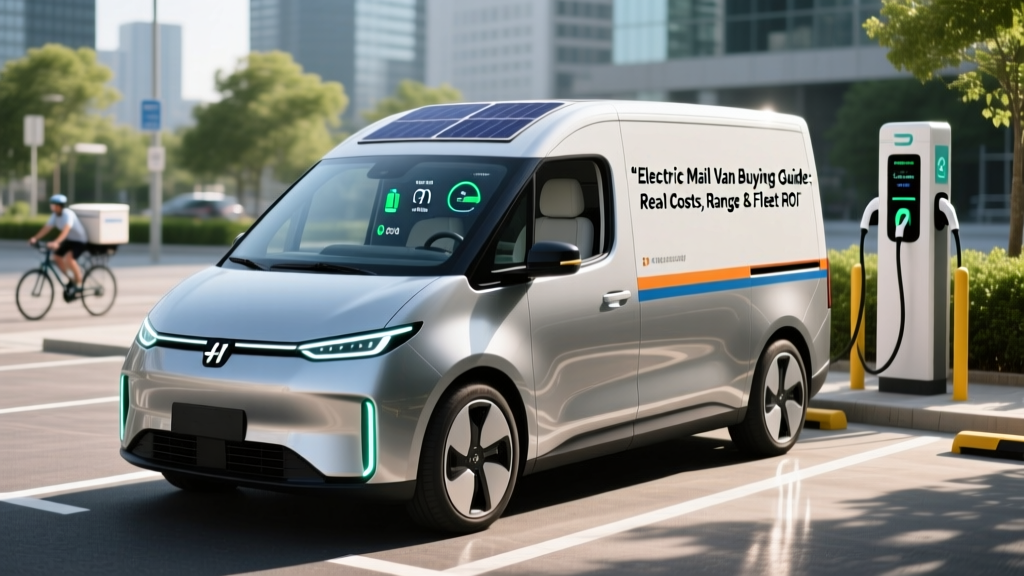
The term "electric mail van" encompasses battery-electric commercial cargo vans designed for last-mile delivery, postal routes, and parcel logistics. The segment has matured significantly since the USPS began its fleet modernization program. The primary models competing for fleet contracts in 2026 include:
- Ford E-Transit — The segment benchmark, available in multiple wheelbase and roof heights
- BrightDrop Zevo 600 — GM-backed, purpose-built for delivery with a focus on fleet integration
- Canoo Lifestyle Delivery Vehicle (LDV) — Compact, maneuverable, aimed at dense urban routes
- Mercedes-Benz eSprinter — Premium option with extended-range battery option
These are not converted gas vans. They're built on dedicated EV platforms (or heavily adapted ones) with battery packs mounted under the cargo floor, preserving load space while lowering the center of gravity.
Spec Comparison: Electric Mail Van Lineup
Here's how the major players stack up on the metrics that matter for fleet purchasing decisions. All figures reflect 2026 model-year data where available.
| Spec | Ford E-Transit (2026) | BrightDrop Zevo 600 | Mercedes-Benz eSprinter (2500 High Roof) |
|---|---|---|---|
| EPA Range | 126 mi (standard) / 150 mi (extended) | ~150 mi (estimated) | ~150 mi (est., large battery) |
| Battery Capacity (usable) | 68 kWh (standard) / 89 kWh (extended) | ~90 kWh (est.) | ~113 kWh (large pack) |
| Chemistry | NMC (nickel manganese cobalt) | NMC | NMC |
| Max DC Fast Charge | 115 kW | ~120 kW (est.) | ~115 kW |
| 10-80% DC Charge Time | ~45 min | ~40 min (est.) | ~50 min |
| Level 2 AC Charge Rate | 10.5 kW | 11.5 kW | 9.6 kW |
| Motor Output | 266 hp / 317 lb-ft torque | ~200 hp (est.) | 201 hp / 332 lb-ft |
| Max Payload | 3,880 lbs (cutaway) / 3,397 lbs (cargo van) | ~2,500 lbs (est.) | ~2,624 lbs |
| Cargo Volume | 487.3 cu ft (extended high roof) | 600 cu ft | 532.6 cu ft |
| Base MSRP (Cargo Van) | ~$47,000-$55,000 | ~$50,000-$58,000 | ~$57,000-$65,000 |
| Battery Warranty | 8 yr / 100,000 mi | 8 yr / 100,000 mi | 8 yr / 100,000 mi |
Real-World Range Reality Check: The EPA sticker is a starting point, not a guarantee. For an electric mail van carrying 1,500-2,500 lbs of cargo on a stop-and-go delivery route, expect 10-15% below EPA range in mild weather. In sub-freezing temperatures, range loss compounds — plan for 25-35% reduction. An E-Transit rated at 126 miles EPA may deliver 85-95 miles of usable route range in January in Chicago. Fleet managers should size routes to 75% of EPA range as a safe daily maximum in cold climates.
Electric Mail Van vs Gas Van: The Cost Math
The purchase decision for an electric mail van comes down to total cost of ownership (TCO), not sticker price. Commercial vans accumulate miles quickly, and the per-mile operating cost gap between electric and gas widens with every route.
| Cost Factor (5-Year / 75,000 mi) | Ford E-Transit (Electric) | Ford Transit 250 (Gas, 3.5L V6) |
|---|---|---|
| Purchase Price (base MSRP) | $49,995 | $45,760 |
| Federal Commercial Clean Vehicle Credit (§45W) | -$7,500* | $0 |
| Effective Purchase Price | $42,495 | $45,760 |
| Fuel / Electricity (75,000 mi) | $6,750 ($0.09/mi avg) | $16,875 ($0.225/mi at 16 MPG avg, $3.60/gal) |
| Maintenance (oil, filters, brakes, belts) | $1,800 (est. — regen braking saves pads) | $5,400 (est.) |
| Insurance (commercial fleet avg) | $9,500 | $8,750 |
| Estimated Resale Value (Year 5) | $14,000 | $16,500 |
| Net 5-Year TCO | $46,545 | $60,285 |
*The §45W Commercial Clean Vehicle Credit applies to vehicles used in a trade or business. Eligibility depends on battery sourcing, MSRP caps, and manufacturer qualifications. Consult IRS guidance on §45W and a tax professional before purchasing. State and local utility incentives may further reduce cost.
The math favors electric for high-mileage fleet use. The E-Transit breaks even around month 28-32 under typical delivery patterns, with savings accelerating as the vehicle ages due to lower maintenance. The gas van's advantage shrinks further if your depot has access to commercial electricity rates below $0.10/kWh.
Charging Infrastructure: What Fleet Buyers Need to Plan
Unlike consumer EVs, electric mail vans charge primarily at the depot overnight. This simplifies logistics but requires upfront infrastructure investment.
| Charging Level | Power (kW) | Miles Added Per Hour | Best Use Case |
|---|---|---|---|
| Level 1 (120V outlet) | 1.4 kW | ~2-3 mi/hr | Emergency top-up only — not viable for fleet ops |
| Level 2 (240V, depot charger) | 10.5-11.5 kW | ~18-22 mi/hr | Overnight depot charging — 8-10 hours fully recharges |
| DC Fast Charge | 115-120 kW (peak) | ~100-130 mi/hr (peak) | Mid-day top-up, opportunity charging — 10-80% in ~40-45 min |
Depot charging installation costs vary significantly by site:
- Single Level 2 charger (40A/9.6 kW): $3,000-$7,000 installed (charger + electrical work + permit)
- Multiple Level 2 chargers (5-unit depot): $18,000-$40,000 depending on panel upgrades, trenching, and conduit runs
- DC fast charger (50-150 kW): $40,000-$120,000+ installed — typically unnecessary for overnight depot ops but useful for mid-day route recovery
A critical note on kW vs kWh: kW measures charging power (how fast energy flows); kWh measures battery capacity (how much energy is stored). A 68 kWh battery charged at 10.5 kW takes roughly 6.5 hours from empty to full. Fleet managers should spec Level 2 chargers at 40A or 48A to ensure overnight charging completes within a standard 8-10 hour depot window.
Many utilities offer commercial EV charging incentives and time-of-use rates that make overnight charging significantly cheaper than daytime rates. Check with your local utility before spec'ing depot infrastructure.
Real-World Ownership: What First-Time Fleet EV Buyers Miss
Transitioning a delivery fleet from gas to electric introduces operational considerations that don't appear on a spec sheet.
Payload and Route Planning
Battery weight reduces payload capacity. The E-Transit's curb weight is roughly 1,000 lbs heavier than a gas Transit, meaning you lose that much payload headroom. For parcel delivery (light, voluminous loads), this is rarely an issue. For dense cargo (beverages, building materials), it can matter.
Cold-Weather Performance
Lithium-ion batteries lose efficiency in cold temperatures, and cabin heating draws from the traction battery. Fleet operators in northern climates should:
- Spec the extended-range battery option if available
- Use preconditioning (heating the battery and cabin while still plugged in at the depot) to preserve range
- Plan winter routes at 65-75% of summer route length
- Consider heated seats over cabin air heating — seats draw far less energy
Driver Training
Regenerative braking changes the driving feel significantly. One-pedal driving (lifting off the accelerator slows the van aggressively) reduces brake wear but requires driver acclimation. Budget for a half-day training session per driver to maximize regen efficiency and avoid ride-quality complaints from abrupt deceleration.
Maintenance Reality
EVs eliminate oil changes, spark plugs, fuel filters, transmission fluid (most use single-speed reductions), and exhaust system maintenance. Brake pads last 2-3x longer due to regenerative braking. The primary maintenance items become tire rotation, cabin air filter, coolant system checks, and software updates. Ford estimates E-Transit maintenance costs are roughly 40% lower than a gas Transit over 5 years.
Common Misconceptions About Electric Mail Vans
| Myth | Fact |
|---|---|
| "126 miles of range isn't enough for delivery routes" | The average USPS delivery route is 20-40 miles. UPS and FedEx last-mile routes average 60-90 miles. Most electric mail vans cover daily routes with 30-50% battery remaining. |
| "The battery will need expensive replacement within a few years" | NMC batteries in commercial vans are warrantied for 8 years/100,000 miles at 70%+ capacity retention. Real-world fleet data shows degradation of 8-12% over 5 years with proper charging habits (avoiding daily 100% SoC). |
| "Charging takes too long for commercial use" | Overnight Level 2 depot charging fully replenishes the battery in 7-9 hours — well within a standard off-shift window. DC fast charging at 115 kW adds 80% in ~45 minutes for mid-day recovery. |
| "Electric vans can't handle hot or cold climates" | Modern thermal management systems (liquid cooling and heating) keep batteries in optimal temperature range. Range loss is real (15-30% in extreme cold) but manageable with route planning and preconditioning. |
| "The tax credit makes it basically free" | The §45W commercial credit provides up to $7,500 for vehicles under 14,000 lbs GVWR, but eligibility depends on battery component sourcing, critical mineral requirements, and your business tax liability. Always verify current-year rules with the IRS and a tax professional. |
Decision Framework: Should Your Fleet Go Electric?
Choose an Electric Mail Van If:
- Your daily routes are under 100 miles (or under 80 miles in cold climates)
- You have depot parking with access to 240V electrical service (or can install it)
- Your fleet accumulates 12,000-20,000+ miles per vehicle annually (higher miles = faster payback)
- Your cargo is voluminous but relatively light (parcels, mail, food delivery)
- You operate in a state or utility district with EV fleet incentives
- You want predictable per-mile fuel costs insulated from gas price volatility
Stick with Gas or Hybrid Vans If:
- Daily routes regularly exceed 130 miles with no mid-day charging opportunity
- Your depot lacks electrical capacity for Level 2 charging and upgrading is cost-prohibitive
- You haul dense, heavy cargo near the van's GVWR limit
- Your fleet operates in extreme cold (consistent sub-0°F) without garage parking
- You need maximum resale value certainty (EV commercial resale markets are still maturing)
- Vehicle annual mileage is under 8,000 miles (TCO advantage takes too long to realize)
Frequently Asked Questions
Does the USPS use electric mail vans?
Yes. The USPS committed to purchasing at least 45,000 Next Generation Delivery Vehicles (NGDV), with a significant portion being battery-electric. The contract was awarded to Oshkosh Defense, and deliveries began ramping in 2024-2025. The USPS also procured Ford E-Transit vans as part of the fleet transition. This federal commitment has accelerated charging infrastructure buildout at postal facilities nationwide.
How long does an electric mail van battery last before replacement?
Based on current NMC chemistry and fleet usage patterns, expect 10-15 years or 150,000-200,000 miles before capacity drops below 70% of original. Most manufacturers warranty the battery at 8 years/100,000 miles with a 70% capacity retention threshold. Full battery replacement costs range from $12,000-$18,000 depending on the model and pack size, though prices continue to decline as battery manufacturing scales.
Can I charge an electric mail van at a public charging station?
Yes, but it's not the intended use case. Public DC fast chargers (Electrify America, EVgo, Tesla Supercharger with NACS adapter) can replenish the battery during a route if needed. However, commercial fleets should rely on depot-based Level 2 charging for cost efficiency. Public DC fast charging costs $0.30-$0.50/kWh vs $0.06-$0.12/kWh for depot electricity — a 3-5x cost premium.
What's the difference between kW and kWh for fleet planning?
kW (kilowatts) measures power — how fast energy flows. A 115 kW DC fast charger delivers energy rapidly. kWh (kilowatt-hours) measures energy capacity — how much the battery holds. A 68 kWh battery stores 68 kilowatt-hours of energy. Think of kW as the diameter of a hose and kWh as the size of the tank you're filling. For fleet planning, kWh determines how far you can drive; kW determines how quickly you can recharge.
Do electric mail vans qualify for the federal tax credit?
Commercial fleets should look at the §45W Commercial Clean Vehicle Credit, not the consumer §30D credit. §45W offers up to $7,500 for qualifying vehicles under 14,000 lbs GVWR (and up to $40,000 for heavier vehicles). Eligibility requires the vehicle be used in a trade or business, meet battery sourcing requirements, and the purchasing entity must have sufficient tax liability to use the credit (or elect direct pay if tax-exempt). Rules evolve annually — verify current requirements with the IRS and your tax advisor before committing to a purchase order.
What about insurance costs for electric mail vans?
Commercial EV insurance premiums run 5-15% higher than equivalent gas vans due to higher repair costs for battery and powertrain components and higher vehicle replacement values. However, some insurers offer fleet EV discounts as claims data matures. Budget a modest premium increase in your TCO model, and shop quotes from carriers with specific commercial EV experience.