The Short Answer: Does an Electric M3 Exist in 2026?
As of early 2026, BMW has not released a car officially badged "M3 Electric." However, two electrified paths exist for M3 buyers:
- BMW i4 M80 xDrive (2026): The closest production EV to M3 performance — dual motor, ~590 hp, 0-60 in ~3.3s, EPA-est. ~280 miles range, starting around $78,000.
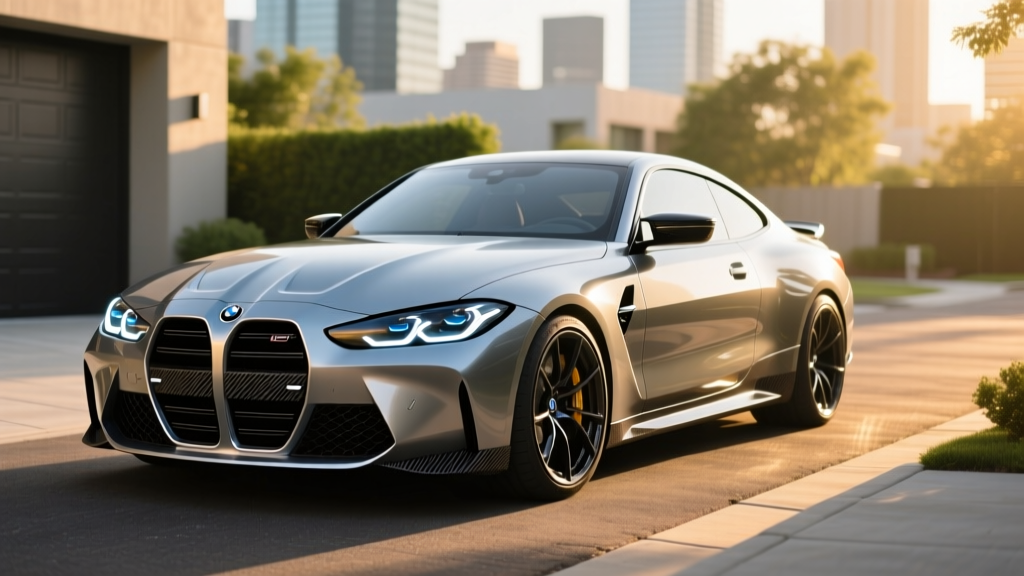
- BMW M3 (G80, 2026 refresh): The current twin-turbo inline-6 gas M3 continues at 473-523 hp, starting ~$76,000.
- Neue Klasse M (announced): BMW's next-gen electric M sports sedan, previewed by the Vision Neue Klasse concept, expected ~2027-2028. Not yet on sale.
If you're searching for an "electric M3" today, the i4 M80 is the real-world answer — and this guide breaks down whether it's worth the switch from gas.
What "Electric M3" Actually Means in 2026
The search term "electric M3" reflects genuine buyer demand: enthusiasts who want M3-level thrills without the fuel bill and emissions. BMW's strategy has been deliberate rather than immediate. The brand's M division has stated that future M cars will go electric, but the transition is phased.
Here's the current landscape:
- i4 M50 (current): 536 hp, dual motor, EPA 245-270 miles depending on wheels. Starting ~$69,900. This is BMW's current electric M-performance gran coupe.
- i4 M80 xDrive (2026 model year): An anticipated higher-output variant using BMW's updated Gen5 eDrive system, targeting closer to true M3 acceleration figures.
- Neue Klasse platform (future): BMW's dedicated EV architecture debuting with the iX3 replacement, then expanding to sedan/M variants. This is where a true electric M3 successor will likely emerge.
For buyers ready to purchase now, the i4 M50 (and the anticipated M80) represent the electric M3 equivalent. Let's compare them head-to-head with the gas M3.
Electric vs Gas M3: Spec-by-Spec Breakdown
Numbers matter in the M segment. Here's how BMW's current electrified and gas M cars compare:
| Specification | 2026 BMW M3 (G80) | 2026 BMW i4 M50 | i4 M80 (Expected) |
|---|---|---|---|
| Powertrain | 3.0L Twin-Turbo I6 | Dual Motor AWD | Dual Motor AWD (Gen5+) |
| Horsepower | 473 hp (523 Competition) | 536 hp | ~590 hp (est.) |
| 0-60 mph | 4.1s (3.4s Comp xDrive) | 3.7s | ~3.3s (est.) |
| EPA Range / MPG | 16/23 mpg (city/hwy) | 245-270 mi (EPA) | ~280 mi (est.) |
| Battery / Fuel Tank | 15.6 gal tank | 81.5 kWh usable (NMC) | ~90+ kWh (est.) |
| Max DC Charge Rate | N/A | 205 kW peak | ~250 kW (est.) |
| 10-80% DC Charge | ~5 min (gas) | ~31 min | ~22 min (est.) |
| Curb Weight | ~3,830 lbs | ~4,870 lbs | ~4,900+ lbs (est.) |
| Starting MSRP | ~$76,000 | ~$69,900 | ~$78,000 (est.) |
| Federal §30D Credit | None | Check eligibility* | Check eligibility* |
*The IRS §30D clean vehicle credit has strict rules: buyer income caps ($150K single/$300K joint), MSRP caps ($55K sedans — which disqualifies most M cars), and battery mineral sourcing requirements. As of 2026, the i4 M50's MSRP exceeds the $55,000 sedan cap, meaning it does NOT qualify for the federal credit. Always verify current eligibility with a tax professional.
Real-World Range: What the EPA Sticker Doesn't Tell You
EPA Estimate (i4 M50): 245-270 miles (depending on 19" vs 20" wheels)
Real-World Expectation:
- Mixed driving (70°F): ~230-255 miles achievable
- Highway at 75 mph sustained: ~210-230 miles (EVs lose efficiency at high speed)
- Cold weather (20°F): ~170-200 miles (battery chemistry + cabin heating draw)
- Track/enthusiast driving: Range drops dramatically — expect 80-120 miles of hard use
The i4 M50's 81.5 kWh (usable) NMC battery delivers respectable range for a performance sedan, but M-car buyers should understand the physics: aggressive acceleration and high speeds consume energy exponentially. On a road trip at 80 mph through the Rockies, you'll plan charging stops more frequently than the sticker suggests.
BMW's heat pump (standard on recent model years) helps mitigate cold-weather losses by ~10-15% compared to resistive heating, but winter range reduction remains a fact of EV ownership in northern climates.
Charging Speed and Infrastructure Reality
The i4 M50 supports up to 205 kW DC fast charging on CCS1 connectors. Here's what that means in practice:
| Charging Level | Power (kW) | Miles Added per Hour | Typical Use Case |
|---|---|---|---|
| Level 1 (120V) | ~1.4 kW | ~4-5 mi/hr | Emergency/top-up only |
| Level 2 (240V, 48A) | ~11 kW | ~35-40 mi/hr | Home overnight charging |
| DC Fast (CCS1) | Up to 205 kW peak | ~600+ mi/hr (peak) | Road trips, 10-80% in ~31 min |
The charging curve reality: The i4 M50 peaks at 205 kW only at low state-of-charge (roughly 10-30%). Above 50% SoC, the rate tapers significantly — typically dropping to 80-100 kW by 70%, and further to 40-50 kW above 85%. This is normal battery management to protect cell longevity, but it means the advertised "31-minute 10-80%" time doesn't translate to equally fast 80-100% fills.
Home charging setup: Most i4 owners install a Level 2 wallbox (BMW Wallbox Professional or third-party like ChargePoint Home Flex). Expect $500-$800 for the unit and $800-$2,500 for electrician installation depending on panel capacity and run length. A 200-amp electrical panel is typically required; older homes may need a $2,000-$4,000 panel upgrade.
BMW also provides access to the Electrify America network and, increasingly, Tesla Supercharger access via adapter (NACS transition). Public charging reliability in 2026 has improved, but rural charging deserts remain a factor for road-trip-heavy owners.
Total Ownership Cost: Electric M vs Gas M Over 5 Years
The purchase price is only the beginning. Here's a realistic 5-year/60,000-mile ownership comparison:
| Cost Category | 2026 M3 Competition xDrive | 2026 i4 M50 |
|---|---|---|
| MSRP (base) | $82,000 | $69,900 |
| Federal Tax Credit | $0 | $0 (MSRP exceeds cap) |
| Estimated Insurance (5yr) | $14,500 | $13,000 |
| Fuel/Energy (60K mi) | $11,400 (18 mpg avg, $3.80/gal) | $4,200 (3.0 mi/kWh, $0.14/kWh avg) |
| Maintenance (5yr) | $4,800 (oil, brakes, filters) | $1,800 (cabin filter, fluid checks, tires) |
| Tire Replacement | $2,400 | $2,800 (heavier vehicle = faster wear) |
| Depreciation (est. 5yr) | $38,000 | $36,000 |
| Total 5-Year Cost | ~$153,100 | ~$127,700 |
Net savings driving electric: ~$25,400 over 5 years. The i4 M50 wins primarily on fuel and maintenance savings, despite a higher tire budget due to the ~1,000-lb weight penalty. However, depreciation is the wildcard — EV resale values have been volatile, and the M3's enthusiast following may hold value better long-term.
Key assumptions: electricity at $0.14/kWh (national average blending home and public charging), gas at $3.80/gal, 15,000 miles/year, premium fuel for M3. Your local utility rates and driving patterns will shift these numbers significantly.
Common Misconceptions About an Electric M3
| Myth | Fact |
|---|---|
| "The i4 M50 handles like a real M3" | The i4 M50 is fast in a straight line, but the ~1,000-lb weight penalty is felt in cornering. The G80 M3 remains the sharper track tool. |
| "EV batteries need replacing every 5 years" | BMW warranties the i4 battery for 8 years/100,000 miles (minimum 70% capacity retention). Industry data shows NMC packs losing ~10-15% capacity over 150K miles with normal use. |
| "I'll save $7,500 on taxes buying electric" | The §30D credit has an MSRP cap of $55,000 for sedans. The i4 M50 (~$69,900) does not qualify. Some states offer separate rebates — check your local programs. |
| "Public charging is unreliable everywhere" | Network uptime has improved in 2026 (Electrify America and Tesla Superchargers average 90%+ uptime), but rural corridors and older CCS stations still have issues. Plan routes with PlugShare or A Better Routeplanner. |
| "An electric M3 will be just as light" | Current battery energy density means performance EVs weigh 4,800-5,000+ lbs. Solid-state batteries (expected late this decade) may change this, but not for 2026 models. |
Decision Framework: Should You Buy Electric or Gas M?
Choose the BMW i4 M50 (Electric) If:
- You have reliable home Level 2 charging (garage or driveway with 240V access)
- Your daily commute is under 150 miles round-trip
- You value instant torque, silent acceleration, and one-pedal driving
- You want lower running costs (~$7,200 fuel savings over 5 years)
- You rarely drive in sub-20°F weather or remote areas without charging
- Track days are occasional, not weekly
Choose the BMW M3 (G80 Gas) If:
- You live in an apartment or lack home charging access
- You regularly take 400+ mile road trips through charging-sparse regions
- Track performance and lightweight handling are top priorities
- You want the inline-6 sound and engagement of a traditional M car
- You plan to keep the car 10+ years (proven ICE longevity, simpler long-term parts supply)
- Extreme cold (below 0°F) is routine in your climate
Wait for the Neue Klasse M (2027-2028) If:
- You want a dedicated EV platform (better packaging, lower center of gravity, potentially lighter weight)
- You're willing to wait for BMW's next-gen electric M with quad-motor potential
- Current i4 range and charging speed don't meet your needs
What First-Time EV Buyers Should Know
If the i4 M50 would be your first EV, prepare for these ownership realities:
- Home charging is essential. Public-only charging is expensive ($0.35-$0.55/kWh at DC stations) and inconvenient. Budget $1,500-$3,500 for a Level 2 home installation.
- Preconditioning matters. Use the BMW app to warm the battery before DC fast charging — it significantly improves charge speed in cold weather.
- Tires wear faster. The instant torque and heavy weight of EVs chew through performance tires. Budget for replacement at 20,000-30,000 miles.
- Insurance may be higher. EV performance cars carry elevated premiums due to repair costs and parts pricing. Get quotes before purchasing.
- Regenerative braking changes your driving. BMW's adaptive regen (and one-pedal mode) reduces brake pad wear dramatically — many owners report brake pads lasting 80,000+ miles.
- Software updates improve the car. BMW's iDrive 8.5 receives over-the-air updates that can add features, improve efficiency, and refine charging behavior post-purchase.
Frequently Asked Questions
Will BMW make an official electric M3?
BMW has confirmed that future M models will be electric, built on the Neue Klasse platform. A true "M3" EV successor is expected around 2027-2028, but BMW has not confirmed the badge name. It may carry a new designation (e.g., "M3 EV" or a Neue Klasse-specific name).
Does the BMW i4 M50 qualify for any tax credits?
The federal §30D credit caps sedan eligibility at $55,000 MSRP, which disqualifies the i4 M50 at ~$69,900. However, some states (California, Colorado, Massachusetts, New York) offer separate EV rebates of $1,000-$7,500 that may apply. Check fueleconomy.gov and your state's energy office for current programs.
How does the i4 M50 compare to the Tesla Model 3 Performance?
The 2026 Model 3 Performance (~$54,990, 0-60 in 2.9s, EPA 315 mi) is faster, lighter, and has longer range — plus it may qualify for the §30D credit depending on sourcing rules. However, the i4 M50 offers superior interior quality, a more traditional luxury driving experience, and BMW dealer service infrastructure. Choose Tesla for pure performance-per-dollar; choose BMW for build quality and brand experience.
What's the battery warranty on the i4 M50?
BMW covers the high-voltage battery for 8 years or 100,000 miles (whichever comes first), guaranteeing minimum 70% state-of-health (capacity retention). If degradation exceeds 30% within that window, BMW will repair or replace the pack. Out-of-warranty replacement costs are estimated at $15,000-$22,000, though prices are expected to decline as the battery supply chain matures.
Can I take the i4 M50 to a BMW M track day?
You can, but with caveats. Sustained high-speed lapping drains the battery rapidly (potentially 2-3 laps on a long circuit before needing a cool-down charge), and the ~4,870-lb weight is felt through braking zones. BMW M has begun hosting EV-specific track events, but the gas M3 remains the better dedicated track car.
Is the i4 M50 all-wheel drive?
Yes. The i4 M50 uses BMW's xDrive dual-motor AWD system with a rear-motor bias for driving dynamics. The front motor disengages under light loads to improve efficiency.