The Short Answer on Electric Low Speed Vehicles
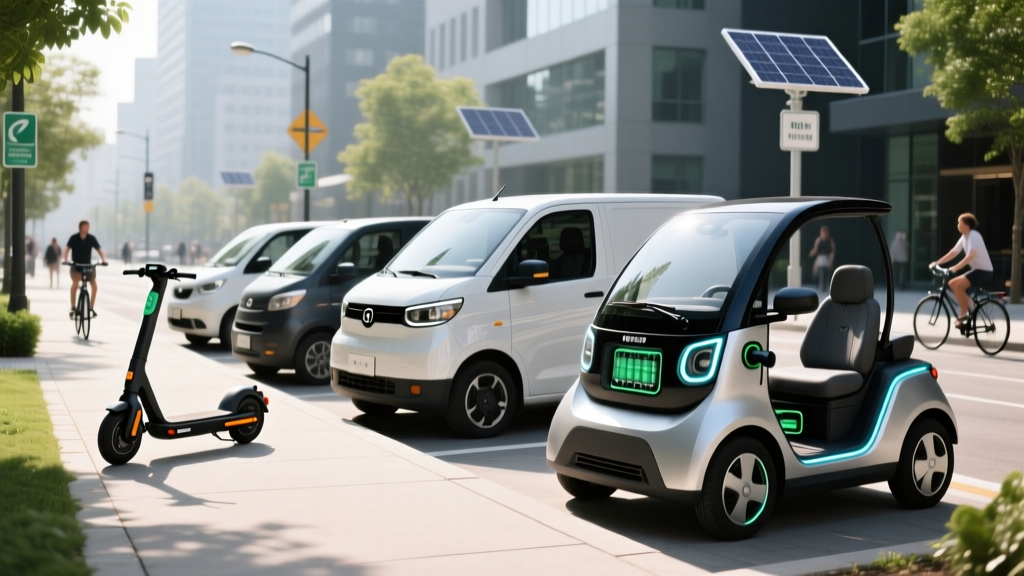
Electric low speed vehicles (LSVs)—also called Neighborhood Electric Vehicles (NEVs)—are street-legal, federally regulated electric carts capped at 25 mph with a typical range of 30–60 miles on a full charge. They cost between $8,000 and $20,000, charge from a standard 120V outlet in 6–8 hours, and cost roughly $0.02–$0.04 per mile to operate. They are legal on roads posted 35 mph or lower in most states. If your daily driving is under 20 miles on low-speed local roads, an LSV can replace a second car at a fraction of the cost. If you need highway access, cargo versatility, or cold-weather reliability, a conventional EV or PHEV is the better choice.
What Qualifies as an Electric Low Speed Vehicle?
The term "electric low speed vehicle" refers to a specific federal vehicle classification defined by the National Highway Traffic Safety Administration (NHTSA) under Federal Motor Vehicle Safety Standard (FMVSS) No. 500. To be street-legal as an LSV, a vehicle must meet these criteria:
- Top speed: At least 20 mph but not more than 25 mph
- Powertrain: Fully electric (no internal combustion engine)
- Safety equipment: Headlamps, turn signals, stop lamps, reflex reflectors, exterior mirrors, parking brake, windshield (glazed), VIN, and seat belts
- Gross Vehicle Weight Rating: Under 3,000 lbs
LSVs are not golf carts, though the distinction confuses many buyers. Golf carts are not federally regulated as motor vehicles and are typically restricted to private property or designated paths. An LSV, once titled and registered, can be driven on public roads where the posted speed limit is 35 mph or below—though state and local laws vary significantly. According to NHTSA, LSVs are exempt from most crashworthiness standards that apply to full-size passenger vehicles, which has major implications for safety (more on that below).
Real-World Range, Speed, and Charging Specs
Unlike full-size EVs rated by the EPA, LSVs do not carry EPA range or MPGe stickers. Range claims come from manufacturers and vary based on battery chemistry, payload, terrain, and temperature. Here is what current popular models deliver based on manufacturer specifications and independent owner reports:
| Model (2025–2026) | Battery (kWh) | Chemistry | Claimed Range (mi) | Real-World Range (mi) | Top Speed (mph) | Charge Time (120V) | Base MSRP |
|---|---|---|---|---|---|---|---|
| GEM e2 | ~8–12 kWh | LFP / AGM | 30–50 | 20–35 | 25 | 6–8 hours | $11,500 |
| Club Car Onward Electric (LSV trim) | ~10 kWh | Lithium-ion | 30–40 | 22–32 | 25 | 5–7 hours | $13,000 |
| Arcimoto SRK (FUV) | ~12–20 kWh | NMC | 40–70 | 30–55 | 75* | 4–6 hours | $17,900 |
| Aygo / Chinese import LSVs | ~6–10 kWh | Lead-acid / LFP | 30–50 | 18–30 | 25 | 8–10 hours | $8,000–$12,000 |
*The Arcimoto SRK (Fun Utility Vehicle) is classified as a motorcycle/autocycle in many states, not a traditional LSV, and can exceed 25 mph. It is included here because it competes in the same buyer consideration set.
LSV vs. Gas Car vs. Full-Size EV: A Cost and Capability Comparison
The decision to buy an electric low speed vehicle usually comes down to whether it can serve as a second (or only) vehicle for a specific use case. Here is how an LSV compares to the alternatives on cost, range, and daily practicality:
| Factor | LSV / NEV | Used Gas Compact (e.g., 2020 Corolla) | New Full-Size EV (e.g., 2026 Chevy Bolt EV) |
|---|---|---|---|
| Purchase Price | $8,000–$20,000 | $14,000–$18,000 | $28,795 (base MSRP) |
| Fuel / Energy Cost per Mile | $0.02–$0.04 | $0.12–$0.16 | $0.03–$0.05 |
| Range | 20–55 miles | 350–450 miles | 259 miles (EPA) |
| Top Speed | 25 mph (LSV) / 75 mph (FUV) | 110+ mph | 93 mph (electronically limited) |
| Highway Legal | No (35 mph roads max) | Yes | Yes |
| Annual Insurance | $200–$600 | $1,000–$1,800 | $1,200–$2,000 |
| Annual Maintenance | $50–$200 | $500–$1,000 | $100–$300 |
| Home Charging Required | Yes (120V standard outlet) | N/A | Recommended (Level 2 preferred) |
| Federal Tax Credit (§30D) | Not eligible | Not eligible | Up to $7,500 (income/sourcing rules apply) |
| Crash Protection | Minimal (no airbags, no crash testing) | Full (airbags, crumple zones) | Full (airbags, crumple zones, IIHS-rated) |
The LSV wins on upfront cost and per-mile operating cost, but it loses decisively on speed, range, highway access, and occupant protection. This is not a vehicle that replaces a primary commuter car for most households—it replaces short, low-speed trips that a full-size vehicle is overkill for.
5-Year Total Cost of Ownership Breakdown
Assuming 4,000 miles driven per year (the typical LSV use case: school runs, grocery trips, neighborhood errands), here is a realistic 5-year cost projection:
| Cost Category | LSV ($13,000 purchase) | Used Gas Car ($16,000 purchase) |
|---|---|---|
| Purchase Price | $13,000 | $16,000 |
| Fuel / Electricity (5 yrs, 20,000 mi) | $600–$800 | $2,400–$3,200 |
| Insurance (5 yrs) | $1,000–$3,000 | $5,000–$9,000 |
| Maintenance (5 yrs) | $250–$1,000 | $2,500–$5,000 |
| Registration / Taxes (5 yrs) | $250–$750 | $500–$1,500 |
| Battery Replacement (if needed) | $1,500–$3,500 | $0 |
| 5-Year Total | $16,600–$22,050 | $26,400–$34,700 |
The LSV saves $8,000–$15,000 over five years compared to a used gas car for the same low-speed, short-distance driving pattern. The largest variable is battery replacement: lead-acid batteries in budget LSVs may need replacement every 3–5 years ($1,500–$2,500), while lithium-ion packs in premium models typically last 8–12 years with gradual capacity loss.
Common Misconceptions About Electric Low Speed Vehicles
| Myth | Fact |
|---|---|
| "LSVs are just golf carts with a license plate." | Golf carts are not federally regulated motor vehicles. LSVs must meet FMVSS No. 500 requirements (headlamps, mirrors, seat belts, VIN, windshield) and are titled and registered like any other street-legal vehicle. |
| "I can drive an LSV on any road." | Federal law allows LSVs on roads posted 35 mph or below, but states can further restrict or expand access. Some states allow crossing higher-speed roads at intersections; others prohibit it entirely. Check your state DMV before purchasing. |
| "LSVs qualify for the $7,500 federal EV tax credit." | LSVs do not qualify for the IRS §30D Clean Vehicle Credit. The credit applies to vehicles with a gross vehicle weight rating under 14,000 lbs that meet battery sourcing and MSRP caps, but LSVs are excluded because they do not meet the definition of a "motor vehicle" under 49 U.S.C. § 32901 for CAFE purposes. Some states offer separate NEV rebates—check your state energy office. |
| "An LSV is safe because it's street-legal." | Street-legal does not mean crash-safe. LSVs have no airbags, no crumple zones, and are not crash-tested by NHTSA or IIHS. In a collision with a full-size vehicle, occupants are extremely vulnerable. LSVs are safest when used exclusively on low-traffic, low-speed roads. |
| "I can charge an LSV at a public DC fast charger." | LSVs charge exclusively from standard 120V AC outlets (Level 1). They do not have CCS, NACS, or CHAdeMO connectors and cannot use public DC fast charging or Level 2 public stations. |
| "LSV batteries last forever." | Lead-acid batteries (found in budget models) degrade significantly within 3–5 years and 500–800 charge cycles. Lithium-ion and LFP packs last longer (8–12 years, 1,500–3,000 cycles) but still experience capacity loss. Budget for eventual replacement. |
Who Should Buy an Electric Low Speed Vehicle (and Who Shouldn't)
Decision Framework: Is an LSV Right for You?
Buy an LSV if:
- Your daily driving is under 20 miles round-trip on roads posted 35 mph or lower
- You live in a planned community, retirement community, college town, or island with low-speed road infrastructure
- You want a second vehicle strictly for local errands, school runs, and neighborhood trips
- You have access to a standard 120V outlet for overnight charging (a garage or carport works)
- You understand the safety trade-off and accept minimal crash protection
- You live in a warm or moderate climate (cold weather significantly reduces range)
Do NOT buy an LSV if:
- You need to drive on roads posted above 35 mph or access highways
- Your daily commute exceeds 25 miles one-way
- You regularly carry more than 2 passengers or significant cargo
- You live in a region with harsh winters and need reliable cold-weather range
- You expect crash protection comparable to a full-size vehicle
- You want a single vehicle that handles all driving needs
State-by-State Legality: What You Need to Know Before Buying
LSV regulations are a patchwork of federal and state rules. While NHTSA defines the vehicle class, individual states decide where LSVs can operate, what licensing and insurance is required, and whether additional equipment (such as daytime running lamps or slow-vehicle emblems) is mandatory. Key state-level variations include:
- Speed limit access: Most states restrict LSVs to roads posted 35 mph or below. A few states (e.g., Texas, Arizona) allow local jurisdictions to permit LSVs on roads posted up to 45 mph.
- Registration requirements: All states require LSVs to be titled and registered. Insurance requirements vary—some states mandate minimum liability coverage, while others treat LSVs like motorcycles with separate insurance classes.
- Driver licensing: A valid driver's license is required in every state to operate an LSV on public roads. No special endorsement is typically needed.
- Crossing higher-speed roads: Many states allow LSVs to cross roads posted above 35 mph at controlled intersections, but not to travel along them. Confirm this with your local DMV.
Before purchasing, contact your state DMV or visit your state's transportation website to confirm current LSV operating rules. Municipal ordinances may impose additional restrictions on top of state law.
Battery Chemistry, Longevity, and Replacement Costs
The battery is the single most expensive component in any electric low speed vehicle, and the chemistry determines both daily performance and long-term cost. Three battery types dominate the current LSV market:
| Battery Type | Energy Density | Cycle Life | Typical Lifespan | Replacement Cost | Trade-offs |
|---|---|---|---|---|---|
| Lead-Acid (AGM / Flooded) | Low (30–40 Wh/kg) | 500–800 cycles | 3–5 years | $1,500–$2,500 | Heavy, short lifespan, cheapest upfront. Common in budget LSVs. |
| LFP (Lithium Iron Phosphate) | Medium (90–120 Wh/kg) | 2,000–3,000 cycles | 8–12 years | $2,500–$4,000 | Excellent cycle life, thermally stable, heavier than NMC. Becoming standard in mid-range LSVs. |
| NMC (Nickel Manganese Cobalt) | High (150–220 Wh/kg) | 1,000–2,000 cycles | 6–10 years | $3,000–$5,000 | Lightest option, best range per kWh, more expensive and thermally sensitive. Used in premium/FUV models. |
For most LSV buyers, an LFP-equipped model offers the best balance of longevity, safety, and cost. If you are buying a used LSV with lead-acid batteries, factor in immediate or near-term battery replacement ($1,500–$2,500) when negotiating the price.
Practical Ownership Tips for First-Time LSV Buyers
If you have decided an electric low speed vehicle fits your driving pattern, here are the ownership realities that manufacturers do not emphasize in brochures:
- Charging is overnight-only. With 120V Level 1 charging at roughly 1–1.5 kW, expect 6–10 hours for a full charge. Plan to plug in every evening—there is no fast-charging option and no public infrastructure for LSVs.
- Plan routes around speed limits. Use Google Maps to verify that your regular routes (grocery store, school, pharmacy) are on roads posted 35 mph or below. Many suburban arterials are posted 40–45 mph and are off-limits to LSVs.
- Winter range loss is real. LFP and lead-acid batteries lose 25–40% of usable capacity below freezing. If your 30-mile summer range is barely enough, winter will leave you stranded. Consider a model with 20–30% range buffer above your daily needs.
- Tire and brake maintenance still applies. LSVs have standard automotive tires, brake pads, and suspension components. Budget $100–$200 annually for tire rotation, brake inspection, and fluid checks.
- Resale value is low and uncertain. Unlike full-size EVs with established depreciation curves, LSV resale values are highly dependent on battery condition and local demand. Expect 30–50% depreciation over 5 years.
- Insurance is cheap but coverage is limited. Most insurers offer LSV policies at $200–$600/year, but collision and comprehensive coverage may not fully account for battery replacement cost. Read your policy carefully.
Frequently Asked Questions
Do I need a driver's license to operate an electric low speed vehicle?
Yes. Every U.S. state requires a valid driver's license to operate an LSV on public roads. LSVs are titled, registered, and insured motor vehicles—not recreational equipment.
Can I drive an LSV in the rain or winter weather?
Most LSVs have enclosed or semi-enclosed cabins with windshields and wipers, so rain operation is feasible. However, LSVs lack the heating systems, all-wheel drive, and ground clearance of full-size vehicles. Snow and ice on low-speed roads can be hazardous given the minimal vehicle weight (typically 1,200–1,800 lbs) and narrow tires.
How much does it cost to charge an LSV per month?
At the U.S. average residential electricity rate of approximately $0.17/kWh (EIA, 2025), charging a 10 kWh LSV battery from empty to full costs about $1.70. If you drive 20 miles per day and charge nightly, expect $25–$40 per month in electricity—compared to $100–$150 in gasoline for the same mileage in a 30 MPG compact car.
Can I install solar panels to charge my LSV?
Yes, though this falls outside automotive scope. A basic grid-tied solar system can offset LSV charging costs. Because LSV energy consumption is extremely low (roughly 300–500 kWh per year for daily use), even a small solar array can cover all LSV charging needs.
Are there any federal or state incentives for buying an LSV?
LSVs do not qualify for the federal §30D Clean Vehicle Credit. Some states and municipalities offer separate rebates or incentives for NEVs and LSVs—typically $500–$2,000. Check with your state energy office or local air quality district for current programs.
What happens if my LSV battery degrades to 70% capacity?
At 70% state of health (SoH), a 10 kWh battery delivers only 7 kWh of usable energy, reducing your real-world range proportionally. Unlike full-size EVs, most LSV manufacturers do not offer formal battery warranties with capacity-retention guarantees. Ask the manufacturer for written warranty terms before purchasing, and budget for replacement when capacity drops below 80%.
Is an LSV safer than an e-bike or scooter?
An LSV provides more physical structure and weather protection than an e-bike, but it lacks the crash engineering of a full-size vehicle. In collisions with cars or trucks, LSV occupants are at significantly higher risk of injury. The safest LSV use is on dedicated low-speed roads with minimal car traffic—similar to the environment where e-bikes thrive but with more occupant enclosure.