Quick Answer: What Is an Electric Low Speed Vehicle?
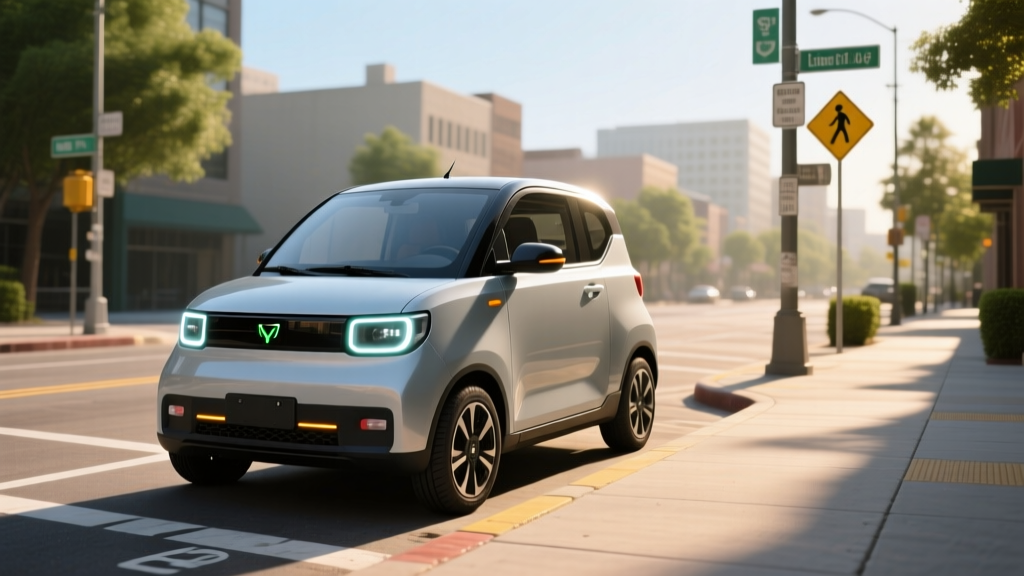
An electric low speed vehicle (LSV) is a street-legal, four-wheeled electric vehicle federally limited to a top speed of 25 mph and a gross vehicle weight under 3,000 lbs. Under FMVSS 500, LSVs must include headlamps, turn signals, seat belts, a VIN, and a windshield — but they are exempt from crash-test standards that apply to full-size passenger cars. Most electric LSVs offer 30–60 miles of real-world range, cost between $8,000 and $18,000, and charge from a standard 120V household outlet in 6–10 hours. They are legal on roads posted 35 mph or below in most (but not all) states.
Who Actually Needs an Electric Low Speed Vehicle?
Electric LSVs fill a narrow but practical niche. They are not highway-capable commuter cars, and they are not toys — they are federally classified motor vehicles that require registration, insurance, and a licensed driver. The buyers who get the most value from an LSV share a few traits:
- Geographically contained driving: gated communities, retirement neighborhoods, college campuses, military bases, or small towns where daily trips stay under 15 miles and roads are posted 35 mph or lower.
- Home charging access: a standard 120V garage or carport outlet is sufficient — no Level 2 install needed for most owners.
- Second-vehicle replacement: households that want to stop using a full-size SUV or truck for short errands, school drop-offs, or neighborhood loops.
- Climate consideration: LSVs lack sophisticated thermal management. Lead-acid battery models lose significant range in cold weather; lithium-equipped models fare better but still have no cabin heater to speak of. These are warm-climate, fair-weather vehicles for most buyers.
If your daily driving includes any road posted above 35 mph, a highway merge, or a trip longer than 25 miles one-way, an LSV is the wrong tool. You need a full-size BEV or a PHEV instead.
Electric LSV vs Gas Golf Cart vs Used Compact EV: The Cost Breakdown
The most common cross-shopping decision for LSV buyers isn't "which LSV" — it's "LSV or something else entirely." Here's how the numbers stack up across the three alternatives most buyers consider:
| Category | Electric LSV (Lithium) | Gas Golf Cart (Street-Legal) | Used Compact EV (e.g., 2023 Bolt EV) |
|---|---|---|---|
| Purchase Price | $10,000–$16,000 | $9,000–$14,000 | $14,000–$20,000 |
| Federal Tax Credit (§30D) | Not eligible* | Not eligible | Up to $4,000 (used EV credit, §25E)** |
| Annual "Fuel" Cost | ~$65/yr (electricity) | ~$480/yr (gasoline) | ~$450/yr (electricity, highway mix) |
| Annual Maintenance | ~$50–$100/yr | ~$300–$500/yr (oil, belts, plugs) | ~$200–$400/yr |
| Insurance (Annual Avg) | $300–$600/yr | $250–$500/yr | $900–$1,400/yr |
| 5-Year Total Cost (Approx) | $12,500–$20,500 | $16,000–$24,500 | $17,500–$27,000 |
*The §30D new EV credit requires a vehicle with a battery capacity of at least 7 kWh and a GVWR under 14,000 lbs, among other sourcing and MSRP requirements. Most LSVs fall below the 7 kWh battery threshold and are not on the IRS qualified-vehicle list. Always check the current fueleconomy.gov credit lookup before purchasing.
**The §25E used-EV credit (up to $4,000 or 30% of sale price, whichever is less) applies to qualified used EVs priced at $25,000 or below, purchased from a dealer, subject to buyer income caps. A used Chevrolet Bolt EV or Nissan LEAF can qualify; an LSV generally does not.
Real-World Range and Battery Chemistry: What to Expect
LSV manufacturers often advertise "up to 60 miles" of range, but as with full-size EVs, the real-world number depends heavily on battery chemistry, payload, terrain, and temperature.
Lead-Acid vs. Lithium-Ion (LiFePO4) Batteries
Most budget LSVs (under $10,000) ship with sealed lead-acid (SLA) or AGM battery packs. Mid-tier and premium models increasingly use lithium iron phosphate (LiFePO4 / LFP) packs. The differences are substantial:
| Attribute | Lead-Acid (SLA/AGM) | Lithium Iron Phosphate (LFP) |
|---|---|---|
| Typical Pack Capacity | 4.8–7.2 kWh (48V system) | 5–10 kWh (48V–72V system) |
| Advertised Range | 30–45 miles | 45–70 miles |
| Real-World Range (70°F, flat) | 20–35 miles | 35–55 miles |
| Cold-Weather Loss (30°F) | 30–50% range loss | 15–25% range loss |
| Cycle Life | 300–500 cycles | 2,000–3,000+ cycles |
| Typical Lifespan | 2–4 years | 7–10+ years |
| Battery Replacement Cost | $600–$1,200 | $1,500–$3,000 |
| Charge Time (120V Outlet) | 8–12 hours | 6–10 hours |
| Weight | 180–250 lbs (pack) | 50–90 lbs (pack) |
The takeaway: a lead-acid LSV that advertises 40 miles of range will realistically deliver 25 miles on a warm day and as few as 15 miles in 30°F weather. An LFP-equipped LSV is a meaningfully better ownership experience — longer life, lighter weight, and more honest range — and is worth the $2,000–$4,000 premium for anyone who plans to keep the vehicle more than three years.
Street-Legal Rules: Where Can You Actually Drive an LSV?
Federal law (FMVSS 500) defines what an LSV must be equipped with, but state and local governments decide where LSVs are permitted on public roads. This creates a patchwork that catches many buyers off guard.
Federal Equipment Requirements (FMVSS 500)
Every street-legal LSV sold in the U.S. must have:
- Headlamps, front and rear turn signals, tail lamps, and stop lamps
- Exterior mirrors (driver's side and passenger's side or interior)
- A parking brake
- A conforming windshield (AS-1 or AS-5 glazing)
- VIN number
- Seat belts for all designated seating positions
State-by-State Road Access
As of 2026, most states permit LSVs on roads with speed limits of 35 mph or lower. Some states (Florida, Arizona, South Carolina) have particularly permissive LSV laws and large LSV-friendly communities. Others restrict LSVs further or require additional equipment. A few states allow LSVs to cross — but not travel on — roads posted above 35 mph. Always verify your state's specific statutes with your local DMV before purchasing.
Decision Framework: Is an Electric LSV Right for You?
Use this framework to decide whether an LSV, a used compact EV, or a PHEV is the right purchase:
- Choose an electric LSV if: 100% of your typical trips are on roads posted ≤35 mph, your one-way trip distance is under 15 miles, you have garage or carport access for overnight 120V charging, you live in a mild climate, and you already own or have access to a full-size vehicle for highway trips.
- Choose a used compact EV (Bolt EV, LEAF, Model 3) if: you need highway capability, your trips exceed 25 miles, you need crash-test safety ratings, you drive in cold weather regularly, or you want eligibility for the §25E used-EV tax credit.
- Choose a PHEV (Prius Prime, RAV4 Prime) if: you need both short electric-only neighborhood trips (25–45 miles EV range) and the flexibility for longer highway drives without charging infrastructure planning.
- Do NOT buy an LSV if: you need to cross highways, carry more than 4 passengers, drive in sub-freezing temperatures regularly, transport children (most LSVs lack child-seat anchors and crash protection), or rely on a single vehicle for all transportation needs.
Common Misconceptions About Electric LSVs
| Myth | Fact |
|---|---|
| "LSVs don't require insurance or registration." | In nearly every state, LSVs must be titled, registered, plated, and carry minimum liability insurance — just like a car. Check your state DMV. |
| "An LSV qualifies for the $7,500 federal EV tax credit." | Most LSVs do not meet the §30D battery-capacity threshold (≥7 kWh) or critical-mineral sourcing requirements. Always verify on fueleconomy.gov before assuming eligibility. |
| "I can drive an LSV on any road." | LSVs are restricted to roads posted 35 mph or lower in most states, and some states impose additional restrictions. Driving on a 45 mph road can result in a citation. |
| "LSVs are just golf carts." | Golf carts are a separate vehicle class. Many golf carts lack the FMVSS 500 equipment required for street-legal LSV status. An LSV must have a VIN, proper lighting, mirrors, and seat belts. A "lifted golf cart" from a private seller may not be street-legal in your state. |
| "Range doesn't matter for a neighborhood vehicle." | Lead-acid LSVs can lose 40%+ range in cold weather. A 40-mile advertised range can become 18 miles in January in the Midwest. If your neighborhood loop is 12 miles, that's cutting it dangerously close. |
| "LSVs are safe because they're slow." | LSVs are exempt from federal crash-test standards (no frontal, side, or rollover tests required). In a collision with a full-size vehicle, occupants have far less structural protection than in any modern passenger car. This is the single biggest trade-off of LSV ownership. |
Charging and Daily Ownership: What It Actually Looks Like
One of the strongest practical advantages of an electric LSV is charging simplicity. Unlike a full-size EV, which benefits from a 240V Level 2 home charger (typically requiring a $500–$2,000 electrician install), most LSVs charge from a standard 120V household outlet using an onboard charger rated at 0.5–1.5 kW.
Charging Math
A typical LFP-equipped LSV with an 8 kWh usable battery and a 1 kW onboard charger will charge from 20% to full in roughly 6.5 hours. Plug in at 10 PM after an evening drive, and you're fully charged by 6 AM. There is no DC fast-charging capability on any current LSV — and there doesn't need to be. The small battery makes overnight trickle charging perfectly practical.
Electricity Cost
At the U.S. average residential electricity rate of roughly $0.17/kWh (EIA, 2025 data), charging an 8 kWh LSV battery from empty costs about $1.36. If you drive 15 miles per day and consume roughly 0.2 kWh/mile (typical for a lightweight LSV), your daily electricity cost is approximately $0.51 — or about $128 per year for 250 driving days. Compare that to a gas-powered golf cart getting roughly 20 miles per gallon at $3.40/gallon: $255/year for the same mileage. The LSV saves roughly $127/year in fuel alone, with far less maintenance on top.
What First-Time LSV Buyers Should Know Before Purchasing
- Verify street legality in your state and county. State laws vary, and some municipalities add their own restrictions on top of state rules. Call your local DMV or tag agency before you buy.
- Demand a VIN and a Manufacturer's Certificate of Origin (MCO/MSO). You cannot title or register an LSV without one. Off-brand imports sold online sometimes lack proper documentation.
- Insist on LFP batteries if budget allows. The upfront premium pays for itself in cycle life, cold-weather performance, and weight savings. Lead-acid packs will need replacement every 2–4 years at $600–$1,200 each time.
- Check the warranty. Reputable LSV manufacturers offer 1–3 years on the vehicle and 3–5 years on lithium battery packs. Anything less is a red flag.
- Budget for insurance. LSV insurance is generally cheaper than auto insurance ($300–$600/year) but is not optional. Some insurers won't cover LSVs; specialty carriers like Hagerty or Progressive's off-road/LSV divisions are common options.
- Test-drive on your actual roads. An LSV that feels fine on a flat, paved community road may struggle on hills or gravel. Verify hill-climb ability and braking feel before committing.
- Understand the safety trade-off. LSVs have no airbags, no crumple zones, and no crash-test ratings. They are appropriate for low-speed, low-traffic environments. They are not appropriate as a family's primary vehicle or for transporting children on busy roads.
Can I drive an electric low speed vehicle on highways?
No. LSVs are federally limited to a maximum speed of 25 mph and are prohibited on roads posted above 35 mph in most states. They are not highway-capable and lack the safety equipment required for high-speed travel.
Do I need a driver's license to operate an LSV?
Yes. In virtually every state, operating a street-legal LSV on public roads requires a valid driver's license, vehicle registration, and minimum liability insurance.
How long do electric LSV batteries last?
Lead-acid batteries typically last 300–500 charge cycles (2–4 years with daily use). LFP lithium batteries last 2,000–3,000+ cycles (7–10+ years). Replacement costs range from $600–$1,200 for lead-acid and $1,500–$3,000 for LFP packs.
Can I charge an LSV from a regular wall outlet?
Yes. Most electric LSVs use an onboard charger (0.5–1.5 kW) that plugs into a standard 120V household outlet. A full charge takes 6–12 hours depending on battery capacity and state of charge. No Level 2 charger installation is required.
Are electric LSVs eligible for the federal EV tax credit?
Generally, no. The §30D new clean vehicle credit requires a battery capacity of at least 7 kWh, compliance with critical-mineral and battery-component sourcing rules, and an MSRP below the statutory cap. Most LSVs have batteries below 7 kWh and do not appear on the fueleconomy.gov qualified vehicle list. Always verify before purchase.
What's the difference between an LSV and a Neighborhood Electric Vehicle (NEV)?
"NEV" is an older term that refers to the same vehicle class. FMVSS 500 uses "Low-Speed Vehicle" as the official designation. You'll still see "NEV" used in state statutes and marketing materials — they mean the same thing.