The Short Answer on Electric Lawn Mower Honda
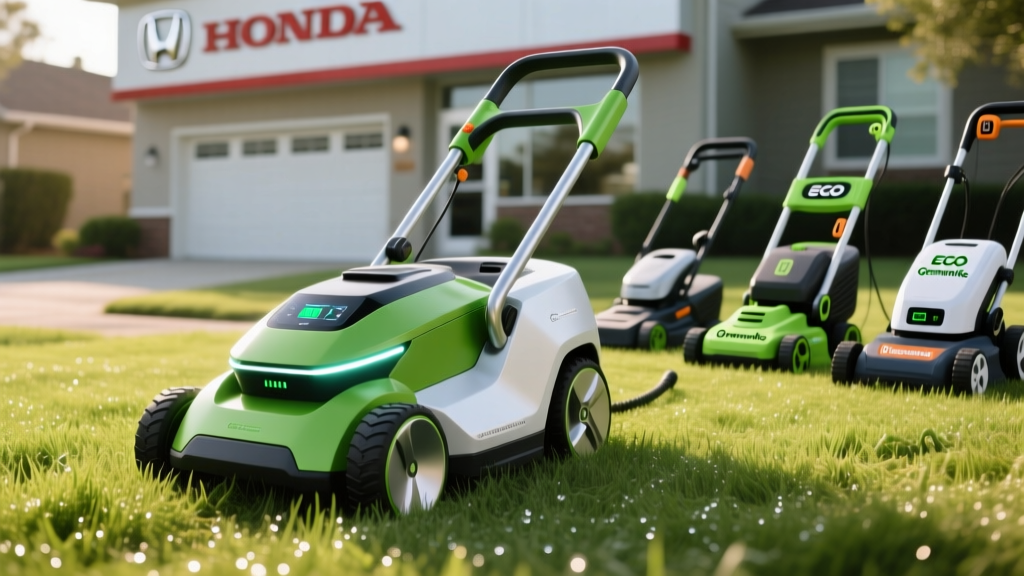
As of 2026, Honda does not manufacture a consumer electric lawn mower — battery-electric or otherwise. Honda's U.S. power equipment lineup remains dominated by gas-powered mowers equipped with their signature GCV-series small engines. If you're searching for an "electric lawn mower Honda," you're likely encountering outdated rumors, third-party battery adapters, or confusion with Honda's automotive EV efforts. For buyers committed to Honda engineering quality, the practical path forward is either sticking with a Honda gas mower or looking at dedicated electric outdoor power equipment brands like EGO, Ryobi, DeWalt, or Greenworks that offer comparable reliability with zero tailpipe emissions.
Why Honda Hasn't Gone Electric in Lawn Care
Honda's hesitation to electrify its lawn mower lineup isn't an oversight — it's a calculated engineering and business decision. The company has invested decades perfecting its micro-engine technology, particularly the GCV170 and GCV200 engines that power its HRN and HRS mower series. These engines are known for exceptional longevity (often 15-20+ years with basic maintenance), easy cold starts, and a parts ecosystem that any small-engine shop can service.
Transitioning to battery-electric mowers requires entirely different expertise: battery management systems (BMS), lithium-ion cell sourcing, thermal management for sustained high-torque draw, and a dealer network trained on high-voltage diagnostics. Honda has signaled its electrification focus is squarely on automotive — the Prologue SUV, the upcoming 0 Series sedans, and partnerships for solid-state battery development.
For lawn and garden, Honda continues to refine combustion. The 2026 HRN216VKA, for example, retails around $549 MSRP and delivers the mulching quality and deck durability Honda owners expect. Honda has not announced a battery-electric mower timeline as of early 2026.
The Real Comparison: Honda Gas vs. Leading Electric Mowers
If you're cross-shopping a Honda gas mower against the best electric alternatives, the numbers tell a nuanced story. Below is a spec-level comparison between a popular Honda gas mower and two leading battery-electric options:
| Spec | Honda HRN216VKA (Gas) | EGO LM2135SP (Battery) | Ryobi RY401150 (Battery) |
|---|---|---|---|
| Power Source | GCV170 170cc gas engine | 56V 7.5 Ah lithium-ion (420 Wh) | 40V 6.0 Ah lithium-ion (240 Wh) |
| Deck Width | 21 inches | 21 inches | 21 inches |
| Self-Propelled | Yes (variable speed) | Yes (variable speed) | Yes (variable speed) |
| Runtime / Tank | ~60-90 min per tank | ~60 min (single 7.5 Ah battery) | ~45-50 min (single 6.0 Ah battery) |
| Refuel / Recharge Time | 2 min (gas refill) | ~60 min (rapid charger) | ~90 min (standard charger) |
| Noise Level | ~90-95 dB | ~70-75 dB | ~72-78 dB |
| Weight | ~77 lbs | ~62 lbs | ~58 lbs |
| MSRP (2026) | ~$549 | ~$649 (with battery + charger) | ~$449 (with battery + charger) |
| Warranty | 3 years (mower), 2 years (engine) | 5 years (tool), 3 years (battery) | 5 years (tool), 3 years (battery) |
The data reveals a genuine trade-off. Honda wins on raw runtime and instant refueling — critical if you're mowing a half-acre or larger. Electric mowers win decisively on noise (roughly 20 dB quieter — perceived as four times quieter by human ears), weight, maintenance, and instant torque.
5-Year Cost of Ownership: Gas vs. Electric Mower
EV buyers know that purchase price is only part of the equation. The same logic applies to lawn equipment. Here's a realistic 5-year cost breakdown assuming you mow 30 times per year on a quarter-acre lot:
| Cost Category | Honda HRN216VKA (Gas) | EGO LM2135SP (Electric) |
|---|---|---|
| Purchase Price | $549 | $649 |
| Fuel / Electricity (5 yrs) | $375 (~$2.50/gal, 1 gal/4 cuts) | $45 (~$0.16/kWh, 0.42 kWh/cut) |
| Oil Changes (5 yrs) | $75 (annual, ~$15 each) | $0 |
| Air Filter / Spark Plug | $60 | $0 |
| Blade Sharpening / Replacement | $50 | $50 |
| Battery Replacement (if needed) | N/A | $0 (covered under 3-yr warranty; ~$299 out-of-warranty) |
| 5-Year Total | ~$1,109 | ~$744 |
| Cost Per Cut | ~$0.74 | ~$0.50 |
The electric mower saves roughly $365 over five years, primarily through eliminated fuel and small-engine maintenance. That gap widens further if gas prices rise or if you mow more frequently. The break-even point against the EGO's higher upfront cost is approximately 2.5 years of typical use.
One important caveat: battery degradation. Lithium-ion cells in outdoor power equipment typically retain 70-80% of original capacity after 500 charge cycles. EGO's 56V platform uses high-quality cells (comparable to NMC chemistry in EVs), and real-world reports suggest 7-10 years of usable life for residential mowing before noticeable runtime loss.
Common Misconceptions About Electric Mowers (and EVs Generally)
| Myth | Fact |
|---|---|
| "Electric mowers can't handle thick or wet grass." | Modern 56V and 80V platforms deliver torque comparable to 170-190cc gas engines. EGO and Greenworks models handle wet St. Augustine and tall fescue without bogging, though you'll consume more battery doing so. |
| "Batteries die after 2 years and cost a fortune to replace." | Quality lithium-ion batteries (EGO, DeWalt, Milwaukee) are warrantied for 3 years and routinely last 7-10 years. A replacement 7.5 Ah EGO battery costs ~$299 — comparable to 5-6 years of gas for the average homeowner. |
| "Honda will release an electric mower any year now." | Honda has made no official announcement as of 2026. Their power equipment division continues investing in gas engine refinement. Don't delay a purchase on speculation. |
| "Electric mowers are weaker than gas." | Battery voltage matters more than the gas-vs-electric label. A 56V/7.5Ah system delivers ~420 watt-hours — sufficient for 21-inch self-propelled mowing of up to half an acre on a single charge. 80V platforms (Greenworks, Kobalt) push even higher. |
| "You need a special outlet or charger for an electric mower." | All consumer electric mower chargers plug into a standard 120V household outlet. A full charge on a 7.5 Ah battery takes roughly 60 minutes on a rapid charger — no electrical upgrades needed. |
What First-Time EV Buyers Should Know (Cars AND Equipment)
The principles that govern smart EV purchasing for cars apply directly to battery-electric lawn equipment. If you're researching Honda's electric future because you're also considering a Honda Prologue or another EV, here's how the ownership logic translates:
Battery platform commitment matters. Just as choosing a Tesla locks you into the NACS charging ecosystem, choosing EGO locks you into their 56V ARC lithium battery platform. The upside: one battery system powers your mower, string trimmer, blower, snow blower, and chainsaw. The downside: you can't mix brands. Ryobi's 40V system, DeWalt's 20V/60V FLEXVOLT, and Milwaukee's M18 are all separate ecosystems.
Runtime is your "range." An electric mower's battery Wh (watt-hours) is the equivalent of an EV's kWh capacity. A 420 Wh battery (EGO 7.5 Ah × 56V) gives you roughly 60 minutes of mowing. Just like an EV, real-world runtime drops with thick grass (the equivalent of uphill driving), extreme heat (battery thermal management), and self-propelled use (increased draw).
Home charging access is assumed. Unlike EVs — where apartment dwellers face real charging barriers — electric mower charging is trivially easy. Any standard 120V outlet works. This is one area where electric lawn equipment has a massive adoption advantage over electric cars.
Decision Framework: Should You Buy Gas or Electric for Lawn Care?
Choose a Honda Gas Mower If:
- You mow more than half an acre regularly and need instant refueling without runtime limits
- You live in a region with extremely thick, dense grass (Bermuda, St. Augustine) where sustained high-load mowing drains batteries fast
- You already own Honda gas equipment and value dealer serviceability — Honda's power equipment dealer network is extensive
- You store equipment in unheated sheds in cold climates where lithium-ion storage below freezing can accelerate degradation (store batteries indoors)
- You plan to keep the mower 15+ years and are comfortable performing annual oil changes, air filter swaps, and spark plug replacements
Choose an Electric Mower (EGO, Ryobi, Greenworks) If:
- Your lot is quarter-acre or smaller — a single battery charge handles it comfortably
- You value near-silent operation — electric mowers run 20+ dB quieter, letting you mow early mornings or evenings without neighbor complaints
- You want zero maintenance beyond blade sharpening — no oil, no spark plugs, no carburetor cleaning, no winterizing with fuel stabilizer
- You're building a battery ecosystem — one 56V or 40V battery platform powers all your outdoor tools
- You're motivated by eliminating gasoline storage — no jerry cans, no stale fuel, no spill risk
The Honda EV Connection: What This Means for Car Buyers
Interestingly, Honda's slow electrification of power equipment mirrors its automotive EV strategy, which has been more cautious than competitors. The Honda Prologue (built on GM's Ultium platform) was their first serious mass-market EV, arriving for the 2024 model year. Honda's own dedicated EV architecture — the "0 Series" — targets 2026-2027 for production models.
This pattern suggests Honda prioritizes proven, long-life engineering over first-mover advantage — a philosophy that serves well in small engines (where their 30-year-old mowers still run) but means you'll wait longer for electrified versions of their products.
For EV car buyers researching Honda, the takeaway: Honda vehicles (Prologue, upcoming 0 Series) will be engineered conservatively but durably. For lawn equipment, that same conservatism means gas engines remain Honda's answer for years to come.
Frequently Asked Questions
Does Honda make any electric outdoor power equipment?
Honda offers a limited range of battery-powered products in select international markets, including small trimmers and a battery-powered cultivator in Japan. In the U.S., Honda's consumer power equipment lineup remains almost entirely gas-powered as of 2026. Their commercial division has experimented with battery prototypes, but nothing is widely available at retail.
Can I put a third-party battery kit on a Honda mower?
Some aftermarket companies sell electric conversion kits for gas mower decks, but these void Honda's warranty, lack safety certifications (UL/ETL), and often deliver inferior performance. The engineering integration of motor, controller, and battery management in purpose-built electric mowers is significantly better. We don't recommend conversions.
What's the best electric mower if I want Honda-level quality?
EGO's 56V platform is the closest equivalent to Honda in the electric space — premium build quality, strong dealer/retail support, excellent mulching performance, and the longest warranty in the category (5 years on the tool). The EGO LM2135SP at ~$649 MSRP is the direct competitor to the Honda HRN216VKA. Commercial users should look at the EGO Commercial line or Mean Green's battery-electric commercial mowers.
How does electric mower battery degradation compare to EV battery degradation?
The chemistry is similar (NMC lithium-ion in most cases), but the usage patterns differ dramatically. An EV battery cycles 300-500 times over its life; a mower battery might cycle 30 times per year. The bigger degradation risk for mower batteries is storage — leaving a battery at 100% charge in a hot garage all summer, or at 0% in a freezing shed all winter. Store at 40-60% charge in a climate-controlled space for maximum longevity.
Are there any federal tax credits for buying an electric mower?
No. The IRS §30D Clean Vehicle Credit applies only to qualified plug-in electric vehicles (cars, trucks, SUVs, and certain off-road vehicles meeting specific criteria). Electric lawn mowers, trimmers, and blowers do not qualify. Some local utilities offer rebates for electric outdoor equipment — check with your provider or visit DSIRE for state and local incentive databases.
Will Honda eventually make an electric mower?
Honda has not announced plans for a battery-electric lawn mower as of 2026. Industry analysts expect Honda to eventually enter the segment, likely after their automotive EV platforms are established and battery costs decline further. However, Honda's power equipment division has historically moved independently from automotive, so a timeline remains speculative.