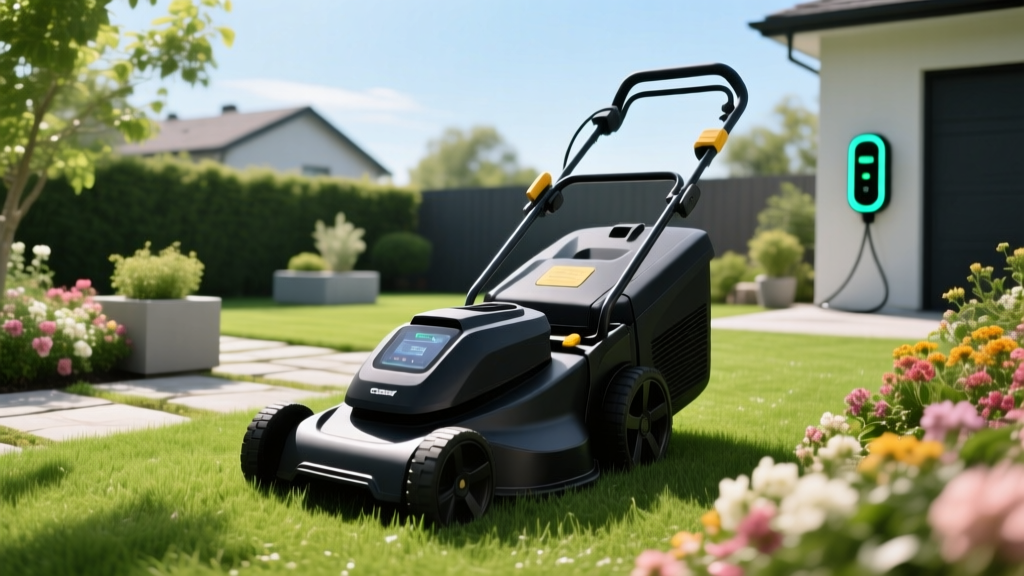
If you already own an electric vehicle, adding an electric lawn mower to your garage is a natural extension of your electrified lifestyle. Here's the practical answer: to use an electric lawn mower, charge its lithium-ion battery pack (typically 2.0–7.5 kWh for cordless models, or plug in directly for corded versions), insert the battery, adjust the cutting height between 1.5–4.0 inches, and push or self-propel across your lawn. Most battery-powered mowers deliver 45–90 minutes of runtime per charge — enough for lawns up to 1/3 acre. Unlike gas mowers, there's no pull-start, no oil changes, and no spark plugs. You simply press a button and mow.
But as someone who tracks EV batteries, charging infrastructure, and total cost of ownership daily, I know you want the real numbers — not the marketing brochure. Let's break down exactly what electric lawn mowers offer, how they compare to gas, and what EV owners specifically need to know about battery care, charging logistics, and long-term costs.
Electric Lawn Mower Basics: Battery kWh, Runtime, and Power
Electric lawn mowers come in two main categories: cordless (battery-powered) and corded (plug-in). For most homeowners in 2026, cordless models dominate the market, using lithium-ion battery packs that share platforms with other outdoor power equipment (trimmers, blowers, chainsaws).
Here's how the specs break down across common mower categories:
| Mower Type | Battery Capacity (kWh) | Voltage Platform | Runtime (min) | Lawn Size | Typical Price (MSRP) |
|---|---|---|---|---|---|
| Compact Push (14–16") | 0.072–0.144 kWh (2.0–4.0 Ah × 36V) | 36V–40V | 30–45 min | Up to 1/8 acre | $200–$350 |
| Mid-Range Self-Propelled (19–21") | 0.180–0.288 kWh (5.0–7.5 Ah × 40V) | 40V–56V | 45–70 min | Up to 1/4 acre | $350–$550 |
| Premium Self-Propelled (21") | 0.300–0.432 kWh (7.5–12.0 Ah × 56V) | 56V–80V | 60–90 min | Up to 1/3 acre | $500–$800 |
| Riding Mower (30–42") | 1.5–4.0 kWh | 48V–56V | 90–180 min | 1/2–2 acres | $2,500–$6,000 |
| Corded Push (14–18") | N/A (unlimited, 120V plug-in) | 120V AC | Unlimited | Up to 1/8 acre | $130–$250 |
Key EV-owner translation: A premium 56V mower with a 7.5 Ah battery stores roughly 0.42 kWh of energy — about the same as leaving a 100W light bulb on for 4 hours. Compare that to your EV's 60–100 kWh traction battery, and you can see why mower batteries are relatively inexpensive to replace and trivial to charge from any standard outlet.
Electric vs. Gas Lawn Mower: Cost and Performance Comparison
This is where the data gets interesting — especially if you're used to comparing EVs against internal combustion vehicles. The parallel is striking: electric mowers win on operating cost and maintenance, while gas mowers still hold an edge for large properties and commercial use.
| Factor | Electric Mower (Cordless) | Gas Mower (Push/Self-Propelled) |
|---|---|---|
| Purchase Price | $300–$600 | $250–$500 |
| Energy/Fuel Cost per Mow (1/4 acre) | $0.03–$0.06 (electricity) | $1.50–$3.00 (gasoline) |
| Annual Energy Cost (30 mows/year) | $1–$2 | $45–$90 |
| Annual Maintenance | $0 (blade sharpening only, ~$15) | $40–$80 (oil, air filter, spark plug, fuel stabilizer) |
| Battery/Engine Replacement (10-yr horizon) | $100–$200 (replacement battery pack) | $0–$300 (engine rebuild or new mower) |
| Noise Level | 65–75 dB (conversation level) | 85–95 dB (hearing protection recommended) |
| Emissions at Point of Use | Zero | CO₂, NOₓ, unburned hydrocarbons |
| Start Method | Push-button | Pull-cord (electric start on premium models) |
| Runtime/Refuel | 45–90 min per charge; 60–90 min recharge | 45–60 min per tank; 2 min refuel |
| 5-Year Total Cost of Ownership | $380–$680 | $520–$950 |
The 5-year TCO advantage for electric is roughly $150–$300, primarily from fuel savings and eliminated maintenance. This mirrors the EV-vs-gas car equation, just at a smaller dollar scale. According to the EPA, gas-powered lawn equipment accounts for roughly 5% of total U.S. air pollution — a figure that's growing as vehicle emissions drop.
Step-by-Step: How to Use an Electric Lawn Mower
Whether you're unboxing your first electric mower or transitioning from gas, the operation is straightforward. Here's the exact process:
Before You Mow
- Charge the battery fully. Most 56V/7.5 Ah packs charge from 0–100% in 60–90 minutes on the included standard charger. Fast chargers (sold separately by brands like EGO and Milwaukee) cut this to 30–45 minutes. Check the charger's wattage: a 300W charger adds roughly 0.3 kWh per hour.
- Insert the battery pack. Slide it into the mower's battery compartment until it clicks. Most mowers use a single battery; premium models accept dual batteries for extended runtime.
- Adjust cutting height. Use the single-lever height adjuster (standard on most 2026 models) to set between 1.5" and 4.0". For warm-season grasses (Bermuda, Zoysia), aim for 1.5–2.5". For cool-season grasses (fescue, Kentucky bluegrass), set to 2.5–4.0".
- Clear the lawn. Remove sticks, toys, and rocks. Electric mowers have less torque than gas models at low RPM, so thick debris can stall the blade motor.
While Mowing
- Press the safety key and start button. Most electric mowers require a safety key insertion plus a bail-bar squeeze before the blade engages — similar to an EV's brake-to-start sequence.
- Mow in overlapping rows. Overlap each pass by 2–3 inches. Electric mowers maintain consistent blade speed regardless of grass thickness, but they can bog down in very tall, wet grass.
- Monitor battery level. LED indicators (usually 4–5 bars) show remaining charge. Plan to mow the most visible areas first in case you run low.
- Use mulching mode when possible. Most electric mowers default to mulching (recirculating clippings). This works well because the consistent blade speed creates fine clippings that decompose quickly.
After Mowing
- Remove the battery if storing the mower in an unconditioned space (garage, shed). Store batteries between 50°F–80°F for maximum longevity.
- Clean the deck. Tip the mower on its side (battery removed) and scrape accumulated grass from the underside.
- Charge the battery back to ~60–80% if you won't mow again for 2+ weeks. This mirrors EV battery best practices — avoiding both 100% and 0% for long-term storage.
Battery Chemistry and Longevity: What EV Owners Already Know
Here's where your EV knowledge pays off. Most premium electric mowers in 2026 use NMC (nickel manganese cobalt) lithium-ion cells — the same chemistry found in many EV battery packs. Some budget models use LFP (lithium iron phosphate), which offers longer cycle life but lower energy density.
| Battery Chemistry | Energy Density | Cycle Life (to 80% capacity) | Common In Mowers | Expected Lifespan |
|---|---|---|---|---|
| NMC (Nickel Manganese Cobalt) | High (lighter packs) | 500–800 cycles | EGO, Ryobi, DeWalt, Milwaukee | 5–8 years (residential use) |
| LFP (Lithium Iron Phosphate) | Lower (heavier packs) | 1,500–3,000 cycles | Budget brands, some Toro models | 8–12 years (residential use) |
Real-world degradation: If you mow 30 times per year, a 500-cycle NMC battery will last roughly 16 years in pure cycle terms. But calendar aging (heat, storage at 100% SoC) typically kills mower batteries in 5–8 years — the same degradation pattern you see in EVs parked at full charge in hot climates. Replacement battery packs cost $100–$200 for 56V platforms (EGO, Ryobi) and $150–$300 for 80V platforms (Greenworks, Snapper).
For context, the IRS §30D tax credit doesn't apply to lawn equipment — but if you're buying an electric riding mower over $2,500, check your state's electrification rebate programs. Some states include off-road electric equipment in their clean-air incentive programs.
Charging Logistics: Where and How to Charge Your Mower
This is where EV owners have a built-in advantage. You already understand charging levels, electrical capacity, and the importance of dedicated circuits.
Charging Speeds and Costs
| Charging Method | Power (W) | Time to Full (7.5 Ah / 56V) | Cost per Charge (at $0.16/kWh) |
|---|---|---|---|
| Standard Charger (included) | 150–200W | 90–120 min | $0.05–$0.07 |
| Fast Charger (optional) | 300–500W | 30–60 min | $0.05–$0.07 |
| EV Solar / Home Battery | Varies | Varies | $0.00–$0.02 |
Electrical requirements: All mower chargers plug into a standard 120V/15A household outlet. A 200W charger draws roughly 1.7 amps — well within any circuit's capacity, even if your EV Level 2 charger is already pulling 32–48 amps on a dedicated 240V circuit. No panel upgrade needed, no electrician required.
EV-owner tip: If you have a home solar array or a home battery system (like a Tesla Powerwall or Enphase IQ), charging your mower battery during peak solar production hours means essentially free mowing. A 7.5 Ah/56V pack stores just 0.42 kWh — a fraction of what a single solar panel produces in an hour.
Common Misconceptions: Facts vs. Fiction
| Myth | Fact |
|---|---|
| "Electric mowers can't handle thick or tall grass." | Modern 56V–80V brushless motors deliver 1.5–2.0 HP equivalent — comparable to a 140cc–160cc gas engine. They handle normal residential lawns easily. Only extremely overgrown, wet grass consistently causes bogging. |
| "Batteries die after 2 years and cost a fortune to replace." | Quality NMC packs from EGO, Ryobi, or DeWalt carry 3–5 year warranties and last 5–8 years in real-world use. Replacement costs $100–$200 — less than 5 years of gas and oil for a gas mower. |
| "You need a huge battery for a big yard." | A 7.5 Ah/56V battery handles up to 1/3 acre on a single charge. For larger lawns, buy a second battery and swap mid-mow — total swap time is about 10 seconds. |
| "Electric mowers are slower than gas." | Blade speed is comparable (2,800–3,200 RPM). Self-propelled electric mowers walk at 2.5–3.5 mph — identical to gas. The only time difference is that you don't lose 5 minutes to pull-starting and warm-up. |
| "You can't mow in damp conditions." | Modern electric mowers are rated for outdoor use and handle morning dew fine. However, avoid mowing in heavy rain — the same advice applies to gas mowers, and wet grass clumps regardless of power source. |
Decision Framework: Which Electric Mower Should You Buy?
Choose Based on Your Lawn and Lifestyle
Choose a compact push mower (14–16", 36V–40V, $200–$350) if:
- Your lawn is under 1/8 acre (roughly 5,500 sq ft)
- The terrain is flat with minimal obstacles
- You want the lightest possible option (under 35 lbs without battery)
Choose a mid-range self-propelled mower (19–21", 40V–56V, $350–$550) if:
- Your lawn is 1/8 to 1/4 acre (5,500–11,000 sq ft)
- You have slopes or uneven terrain
- You want the best balance of runtime and price
Choose a premium self-propelled mower (21", 56V–80V, $500–$800) if:
- Your lawn is 1/4 to 1/3 acre (11,000–14,500 sq ft)
- You already own tools on the same battery platform (EGO 56V, Milwaukee M18, DeWalt 20V/60V)
- You want maximum torque for thick Southern grasses
Choose an electric riding mower (42", 48V–56V, $2,500–$6,000) if:
- Your lawn exceeds 1/2 acre
- You currently spend $50+/year on gas for a gas rider
- You want zero emissions and near-silent operation (65 dB vs. 90+ dB for gas riders)
Stick with gas (for now) if:
- Your lawn exceeds 2 acres and you need continuous runtime without battery swaps
- You mow commercially and can't afford mid-job charging downtime
- You live in an area with no access to reliable electricity at your mowing site
Ownership Tips: Maximizing Your Electric Mower's Lifespan
As an EV owner, you already practice many of these habits with your car's battery. Apply the same principles here:
- Avoid storing batteries at 100% SoC. Charge to 80% for storage longer than a week. This alone can add 2–3 years to an NMC pack's life.
- Don't let batteries freeze. Bring them indoors if temperatures drop below 32°F. Charging a frozen lithium-ion battery causes permanent cell damage — the same rule that applies to your EV.
- Sharpen the blade annually. A dull blade forces the motor to work harder, drawing more current and generating more heat in the battery. A $15 annual blade sharpening (or a $30 replacement blade) pays for itself in extended battery life.
- Buy into a battery ecosystem. Platforms like EGO 56V, Ryobi 40V, Milwaukee M18, and DeWalt 20V/60V let you use the same battery across dozens of tools. This means your $150 spare mower battery also powers your string trimmer, leaf blower, and hedge trimmer.
- Register your battery for warranty. Most brands offer 3–5 year battery warranties, but only if you register within 30–90 days of purchase. This is analogous to registering your EV battery for the 8-year/100,000-mile federal warranty mandate.
Frequently Asked Questions
Can I charge my electric mower battery using my EV's home charging setup?
Not directly — your EV uses a Level 2 (240V) charger with a J1772 or NACS connector, while mower chargers plug into standard 120V outlets. However, they can share the same electrical panel without issue. A mower charger draws under 2 amps at 120V, so it won't conflict with your EV's 32–48 amp Level 2 circuit.
How long do electric mower batteries last before needing replacement?
Expect 5–8 years for NMC packs and 8–12 years for LFP packs under normal residential use (25–35 mows per year). The battery won't suddenly die — it will gradually lose capacity, similar to EV battery degradation. At 80% of original capacity (the same threshold used in EV battery warranties), you'll notice reduced runtime but the mower will still function.
Are electric mowers powerful enough for St. Augustine or Bermuda grass?
Yes, on a 56V or higher platform. Thick, dense Southern grasses demand more torque, and modern brushless motors on 56V–80V mowers deliver 1.5–2.0 HP equivalent. Set the cutting height to 3.0–4.0 inches for St. Augustine, mow when dry, and avoid cutting more than 1/3 of the blade height at once. For very thick zoysia, consider a dual-battery model.
What's the real cost per mow compared to gas?
At the national average electricity rate of $0.16/kWh (per EIA data), charging a 0.42 kWh mower battery costs roughly $0.07. A gas mower burns about 0.5 gallons per hour of mowing, costing $1.75–$2.00 at current gas prices. Over a 30-mow season, that's $2 for electric vs. $55–$60 for gas — a savings of roughly $55 per year.
Should I buy a corded or cordless electric mower?
Corded mowers ($130–$250) offer unlimited runtime and zero battery degradation concerns, but you're tethered to a 100-foot extension cord. For lawns under 1/8 acre with an accessible outdoor outlet, corded is the most cost-effective option. For anything larger, or if your yard has trees and obstacles that make cord management frustrating, cordless is worth the premium. Most EV owners prefer cordless — you've already experienced the freedom of untethered operation with your car.
Do electric mowers qualify for any tax credits or rebates?
The federal IRS §30D clean vehicle credit does not cover lawn equipment. However, some state and local air quality districts offer rebates for replacing gas lawn equipment with electric — particularly in California (CARB programs), Texas (TERP), and Colorado. Check your local air quality management district or state energy office. Some utility companies also offer $25–$100 rebates for electric outdoor equipment as part of demand-response programs.