What Are Electric Last Mile Solutions?
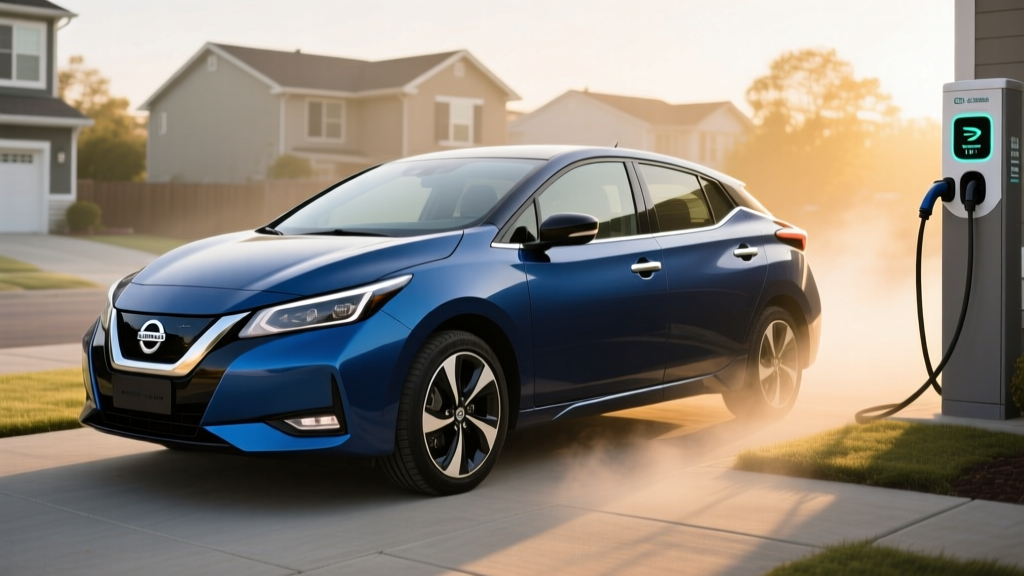
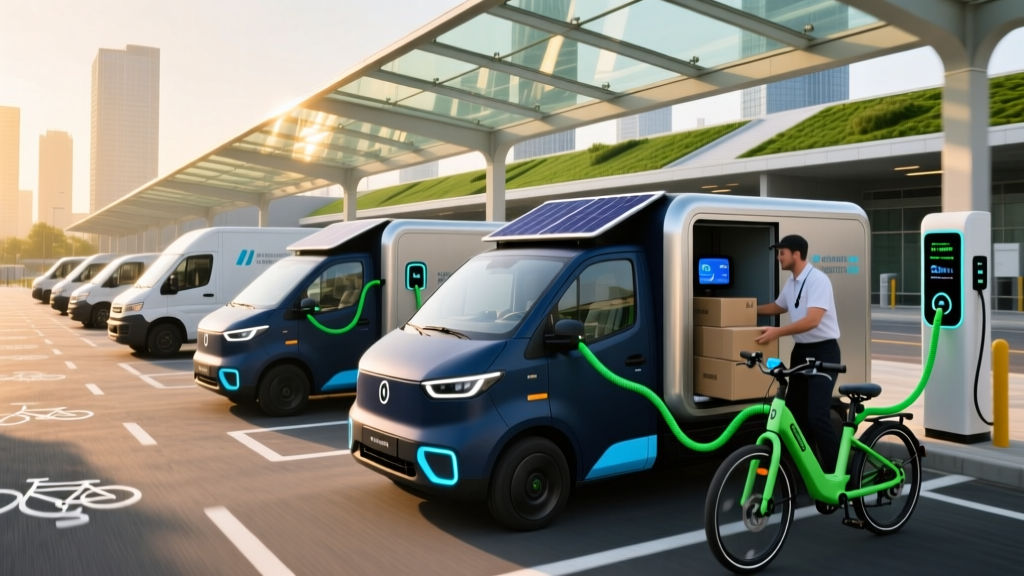
Electric last mile solutions are battery-electric vehicles optimized for the final leg of package, food, or goods delivery — typically routes under 100 miles per day with frequent stops. In 2026, the most practical options range from compact EVs like the Chevrolet Bolt EV (~$26,500 MSRP, EPA 259 mi range) to dedicated commercial platforms like the Ford E-Transit (EPA 126 mi, ~$45,000 base) and the BrightDrop Zevo 400 (~$50,000 estimated). For most small-fleet and owner-operator routes, a compact or midsize electric crossover delivers the lowest cost per mile, with electricity running roughly $0.12–$0.15 per mile versus $0.18–$0.24 per mile for a comparable gas vehicle at current fuel prices.
Why Last Mile Delivery Is the Ideal EV Use Case
Last mile routes align almost perfectly with what electric vehicles do best: short, predictable daily distances with overnight charging windows and heavy stop-and-go driving where regenerative braking recovers energy. The average last mile delivery route covers 40–80 miles per day, well within the real-world range of nearly every modern EV. Frequent stops — often 80 to 150 per shift for courier services — mean the vehicle spends minimal time at highway speeds where EVs are least efficient.
Regenerative braking in EVs converts deceleration energy back into the battery, a massive advantage over gas vehicles that waste that energy as heat in the brake pads. Over a 150-stop route, a well-driven EV can recover 15–25% of its energy through regen alone. This is why EPA city MPGe ratings for EVs often exceed their highway ratings — the exact opposite of gas vehicles.
Top Electric Last Mile Solutions Compared
The right vehicle depends on whether you're an independent courier, a small fleet operator, or managing high-volume commercial delivery. Here's a data-driven breakdown of the leading platforms available in 2026.
| Spec | Chevrolet Bolt EV | Ford E-Transit (Low Roof) | BrightDrop Zevo 400 | Rivian EDV (Amazon Van) |
|---|---|---|---|---|
| EPA Range | 259 mi | 126 mi | ~160 mi (estimated) | ~150 mi (estimated) |
| Battery (usable kWh) | 65 kWh (NMC) | 68 kWh (NMC) | ~85 kWh (NMC) | ~105 kWh (NMC) |
| Peak DC Fast Charge | 115 kW | 115 kW | ~150 kW | ~150 kW |
| 10–80% DC Charge | ~35 min | ~45 min | ~35 min | ~40 min |
| Level 2 Charge Rate | 11.5 kW | 10.5 kW | 11.5 kW | 11.5 kW |
| Cargo Volume | 57.7 cu ft | 246.7 cu ft | ~412 cu ft | ~660 cu ft |
| Payload Capacity | ~900 lbs | ~3,800 lbs | ~2,500 lbs | ~2,500 lbs |
| Base MSRP | $26,500 | $45,000 | ~$50,000 (fleet) | Fleet only (Amazon) |
| Battery Warranty | 8 yr / 100,000 mi | 8 yr / 100,000 mi | 8 yr / 100,000 mi | 8 yr / 175,000 mi |
Real-world range caveat: EPA range assumes mixed driving at moderate temperatures. In last mile delivery use — heavy stop-and-go, frequent door openings, climate running — expect to achieve roughly 85–95% of EPA range in mild weather and 65–75% in sub-freezing conditions. A Bolt EV rated at 259 miles EPA will realistically deliver 220–240 miles in summer delivery use and 170–195 miles in cold winter routes. The E-Transit's 126-mile EPA rating means approximately 105–115 real-world miles in temperate conditions, which still covers most urban delivery shifts.
Cost Breakdown: Electric vs Gas Last Mile Delivery
The economic case for electric last mile solutions hinges on operating cost savings that compound daily. Here's how a typical 60-mile-per-day courier route compares between a Chevrolet Bolt EV and a gas-powered compact SUV like the Toyota RAV4 (27 MPG combined, per fueleconomy.gov).
| Cost Category | Chevrolet Bolt EV | Toyota RAV4 (Gas) |
|---|---|---|
| Energy/Fuel | $2,340 (30 kWh/100mi × $0.13/kWh) | $3,733 (27 MPG × $5.60/gal) |
| Oil Changes | $0 | $240 (3×/yr) |
| Brake Pads | $0–$100 (regen extends life 3–5×) | $350 (1 replacement/yr in stop-and-go) |
| Tires (rotations + replacement) | $600 (heavier EV wear) | $450 |
| Annual Maintenance Total | ~$700 | ~$1,040 |
| Insurance (avg) | $2,100 | $1,650 |
| Total Annual Operating | ~$5,140 | ~$6,423 |
Annual savings of roughly $1,283 with the EV, even factoring in higher insurance premiums (a real and often overlooked cost). Over a 5-year ownership cycle, that's approximately $6,400 in operational savings — enough to offset a meaningful portion of the purchase price. For fleet operators running 10+ vehicles, these savings multiply quickly.
Electricity cost note: The $0.13/kWh figure reflects a national blended residential rate in 2026. Commercial charging rates vary widely — depot-level Level 2 charging typically runs $0.08–$0.14/kWh, while public DC fast charging can cost $0.30–$0.48/kWh. Last mile operations should prioritize overnight Level 2 depot or home charging to capture the lowest rates. According to the IRS, commercial EVs may also qualify for the §45W Commercial Clean Vehicle Credit (up to $7,500 for vehicles under 14,000 lbs GVWR), which has different eligibility rules than the consumer §30D credit.
Real-World Ownership Considerations
Numbers on a spec sheet don't tell the whole story. Here's what actually matters when you put an electric last mile vehicle into daily service.
Home and Depot Charging Access
This is the single most critical factor. If you can install a Level 2 (240V) charger at your home or depot, an EV for last mile delivery works seamlessly. A 40-amp Level 2 circuit delivers roughly 25–30 miles of range per hour of charging, meaning an overnight 8-hour session replenishes 200+ miles — far more than any last mile route requires.
Level 2 installation costs vary significantly:
- Equipment: $350–$750 for a quality 40-amp unit (ChargePoint Home Flex, Emporia Vue, or Wallbox Pulsar Plus)
- Electrician labor: $600–$2,500 depending on panel proximity and wiring distance
- Panel upgrade (if needed): $1,500–$3,500 for a 200-amp service upgrade
- Permits: $50–$200 depending on jurisdiction
If you lack home charging and must rely on public infrastructure, the economics and convenience equation worsens considerably. Public DC fast charging at $0.35+/kWh erases most fuel-cost savings, and the 35–45 minute charging sessions eat into delivery time. Electric last mile solutions only make financial sense with reliable overnight Level 2 access.
Climate and Cold-Weather Range Loss
Lithium-ion batteries lose efficiency in cold temperatures. At 20°F, expect 25–35% range reduction compared to the EPA sticker. A vehicle rated at 259 miles might deliver only 170–195 miles in freezing conditions. For last mile routes under 80 miles, this still provides adequate buffer, but operators in northern climates should spec vehicles with at least 40% more range than their longest daily route requires.
Heat pumps, now standard on many 2026 EVs, mitigate cabin-heating energy draw by 30–50% compared to resistive heaters. If you operate in cold climates, prioritize models with heat pump systems.
Driving Patterns and Payload
Last mile delivery is uniquely EV-friendly because:
- Low average speeds (20–35 mph urban) maximize EV efficiency
- Frequent stops activate regenerative braking, recovering energy
- Predictable routes eliminate range uncertainty
- Overnight downtime aligns with off-peak charging rates
However, payload weight matters. Every additional 500 lbs of cargo reduces range by approximately 5–8%. If your routes regularly involve heavy loads, factor this into your range calculations.
Tax Credits and Incentives for Commercial and Personal EVs
Federal incentives can substantially reduce the effective purchase price, but eligibility rules are specific and change periodically. Here's the current landscape:
| Myth | Fact |
|---|---|
| "Every EV gets $7,500" | Consumer §30D credit ranges from $3,750–$7,500 depending on battery sourcing and critical mineral requirements. Many vehicles qualify for only $3,750 or nothing. |
| "I can buy any EV and get the credit" | MSRP caps apply: $55,000 for sedans, $80,000 for SUVs/vans. Buyer income caps: $150K single / $300K joint. Vehicle must meet North American assembly requirements. |
| "Commercial vehicles don't qualify" | The §45W Commercial Clean Vehicle Credit provides up to $7,500 (under 14,000 lbs GVWR) or $40,000 (over 14,000 lbs) for business-purchased EVs, with different sourcing rules. |
| "The credit is only at tax time" | Since 2024, buyers can transfer the §30D credit to the dealer at point of sale for an immediate price reduction. §45W remains a business tax credit. |
For independent couriers purchasing personally, the §30D credit may apply if you meet income, MSRP, and sourcing requirements — verify current rules on IRS.gov before purchasing. For fleet operators buying through a business entity, the §45W commercial credit often provides a cleaner path to incentives without the consumer income caps. Consult a tax professional to determine which credit structure applies to your situation.
Common Misconceptions About Electric Last Mile Vehicles
"EVs Can't Handle a Full Day of Deliveries"
A 2026 Bolt EV's real-world delivery range of 220+ miles covers virtually any single-shift last mile route. Even the E-Transit's ~110 real-world miles handles most urban courier shifts. If your route exceeds 150 miles daily, you're likely beyond "last mile" territory and should evaluate mid-mile logistics solutions instead.
"Battery Replacement Will Cost More Than the Vehicle"
Current lithium-ion battery replacement costs range from $5,000–$15,000 depending on the vehicle, but modern EV batteries are engineered for 200,000+ mile lifespans with less than 10–15% degradation. The federally mandated minimum battery warranty is 8 years/100,000 miles, and most manufacturers guarantee 70% capacity retention over that period. Data from long-term fleet deployments shows most batteries retain 85–90% capacity at 100,000 miles under normal use.
"Charging Takes Too Long for Delivery Work"
Last mile vehicles charge overnight while not in use — exactly like a phone. A Level 2 charger replenishes a full day's route in 2–4 hours. Mid-day DC fast charging, if needed, adds 80+ miles of range in 20–30 minutes. The charging "problem" only exists for operators without depot or home charging access.
Decision Framework: Which Electric Last Mile Solution Is Right for You?
Choose Based on Your Route Profile
Choose a compact EV (Chevrolet Bolt EV, Hyundai Kona Electric) if:
- Your daily route is under 120 miles
- You deliver small parcels, food, or documents
- Payload is typically under 500 lbs
- You want the lowest purchase price and maximum range flexibility
- You have Level 2 home or depot charging
Choose a commercial EV van (Ford E-Transit, BrightDrop Zevo 400) if:
- Your daily route is under 90 miles
- You need 200+ cubic feet of cargo space
- Payload regularly exceeds 1,000 lbs
- You operate a fleet and qualify for §45W commercial credits
- You have depot-level charging infrastructure
Stick with a gas or hybrid vehicle if:
- Your daily route exceeds 200 miles with no mid-day charging option
- You lack any access to Level 2 charging (home, depot, or reliable public)
- You operate in extreme cold (below 0°F regularly) with routes near the vehicle's range limit
- Your routes are predominantly highway-speed (55+ mph) where EV efficiency drops
Frequently Asked Questions
How long does a Level 2 home charger installation take?
Most Level 2 installations take 4–8 hours for a licensed electrician to complete, assuming your electrical panel has adequate capacity and is reasonably close to the parking location. If a panel upgrade to 200-amp service is required, plan for 1–2 days total including permit inspection. Total installed cost typically ranges from $1,000–$3,000 without a panel upgrade and $2,500–$6,000 with one.
Can I use a regular 120V outlet for last mile EV charging?
Level 1 (120V) charging adds roughly 3–5 miles of range per hour. For a 60-mile daily route, you'd need 12–20 hours of charging — barely enough on an overnight cycle. Level 1 works as a backup but is not practical as the primary charging method for daily delivery use. Level 2 (240V) is strongly recommended.
What happens if I run out of charge on a delivery route?
The same thing that happens with an empty gas tank: you stop. However, unlike gas stations, DC fast chargers can add 80+ miles in 20–30 minutes. Modern EV route-planning software (built into most vehicle navigation systems) will alert you well in advance and route you through chargers. With proper overnight charging and routes under 80% of your real-world range, running out of charge on a delivery route is virtually preventable.
Do electric delivery vehicles qualify for the $7,500 federal tax credit?
It depends on how you purchase. Consumer purchases (§30D) require the vehicle to meet MSRP caps, buyer income limits, and North American battery/mineral sourcing rules — and not all EVs qualify for the full $7,500. Commercial purchases through a business (§45W) have different eligibility criteria and can provide up to $7,500 for vehicles under 14,000 lbs GVWR. Always verify current eligibility on fueleconomy.gov and consult a tax professional before relying on credit amounts in your purchase decision.
How does EV maintenance compare to gas vehicles in delivery use?
EVs eliminate oil changes, spark plugs, timing belts, exhaust system repairs, and transmission fluid changes. Regenerative braking extends brake pad life by 3–5× compared to gas vehicles in stop-and-go delivery use. The main maintenance items are tire rotations (EVs are heavier and may wear tires faster), cabin air filter replacement, and coolant system checks. Annual maintenance costs for a delivery EV typically run 40–60% lower than a comparable gas vehicle.