Quick Answer: Are There Electric Land Rovers You Can Buy?
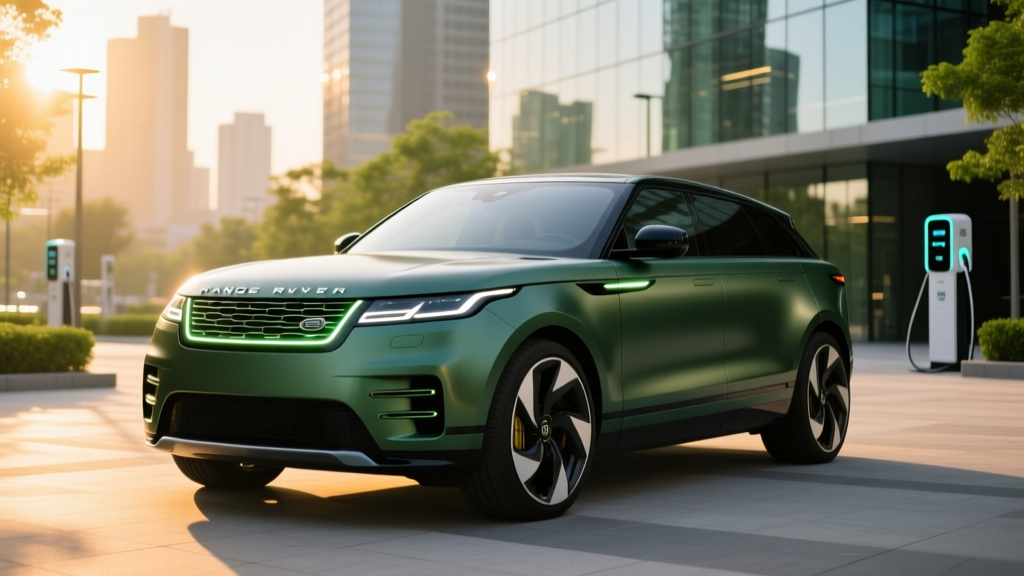
As of early 2026, the Range Rover Electric (sometimes called the Range Rover EV) is Land Rover's first fully electric vehicle, built on the brand's MLA-Flex architecture. It is currently in the reservation and early-delivery phase with an expected starting MSRP around $120,000–$130,000. Land Rover has targeted an EPA-estimated range of roughly 300+ miles, DC fast charging at up to ~200+ kW, and a 0–60 mph time near 5.0 seconds. No other all-electric Land Rover model (Defender EV, Discovery EV) has been confirmed for sale yet. Buyers should also know that the federal §30D tax credit is unlikely to apply due to the vehicle's MSRP exceeding the $80,000 SUV cap and battery-sourcing requirements.
What Electric Land Rovers Exist (or Are Coming)?
Land Rover's electrification strategy has moved slower than some European rivals, but the Range Rover Electric marks the brand's first all-electric production vehicle. Here is where the lineup stands:
| Model | Powertrain | Status (2026) | Est. Starting MSRP |
|---|---|---|---|
| Range Rover Electric | BEV (all-electric) | Reservations / early deliveries | ~$120,000–$130,000 |
| Range Rover PHEV (P460e/P550e) | Plug-in hybrid | On sale | ~$108,000 |
| Range Rover Sport PHEV | Plug-in hybrid | On sale | ~$85,000 |
| Defender Electric | BEV (announced) | Expected late 2026/2027 | TBD |
| Discovery Electric | BEV (rumored) | Not confirmed | TBD |
Jaguar Land Rover (JLR) has committed to launching six all-electric models by 2026 under its "Reimagine" strategy, with Land Rover receiving its first BEV in the form of the Range Rover Electric. The Defender and Discovery are expected to follow, but confirmed specs and timelines remain preliminary.
Range Rover Electric: Projected Specs and Real-World Expectations
Because the Range Rover Electric is still in the early-delivery and reservation stage for the U.S. market, the figures below reflect JLR's announced targets and European testing data. Final EPA-certified numbers may differ.
| Specification | Value |
|---|---|
| Battery capacity (usable) | ~100–110 kWh (estimated, NMC chemistry) |
| WLTP range (Europe) | Up to ~320 miles (510 km) |
| EPA range (projected) | ~280–310 miles |
| Peak DC fast charge rate | ~200–220 kW |
| 10–80% DC charge time (est.) | ~25–30 minutes |
| Level 2 AC charging | ~11–22 kW (onboard charger dependent) |
| Horsepower | ~540 hp (estimated dual-motor AWD) |
| 0–60 mph | ~5.0 seconds (projected) |
| Towing capacity | ~5,500–6,600 lbs (estimated) |
| Drivetrain | Dual-motor all-wheel drive |
| Platform | MLA-Flex (modular longitudinal architecture) |
Real-World Range Reality Check
Projected EPA: ~280–310 miles | Expect in practice: Highway driving at 75+ mph will likely yield 240–270 miles. In cold weather (below 30°F), expect a 15–25% reduction, putting real range closer to 210–260 miles depending on conditions. The Range Rover's large frontal area and boxy SUV shape create more aerodynamic drag than sleeker EVs, which disproportionately hurts highway efficiency. Towing will cut range further — plan for 150–180 miles when pulling a loaded trailer.
On charging: the ~200–220 kW peak DC rate is competitive but not class-leading. The Porsche Macan Electric and Hyundai Ioniq 5 can peak above 270–350 kW on 800V architectures. Expect the Range Rover Electric's charge curve to taper significantly above 80% state of charge, meaning that last 20% could take as long as the first 80%. For road trips, plan stops around the 10–80% window for optimal charging speed.
Electric vs. Gas vs. PHEV: How Do Land Rover Options Compare?
Most Land Rover shoppers cross-shop between the Range Rover Electric, the Range Rover PHEV, and the conventional mild-hybrid (MHEV) Range Rover. Here's a data-driven comparison:
| Metric | Range Rover Electric | Range Rover PHEV (P550e) | Range Rover MHEV (P400) |
|---|---|---|---|
| Starting MSRP | ~$120,000–$130,000 | ~$108,000 | ~$107,000 |
| EPA range / fuel economy | ~280–310 mi (est.) | ~50 mi electric + 20 MPG gas | ~21 MPG combined |
| Annual fuel/energy cost (12k mi) | ~$600–$900 (home charging) | ~$1,200–$1,800 | ~$2,400–$3,000 |
| Maintenance (annual est.) | ~$300–$500 | ~$800–$1,200 | ~$1,000–$1,500 |
| 0–60 mph | ~5.0 sec | ~5.4 sec | ~5.8 sec |
| Federal tax credit (§30D) | Unlikely (MSRP cap) | Unlikely (MSRP cap) | N/A |
| Home charging needed? | Strongly recommended | Recommended for EV mode | No |
The PHEV offers a pragmatic middle ground: ~50 miles of electric-only driving covers most daily commutes, and the gas engine eliminates range anxiety for road trips. However, PHEV owners who don't plug in regularly end up hauling a heavy battery with worse fuel economy than the MHEV. If you have reliable home charging and mostly drive under 50 miles daily, the PHEV can be extremely efficient. If you want full electrification and can absorb the premium, the Range Rover Electric eliminates oil changes, transmission fluid, and spark plugs entirely.
Real Ownership Costs: What Will Electric Land Rovers Actually Cost You?
Buying a luxury EV involves more than the sticker price. Here's a five-year ownership projection for the Range Rover Electric versus its gas counterpart:
| Cost Category | Range Rover Electric | Range Rover MHEV (P400) |
|---|---|---|
| Purchase price (base MSRP) | $125,000 | $107,000 |
| Federal tax credit | $0 (exceeds MSRP cap) | $0 |
| Fuel / energy | $3,750 (home + public mix) | $13,500 ($3.75/gal avg, 21 MPG) |
| Maintenance | $2,000 | $6,000 |
| Insurance (avg) | $18,000 ($3,600/yr) | $15,000 ($3,000/yr) |
| Estimated depreciation | $50,000–$55,000 | $45,000–$50,000 |
| 5-year total (approx.) | $98,750–$103,750 | $86,500–$91,500 |
Key takeaways:
- Energy savings are real: Charging at home (at ~$0.13/kWh national average) saves roughly $9,750 over five years compared to premium gasoline.
- Maintenance savings add up: No oil changes, no transmission service, fewer brake replacements (regen braking reduces pad wear). Estimated savings: ~$4,000 over five years.
- Insurance costs more: Luxury EVs typically carry 15–25% higher insurance premiums due to repair costs, specialized parts, and higher vehicle values.
- Depreciation is the wildcard: Luxury EVs have historically depreciated steeply. The Range Rover brand holds value reasonably well, but early-adopter EV models can suffer outsized depreciation as battery tech advances. Plan conservatively.
- Net result: The Range Rover Electric will likely cost $10,000–$15,000 more to own over five years than the gas model, primarily due to the higher purchase price and depreciation. The fuel and maintenance savings partially offset but don't fully close the gap at this price tier.
Home Charging, Public Charging, and What First-Time EV Buyers Must Know
If you're considering an electric Land Rover, charging logistics will define your ownership experience more than any other factor.
Home Charging (Where 80%+ of Charging Happens)
The Range Rover Electric's large ~100+ kWh battery means Level 1 charging (120V, ~1.4 kW) is impractical — it would take 70+ hours for a full charge. A Level 2 home charger (240V) is effectively mandatory:
| Level | Power (kW) | Miles Added per Hour | Full Charge Time |
|---|---|---|---|
| Level 1 (120V outlet) | ~1.4 kW | ~3–4 mi/hr | ~70+ hours |
| Level 2 (240V, 48A) | ~11.5 kW | ~28–33 mi/hr | ~9–10 hours |
| Level 2 (240V, 80A) | ~19.2 kW | ~45–55 mi/hr | ~5.5–6 hours |
| DC Fast Charge | ~200+ kW | N/A (session-based) | 10–80% in ~25–30 min |
Level 2 installation costs typically run $1,200–$3,500 (charger unit + electrician + permit), but can exceed $5,000+ if your electrical panel needs an upgrade to 200A service. Always get a licensed electrician's assessment before purchasing. For a vehicle in this price class, budget $2,000–$2,500 for a quality Level 2 setup (e.g., ChargePoint Home Flex, Tesla Wall Connector, or Emporia Vue with a J1772/NACS adapter).
Public DC Fast Charging
For road trips, the Range Rover Electric will rely on public DC fast-charging networks. JLR has indicated compatibility with the CCS1 connector (standard for most non-Tesla EVs), with potential future NACS support. Expect to use networks like:
- Electrify America — largest U.S. CCS network, 150–350 kW stations
- EVgo — growing network with 100–350 kW chargers
- ChargePoint — mixed network, useful for Level 2 destination charging
Public DC fast charging costs $0.30–$0.50/kWh depending on the network and location, making it significantly more expensive than home charging. A 10–80% session on the road might cost $25–$40.
First-Time EV Buyer Checklist
- Confirm home charging feasibility before ordering. Can you install a 240V outlet or hardwired charger in your garage or driveway?
- Understand kW vs. kWh: kWh is your battery's energy capacity (like gallons in a tank). kW is charging power (like the flow rate of a gas pump). A 100 kWh battery charged at 11.5 kW takes ~8.7 hours.
- Precondition the battery before DC fast charging. The Range Rover Electric's navigation system should route through a charger to warm the battery, enabling faster charge speeds — especially critical in cold weather.
- Plan for cold-weather range loss. If your commute is 200 miles round-trip and you live in a cold climate, the effective winter range of ~210–260 miles leaves a thin margin. A heat pump (expected on the Range Rover Electric) helps but doesn't eliminate the physics.
- Research your local utility's EV rate plan. Time-of-use (TOU) rates can cut charging costs to $0.06–$0.08/kWh overnight — a massive savings versus peak rates.
Federal Tax Credits and Incentives: What Applies to Electric Land Rovers?
The IRS §30D Clean Vehicle Credit offers up to $7,500 for qualifying new EVs — but the Range Rover Electric faces several eligibility barriers:
§30D Credit Requirements vs. Range Rover Electric
- MSRP cap for SUVs: $80,000 maximum — the Range Rover Electric at ~$120,000+ exceeds this cap.
- Buyer income cap: AGI ≤ $300,000 (joint) / $150,000 (single) — many buyers in this price range may exceed these limits.
- Battery sourcing requirements: Critical minerals and battery components must meet escalating North American sourcing percentages. JLR's supply chain compliance is not yet confirmed for U.S. credit eligibility.
- Final assembly: Must occur in North America. The Range Rover Electric is assembled in Solihull, UK — likely disqualifying.
Bottom line: Do not plan your purchase around the federal tax credit. The Range Rover Electric almost certainly will not qualify for the §30D credit due to MSRP, assembly location, and potentially battery-sourcing requirements. Some states (California, Colorado, New York, etc.) offer additional rebates that may apply — check your state's energy office or the DOE's alternative fuels incentive database for current local programs.
Common Misconceptions About Electric Land Rovers
| Myth | Fact |
|---|---|
| "Electric Land Rovers can't go off-road." | Electric motors deliver instant torque at zero RPM, which is actually advantageous for rock crawling. The Range Rover Electric is expected to retain the brand's Terrain Response system, wading capability, and air suspension. However, underbody battery protection and reduced range on technical terrain are legitimate considerations. |
| "The battery will need replacement in 5 years." | Modern NMC batteries are designed for 200,000+ miles with 70–80% capacity retention at 100,000–150,000 miles. JLR is expected to offer an 8-year/100,000-mile battery warranty (standard for the industry). Full replacement, if ever needed, would likely cost $15,000–$25,000+, but most owners will never need one. |
| "You'll save a fortune vs. gas." | You will save on fuel and maintenance — roughly $1,500–$2,500/year — but at a $120,000+ purchase price with no federal tax credit and higher insurance, total ownership costs remain higher than the gas Range Rover. The savings are real but don't offset the premium. |
| "It charges as fast as a Tesla." | At ~200–220 kW peak on a 400V architecture, the Range Rover Electric charges slower than Tesla's 250 kW V3 Superchargers and significantly slower than 800V vehicles like the Hyundai Ioniq 5 (350 kW capable). Plan longer stops on road trips. |
| "All Land Rovers are electric now." | Only the Range Rover Electric is a BEV. Most of the lineup remains MHEV or PHEV. The Defender Electric is not yet available, and the Discovery has no confirmed electric variant. |
Decision Framework: Should You Buy an Electric Land Rover?
Choose the Range Rover Electric If:
- You have reliable Level 2 home charging (garage or driveway with 240V access).
- Your daily driving is under 200 miles and you take road trips only a few times per year.
- You want the quietest, smoothest Range Rover experience with instant torque and zero tailpipe emissions.
- You can absorb the $15,000–$20,000 price premium over the gas Range Rover without financial strain.
- You value lower routine maintenance and are comfortable with a first-generation EV from the brand.
Choose the Range Rover PHEV Instead If:
- You want electric commuting (~50 miles EV range) but need gas flexibility for frequent long trips or towing.
- You lack reliable home charging or live in an apartment without EV infrastructure.
- You want to spend $15,000–$20,000 less upfront and aren't ready to go fully electric.
- You live in a very cold climate where EV range loss would leave you uncomfortable on longer drives.
Choose the Gas Range Rover (MHEV) If:
- You drive in remote areas with limited charging infrastructure.
- You tow frequently and need maximum range without planning charge stops.
- You want the lowest purchase price and proven long-term reliability data.
Frequently Asked Questions
When can I actually buy an electric Land Rover in the U.S.?
The Range Rover Electric is in the reservation and early-delivery phase for the U.S. market as of 2026. Exact delivery timelines vary by dealer allocation. The Defender Electric is expected to follow, potentially in late 2026 or 2027, but is not yet available for order.
Will the Range Rover Electric qualify for the $7,500 federal tax credit?
Almost certainly not. The §30D credit has an $80,000 MSRP cap for SUVs, and the Range Rover Electric starts around $120,000. Additionally, its UK assembly location likely fails the North American final-assembly requirement. Always verify current rules on IRS.gov before relying on any credit.
How much does it cost to charge the Range Rover Electric at home?
With a ~100 kWh battery and the national average electricity rate of ~$0.16/kWh, a full charge costs roughly $16. With a time-of-use plan and overnight charging at $0.08/kWh, that drops to about $8. For context, filling the gas Range Rover's 23.8-gallon tank at $3.75/gallon costs roughly $89.
Can the Range Rover Electric tow a boat or trailer?
JLR has targeted a towing capacity in the range of 5,500–6,600 lbs, which is competitive with the gas Range Rover. However, towing significantly reduces range — expect a 40–50% reduction, meaning roughly 140–180 miles of effective range when towing near max capacity. This is a key limitation versus the gas model for frequent towers.
What is the battery warranty on the Range Rover Electric?
JLR is expected to offer an 8-year/100,000-mile high-voltage battery warranty, consistent with industry standards and federal requirements. This typically covers capacity loss below 70% of original capacity. Final U.S. warranty terms should be confirmed at purchase.
Is the Range Rover Electric good for off-roading?
Electric powertrains offer advantages off-road: instant torque at zero RPM, precise individual wheel torque vectoring, and a low center of gravity from the underfloor battery pack. The Range Rover Electric is expected to retain the brand's signature air suspension, Terrain Response 2 system, and wading depth capability. However, rocks and obstacles pose a risk to the underbody battery — skid plate protection is critical. Range depletion on low-speed technical terrain is also higher than on-road driving.