Quick Answer: Is the Electric Land Rover Range Rover Worth It?
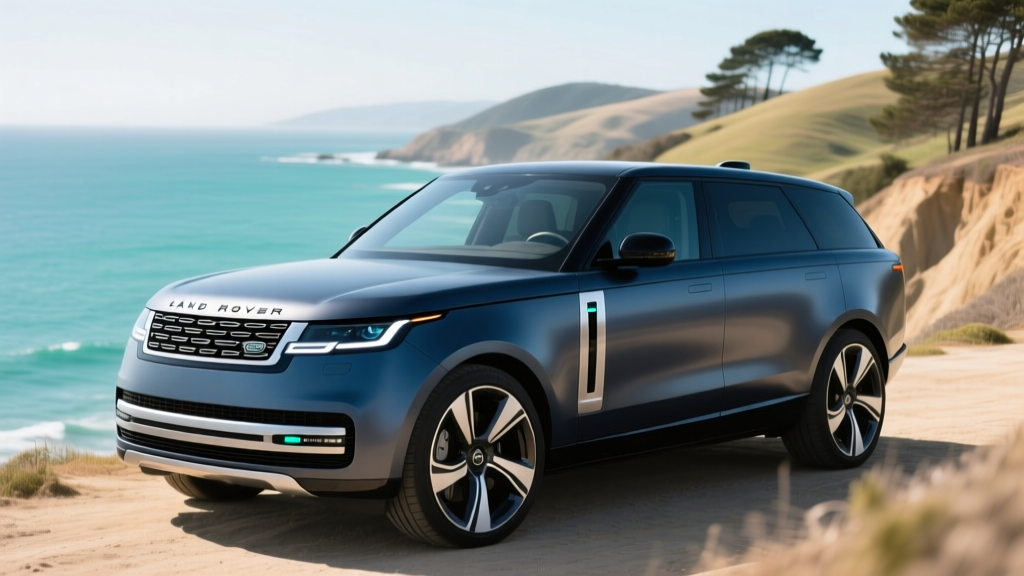
The 2026 electric Land Rover Range Rover (officially the Range Rover Electric) is Jaguar Land Rover's first fully electric luxury SUV, targeting an EPA range of approximately 300 miles from a 117 kWh (usable) battery pack built on the 800V-capable MLA-Flex architecture. Pricing starts around $120,000 MSRP. It will not qualify for the $7,500 federal §30D tax credit due to the $80,000 SUV MSRP cap. If you want a zero-emission luxury SUV with genuine off-road capability and ultra-fast DC charging, it's a strong option — but buyers should budget realistically for insurance, home charger installation, and real-world highway range closer to 250–270 miles.
What Is the Electric Land Rover Range Rover?
The Range Rover Electric is not a conversion or compliance car. JLR has engineered it on the same Modular Longitudinal Architecture (MLA-Flex) that underpins the current fifth-generation Range Rover, meaning the EV variant shares its exterior dimensions, interior layout, and off-road hardware with its mild-hybrid and V8 siblings. JLR confirmed the electric variant will sit alongside ICE and plug-in hybrid models rather than replacing them.
The powertrain uses a dual-motor all-wheel-drive configuration producing an estimated 550 horsepower, with JLR targeting a 0–60 mph time in the low-to-mid 4-second range. The battery pack uses pouch-cell NMC (nickel manganese cobalt) chemistry supplied by LG Energy Solution, with a total capacity around 117 kWh usable. JLR has emphasized that the Range Rover Electric will retain the brand's signature wading depth (up to 33.5 inches), Terrain Response system, and air suspension — all adapted for the weight distribution and instant torque of an electric drivetrain.
| Specification | Value |
|---|---|
| Battery (usable) | ~117 kWh, NMC pouch cells |
| EPA Range (target) | ~300 miles (real-world highway: ~250–270 mi) |
| Drivetrain | Dual-motor AWD |
| Horsepower | ~550 hp (estimated) |
| 0–60 mph | ~4.5 seconds (estimated) |
| DC Fast Charge (peak) | ~200+ kW (800V architecture) |
| 10–80% DC Charge | ~25–30 minutes (estimated) |
| Level 2 AC Charge | ~11 kW onboard charger |
| Towing Capacity | ~7,700 lbs (target) |
| Base MSRP | ~$120,000 (estimated) |
| Federal §30D Tax Credit | Not eligible (exceeds $80,000 SUV MSRP cap) |
| Battery Warranty | 8 years / 100,000 miles (≥70% retention) |
Note: As of early 2026, JLR has not published final EPA-certified figures. Specs above reflect manufacturer targets and industry estimates. Final numbers will be confirmed closer to the on-sale date.
Range and Charging: What to Expect in the Real World
JLR's 300-mile EPA target places the Range Rover Electric in the same ballpark as the BMW iX xDrive50 (EPA 324 mi) and Mercedes EQS 580 SUV (EPA 305 mi). But as with any large, heavy luxury SUV with a brick-like aerodynamic profile, real-world range will fall short of the sticker.
Real-World Range Expectations
EPA Target: ~300 miles
Highway (70–80 mph): Expect 250–270 miles. The Range Rover's tall, flat-fronted shape creates more aerodynamic drag than a sedan-shaped EV like the Lucid Air or Mercedes EQS sedan.
Cold Weather (below 32°F): Expect 210–240 miles. NMC batteries lose roughly 20–30% range in freezing temperatures, even with a heat pump (which JLR has confirmed is standard).
Off-Road / Low-Speed Trail Use: Range impact is minimal at low speeds, but heavy throttle use on sand or rock crawling will drain the pack faster than highway driving.
Charging Speed and the 800V Advantage
The MLA-Flex platform supports an 800V electrical architecture, which allows the Range Rover Electric to accept higher DC fast-charging power with lower current — reducing heat and improving efficiency. Peak charge rate is expected at or above 200 kW.
| Charging Level | Power | Miles Added per Hour |
|---|---|---|
| Level 1 (120V household) | ~1.4 kW | ~3–4 mi/hr |
| Level 2 (240V, 48A home charger) | ~11 kW | ~28–32 mi/hr |
| DC Fast Charge (peak) | ~200+ kW | ~500+ mi/hr (at peak) |
At a 350 kW Electrify America or Ionity station, the Range Rover Electric should charge from 10% to 80% in roughly 25–30 minutes. However, remember that charge curves taper significantly above 80% SoC — the final 20% can take as long as the first 80%. For road trips, plan to charge to 80% and move on rather than waiting for a full pack.
For daily ownership, a home Level 2 charger is essential. With an 11 kW onboard charger, a fully depleted 117 kWh battery will recharge overnight in about 11 hours — perfectly adequate for a vehicle that most owners will plug in each evening.
Electric vs. Gas Range Rover: Cost and Performance Comparison
The current Range Rover lineup includes a 3.0L inline-six mild-hybrid (P400, 395 hp) and a 4.4L twin-turbo V8 (P530, 523 hp). Here's how the electric variant stacks up against the most comparable gas model — the P400 mild-hybrid — across cost and performance.
| Metric | Range Rover Electric (est.) | Range Rover P400 MHEV |
|---|---|---|
| Base MSRP | ~$120,000 | ~$107,000 |
| Horsepower | ~550 hp | 395 hp |
| 0–60 mph | ~4.5 sec | 5.5 sec |
| Fuel / Energy Cost per Mile | ~$0.05–0.07 (home charging) | ~$0.18–0.22 (premium gas, 19 MPG combined) |
| Annual Fuel/Energy (12,000 mi) | ~$600–$840 | ~$2,160–$2,640 |
| Annual Maintenance | ~$300–$500 | ~$900–$1,400 |
| Federal Tax Credit | $0 (MSRP cap) | $0 |
| EPA Range / Tank Range | ~300 mi | ~410 mi (21.7-gal tank) |
The electric Range Rover commands a ~$13,000 price premium over the P400, but it recoups roughly $1,500–$2,000 per year in fuel and maintenance savings for a typical driver covering 12,000 miles. That payback takes approximately 7–9 years — longer than most mainstream EVs, which is typical for luxury vehicles where the upfront delta is steep.
Performance, however, heavily favors the EV. With 550 hp and instant torque, the electric variant will out-accelerate both the P400 and approach the V8 P530, while operating silently — a significant refinement advantage in a vehicle whose brand identity centers on serenity.
Total Ownership Cost: 5-Year Breakdown
Beyond the sticker price, luxury EV ownership carries different cost dynamics than a gas Range Rover. Insurance premiums for high-value EVs tend to run 15–25% higher than equivalent ICE models, and while maintenance is lower, tire replacement costs are elevated due to the vehicle's weight (estimated 6,000+ lbs curb weight).
| Cost Category | Range Rover Electric | Range Rover P400 |
|---|---|---|
| Purchase Price | $120,000 | $107,000 |
| Fuel / Energy (5 years) | $3,000–$4,200 | $10,800–$13,200 |
| Maintenance (5 years) | $1,500–$2,500 | $4,500–$7,000 |
| Insurance (5 years, est.) | $15,000–$18,000 | $12,000–$15,000 |
| Home Charger Install | $1,200–$2,500 | $0 |
| Estimated Depreciation (5 yr) | ~$54,000 (45%) | ~$50,000 (47%) |
| Total 5-Year Cost | ~$194,700–$201,200 | ~$184,300–$192,200 |
The 5-year cost gap narrows to roughly $5,000–$12,000 in the EV's favor on operating costs, but is offset by the higher purchase price and insurance. For buyers who plan to keep the vehicle 7–10 years, the electric Range Rover becomes the more economical choice — assuming stable electricity rates and no major battery issues (which the 8-year/100,000-mile warranty should cover).
Federal Tax Credit and Incentives
Under current IRS §30D rules, the federal clean vehicle credit offers up to $7,500 for qualifying new EVs. However, the Range Rover Electric will not qualify for the following reasons:
- MSRP Cap: SUVs must have an MSRP at or below $80,000. The Range Rover Electric starts around $120,000 — well above the cap.
- Buyer Income Cap: Even if it did qualify, modified adjusted gross income must not exceed $300,000 (joint filers), $225,000 (head of household), or $150,000 (single).
- Battery Sourcing: The credit requires increasing percentages of critical minerals and battery components sourced from the U.S. or free-trade-agreement countries. JLR's supply chain for the MLA-Flex battery has not been confirmed as compliant.
Some states offer their own incentives that have no MSRP cap — check your state's energy or environmental agency for details. Additionally, the U.S. Department of Energy's fueleconomy.gov site maintains a state-by-state incentive tool.
Common Misconceptions About the Electric Range Rover
| Myth | Fact |
|---|---|
| "It can't really go off-road." | JLR has confirmed the EV retains Terrain Response, air suspension, and up to 33.5 inches of wading depth. Electric motors provide precise low-speed torque control — an advantage on technical terrain. |
| "The battery will need replacing in 5 years." | NMC batteries in modern thermal-managed systems typically degrade 10–15% over 8 years. JLR warranties the pack for 8 years/100,000 miles at ≥70% capacity retention. Real-world data from similar packs (BMW iX, Mercedes EQS) shows ~5–8% degradation at 100,000 miles. |
| "Charging takes forever." | On a 350 kW DC fast charger, 10–80% takes roughly 25–30 minutes. On a home Level 2 charger, a full overnight charge takes ~11 hours — you wake up with a full battery every morning. |
| "It won't have the same luxury feel." | The EV variant uses the same interior, materials, and cabin dimensions as the ICE Range Rover. The absence of engine noise actually improves NVH (noise, vibration, harshness) — a net luxury upgrade. |
| "I'll save $7,500 on taxes." | The Range Rover Electric exceeds the $80,000 SUV MSRP cap under §30D. No federal credit applies. Plan your budget accordingly. |
Decision Framework: Should You Buy the Electric Land Rover Range Rover?
Choose the Range Rover Electric If:
- You have reliable home Level 2 charging access (garage or driveway with a 240V circuit).
- You drive primarily in urban, suburban, or moderate-highway conditions where 250–300 miles of range is sufficient.
- You value silent, torque-rich acceleration and want the most refined version of the Range Rover experience.
- You plan to keep the vehicle 7+ years, allowing operating-cost savings to offset the price premium.
- You want a genuine off-road-capable EV — a very short list that currently includes only the Rivian R1S and the upcoming electric G-Wagen.
Choose the Gas or PHEV Range Rover If:
- You frequently tow heavy loads over long distances (the gas P530 has more proven range for cross-country towing).
- You live in an area with limited DC fast-charging infrastructure and cannot install a Level 2 charger at home.
- You regularly drive in extreme cold (below 0°F) where NMC range loss becomes significant.
- You want the flexibility of the PHEV variant (expected ~50 miles of electric-only range) as a bridge between electric daily driving and gas road trips.
Home Charging Setup: What You'll Need
For a 117 kWh battery, Level 1 (120V) charging is impractical as a daily solution — it would take over 80 hours to fully recharge. A Level 2 home charger is effectively mandatory.
| Item | Estimated Cost |
|---|---|
| Level 2 EVSE (48A, hardwired, e.g., ChargePoint Home Flex, Wallbox Pulsar Max) | $500–$800 |
| Electrician labor (run 60A circuit, 240V, ~50 ft from panel) | $600–$1,500 |
| Permit and inspection | $50–$200 |
| Electrical panel upgrade (if needed, 200A service) | $1,500–$3,000 |
| Total (no panel upgrade) | $1,150–$2,500 |
| Total (with panel upgrade) | $2,650–$5,500 |
Consult a licensed electrician to assess your panel capacity. A 48A charger requires a 60A breaker, and older homes with 100A service will almost certainly need a panel upgrade. Homes with existing 200A service usually accommodate a Level 2 charger without issue.
Frequently Asked Questions
When will the electric Land Rover Range Rover be available?
JLR has confirmed the Range Rover Electric will begin deliveries in 2026, with initial markets including the UK, Europe, and North America. Reservations are expected to open ahead of the on-sale date. Final EPA certification figures will be published closer to launch.
How does the Range Rover Electric compare to the BMW iX or Mercedes EQS SUV?
The BMW iX xDrive50 offers a longer EPA range (324 mi), starts at ~$87,000, and qualifies for the federal tax credit. The Mercedes EQS 580 SUV offers similar luxury at ~$110,000 with 305 miles of range. The Range Rover Electric differentiates itself with genuine off-road capability and the brand's prestige — but at a higher price and without the tax credit. If off-road use is not a priority, the iX is the more cost-efficient choice.
Will the battery need to be replaced, and what would it cost?
Based on degradation data from comparable NMC packs, expect 85–92% capacity retention at 100,000 miles. Full battery replacement for a pack this size would likely cost $18,000–$28,000 out of warranty, but this is rarely needed — most packs outlast the vehicle's useful life. JLR's 8-year/100,000-mile warranty covers capacity below 70%.
Can I tow with the electric Range Rover?
JLR targets approximately 7,700 lbs of towing capacity, matching the gas Range Rover. However, towing significantly reduces range — expect a 30–50% reduction depending on trailer weight and speed. A 300-mile range could drop to 150–200 miles while towing at highway speeds. Plan charging stops accordingly.
Does the electric Range Rover qualify for any incentives?
Not the federal §30D credit, due to the MSRP cap. Some states and utility companies offer rebates for EV purchases or home charger installations that have no price cap — check the AFDC state incentive database for your area.
Is the electric Range Rover self-driving?
No. The Range Rover Electric will feature JLR's latest ADAS suite, including adaptive cruise control, lane-keeping assist, and highway assist features. These are SAE Level 2 driver-assistance systems — the driver must remain attentive and keep hands on or near the steering wheel at all times. This is not autonomous or "self-driving" technology.
Sources: Jaguar Land Rover official press releases, fueleconomy.gov, IRS §30D Clean Vehicle Credit guidelines.