Quick Answer: Should You Buy the Electric Land Rover Defender?
The 2026 electric Land Rover Defender (officially part of Jaguar Land Rover's reimaged EV lineup built on the EMA platform) is expected to start around $110,000 MSRP with an estimated 280–310 miles of EPA range, a ~100 kWh usable battery (NMC chemistry), and DC fast charging up to ~200 kW (10–80% in approximately 28 minutes). It qualifies as a luxury off-road SUV with real all-terrain capability, but buyers should know: it does not currently qualify for the full $7,500 federal §30D tax credit due to MSRP caps on SUVs ($80,000 limit), and real-world highway range drops to roughly 230–250 miles. If you want a zero-emission luxury off-roader with daily-driver practicality and home charging access, it's a strong pick. If budget or tax-credit eligibility is your priority, consider the plug-in hybrid Defender P400e instead.
What Is the Electric Land Rover Defender? Platform, Specs, and Availability
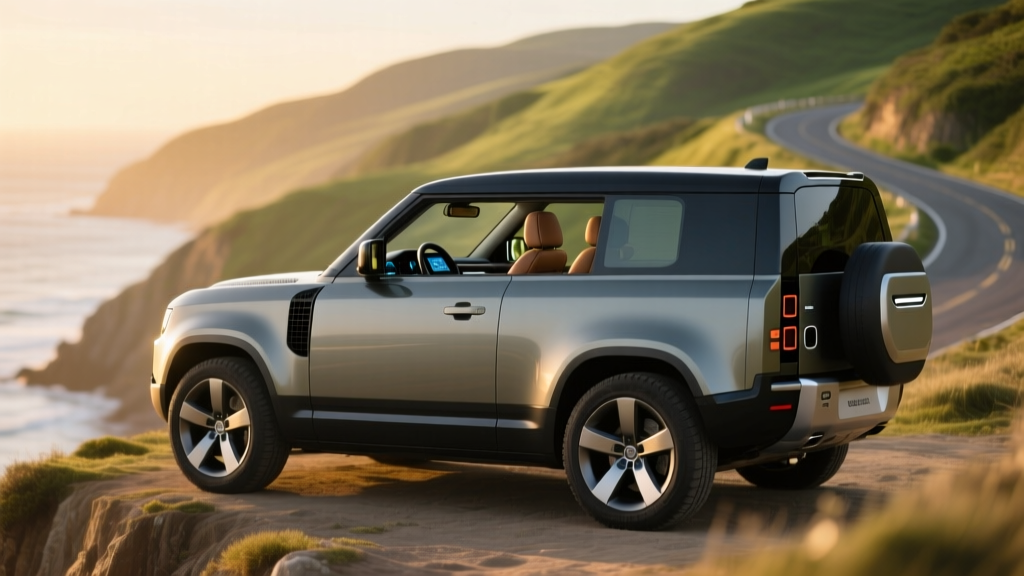
Land Rover confirmed that the next-generation Defender will ride on JLR's Electric Modular Architecture (EMA), a dedicated BEV skateboard platform that also underpins the new Range Rover Electric. Unlike earlier mild-hybrid and PHEV Defenders, the electric Defender is a full battery-electric vehicle (BEV) with no internal combustion engine.
As of early 2026, JLR has released preliminary specifications. Final EPA certification numbers are expected closer to the on-sale date in late 2026. Here is what we know so far based on manufacturer disclosures and EMA platform data:
| Spec | Estimated / Announced |
|---|---|
| Battery (usable) | ~100 kWh, NMC lithium-ion |
| EPA Range (est.) | 280–310 miles |
| Real-World Highway Range | ~230–250 miles |
| DC Fast Charge Peak | ~200 kW |
| 10–80% DC Fast Charge | ~28 minutes |
| Level 2 Charge Rate | 11 kW (onboard charger) |
| Level 2 0–100% Time | ~10 hours |
| 0–60 mph | ~4.5 seconds (est., dual-motor AWD) |
| Horsepower | ~500+ hp (dual-motor) |
| Drivetrain | Dual-motor AWD w/ Terrain Response |
| Towing Capacity | ~7,700 lbs (est.) |
| Base MSRP | ~$110,000 |
| Federal §30D Tax Credit | Not eligible (exceeds $80K SUV cap) |
| Battery Warranty | 8 yr / 100,000 mi (min. 70% retention) |
Important caveat: These are preliminary figures based on JLR's EMA platform disclosures. The production Range Rover Electric uses a similar architecture with a ~100 kWh pack and ~200 kW peak charging, so the Defender should land in a comparable envelope. Final EPA certification may shift range by ±10 miles. Always verify at fueleconomy.gov once certified.
Electric Defender vs. Gas Defender: Cost and Capability Comparison
Most Defender buyers cross-shop the current gas-powered Defender 110 (P300 and P400 mild-hybrid inline-six) and the Defender P400e plug-in hybrid. Here's how the numbers stack up for a buyer considering the switch to full electric:
| Metric | Electric Defender (est.) | Gas Defender 110 P400 |
|---|---|---|
| Base MSRP | ~$110,000 | ~$72,000 |
| Federal Tax Credit | $0 (MSRP cap) | $0 |
| EPA Combined Efficiency | ~70 MPGe / ~48 kWh/100mi | ~19 MPG combined |
| Fuel/Energy Cost (5 yr, 75K mi) | ~$5,400 (at $0.16/kWh avg) | ~$16,800 (at $3.80/gal, premium) |
| Maintenance (5 yr est.) | ~$2,500 | ~$5,500 |
| 5-Yr Total Fuel + Maint. | ~$7,900 | ~$22,300 |
| Savings vs. Gas (operating) | ~$14,400 over 5 years | |
| Insurance (annual avg) | ~$3,200 | ~$2,800 |
The takeaway: The electric Defender saves roughly $14,400 in operating costs over 5 years (fuel and maintenance), but carries a ~$38,000 higher purchase price. The break-even point on operating savings alone is roughly 13 years — meaning the EV is a values-driven or experience-driven choice, not a pure cost-savings play. If you drive more than 15,000 miles per year or have access to cheap home solar charging, the math improves significantly.
Data sources: EPA fueleconomy.gov for current Defender 110 MPG figures; electricity cost based on U.S. average residential rate per EIA.
Real-World Range: What the EPA Sticker Won't Tell You
EPA Estimate vs. Reality
EPA sticker (est.): 280–310 miles
Real-world highway (70 mph, mild weather): ~230–250 miles
Cold weather (below 32°F, highway): ~190–220 miles
Off-road / low-speed trail use: Range drops vary widely; expect ~15–25% reduction under sustained technical crawling due to high torque demands.
The Defender's boxy shape creates significant aerodynamic drag at highway speeds, which is the primary range killer for any SUV but especially pronounced here. The EMA platform's thermal management system includes a heat pump (standard), which helps mitigate cold-weather losses compared to resistive heating, but you should still plan for a 20–30% range reduction in sub-freezing temperatures.
For road trips, the ~200 kW peak DC charge rate means you'll add roughly 140 miles of range in 15 minutes at a compatible Electrify America or EVgo 350 kW station — though the charge curve tapers significantly above 80% State of Charge (SoC), dropping to ~50 kW. Plan charging stops around 10–80% for the fastest sessions.
Charging at Home and on the Road: What You Need to Know
| Level | Power | Miles Added per Hour | Typical Use Case |
|---|---|---|---|
| Level 1 (120V) | ~1.4 kW | ~3–4 mi/hr | Emergency / trickle only |
| Level 2 (240V, 48A) | 11 kW | ~25–28 mi/hr | Home daily charging |
| DC Fast Charge | Up to ~200 kW | ~560 mi/hr (peak) | Road trips |
Home charging is essential for this vehicle. A Level 2 home charger (240V, 48-amp hardwired wallbox like the ChargePoint Home Flex or Emporia V2) will fully replenish the ~100 kWh battery in roughly 10 hours — ideal for overnight top-ups. Expect to spend $800–$2,200 on a professional Level 2 installation, including the charger unit ($500–$700), electrician labor ($300–$1,200), and permits ($50–$200). If your home's electrical panel needs an upgrade to 200A service, add $1,500–$3,500.
For public charging, Land Rover has committed to NACS (Tesla-style) connectors on new EVs in North America starting with the EMA platform, giving the electric Defender access to Tesla Superchargers via native port — a significant advantage for road-trip charging infrastructure. Always confirm connector type at your specific model year, as early-production units may ship with CCS1 adapters.
Federal Tax Credit and Incentives: The Bad News
§30D Federal EV Tax Credit — Why the Electric Defender Doesn't Qualify
- MSRP Cap for SUVs: $80,000 (per IRS §30D rules)
- Electric Defender MSRP: ~$110,000 (exceeds cap)
- Buyer Income Cap: $150K single / $300K joint (would apply if eligible)
- Battery Sourcing: Must meet critical minerals + battery component requirements
- Result: $0 federal credit due to MSRP cap, regardless of income or sourcing
This is the single biggest financial disadvantage of the electric Defender. Luxury EVs above the MSRP cap — including the BMW iX, Mercedes EQS SUV, and Cadillac Escalade IQ — face the same limitation. Some states offer their own rebates or tax credits that may partially offset the cost (California's CVRP and Colorado's innovative vehicle credit are examples), but these vary by jurisdiction and income. Consult a tax professional for your specific situation.
Common Misconceptions About the Electric Defender
| Myth | Fact |
|---|---|
| "It can't off-road because it's electric." | Dual-motor AWD with instant torque and JLR's Terrain Response system actually improves low-speed rock crawling precision. The battery pack is fully sealed and wading depth is expected to match or exceed the gas Defender's ~35.4 inches. |
| "You'll get the $7,500 tax credit." | The ~$110,000 MSRP far exceeds the $80,000 SUV cap under IRS §30D. No federal credit applies. |
| "The battery will need replacing in 5 years." | JLR warranties the battery for 8 years/100,000 miles with a 70% capacity retention threshold. NMC batteries on modern thermal management systems typically retain 85–90% capacity at 100K miles based on industry-wide degradation data. |
| "It charges as fast as a Tesla." | At ~200 kW peak, the Defender charges slower than a Tesla Model X (which peaks at ~250 kW on V3 Superchargers). Expect ~28 minutes for 10–80%, not 15–18 minutes. |
| "I can charge on any public charger." | NACS native port gives Supercharger access, but some legacy CCS-only stations (older Electrify America locations) may require an adapter. Verify before road-tripping. |
Decision Framework: Is the Electric Defender Right for You?
Choose the Electric Defender If:
- You have reliable Level 2 home charging (garage or driveway with 240V access)
- Your daily driving is under 150 miles round-trip, with occasional road trips
- You value instant off-road torque, silent trail crawling, and zero tailpipe emissions
- You're upgrading from a luxury SUV (Range Rover, G-Wagen, Cayenne) and budget is flexible above $100K
- You live in a state with additional EV incentives that soften the MSRP-cap sting
Choose the Gas or PHEV Defender Instead If:
- You lack home charging access or live in an apartment without EV infrastructure
- You frequently tow heavy loads over long distances (towing significantly cuts EV range — expect 40–50% reduction at max load)
- You want federal tax credit eligibility (consider the Defender P400e PHEV at ~$75,000, which may fall under the MSRP cap)
- You regularly drive in remote areas with no DC fast-charging infrastructure
- Purchase price sensitivity is a primary concern — the gas P300 starts $38K lower
First-Time EV Buyer Checklist for the Defender
If this is your first battery-electric vehicle, here's what to prepare before taking delivery:
- Install a Level 2 home charger before the car arrives. Budget $1,200–$2,500 including a 48A hardwired unit and professional installation. Get a quote from a licensed electrician — panel upgrades can add $1,500+ if needed.
- Download the JLR app and familiarize yourself with preconditioning. Warming the battery before DC fast charging (or while plugged in at home) significantly improves charge speed and range in cold weather.
- Plan your road-trip charging using A Better Routeplanner (ABRP) or PlugShare. The NACS connector opens Tesla Superchargers, but verify station availability along your common routes.
- Understand regenerative braking. The Defender will offer adjustable regen levels. One-pedal driving is possible in most conditions, reducing brake wear — expect brake pads to last 80,000+ miles.
- Check your insurance rate before purchasing. Luxury EVs typically carry premiums 10–20% higher than their gas equivalents. Get a quote from your current carrier and at least one competitor.
- Verify your state incentives separately from federal rules. Some states offer point-of-sale rebates regardless of MSRP caps.
Frequently Asked Questions
When can I actually buy the electric Land Rover Defender?
JLR has targeted late 2026 for initial deliveries in select markets, with broader U.S. availability in early 2027. Reservations are expected to open mid-2026. These are announced timelines and may shift — check JLR's official press site for updates.
Will the electric Defender have the same off-road capability as the gas version?
JLR has confirmed that the EMA platform preserves the Defender's core off-road geometry — approach, departure, and breakover angles. The battery pack is fully sealed for wading, and electric motors provide more precise low-speed torque control than a combustion engine. Ground clearance may differ slightly due to underbody battery packaging, but expect comparable or better capability in technical terrain.
How much does it cost to charge the electric Defender at home?
At the U.S. average residential electricity rate of ~$0.16/kWh, a full charge of the ~100 kWh battery costs approximately $16. That translates to roughly $0.05–$0.06 per mile — compared to ~$0.22 per mile for the gas Defender P400 on premium fuel. Over 15,000 annual miles, home charging saves about $2,400 per year vs. gas.
Does the electric Defender qualify for any tax credits?
Not at the federal level. The ~$110,000 MSRP exceeds the IRS §30D cap of $80,000 for SUVs. Some state-level incentives may still apply depending on your location and income. Consult IRS.gov and your state's energy office for current rules.
What happens if the battery degrades?
JLR's battery warranty guarantees at least 70% capacity retention for 8 years or 100,000 miles. Based on industry data from similar NMC packs with active thermal management, most owners see 85–90% State of Health (SoH) at the 100K-mile mark. If the battery falls below 70% within the warranty period, JLR will repair or replace it at no cost. Out-of-warranty battery replacement for a ~100 kWh pack currently runs $15,000–$22,000 at dealerships, though prices are expected to decline as the supply chain matures.
Can I tow with the electric Defender?
Yes — estimated towing capacity is ~7,700 lbs, matching the gas Defender 110. However, towing at or near max capacity will cut range significantly, potentially by 40–50%. A 300-mile EPA range drops to roughly 150–180 miles while towing a heavy trailer. Plan charging stops accordingly and consider the PHEV variant if you tow frequently over long distances.