Quick Answer: Is There an Electric Lamborghini Car You Can Buy Today?
As of 2026, no production electric Lamborghini car is available for purchase. Lamborghini's first fully electric vehicle, the Lanzador, is an announced 2+2 grand tourer expected to reach customers around model year 2028–2029. Until then, Lamborghini's electrified lineup consists of plug-in hybrid models: the Revuelto (V12 PHEV supercar) and the Urus SE (PHEV super SUV). If you want a battery-electric Lamborghini today, you cannot buy one — but you can plan for the Lanzador or evaluate the brand's current PHEV options against pure-EV competitors from Porsche, Lotus, and Rimac.
What We Know About the Lamborghini Lanzador EV
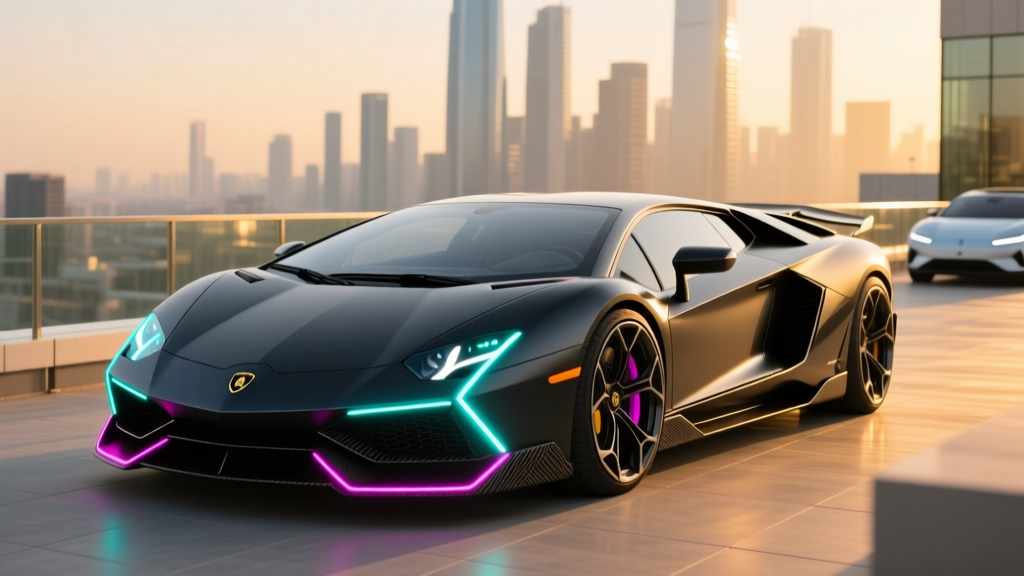
Lamborghini unveiled the Lanzador concept at Monterey Car Week in August 2023 and subsequently confirmed it as the brand's first production battery-electric vehicle (BEV). Positioned as a 2+2 grand tourer with elevated ride height — Lamborghini calls it an "Ultra GT" — the Lanzador sits above the Huracán successor in the lineup and targets buyers who want exotic styling with daily usability.
Based on statements from Lamborghini CEO Stephan Winkelmann and parent company Volkswagen Group's SSP Sport platform architecture, here are the preliminary and estimated specifications for the production Lanzador:
| Attribute | Estimated Figure |
|---|---|
| Powertrain | Dual-motor AWD |
| System Output | ~1,000+ hp (Lamborghini has confirmed "over 1 megawatt") |
| Battery Capacity | ~100–120 kWh usable (NMC chemistry expected) |
| EPA Range (est.) | ~280–320 miles (sticker TBD) |
| DC Fast Charging | Up to ~270–350 kW peak (800V architecture) |
| 10–80% Charge Time (est.) | ~18–25 minutes |
| 0–60 mph | Sub-3.0 seconds (est.) |
| Body Style | 2+2 Ultra GT, elevated grand tourer |
| Expected MSRP | $250,000–$400,000+ (est.) |
| Production Start | 2028 (model year 2028–2029) |
Important caveat: These are projections based on the concept reveal, VW Group platform data, and executive statements. Final EPA range, battery capacity, and pricing will not be confirmed until closer to production. Lamborghini has explicitly stated the Lanzador will use a next-generation platform, likely the VW Group's SSP Sport architecture shared with upcoming electric Porsche and Audi models.
Current Lamborghini Electrified Options: Revuelto and Urus SE PHEVs
While you wait for the Lanzador, Lamborghini currently sells two plug-in hybrid models that offer partial electric driving:
Lamborghini Revuelto (PHEV Supercar)
The Revuelto pairs a naturally aspirated 6.5-liter V12 with three electric motors for a combined 1,001 hp. Its relatively small lithium-ion battery (~3.8 kWh) provides only a brief electric-only assist — this is a performance hybrid, not a commuter EV. Expect no meaningful EPA electric-only range; the system is designed for torque-fill and all-wheel-drive traction, not zero-emission driving.
Lamborghini Urus SE (PHEV Super SUV)
The Urus SE adds a plug-in hybrid system to the twin-turbo V8 SUV. Lamborghini claims approximately 37 miles (WLTP) of electric-only range — expect roughly 25–30 miles EPA once US testing is finalized. The larger battery (~25.9 kWh) supports Level 2 AC charging and genuine short-commute electric driving, making it the most practical electrified Lamborghini for daily use.
Electric Lamborghini vs. Gas Supercars vs. EV Competitors
Understanding where a future electric Lamborghini car fits requires comparing it against both traditional gas supercars and existing electric performance vehicles. Here is how the numbers stack up:
| Vehicle | Type | HP | 0–60 mph | EPA Range / EV Range | Base MSRP (est.) |
|---|---|---|---|---|---|
| Lamborghini Lanzador | BEV (announced) | ~1,000+ | <3.0s | ~280–320 mi | $250K–$400K+ |
| Lamborghini Revuelto | PHEV | 1,001 | 2.5s | Minimal EV-only | $608,358 |
| Lamborghini Urus SE | PHEV | 789 | 3.4s | ~25–30 mi EV | $260,600 |
| Porsche Taycan Turbo GT | BEV | 1,019 | 2.1s | 269 mi (EPA) | $230,000 |
| Lotus Eletre R | BEV | 905 | 2.9s | ~290 mi (est.) | $120,000 |
| Rimac Nevera | BEV | 1,914 | 1.85s | ~300 mi (WLTP) | $2,400,000 |
| Ferrari SF90 Stradale | PHEV | 986 | 2.5s | ~15 mi EV | $524,000+ |
The performance takeaway: in raw acceleration, top-tier BEVs like the Porsche Taycan Turbo GT and Rimac Nevera already match or exceed Lamborghini's PHEV supercars. Where the Lanzador will need to differentiate is in design exclusivity, brand cachet, interior craftsmanship, and driving dynamics — areas where Lamborghini historically excels and where pure-spec-sheet comparisons fall short.
Real-World Ownership Costs: What to Budget
Owning an electric Lamborghini car will carry costs far beyond the sticker price. Here is a realistic breakdown based on the estimated Lanzador pricing and comparable exotic-car ownership:
| Cost Category | Lanzador BEV (Est.) | Gas Supercar (e.g., Huracán-class) |
|---|---|---|
| Purchase Price (base) | $300,000 (est. midpoint) | $280,000 |
| Federal EV Tax Credit (§30D) | $0 (exceeds MSRP cap of $80K for sedans / $80K for SUVs — IRS rules cap passenger vehicles at $55K MSRP and SUVs/pickups at $80K) | $0 |
| Annual Fuel / Electricity | ~$1,200–$1,800 (at $0.15/kWh, 10K mi/yr) | ~$4,500–$6,000 (at 12 MPG, $4.50/gal, 10K mi/yr) |
| Annual Insurance | $8,000–$15,000 (exotic-car premiums) | $7,000–$14,000 |
| Annual Maintenance | $1,500–$3,000 (fewer moving parts, but exotic labor rates) | $3,000–$6,000 (oil, belts, fluids, exhaust) |
| Tires (annual equivalent) | $2,000–$4,000 (high-performance EV rubber wears quickly due to weight + torque) | $2,000–$3,500 |
| Estimated 5-Year Total (excl. depreciation) | ~$375,000–$420,000 | ~$365,000–$415,000 |
Key insight: The Lanzador will save roughly $3,000–$4,500 per year on fuel compared to a gas supercar and modest amounts on maintenance. But at this price tier, the financial case for EV ownership is negligible. Buyers choose the Lanzador for technology, instant torque delivery, and exclusivity — not total-cost-of-ownership savings.
Federal Tax Credit Reality Check
Under current IRS §30D rules, the federal clean vehicle credit caps at $7,500, but only for vehicles below strict MSRP limits: $55,000 for sedans and $80,000 for SUVs/pickups. The Lanzador will categorically exceed these caps and will not qualify for any federal EV tax credit. Buyer income limits ($300K joint / $150K individual AGI) are also a factor for credits that do apply, though most Lamborghini buyers exceed these thresholds regardless.
Charging an Electric Lamborghini: Home and Public Infrastructure
If the Lanzador uses the expected VW Group 800V architecture (shared with the Porsche Taycan and upcoming electric Cayenne), charging capability should be a strong suit:
Home Charging Setup
Expect a Level 2 onboard charger rated at 11–22 kW (AC). At 11 kW, a full charge from 10% to 100% on a ~110 kWh battery would take roughly 10–11 hours — easily achievable overnight. Home installation of a 48-amp (11.5 kW) Level 2 charger typically costs $1,200–$3,500 including equipment, electrician labor, and permits, assuming your electrical panel has sufficient capacity. A 200-amp panel is usually adequate; older homes may need a $2,000–$5,000 panel upgrade.
DC Fast Charging on Road Trips
With an 800V architecture and an estimated peak charge rate of 270–350 kW, the Lanzador should add roughly 150–200 miles of range in 15 minutes at a compatible high-power charger. However, the real-world charging curve matters:
- 10–40% SoC: Near-peak power delivery (270–350 kW)
- 40–80% SoC: Gradual taper to ~150–200 kW
- 80–100% SoC: Sharp taper to <50 kW — avoid charging past 80% on road trips unless necessary
Lanzador owners will likely rely on the Tesla Supercharger network (now open to NACS-equipped non-Tesla EVs), Electrify America, and Ionity (in Europe) for fast charging. Connector standard: expect NACS for the US market, given Lamborghini parent VW Group's commitment to the North American Charging Standard.
Common Misconceptions About Electric Lamborghini Cars
| Myth | Fact |
|---|---|
| "You can buy an electric Lamborghini today." | No production BEV Lamborghini is on sale as of 2026. The Lanzador is expected around 2028–2029. The Revuelto and Urus SE are PHEVs, not full EVs. |
| "The Lanzador will qualify for the $7,500 tax credit." | It will not. The vehicle's MSRP will far exceed the §30D cap of $55K (sedans) or $80K (SUVs), and most buyers will exceed income limits. |
| "Electric supercars can't match gas-engine emotion." | Acceleration and torque delivery in BEVs like the Rimac Nevera (1.85s 0–60) exceed any ICE supercar. However, exhaust note and mechanical engagement are legitimate trade-offs that Lamborghini will need to address with sound design and driving feel. |
| "Battery replacement will cost more than the car." | Lithium-ion pack costs have dropped to approximately $130–$150/kWh at the cell level (2025 BloombergNEF data). A 110 kWh replacement pack might cost $25,000–$40,000 out of warranty — significant, but not catastrophic at this price tier. Expect an 8-year/100,000-mile battery warranty minimum. |
| "I can charge it anywhere." | High-power 800V charging requires 350 kW-capable stations, which remain concentrated in metro areas and major highways. Rural and cross-country routes still have charging gaps, though infrastructure is expanding through 2026–2028. |
Decision Framework: Should You Wait for the Lanzador or Buy Now?
Choose to WAIT for the Lamborghini Lanzador if:
- You specifically want the Lamborghini brand, design language, and exclusivity in a BEV
- Your timeline is flexible (2028–2029 delivery)
- You want a 2+2 grand tourer with exotic styling and EV powertrain simplicity
- You are willing to accept first-generation platform risk (new model, limited initial service infrastructure)
Choose to BUY NOW if you want:
- Electric performance today: Porsche Taycan Turbo GT ($230K, 1,019 hp, 269 mi EPA range) is the closest comparable — proven platform, established service network, 800V fast charging
- Lamborghini badge today: Urus SE PHEV ($260,600) gives you the brand, 25–30 miles of electric-only commuting, and V8 sound
- Ultimate EV hypercar: Rimac Nevera ($2.4M, 1,914 hp) — but production is extremely limited
- Practical exotic EV: Lotus Eletre R (~$120K, 905 hp) offers supercar performance in an SUV package with available delivery
What First-Time Exotic EV Buyers Should Know
If the Lanzador is your first electric exotic — or your first EV period — these practical considerations apply:
- Cold-weather range loss: All BEVs lose 20–35% of rated range in sub-freezing temperatures. A Lanzador rated at 300 miles EPA could deliver 195–240 miles in a Midwest or Northeast winter. Battery preconditioning (heating the pack before fast charging) will be essential and should be built into the navigation system.
- Insurance premiums: Exotic EVs carry some of the highest insurance rates in the industry. Expect quotes of $8,000–$15,000+ annually depending on your driving record, location, and coverage limits. Get quotes before ordering.
- Depreciation uncertainty: EV depreciation has been volatile — early Taycans lost 30–40% in year one, while limited-production models held better. Lamborghini's limited-volume strategy may help, but first-generation EVs carry more depreciation risk than established ICE models.
- Service network: Lamborghini has roughly 150 dealers globally. EV-specific service (battery diagnostics, high-voltage system repairs) requires specialized training. Confirm your nearest dealer's EV readiness before committing.
- Tire costs: Heavy, high-torque EVs wear through tires faster than comparable gas cars. Budget for premium performance tire replacements every 10,000–15,000 miles at $500–$800 per corner.
Frequently Asked Questions
When will the electric Lamborghini Lanzador be available to buy?
Lamborghini has confirmed production for approximately 2028, with customer deliveries likely beginning in late 2028 or 2029. Exact timing depends on VW Group's SSP Sport platform readiness. Reservations are not yet open as of early 2026.
How much will the Lamborghini Lanzador cost?
Lamborghini has not announced official pricing. Based on the brand's positioning between the Urus and Revuelto, and comparable EVs like the Porsche Taycan Turbo GT ($230K) and Rolls-Royce Spectre ($420K), expect an MSRP in the $250,000–$400,000 range depending on trim and options.
Will the Lanzador be a SUV or a car?
Lamborghini describes the Lanzador as an "Ultra GT" — a 2+2 grand tourer with an elevated ride height that blurs the line between a sports car and a crossover. It is not a traditional SUV like the Urus, nor a low-slung coupe like the Revuelto. Think of it as a lifted, practical exotic grand tourer.
Does Lamborghini make any fully electric cars right now?
No. As of 2026, Lamborghini offers two plug-in hybrids (Revuelto and Urus SE) but no battery-electric production vehicle. The Lanzador will be the brand's first BEV.
What charging connector will the Lanzador use?
While not officially confirmed, the VW Group has committed to adopting the NACS (North American Charging Standard) connector for its brands in the US market. European models will likely use CCS2. This means the Lanzador should have native access to the Tesla Supercharger network in North America.
Can I reserve a Lamborghini Lanzador now?
As of 2026, Lamborghini has not opened public reservations. Interested buyers should contact their local Lamborghini dealer to express interest and join any informal waitlist. Expect a formal reservation process to open 12–18 months before production begins.