What Does Electric kWh Mean for EV Buyers?
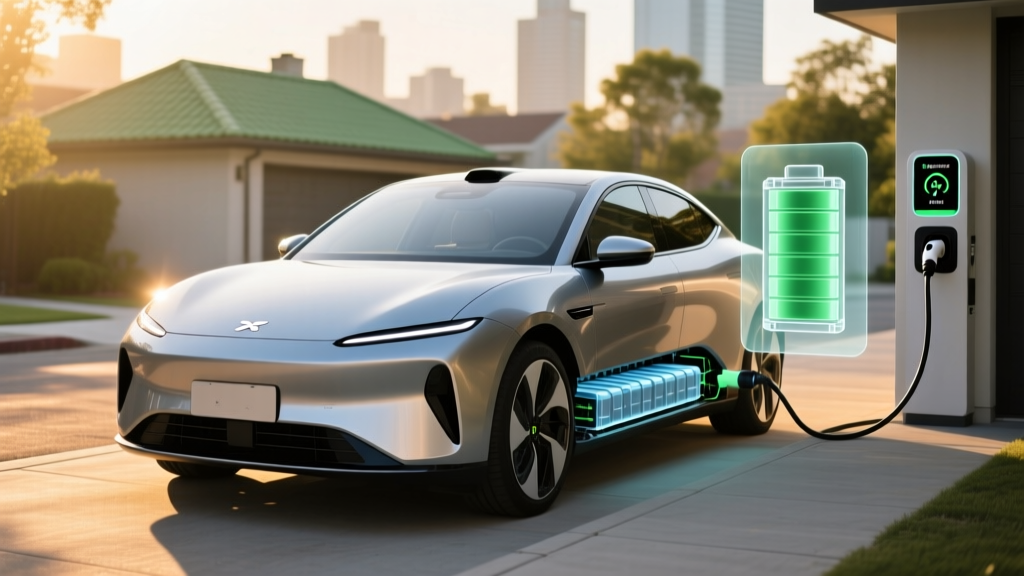
An electric kWh (kilowatt-hour) is the unit measuring how much energy an EV battery stores — directly determining how far you can drive between charges. As a rule of thumb in 2026, most EVs consume between 25 and 40 kWh per 100 miles of driving, meaning a 75 kWh usable battery delivers roughly 220–300 miles of real-world range depending on conditions. Larger kWh batteries cost more upfront but reduce range anxiety and charging frequency. Understanding kWh is the single most important concept for comparing EVs accurately.
kW vs kWh: The Critical Distinction Every EV Buyer Must Know
The most common confusion among first-time EV shoppers is mixing up kW (kilowatts) with kWh (kilowatt-hours). These measure fundamentally different things:
- kWh (energy capacity) — How much total energy the battery holds. Think of it like the size of a gas tank. A 82 kWh battery stores more energy than a 58 kWh battery.
- kW (power rate) — How fast energy flows into or out of the battery. This governs acceleration and charging speed. A 250 kW DC fast charger delivers energy faster than a 50 kW charger.
When a manufacturer advertises a "100 kWh battery," they're telling you about storage capacity. When they advertise "270 kW peak charging," they're telling you about fill-up speed. Both matter, but they answer different questions: "How far can I go?" versus "How quickly can I recharge?"
How Battery kWh Translates to Real-World Range
Raw kWh numbers don't tell the whole story. Range depends on vehicle efficiency — how many kWh the car consumes per mile — which varies with weight, aerodynamics, tire choice, and driving style. Here's how several popular 2026 EVs compare:
| Vehicle (2026 MY) | Usable Battery (kWh) | EPA Range (mi) | Efficiency (kWh/100mi) | Real-World Highway* |
|---|---|---|---|---|
| Tesla Model Y Long Range | 75 kWh (NMC) | 320 | 23.4 | ~270–290 mi |
| Hyundai Ioniq 5 (Std Range) | 58 kWh (NMC) | 240 | 24.2 | ~200–220 mi |
| Chevrolet Equinox EV 3LT | 85 kWh (NMC) | 319 | 26.6 | ~265–285 mi |
| Ford Mustang Mach-E Select | 71 kWh (LFP) | 250 | 28.4 | ~210–230 mi |
| Rivian R1T Dual-Motor | 106 kWh (NMC) | 352 | 30.1 | ~290–320 mi |
*Real-world highway estimates assume 70–75 mph sustained speeds in 65–75°F conditions. Expect 15–30% less in freezing temperatures or at 80+ mph.
The 80% Rule: Why You Won't Use Every kWh
EV batteries perform best when kept between 10–90% state of charge for daily driving. Charging to 100% and draining to 0% accelerates degradation, especially for NMC chemistry. Practically, this means your "daily usable" energy is about 80% of the total battery capacity. A 75 kWh battery gives you roughly 60 kWh for everyday use — plan your range expectations accordingly. LFP (lithium iron phosphate) batteries tolerate regular 100% charges better, making their effective daily capacity closer to the full rated kWh.
EV vs Gas: The kWh-to-Dollars Cost Comparison
Translating kWh into fuel costs reveals why EVs attract budget-conscious buyers — but the savings depend heavily on your local electricity rate and charging habits.
| Cost Factor | EV (75 kWh battery, 300 mi range) | Gas Car (30 MPG combined) |
|---|---|---|
| Energy cost per full "tank" | $9.75 (home, $0.13/kWh) | $42.00 (10 gal × $4.20/gal) |
| Cost per mile | $0.033 (home charging) | $0.140 |
| Annual fuel cost (12,000 mi/yr) | $396 (home) | $1,680 |
| Public DC fast charging cost | $0.35–$0.48/kWh (~$0.09–$0.12/mi) | N/A |
| Annual savings vs gas | $1,284/year (home charging scenario) | |
Source: fueleconomy.gov — U.S. Department of Energy EV cost calculator. Local electricity rates vary significantly; check your utility's EV-specific time-of-use plans for the best rates.
The Home Charging Advantage
Home charging is where EV economics shine. At the U.S. average residential rate of roughly $0.13/kWh (per EIA data), filling a 75 kWh battery costs under $10. But if you rely exclusively on public DC fast chargers at $0.35–$0.48/kWh, your per-mile cost approaches that of an efficient hybrid. EV ownership economics favor those with reliable home or workplace Level 2 charging.
How kWh Battery Size Impacts Purchase Price and Tax Credits
Larger kWh batteries are the single biggest cost driver in EV pricing. Battery pack costs in 2026 average approximately $110–$130 per kWh at the pack level, though consumer pricing includes additional margins and integration costs. Here's how battery size affects what you pay:
| Battery Size | Typical MSRP Range | Example Vehicles | Federal §30D Credit Eligibility |
|---|---|---|---|
| 50–60 kWh | $29,000–$36,000 | Nissan Leaf, Chevy Equinox EV 2LT | Varies by sourcing — check IRS §30D rules |
| 70–80 kWh | $38,000–$52,000 | Tesla Model Y, Ioniq 5 LR, Mach-E | Subject to MSRP cap ($55K cars / $80K trucks), income limits, critical mineral sourcing |
| 90–110 kWh | $55,000–$80,000+ | Rivian R1T, GMC Sierra EV, Tesla Model S | Many exceed MSRP cap for cars; trucks/SUVs have higher $80K cap |
2026 Federal Tax Credit Reality: The §30D clean vehicle credit offers up to $7,500, but eligibility requires meeting ALL of these: buyer income caps ($150K single / $300K joint), vehicle MSRP caps, North American assembly, and battery critical-mineral/component sourcing thresholds that tighten annually. Many vehicles qualify for only a partial credit or none at all. Always verify current eligibility on IRS.gov before purchasing. The credit can now be transferred to the dealer as a point-of-sale discount if eligible.
Charging Speed: Why Peak kW Matters More Than Battery kWh Alone
A large kWh battery is only practical if you can recharge it in reasonable time. Charging speed depends on the vehicle's maximum accepted DC fast charge rate and the charging curve — how power tapers as the battery fills.
| Vehicle | Battery (kWh) | Peak DC Charge (kW) | 10–80% Time | Sustained Avg (kW) |
|---|---|---|---|---|
| Tesla Model Y LR | 75 | 250 | ~25 min | ~140 |
| Hyundai Ioniq 5 LR | 77.4 | 238 | ~18 min | ~175 |
| Chevy Equinox EV | 85 | 150 | ~35 min | ~105 |
| Ford F-150 Lightning Ext | 131 | 150 | ~45 min | ~120 |
Key insight: Peak kW is a marketing number; sustained average kW during the 10–80% window determines actual charging time. The Ioniq 5's 800V architecture maintains higher power longer than competitors with similar peak ratings, making it one of the fastest-charging EVs despite not having the highest peak kW. A 131 kWh battery at only 150 kW peak takes significantly longer to fill than a 75 kWh battery at 250 kW.
Decision Framework: What kWh Battery Size Do You Actually Need?
Choose Your Right Battery Size
- 50–60 kWh battery IF: Your daily commute is under 40 miles round-trip, you have reliable home Level 2 charging, and budget is the priority. You'll save $3,000–$6,000 on purchase price and rarely notice the smaller battery day-to-day.
- 70–80 kWh battery IF: You drive 50+ miles daily, take occasional road trips of 200–300 miles, or live in a cold climate where winter range drops 15–30%. This is the sweet spot for most buyers.
- 90–110+ kWh battery IF: You regularly tow, haul heavy loads, live in extreme cold, or need 350+ miles between charges. Expect higher purchase price, faster tire wear (more weight), and longer charging sessions.
Climate Matters More Than You Think
In sub-freezing temperatures, EV range drops 15–30% due to battery chemistry limitations and cabin heating demands. A vehicle with a 60 kWh battery rated for 240 miles EPA may deliver only 170–190 miles in a Minnesota January. If you live in cold climates, budget for at least 20% more kWh capacity than your daily needs require. Heat pumps (standard on most 2026 EVs) mitigate this loss somewhat but don't eliminate it.
Common EV kWh Misconceptions — Myth vs Fact
| Myth | Fact |
|---|---|
| "Bigger kWh always means better" | Larger batteries add 200–400 lbs of weight, reducing efficiency and increasing tire wear. A 75 kWh battery in an efficient vehicle often outperforms a 100 kWh battery in a heavy truck on a per-mile cost basis. |
| "I need 400 miles of range" | The average American drives 37 miles/day (FHWA data). Even a 60 kWh / 220-mile EV covers 5+ days of typical driving. Road trips require planning, not necessarily a massive battery. |
| "Battery kWh equals exact range" | Range = kWh ÷ efficiency. A 100 kWh battery in a heavy, boxy truck (35 kWh/100mi) yields less range than a 75 kWh battery in a sleek sedan (24 kWh/100mi). |
| "All kWh are usable" | Manufacturers include a buffer (typically 3–8 kWh) to protect battery health. A "75 kWh" battery may have only 71–72 kWh usable. Always check usable vs gross capacity. |
| "Fast charging at peak kW the entire session" | Charging curves taper significantly above 50–60% SoC. A 250 kW peak charger may average 140 kW over a 10–80% session. Plan around sustained averages, not peak numbers. |
First-Time EV Buyer Checklist: Beyond the kWh Number
Battery capacity is crucial, but a smart EV purchase decision requires evaluating the full ownership picture:
- Home charging access: Can you install a Level 2 (240V) charger? Budget $800–$2,500 for equipment plus electrician installation. A 200-amp electrical panel is typically required; older homes may need a $1,500–$3,000 panel upgrade. Without home charging, EV ownership becomes significantly less convenient and more expensive.
- Insurance costs: EVs typically cost 15–25% more to insure than comparable gas vehicles due to higher repair costs and battery replacement value. Get quotes before purchasing.
- Maintenance savings: EVs eliminate oil changes, spark plugs, and transmission fluid. Expect $0.061/mile maintenance vs $0.101/mile for gas cars (AAA data) — saving roughly $480/year at 12,000 miles.
- Battery warranty: Federal law mandates a minimum 8-year/100,000-mile battery warranty covering defects and excessive degradation (typically defined as dropping below 60–70% capacity). Most 2026 EVs offer 8yr/100K or 8yr/120K coverage.
- Depreciation reality: EVs have experienced steeper depreciation than gas vehicles in 2024–2026 due to price cuts and rapid tech advancement. Consider leasing if you're concerned about resale value.
Frequently Asked Questions
How many kWh does the average EV battery hold?
In 2026, most mainstream EVs carry between 58 and 85 kWh of usable battery capacity. Compact EVs like the Nissan Leaf start around 40–50 kWh, while large trucks like the GMC Sierra EV and Rivian R1T offer 100–200+ kWh. The median new EV battery is approximately 75 kWh.
How much does it cost to charge a 75 kWh EV battery at home?
At the U.S. average residential electricity rate of $0.13/kWh, a full charge from 0–100% costs approximately $9.75. Most EV owners charge between 20–80% daily, costing roughly $5.85 per session. Time-of-use plans can reduce overnight rates to $0.06–$0.09/kWh in some regions, cutting costs further.
Does a bigger kWh battery last longer before needing replacement?
Not necessarily. Battery longevity is measured in charge cycles and calendar age, not raw capacity. A larger battery undergoes fewer deep cycles for the same mileage, which can reduce degradation rate. However, all modern EV batteries are designed to retain 70–80% capacity after 150,000–200,000 miles regardless of size. Chemistry matters more: LFP batteries generally show less degradation than NMC over equivalent use.
What's the difference between gross and usable kWh?
Gross kWh is the total physical capacity of the battery pack. Usable kWh is what the vehicle software allows you to access, typically 90–96% of gross. The locked buffer protects the battery from damage caused by full discharge or overcharge. Always compare vehicles using usable kWh for accurate range predictions.
How does kWh affect charging time on a Level 2 home charger?
A typical Level 2 home charger delivers 7.2–11.5 kW. To fully charge a 75 kWh battery at 11.5 kW takes approximately 6.5 hours (0–100%). A larger 106 kWh battery at the same rate takes about 9.2 hours. Most EV owners charge overnight and wake up full regardless of battery size, making Level 2 home charging adequate for all battery sizes.
Sources: U.S. DOE fueleconomy.gov, IRS §30D Clean Vehicle Credit, NHTSA. All range and efficiency figures are EPA estimates unless noted. Real-world results vary by driving conditions, climate, and vehicle configuration.