Quick Answer: Is the Electric Kia Soul EV Worth Buying in 2026?
The 2026 Kia Soul EV delivers 243 miles of EPA range from its 64 kWh battery, starting at approximately $34,990 before incentives. It's one of the most practical entry-level electric crossovers for urban and suburban drivers who can charge at home. Real-world highway range drops to roughly 200–215 miles, and cold-weather driving may reduce that to 170–185 miles. Federal §30D tax credit eligibility (up to $7,500) depends on battery sourcing, buyer income caps, and MSRP limits — check current IRS rules before purchasing. If you drive under 40 miles daily and have Level 2 home charging access, the Soul EV's low running costs and spacious interior make it a compelling choice.
Range, Battery, and Real-World Efficiency
The 2026 Kia Soul EV carries over the proven 64 kWh (usable) lithium-ion polymer battery pack that has powered this model since its redesign. EPA-rated range sits at 243 miles for the standard trim, with efficiency rated at approximately 120 MPGe combined (28 kWh/100 miles).
EPA vs. Real-World Range: What to Expect
EPA sticker: 243 miles
Real-world highway (70 mph, 75°F): ~205–220 miles
Cold weather (30°F, mixed driving): ~170–190 miles
Hot weather with A/C (95°F): ~215–230 miles
The Soul EV lacks a heat pump, so cold-weather range loss is more pronounced than EVs equipped with one. Preconditioning the battery while plugged in helps mitigate winter losses.
The battery uses a mix of NMC (nickel-manganese-cobalt) chemistry, which offers strong energy density for the pack's compact size but requires more careful state-of-charge management than LFP batteries. Kia recommends charging to 80% for daily use and only charging to 100% when you need maximum range for a trip.
Charging Speed and Infrastructure
The Soul EV supports three charging levels, but its DC fast-charging capability is where buyers should pay close attention:
| Level | Power (kW) | Speed (miles/hour) | Time (10–80%) |
|---|---|---|---|
| Level 1 (120V household) | 1.4 kW | ~4 mi/hr | N/A (full charge ~45+ hrs) |
| Level 2 (240V, 7.2 kW onboard) | 7.2 kW | ~23 mi/hr | ~9 hours (0–100%) |
| DC Fast Charge (CCS) | Peak 77 kW | ~200+ mi/hr (peak) | ~54 minutes (10–80%) |
Critical limitation: The Soul EV's 77 kW peak DC fast-charging rate is significantly slower than competitors like the Hyundai Ioniq 5 (peak 240 kW) or Tesla Model Y (peak 250 kW). On a road trip, expect roughly 54 minutes from 10% to 80% at a capable CCS station. The charge curve tapers sharply above 80%, meaning a full 10–100% session takes well over an hour.
The Soul EV uses the CCS1 connector standard. If you plan to use Tesla Superchargers (now opening to non-Tesla EVs via the NACS adapter program), you'll need to confirm adapter compatibility and availability in your area, as Kia has not natively adopted NACS for this model.
2026 Kia Soul EV Pricing and Tax Credit Eligibility
The 2026 Soul EV is available in two primary trims:
| Trim | MSRP | Range (EPA) | Key Features |
|---|---|---|---|
| S | $34,990 | 243 mi | 10.25" touchscreen, heated front seats, ADAS suite |
| X-Line | $36,990 | 243 mi | Rugged styling accents, roof rails, additional USB-C ports |
Federal §30D Tax Credit: Under current 2026 IRS rules, the Soul EV may qualify for up to $7,500 in federal tax credits — but eligibility is far from guaranteed. Requirements include:
- MSRP cap: Vehicle must be under $80,000 (Soul EV qualifies easily)
- Buyer income cap: AGI under $150,000 (single) or $300,000 (joint)
- Battery sourcing: Critical minerals and battery components must meet escalating percentage thresholds from North America or FTA partners — this requirement tightens annually and may exclude some model years or build dates
- Point-of-sale transfer: Eligible buyers can apply the credit at purchase rather than waiting for tax filing
Always verify current eligibility on IRS.gov before purchasing, as battery sourcing rules change and can vary by production batch.
Electric Kia Soul vs. Gas Soul: 5-Year Cost Breakdown
| Cost Factor (5 Years / 75,000 mi) | Soul EV (Electric) | Soul Gas (2.0L) |
|---|---|---|
| Purchase price (base MSRP) | $34,990 | $22,990 |
| Federal tax credit | -$7,500 (if eligible) | $0 |
| Fuel/energy cost (national avg) | $3,750 (electricity) | $8,400 (gasoline at $3.20/gal, 29 MPG) |
| Maintenance (oil, filters, brakes) | $1,200 | $3,800 |
| Insurance (avg premium) | $8,500 | $7,200 |
| Total 5-year cost | $40,940 | $42,390 |
| Cost per mile | $0.55 | $0.57 |
The Soul EV breaks even with the gas model within 3–4 years for most drivers, assuming home charging at average electricity rates ($0.14/kWh). The gap widens further in states with higher gas prices or lower electricity rates. However, if you rely entirely on public DC fast charging ($0.35–$0.50/kWh), the fuel cost advantage narrows substantially.
Data sourced from fueleconomy.gov and AAA's Your Driving Costs methodology.
Performance and Daily Driving Experience
The Soul EV's single front-mounted electric motor produces 201 horsepower and 291 lb-ft of torque, delivering a 0–60 mph time of approximately 7.0 seconds. That's noticeably quicker than the gas Soul (roughly 9.5 seconds) and makes highway merging and city driving feel effortless.
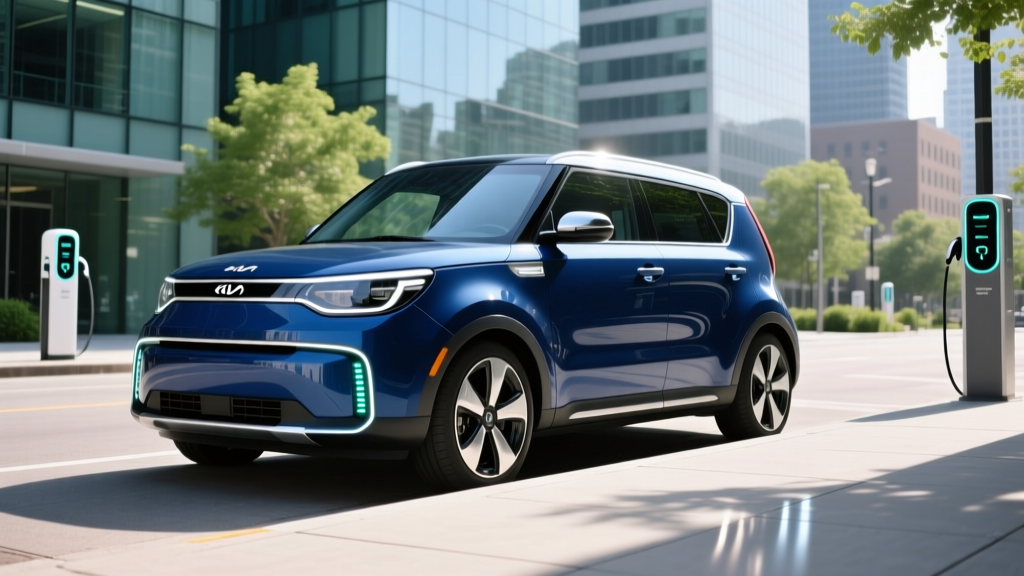
The boxy shape gives the Soul EV outstanding visibility and a surprisingly spacious interior. Rear cargo volume measures 24.2 cubic feet behind the second row, expanding to 62.1 cubic feet with seats folded — nearly identical to the gas version since the battery is mounted low in the floor.
Kia's suite of driver-assistance features (branded as Drive Wise) includes forward collision-avoidance assist, lane-keeping assist, blind-spot monitoring, and adaptive cruise control. This is a Level 2 SAE driver-assistance system, meaning you must remain fully engaged with hands on the wheel and eyes on the road at all times. It is not autonomous driving.
ADAS Limitations
Kia's adaptive cruise control and lane-centering work well on marked highways but do not handle construction zones, unmapped detours, or severe weather. The system may disengage without warning. Always maintain situational awareness.
Real-World Ownership Considerations
Home Charging Access Is Essential
The Soul EV's 77 kW DC fast-charging speed makes it a poor fit for drivers who must rely exclusively on public charging. A Level 2 home charger (240V, 40-amp circuit) adds roughly 23 miles of range per hour, meaning an overnight charge easily refills the battery. Expect to pay $500–$1,500 for a quality Level 2 unit and $800–$2,500 for professional electrical installation (potentially more if your panel needs a 200-amp upgrade).
Cold-Weather Range Loss
Without a heat pump, the Soul EV can lose 25–35% of its range in sustained sub-freezing temperatures. If your commute is 50+ miles round-trip in a cold climate, the 243-mile EPA range may feel tight in January. Garage parking and battery preconditioning help but don't eliminate the loss.
Battery Warranty and Longevity
Kia provides a 10-year / 100,000-mile battery warranty covering defects and capacity loss below approximately 70% state of health. NMC batteries in the Soul EV have demonstrated moderate degradation — expect roughly 10–15% capacity loss over 8–10 years based on fleet data from similar Hyundai/Kia platforms. A full battery replacement (out of warranty) would cost approximately $12,000–$16,000.
Decision Framework: Who Should Buy the Electric Kia Soul?
Choose the Soul EV If:
- You can install a Level 2 charger at home
- Your daily driving is under 60 miles round-trip
- You value a tall, upright seating position and excellent cargo space
- You qualify for the §30D tax credit (bringing effective price to ~$27,500)
- You want an EV with low maintenance costs and no tailpipe emissions
Look Elsewhere If:
- You frequently take road trips over 200 miles (the 77 kW charging speed will frustrate you)
- You live in an apartment or lack home charging access
- You drive in extreme cold regularly and need maximum range retention
- You need AWD (the Soul EV is front-wheel drive only)
Frequently Asked Questions
Is the Kia Soul EV still being sold in 2026?
Yes. The Soul EV continues for the 2026 model year in the U.S. market with the same 64 kWh battery and 243-mile EPA range. Availability varies by dealer, so check with local Kia dealerships for inventory.
Can I charge the Kia Soul EV at a Tesla Supercharger?
Not natively. The Soul EV uses the CCS1 connector. Some Tesla Supercharger stations now serve non-Tesla EVs through an adapter or built-in cable, but you must verify station compatibility through the Tesla app before relying on this for travel.
How long does the Soul EV battery last?
Based on degradation data from similar Hyundai/Kia 64 kWh platforms, expect the battery to retain approximately 85–90% of its original capacity after 5 years and 70–80% after 10 years under normal use. Kia's 10-year/100,000-mile warranty covers defects and significant capacity loss.
Does the Soul EV qualify for the $7,500 federal tax credit?
It may, depending on the vehicle's battery component and critical-mineral sourcing for the specific production batch, your income level, and current-year IRS thresholds. Always confirm on IRS.gov and ask the dealer for a written credit eligibility confirmation before purchase.
Is the electric Soul EV better than the gas version?
It depends on your priorities. The EV is quicker, smoother, and cheaper to operate if you charge at home. The gas Soul is cheaper upfront, has longer total range per fill-up, and works for drivers without home charging. Over 5 years, the EV typically costs less overall when the tax credit applies.
What's the real-world range on the highway?
Expect approximately 205–220 miles at 70 mph in mild weather. At 80 mph or in headwinds, range drops further. Plan road-trip charging stops conservatively — aim to arrive at chargers with 15–20% remaining rather than cutting it close.