The Bottom Line on Electric Kei Trucks
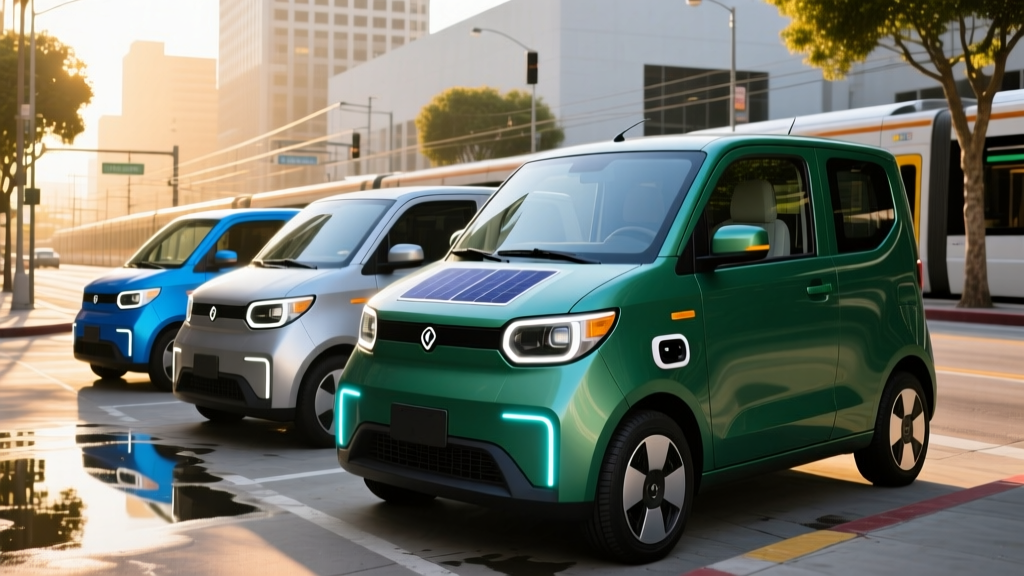
Electric kei trucks are compact, right-hand-drive (RHD) utility vehicles originally designed for Japan's "kei car" class — limited to 660cc or equivalent, with a maximum length of ~11.2 feet. In 2026, a handful of fully electric versions are entering the US market, primarily as Low-Speed Vehicles (LSVs) capped at 25 mph, or as off-road/farm-use utility EVs. Expect a base price between $15,000 and $25,000, a usable range of 40–70 miles from a 12–20 kWh LFP battery, and Level 2 charging in roughly 3–5 hours. They are not federally DOT-certified for highway use in most configurations, and the federal §30D tax credit generally does not apply to LSVs. These trucks work best for farm work, large property maintenance, campus logistics, and short-neighborhood errands — not interstate commuting.
What Exactly Is an Electric Kei Truck?
Japan's kei truck (or "keitora") class has existed since the 1960s — tiny, rugged, flat-bed workhorses built by Suzuki, Honda, Daihatsu, and Subaru. Gas-powered used imports have been popular in the US for decades, especially the Suzuki Carry and Honda Acty, typically imported under the 25-year NHTSA exemption rule that allows non-compliant vehicles older than 25 years to be legally registered.
The electric evolution swaps the 660cc three-cylinder engine for a small AC motor (typically 10–25 kW peak output) and a lithium iron phosphate (LFP) battery pack. The appeal is obvious: near-silent operation, zero tailpipe emissions, minimal maintenance, and fueling costs measured in pennies per mile. But the constraints are equally real — these are low-power, low-speed vehicles with limited range and minimal crash protection by US passenger-car standards.
As of early 2026, the most visible electric kei truck options reaching US buyers include:
- Honda e-Acty (concept/announced): Honda has signaled an electric successor to the iconic Acty, but as of this writing it remains in the announced/preliminary stage with no confirmed US import path.
- Chinese-market electric mini trucks (Wuling, Chang'an, DFSK): Available through direct importers and Alibaba-adjacent channels, typically as off-road or LSV-class vehicles. Pricing starts around $10,000–$18,000 landed.
- US-based LSV conversions: Several small US companies convert imported gas kei trucks to electric drivetrains, typically at a cost of $8,000–$15,000 on top of the donor vehicle price.
- Custom/farm-built electric UTVs: Purpose-built electric utility vehicles from companies like Polaris (Ranger EV lineage) serve a similar niche, though they are not technically kei trucks.
Range, Battery, and Charging: The Hard Numbers
Because electric kei trucks are not EPA-certified passenger vehicles, you will not find them on fueleconomy.gov. Range and efficiency figures come from manufacturer spec sheets, importer testing, and owner reports. Here is a consolidated look at typical 2026-spec electric kei truck powertrains:
| Specification | Typical Range (Low-End) | Typical Range (High-End) |
|---|---|---|
| Battery capacity (usable) | 10 kWh | 22 kWh |
| Battery chemistry | LFP (Lithium Iron Phosphate) — nearly universal | |
| Motor peak power | 10 kW (~13 hp) | 25 kW (~34 hp) |
| Claimed range | 50 mi | 80 mi |
| Real-world range (flat, mild weather, unloaded) | 40 mi | 65 mi |
| Real-world range (loaded bed, hilly, cold) | 25 mi | 45 mi |
| Top speed (LSV-limited) | 25 mph (federally mandated for LSV class) | |
| Top speed (off-road/unrestricted) | 35 mph | 45 mph |
| Level 1 charging (120V, ~1.4 kW) | 7–10 hours | 14–16 hours |
| Level 2 charging (240V, ~3.3–6.6 kW) | 3–4 hours | 4–6 hours |
| DC fast charging | Not available on most models | |
| Battery warranty | 3–5 years / 30,000–50,000 mi (varies by importer) | |
Real-World Range Reality Check
Claimed ranges of 60–80 miles assume ideal conditions: flat terrain, 68°F, empty bed, 20 mph steady speed. In practice, expect to lose 20–35% of range when carrying a 500+ lb payload up hills, and an additional 15–25% loss in temperatures below 40°F due to LFP chemistry's cold-weather resistance increase and cabin heater draw (if equipped). Plan your working radius around 30–40 usable miles for conservative daily use.
Why LFP Is the Right Chemistry Here
Nearly every electric kei truck uses LFP (lithium iron phosphate) cells rather than NMC (nickel manganese cobalt). For this application, that's the correct engineering choice:
- Cycle life: LFP cells tolerate 2,000–3,500 full charge cycles before reaching 80% State of Health (SoH), versus ~1,000–1,500 for typical NMC. For a work truck charged nightly, that translates to 5–10 years of daily use.
- Thermal stability: LFP is far less prone to thermal runaway — important for a vehicle that may sit in a barn or garage with limited fire suppression.
- Cost: LFP cells are 15–25% cheaper per kWh than NMC, keeping these trucks in the $15K–$25K bracket.
- Trade-off: LFP has ~20% lower energy density than NMC, meaning a heavier or physically larger pack for the same kWh. In a kei truck's compact chassis, this caps practical battery size around 20–22 kWh.
Street-Legality: The LSV Problem You Must Understand
This is the single most important thing a US buyer needs to know: most electric kei trucks cannot be legally driven on public roads at full passenger-car speeds.
Here's how the regulatory landscape breaks down:
Federal LSV Classification (FMVSS 500)
The National Highway Traffic Safety Administration (NHTSA) classifies vehicles with a top speed between 20 and 25 mph as Low-Speed Vehicles under FMVSS 500. LSVs must have:
- Headlamps, turn signals, tail lamps, and brake lamps
- Exterior mirrors and a parking brake
- A VIN (Vehicle Identification Number)
- Windshield (glazed or polycarbonate)
LSVs are not required to meet the crash-test standards (frontal, side, rollover) that full passenger vehicles must pass. They are federally legal on roads with speed limits of 35 mph or lower, though individual states can impose additional restrictions or allowances.
State-by-State Variability
Some states (Florida, Texas, Arizona) are relatively permissive about LSV registration and road use. Others (California, New York) have stricter rules about where LSVs can operate. A few states allow LSVs on roads up to 45 mph; others restrict them to 25 mph roads only. Always check your state DMV's current LSV/NEV registration rules before purchasing.
The 25-Year Import Rule for Gas Kei Trucks
Many US kei truck owners drive older gas-powered Suzuki Carrys or Honda Actys imported under the NHTSA's 25-year exemption (vehicles manufactured before 1999 as of 2024, before 2001 as of 2026). This rule does not apply to new electric kei trucks — those must either comply with FMVSS or be registered as LSVs/off-road vehicles.
Electric Kei Truck vs. Gas Mini Truck: Cost Comparison
Let's compare a typical electric kei truck against a used gas-powered Suzuki Carry (the most common kei truck in the US) across a 5-year ownership horizon, assuming 3,000 miles driven annually (farm/property use):
| Cost Category | Electric Kei Truck (New) | Used Gas Suzuki Carry (~2000 model) |
|---|---|---|
| Purchase price | $18,000 | $7,500 |
| Federal tax credit (§30D) | $0 (LSV not eligible) | $0 |
| Fuel/energy (5 yrs, 15,000 mi) | $450 (at $0.14/kWh, 3 mi/kWh) | $2,500 (at $3.50/gal, 22 mpg) |
| Maintenance (5 yrs) | $300 (tires, cabin filter, brake fluid) | $2,800 (oil, plugs, belts, carb cleaning, rust repair) |
| Insurance (5 yrs avg) | $1,500 ($300/yr LSV policy) | $2,000 ($400/yr specialty classic) |
| Estimated resale (year 5) | –$7,000 | –$4,500 |
| Total 5-year net cost | $13,250 | $10,300 |
| Cost per mile | $0.88 | $0.69 |
Decision Framework: Which Should You Choose?
Choose an electric kei truck if:
- You operate primarily on private property, a farm, or a campus where LSV road restrictions don't apply
- Your daily driving radius is under 30 miles round-trip
- You value near-silent operation (livestock operations, early-morning residential work)
- You want minimal maintenance and have reliable access to a 120V or 240V outlet for overnight charging
- You plan to keep the vehicle 7+ years, allowing the lower operating costs to offset the higher purchase price
Choose a used gas kei truck if:
- You need highway-speed road use (the 25-year import exemption allows full registration in many states)
- Your work requires longer range without charging downtime (200+ miles per tank)
- You're on a tighter upfront budget ($5,000–$9,000 vs $15,000–$25,000)
- You live in an extremely cold climate where LFP range loss would be severe
- You need the ability to tow heavier loads (gas kei trucks typically tow 1,000–1,500 lbs; electric versions are often limited to 500–800 lbs due to motor torque curves)
Real-World Ownership: What First-Time Buyers Must Know
Charging Setup at Home
Most electric kei trucks ship with a standard 120V Level 1 charging cord (J1772 connector or a China-standard GB/T adapter). A full charge from empty on Level 1 takes 10–16 hours depending on battery size — adequate if the truck sits overnight after a day's work. For faster turnaround, a Level 2 (240V) EVSE cuts charge time to 3–5 hours. A basic Level 2 home installation typically costs:
| Item | Cost Range |
|---|---|
| Level 2 EVSE unit (16A–32A) | $200–$500 |
| Electrician labor (240V circuit run) | $400–$1,200 |
| Permit and inspection | $50–$200 |
| Panel upgrade (if needed for older homes) | $1,000–$3,000 |
| Total typical install | $650–$1,900 |
Consult a licensed electrician for final specs — your existing panel capacity and circuit distance determine whether a simple breaker addition suffices or a panel upgrade is required.
Cold-Weather Performance
LFP batteries experience increased internal resistance below 40°F. Expect 15–25% range loss at 32°F and potentially 30–40% loss at 10°F or below, compounded by any cabin heater use. Most electric kei trucks lack active battery thermal management (liquid heating/cooling), so preconditioning — warming the battery before driving — is generally not an option. If you operate in northern climates, size your working radius around the worst-case winter range, not the summer sticker.
Parts, Service, and the Importer Gamble
This is where electric kei truck ownership diverges sharply from buying a Ford or Chevrolet. Most electric kei trucks sold in the US come through small importers or direct-from-China channels. That means:
- No dealer network: Warranty service typically goes through the importer, who may have limited US-based technicians.
- Parts lead times: Replacement body panels, motor controllers, or proprietary BMS (battery management system) components may ship from overseas with 4–8 week lead times.
- No NHTSA crash data: These vehicles are not crash-tested by NHTSA or the IIHS. You are accepting significantly less occupant protection than a modern passenger vehicle.
Common Misconceptions About Electric Kei Trucks
| Myth | Fact |
|---|---|
| "They qualify for the $7,500 federal EV tax credit." | The IRS §30D credit applies to qualified plug-in electric vehicles meeting MSRP caps, income limits, and battery-sourcing requirements. LSV-class vehicles generally do not qualify because they are not classified as "motor vehicles" under the Clean Air Act for credit purposes. Always verify with a tax professional before purchasing. |
| "I can drive it on any road." | LSV-class electric kei trucks are federally restricted to roads with speed limits of 35 mph or below (state rules vary). Driving one on a 55 mph highway is illegal and dangerous. |
| "The battery will need expensive replacement in a few years." | LFP chemistry degrades slowly — most packs retain 80%+ capacity after 2,000 cycles (roughly 5–8 years of daily use). Replacement packs for 15 kWh systems run $3,000–$5,000, but full replacement is rarely needed within the vehicle's working life. |
| "They're just golf carts." | Golf carts are a separate vehicle class with even fewer safety requirements. LSV-class kei trucks have VIN numbers, are state-registerable (with plates and insurance), and are built to carry payloads of 700–1,200 lbs in a cargo bed — far beyond golf cart capability. |
| "Electric means zero maintenance." | You still need tire rotations, brake fluid checks, cabin air filter replacement, suspension inspections, and 12V auxiliary battery maintenance. The drivetrain is simpler, but the vehicle is not maintenance-free. |
The Tax Credit and Incentive Landscape for 2026
As noted, the federal §30D new clean vehicle credit is generally not available for LSV-class electric kei trucks. However, there are adjacent incentives to investigate:
- State-level EV rebates: Some states offer rebates for LSVs or neighborhood electric vehicles (NEVs). Check your state energy office or DMV.
- Utility company rebates: Certain electric utilities offer $200–$500 rebates for purchasing an EV or installing a Level 2 charger — some extend this to LSVs.
- Agricultural/business deductions: If the truck is used for farming or business, IRS Section 179 expensing or bonus depreciation may allow you to deduct the full purchase price in year one. Consult a tax professional.
- Used EV credit (§25E): If you purchase a qualifying used electric kei truck from a dealer for $25,000 or less, the §25E credit (up to $4,000 or 30% of sale price) may apply — but only if the vehicle meets the IRS definition of a qualified plug-in electric vehicle. LSV classification is again a potential barrier.
Frequently Asked Questions
Can I import a used electric kei truck from Japan?
Japan's domestic-market electric kei trucks are extremely rare — the kei segment has been slow to electrify compared to passenger cars. Most electric kei trucks available to US buyers are Chinese-manufactured. The 25-year NHTSA import exemption applies to vehicles manufactured before 2001 (as of 2026), but finding a 25-year-old electric kei truck is essentially impossible since they didn't exist in that era.
What's the payload and towing capacity?
Typical electric kei trucks carry 700–1,200 lbs in the bed, depending on the model and battery placement. Towing capacity is usually 500–800 lbs (braked trailer), which is lower than gas kei trucks that often manage 1,000–1,500 lbs. The electric motor's torque is excellent for low-speed hauling, but sustained heavy loads drain the small battery rapidly.
Do I need a special license to drive one?
In most states, a standard driver's license is sufficient to operate an LSV. However, some states require a minimum age or specific endorsements. Check your state DMV before purchasing.
How long does the battery last before needing replacement?
LFP batteries in this class typically retain 80% State of Health after 2,000–3,000 charge cycles. With daily charging, that translates to roughly 5–8 years before you notice meaningful range reduction. Full replacement cost for a 15 kWh pack is approximately $3,000–$5,000 including labor, though many packs last the functional life of the vehicle.
Can I charge it from a standard household outlet?
Yes. Most electric kei trucks include a Level 1 (120V) charging cord. A full charge takes 10–16 hours from empty, which works well for overnight charging after a day's use. For faster turnaround, a 240V Level 2 setup reduces charge time to 3–5 hours.
Are these vehicles safe?
Electric kei trucks in the LSV class are not crash-tested by NHTSA or IIHS. They lack airbags, crumple zones, and the structural protection of a modern passenger vehicle. They are safest when operated at low speeds on private property or quiet residential streets. Treat them like utility equipment, not passenger cars, and always wear a seatbelt.