The Short Answer: Is an Electric Kei Truck Right for You?
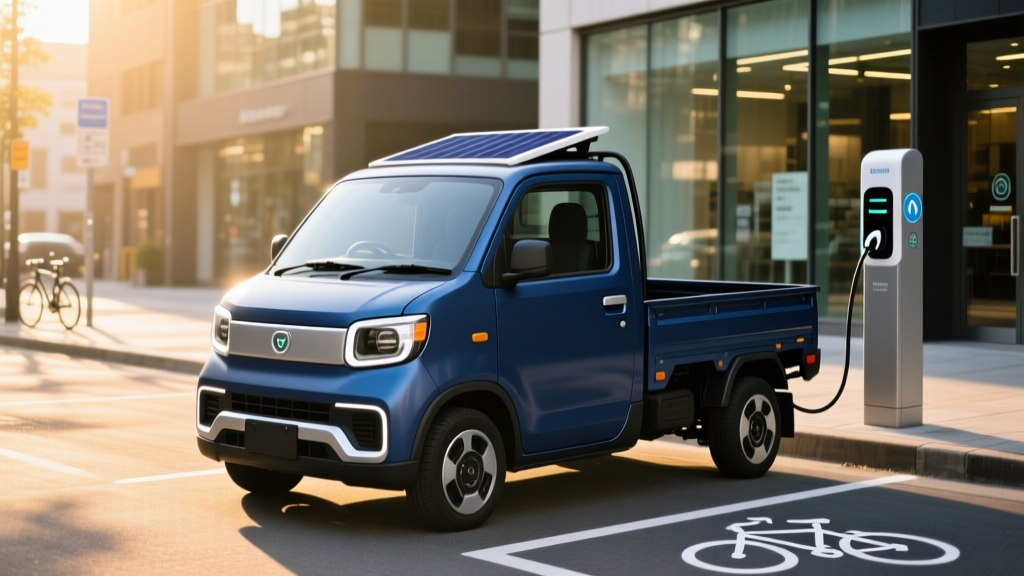
An electric kei truck is a compact, lightweight utility vehicle — originally a Japanese vehicle class — now sold in the U.S. primarily as a Low-Speed Vehicle (LSV) or Neighborhood Electric Vehicle (NEV). In 2026, models like the Cenntro Metro, Workhorse E-Gen, and imported Japanese-market EV kei trucks offer 60 to 100 miles of real-world range from battery packs between 12 kWh and 24 kWh, with prices from roughly $25,000 to $45,000 before incentives. They are best suited for campus logistics, farm and property work, last-mile delivery on private roads, and municipal utility use — not highway commuting.
What Exactly Is an Electric Kei Truck?
The Japanese kei truck (軽トラック) is a micro utility vehicle built to strict dimensional and engine-size regulations in Japan: max length of ~11.1 feet, width of ~4.9 feet, and historically a 660cc gasoline engine. Gasoline kei trucks from Suzuki (Carry), Honda (Acty), Daihatsu (Hijet), and Subaru (Sambar) have been imported to the U.S. as used vehicles for years, prized for their maneuverability and low cost.
The electric kei truck swaps that tiny combustion engine for a battery-electric powertrain. In the U.S. market, this category splits into two groups:
- Japanese-market EV kei trucks (e.g., Mitsubishi Minicab-MiEV Truck, though discontinued, and newer models from Japanese OEMs) — typically imported as 25-year-exempt vehicles or under specialized compliance.
- U.S.-market electric utility carts and LSVs built to kei-truck dimensions and purpose (e.g., Cenntro Metro, Workhorse E-Gen, and various NEV platforms) — street-legal up to 25 mph on roads with speed limits of 35 mph or less, depending on state law.
Neither group competes with full-size electric pickups like the Ford F-150 Lightning or Rivian R1T. These are purpose-built micro-utility vehicles, and understanding that distinction is critical before purchase.
Range, Battery, and Charging: The Real Numbers
Electric kei trucks carry small battery packs relative to passenger EVs, which means range is modest but charging is straightforward. Here is what the data looks like for the main options available or importable in 2026:
| Spec | Cenntro Metro (2025–2026) | Workhorse E-Gen (Utility Config) | Imported Japanese EV Kei (Typical) |
|---|---|---|---|
| Battery Capacity (usable) | ~12–16 kWh (LFP) | ~20–24 kWh (NMC) | ~10.5–16 kWh (varies) |
| EPA / Claimed Range | ~60–80 mi | ~70–100 mi | ~60–90 mi (JC08/WLTP, higher than real-world) |
| Real-World Range (loaded, mixed) | 45–65 mi | 55–80 mi | 40–65 mi |
| Peak Charge Rate (DC) | Not DC-capable (L2 only) | ~15–20 kW DC (some configs) | Mostly L2; CHAdeMO on select models |
| Level 2 Charge Time (0–100%) | ~4–6 hours (3.3–6.6 kW) | ~4–7 hours (6.6 kW) | ~4–8 hours |
| Top Speed | 25 mph (LSV) / 45 mph (off-road variant) | 25–45 mph (config-dependent) | 50–60 mph (Japan-spec) |
| Payload Capacity | ~1,100–1,500 lbs | ~1,200–1,800 lbs | ~750–1,100 lbs |
| Base MSRP (approx.) | $25,000–$32,000 | $35,000–$45,000 | $15,000–$25,000 (used import) |
Real-World Range Reality: Japanese JC08 and WLTP range ratings are notoriously optimistic compared to U.S. EPA testing. A kei truck rated at 100 km (62 mi) under JC08 will typically deliver 40–50 real-world miles when carrying a load, driving on inclines, or operating in cold weather (below 40°F). Plan your routes around 60% of the stated range for safety margin.
Electric Kei Truck vs. Gas Kei Truck: Cost and Capability
Most U.S. kei truck buyers are choosing between a used imported gas kei truck (Suzuki Carry, Honda Acty) and a new electric alternative. The economics diverge sharply depending on use pattern.
| Factor | Electric Kei Truck (New LSV) | Gas Kei Truck (Used Import, 660cc) |
|---|---|---|
| Upfront Cost | $25,000–$45,000 | $7,000–$14,000 (typical used) |
| Fuel / Energy Cost per Mile | ~$0.03–$0.05/mi (at $0.14/kWh avg) | ~$0.12–$0.18/mi (at 20–25 MPG, $3.40/gal) |
| Annual Fuel Cost (5,000 mi/yr) | $150–$250 | $600–$900 |
| Maintenance (Annual) | $100–$200 (minimal — no oil, filters, plugs) | $400–$800 (oil, belts, carburetor issues, emissions) |
| 5-Year Total Operating Cost | $1,250–$2,250 | $5,000–$8,500 |
| Street Legality | LSV/NEV — roads ≤35 mph, state-dependent | Varies widely; many states restrict to off-road or farm use only |
| Range | 45–80 mi real-world | 200–300 mi (7–9 gal tank, 25 MPG) |
| Refuel / Recharge Time | 4–7 hours (L2) | 3 minutes at gas station |
| Cold-Weather Performance | 20–35% range loss below 30°F | Minimal range impact; may need choke / warm-up |
| Emissions | Zero tailpipe (grid-dependent upstream) | High — pre-emissions or JDM-spec, no catalytic converter on many |
The gas kei truck wins on upfront cost and range. The electric kei truck wins decisively on operating cost, with a $3,000–$6,000 operating savings over 5 years at typical use volumes — enough to close much of the purchase-price gap for commercial users who log consistent daily miles.
Real-World Ownership: What First-Time Buyers Must Know
Street Legality Is a Patchwork
This is the single most important ownership consideration. Federal LSV/NEV standards (FMVSS 500) allow these vehicles on roads with speed limits up to 35 mph, but states set their own rules. Some states (Arizona, Florida, Texas) are permissive. Others restrict LSVs heavily or require specific registration classes. Always verify with your state DMV before purchasing — NHTSA's LSV guidelines are the federal baseline, but state law governs daily use.
Home Charging Is Nearly Universal for This Segment
Unlike full-size EVs that benefit from 48-amp Level 2 circuits, most electric kei trucks charge on standard 120V (Level 1) or a basic 240V Level 2 outlet. A standard NEMA 14-50 outlet — the same one your dryer uses — is sufficient for overnight charging in 5–7 hours. Installation cost for a 240V outlet is typically $300–$800 if your panel has capacity, or $1,500–$3,000 if you need a panel upgrade. Most kei truck owners charge in a garage or barn without expensive EV-specific equipment.
Insurance and Registration
LSV insurance is generally cheaper than standard auto — expect $400–$900/year depending on state and coverage level. However, not all insurers write LSV policies, so confirm availability before buying. Registration fees are typically lower than passenger vehicles but vary by state.
Cold Climate Limitations
LFP batteries (common in Chinese-manufactured kei trucks like the Cenntro) lose more capacity in cold weather than NMC packs — expect 25–35% range reduction below freezing. If you operate in northern states with sustained sub-30°F winters, plan for 35–50 real-world miles on a full charge, not the 70+ you might see in summer. Battery preconditioning is generally not available in this vehicle class.
Cost Breakdown: Purchase, Charging, and Total Ownership
| Cost Category | Electric Kei Truck (New, LSV) | Gas Kei Truck (Used Import) |
|---|---|---|
| Purchase Price | $30,000 (mid-range example) | $10,000 (typical used) |
| Federal Tax Credit (§30D) | $0–$7,500* (see eligibility below) | $0 |
| Effective Purchase Price | $22,500–$30,000 | $10,000 |
| Home Charging Setup | $300–$800 (240V outlet) | $0 |
| Annual Energy/Fuel (5,000 mi) | $200 | $750 |
| Annual Maintenance | $150 | $600 |
| Annual Insurance | $650 | $500 (if insurable at all) |
| 5-Year Total Cost of Ownership | $28,500–$36,000 | $19,250 |
| Cost per Mile (all-in, 5 yr / 25K mi) | $1.14–$1.44 | $0.77 |
*Tax credit caveat: The federal IRS §30D clean vehicle credit up to $7,500 applies only if the vehicle qualifies as a new clean vehicle under current rules — including MSRP caps ($80,000 for trucks/vans), buyer income limits ($150K single / $300K joint), battery sourcing requirements, and North American final assembly. Many imported or low-volume electric kei trucks will not qualify due to assembly location or battery mineral sourcing. Check the IRS qualified vehicle list before assuming credit eligibility. The credit can be transferred to the dealer at point of sale if eligible.
Common Misconceptions About Electric Kei Trucks
| Myth | Fact |
|---|---|
| "You can drive a kei truck on any road." | LSV-class electric kei trucks are federally limited to roads with speed limits of 35 mph or less. State laws may further restrict use. Highway driving is illegal in most jurisdictions. |
| "The battery will need replacing in a few years." | LFP batteries in commercial-grade kei trucks are rated for 2,000+ charge cycles before reaching 80% State of Health. At 5,000 miles/year and 15 kWh per charge, that's roughly 150,000+ miles — well beyond the typical service life of the vehicle itself. |
| "Electric kei trucks can tow." | Most have no rated towing capacity or a maximum of 500–1,000 lbs. These are payload vehicles, not tow rigs. Exceeding GVWR risks motor and controller damage. |
| "They qualify for the full $7,500 EV tax credit." | Many do not. §30D requires North American final assembly, critical mineral and battery component sourcing thresholds, and MSRP/income compliance. Verify each model on the IRS qualified list. |
| "Charging takes forever." | A 15 kWh battery charges from 0–100% in about 5 hours on a 240V / 30A Level 2 circuit. For daily use of 30–40 miles, overnight charging on a standard 120V outlet is often sufficient (adds ~12–15 miles of range per hour of charging). |
Decision Framework: Should You Buy an Electric Kei Truck?
Choose an electric kei truck if:
- Your daily routes are under 50 miles round-trip on low-speed roads or private property
- You operate on a campus, farm, large property, or in a municipality with supportive LSV laws
- You drive 3,000+ miles/year (the operating-cost savings compound)
- You have access to a garage, barn, or covered area with a 120V or 240V outlet
- Noise and emissions matter (indoor warehouse use, residential neighborhoods, organic farms)
- You want near-zero maintenance and can absorb higher upfront cost
Stick with a gas kei truck (or consider a different vehicle) if:
- You need 100+ miles of range without mid-day charging
- You operate in extreme cold (sub-20°F) regularly and cannot tolerate range loss
- You need highway-speed capability or must drive on roads above 35 mph
- Your state does not permit LSV/NEV registration for your intended roads
- Your budget is under $15,000 and you cannot wait for operating savings to offset the purchase premium
- You need a rated towing capacity above 500 lbs
Frequently Asked Questions
Are electric kei trucks street-legal in the United States?
It depends on classification and state law. U.S.-market electric kei trucks sold as LSVs/NEVs are federally legal on roads with speed limits up to 35 mph, but each state sets its own registration and road-access rules. Imported Japanese-market kei trucks may face additional DOT and EPA compliance hurdles unless they qualify under the 25-year import exemption. Check your state DMV and NHTSA LSV regulations before purchasing.
How much does it cost to charge an electric kei truck at home?
At the U.S. average residential electricity rate of roughly $0.16/kWh (EIA, 2025–2026), fully charging a 15 kWh battery costs about $2.40. For a typical 5,000-mile driving year consuming ~750 kWh, your annual electricity cost is approximately $120–$200 — compared to $600–$900 in gasoline for an equivalent gas kei truck at 22 MPG.
What is the battery warranty on electric kei trucks?
Warranty coverage varies significantly by manufacturer. Commercial-oriented brands like Cenntro typically offer 2–3 years / 24,000–36,000 miles on the battery pack. This is substantially less than the 8-year/100,000-mile battery warranties common on passenger EVs. Factor this into your total cost calculation and ask the dealer for the specific capacity retention guarantee (e.g., "70% SoH at end of warranty").
Can I use an electric kei truck for commercial delivery?
Yes, and this is one of the strongest use cases. Last-mile delivery on low-speed urban and suburban routes, campus mail services, and resort/hospital logistics are ideal applications. The low per-mile operating cost (~$0.04/mi for electricity) and zero tailpipe emissions make electric kei trucks attractive for fleet operators with predictable, short routes and overnight depot charging.
Do electric kei trucks have regenerative braking?
Most do, though the regen strength varies. Some models offer adjustable regen levels, while others have a fixed, mild regen profile. One-pedal driving is generally not available in this vehicle class due to simpler motor controllers. Expect regen to recapture 10–20% of energy in stop-and-go use.
What happens if the battery degrades over time?
LFP batteries (used in many Chinese-manufactured kei trucks) degrade more slowly than NMC and tolerate daily 100% charging without accelerated wear. Expect roughly 5–8% capacity loss over 5 years at typical commercial use levels. Replacement battery packs for these vehicles typically cost $3,000–$7,000 depending on capacity and chemistry — significantly less than passenger EV battery replacements but still a meaningful expense for a $25,000–$35,000 vehicle.