Quick Answer: What Is an Electric K Truck and Should You Buy One?
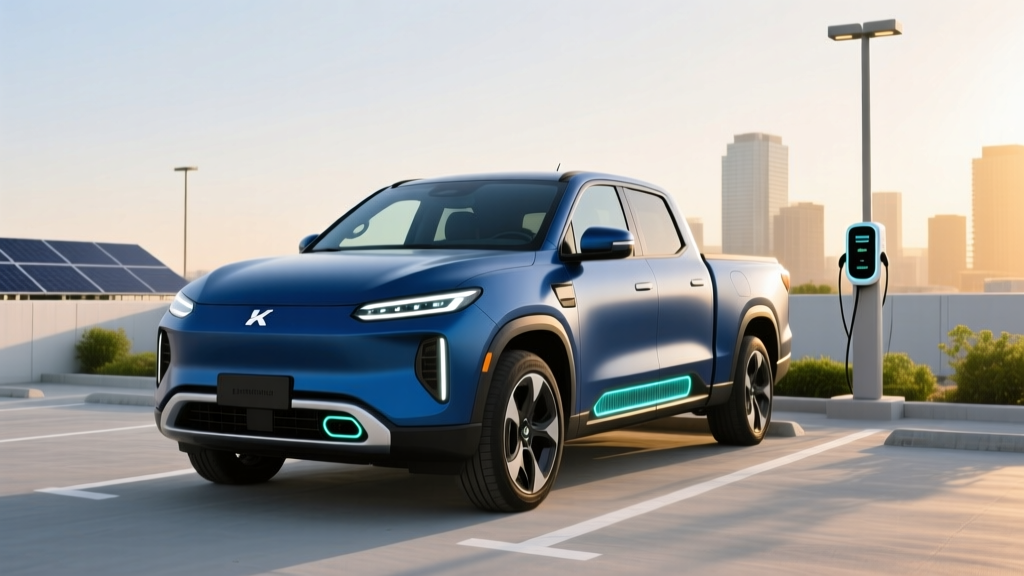
The "electric K truck" (kei truck / kei-class electric pickup) refers to compact, lightweight electric utility vehicles originally derived from Japan's kei-car regulations — now adapted for the U.S. market as neighborhood electric vehicles (NEVs) or low-speed electric trucks. As of 2026, no major OEM sells a full highway-capable electric kei truck in the United States. What's available falls into two categories:
- Street-legal NEV electric mini trucks (top speed ~25 mph): Brands like BMS Electric Vehicles, Mullen Automotive (Mullen One/Three cargo vans), and importers of Chinese-built micro-EVs sell these for $8,000–$18,000. They're limited to roads with speed limits ≤35 mph in most states.
- Highway-capable compact electric pickups: The Ford Maverick (hybrid-only, not fully electric as of 2026), and upcoming platforms like the Slate Auto small EV pickup (announced, expected late 2026/2027) represent the closest mainstream analog.
Bottom line: If you need a compact electric utility truck for campus, farm, warehouse, or last-mile delivery use, NEV-class electric K trucks are available now and cost $0.03–$0.05/mile to "fuel." If you need highway speeds and 200+ mile range, you'll need to wait for announced models or consider a compact EV SUV instead.
What Exactly Is an Electric K Truck?
The term "K truck" (or kei truck) originates from Japan's kei-jidosha (light automobile) category — vehicles restricted to 660cc engines (or electric equivalent), maximum dimensions of roughly 134 inches long × 59 inches wide, and a 350 kg (770 lb) payload limit. Gasoline kei trucks from Suzuki (Carry), Honda (Acty), Daihatsu (Hijet), and Subaru (Sambar) have been imported to the U.S. for decades as off-road and low-speed utility vehicles.
An electric K truck applies the same compact form factor but replaces the engine with a battery-electric powertrain. In 2026, the U.S. market offers these primarily as:
- Imported Chinese micro-EVs rebranded by U.S. distributors (e.g., Kandi, BMS, various Alibaba-sourced models) — typically LSV/NEV classified
- Custom-built electric conversions of vintage Japanese kei trucks by specialty shops ($15,000–$30,000 all-in)
- Purpose-built U.S. utility EVs from startups targeting commercial last-mile and groundskeeping markets
None of these are full highway-capable vehicles. Federal Motor Vehicle Safety Standards (FMVSS) do not require NEVs to meet crash-test, airbag, or ABS mandates, which keeps costs low but limits where you can legally drive them.
Specs That Matter: Battery, Range, and Charging
Because electric K trucks vary wildly by manufacturer and many are small-batch or imported, specs are less standardized than mainstream EVs. Here's what you'll typically encounter in the 2026 market:
| Specification | Typical Range | Notes |
|---|---|---|
| Battery capacity | 7–20 kWh (usable) | Mostly LFP chemistry for cycle life and safety |
| EPA / claimed range | 40–80 miles | No official EPA testing for most NEVs; manufacturer claims only |
| Real-world range (loaded, hills) | 25–55 miles | Expect 30–40% loss at max payload or in cold weather |
| Motor output | 5–20 kW (7–27 HP) | Top speed typically 25–45 mph depending on classification |
| Level 1 charging (120V) | 1.0–1.9 kW | Full charge in 5–12 hours — adequate for overnight |
| Level 2 charging (240V) | Rarely supported | Some commercial models offer 3.3 kW onboard charger |
| DC fast charging | Not available | Battery too small; no CCS/NACS port on NEV-class vehicles |
| Payload capacity | 500–1,100 lbs | Varies by frame and suspension; kei-class original limit is ~770 lbs |
| Towing | Not rated / 500 lbs max | Not designed for trailer towing |
Charging reality: With a 10 kWh battery and a standard 120V outlet delivering ~1.4 kW, a full 0–100% charge takes roughly 7 hours. This is actually practical for the use case — most electric K trucks return to a garage or job site nightly. You do not need a dedicated Level 2 home charger for these vehicles, which eliminates the $500–$2,000 installation cost that full-size EV owners face.
Electric K Truck vs. Gas Kei Truck: Cost Comparison
The most direct comparison for buyers considering an electric K truck is a used Japanese gasoline kei truck (Suzuki Carry, Honda Acty, etc.), which typically sells for $5,000–$12,000 in the U.S. import market. Here's how the economics stack up over 5 years of light utility use (3,000 miles/year):
| Cost Category | Electric K Truck (New, NEV) | Gas Kei Truck (Used Import) |
|---|---|---|
| Purchase price | $12,000–$16,000 | $7,000–$10,000 |
| Fuel / electricity (5 yrs) | $450–$750 ($0.03–$0.05/mi) | $2,250–$3,000 ($0.15–$0.20/mi at 20–25 MPG) |
| Maintenance (5 yrs) | $200–$500 (tires, brakes, cabin filter) | $1,500–$3,000 (oil, filters, belts, carburetor issues on older imports) |
| Insurance (5 yrs) | $1,500–$2,500 (NEV/LSV policies) | $2,000–$3,500 (specialty import vehicle insurance) |
| Registration / title | $300–$600 | $300–$600 |
| Federal tax credit (§30D) | Typically NOT eligible* | N/A |
| 5-year total (mid-range) | ~$17,500 | ~$17,000 |
*Most NEV-class electric K trucks do not qualify for the IRS §30D clean vehicle credit because they do not meet FMVSS requirements for on-road vehicles and are not classified as "motor vehicles" under the credit's definitions. Always verify eligibility with a tax professional before purchase.
The takeaway: electric and gas kei trucks reach near-parity over 5 years, but the electric version front-loads its cost in the purchase price while the gas version bleeds money through fuel and aging-vehicle maintenance. If you drive more than 3,000 miles/year, the electric truck pulls ahead significantly.
Real-World Ownership: What First-Time Buyers Need to Know
If you've never owned an electric vehicle — let alone a niche micro-EV — here are the practical realities that spec sheets don't convey:
Home Charging Access Is Simple (but Verify Your Outlet)
Most electric K trucks charge on a standard 120V / 15A household outlet using an included EVSE cord. Before plugging in, verify the outlet is on a dedicated circuit (not shared with a refrigerator or space heater) and shows no signs of scorching or loose fit. A $15 outlet tester from a hardware store can confirm proper wiring. If your outlet is old or you plan to charge daily, a licensed electrician can install a new 20A dedicated outlet for $150–$300 — far cheaper than a full Level 2 installation.
Cold Weather Cuts Range Hard on Small Batteries
A 10 kWh battery with 50 miles of rated range in 70°F weather may deliver only 30–35 miles at 20°F. LFP chemistry (common in these trucks) is particularly sensitive to cold — charging below freezing can damage cells unless the pack has active thermal management, which almost no NEV-class trucks include. If you operate in northern climates, plan for 40% range loss in winter and store the vehicle in a garage when possible.
Speed and Road Restrictions Are Real
NEV-classified electric K trucks are federally limited to 25 mph top speed, and most states restrict them to roads with posted speed limits of 35 mph or lower. Some states (Texas, Florida, Arizona) have broader allowances; others (New York, California in certain jurisdictions) enforce stricter rules. Check your state's DMV guidelines before assuming you can commute on a 45 mph arterial road.
Parts, Service, and Resale Are the Hidden Risks
Unlike a Ford F-150 Lightning or Rivian R1T, electric K trucks from small importers or startups carry genuine parts-availability risk. If the distributor ceases operations, you may struggle to find replacement battery modules, controllers, or body panels. Before buying, confirm: (1) where replacement parts come from, (2) whether a local technician can service the drivetrain, and (3) whether the battery uses standard cells (e.g., CATL LFP prismatic) or proprietary packs.
Federal Tax Credits and Incentives: What Actually Applies
This is where buyer confusion runs highest. Here are the facts as of 2026:
| Myth | Fact |
|---|---|
| "Every electric vehicle gets $7,500" | The §30D credit requires the vehicle to meet FMVSS standards, have a GVWR ≤14,000 lbs, be manufactured by a qualified OEM, and meet battery-sourcing and critical-minerals requirements. Most NEVs fail the FMVSS test. |
| "I can get the used-EV credit on a kei truck" | The §25E used clean vehicle credit (up to $4,000) also requires the vehicle to be a qualified clean motor vehicle. NEVs generally do not qualify. |
| "State incentives will cover the difference" | Some states (California's CVRP, Colorado's innovative motor vehicle credit, New York's Drive Clean Rebate) offer additional rebates — but most also require highway-capable, FMVSS-compliant vehicles. Check your state energy office for specifics. |
| "Commercial fleet purchases get credits" | The §45W commercial clean vehicle credit (up to $7,500 for vehicles under 14,000 lbs GVWR) may apply if the electric K truck meets the qualified-manufacturer and MSRP requirements. Fleet buyers should consult a tax professional. |
Practical advice: Budget for the full purchase price without assuming any federal credit. If a credit does apply (e.g., through a commercial fleet purchase under §45W), treat it as a bonus, not a baseline.
Decision Framework: Should You Buy an Electric K Truck?
Choose an Electric K Truck If:
- You need a compact utility vehicle for a campus, farm, large property, warehouse district, or last-mile delivery route
- Your typical daily driving is under 30 miles and on roads ≤35 mph
- You have access to a standard 120V outlet for overnight charging
- You want near-zero maintenance and $0.03–$0.05/mile fuel cost
- Noise and exhaust restrictions matter (e.g., indoor facilities, early-morning residential work)
Do NOT Buy an Electric K Truck If:
- You need highway-speed capability (55+ mph) or interstate access
- Your daily route exceeds 40–50 miles round-trip
- You need to tow a trailer or carry more than ~800 lbs regularly
- You live in a state with strict NEV road restrictions and need to use arterial roads
- You expect the federal §30D tax credit to reduce your purchase price
Consider These Alternatives Instead:
- Compact hybrid pickup (Ford Maverick Hybrid): 42 MPG combined per fueleconomy.gov, highway-capable, $28,000–$38,000 MSRP, widely available service network
- Used gas kei truck: $5,000–$10,000, proven mechanical simplicity, no range limits, but higher fuel and maintenance cost
- Wait for announced compact EV pickups: Slate Auto's small EV pickup (announced for late 2026/2027 production) targets the sub-$25,000 highway-capable segment — if it ships on schedule, it will redefine this category
Frequently Asked Questions
Are electric K trucks street-legal in the United States?
Yes, but with major restrictions. Most are classified as Neighborhood Electric Vehicles (NEVs) or Low-Speed Vehicles (LSVs), limited to 25 mph and restricted to roads with speed limits of 35 mph or lower. Registration requirements vary by state — some require a title and insurance, others only a bill of sale. Check your state DMV before purchasing.
How long do the batteries last in electric K trucks?
Most use LFP (lithium iron phosphate) cells, which offer 2,000–4,000 charge cycles before degrading to 80% of original capacity. At one full cycle per day, that translates to roughly 5–10 years of daily use. Replacement battery packs typically cost $2,000–$5,000 depending on capacity — a significant expense relative to the vehicle's value.
Can I charge an electric K truck from a regular wall outlet?
Yes. Nearly all NEV-class electric trucks charge via a standard 120V household outlet using an included charging cord. A full charge on a 10 kWh battery takes approximately 7 hours at 1.4 kW. Ensure the outlet is on a dedicated circuit and in good condition.
Do electric K trucks qualify for the $7,500 federal tax credit?
Generally, no. The IRS §30D clean vehicle credit requires the vehicle to meet Federal Motor Vehicle Safety Standards and be produced by a qualified manufacturer meeting battery-sourcing requirements. Most NEV-class electric K trucks do not meet FMVSS standards. Always verify with a tax professional and check the IRS qualified vehicles list before relying on credit eligibility.
What happens if the importer or manufacturer goes out of business?
This is a genuine risk with small-batch and imported electric K trucks. Parts availability, warranty support, and battery replacement could become difficult. Mitigate this by choosing vehicles that use widely available standard battery cells (CATL, BYD, EVE) and common motor controllers, and by confirming that independent EV repair shops in your area can service the platform.
Is an electric K truck conversion of a gas kei truck worth it?
Conversions typically cost $8,000–$15,000 on top of the donor vehicle price ($4,000–$8,000), totaling $12,000–$23,000. The result is a unique, quiet, zero-tailpipe-emission utility truck, but with no warranty, uncertain resale value, and DIY-level reliability. Only pursue a conversion if you value the project itself and have access to a qualified EV conversion shop.