Quick Answer: Does John Deere Make an Electric Mower in 2026?
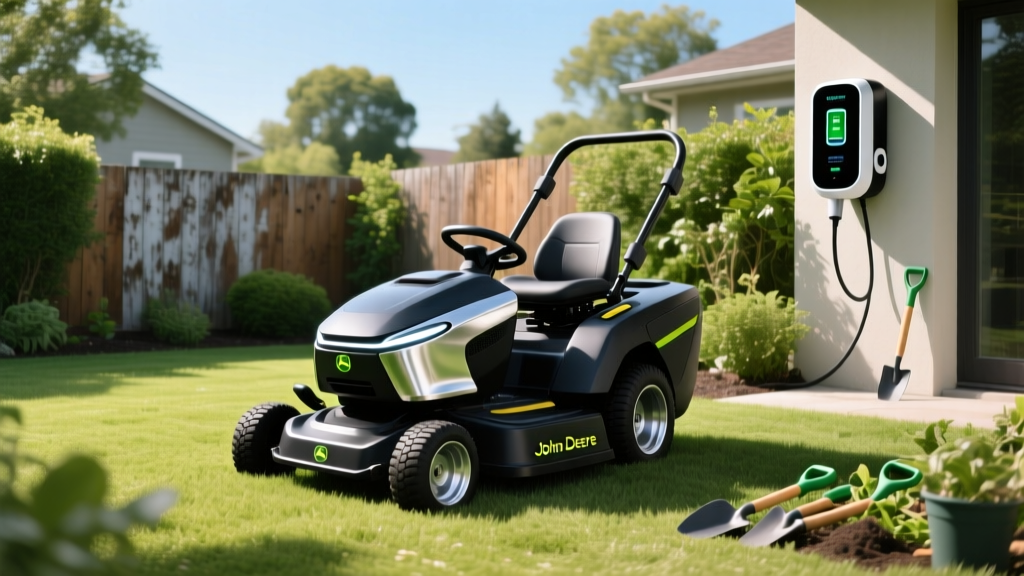
As of early 2026, John Deere does not sell a battery-electric residential walk-behind or riding lawn mower for consumer purchase. The company's electrified lineup is focused on commercial and municipal equipment — including battery-powered compact utility tractors and the autonomous electric Turf Tractor concept — but the residential mower market remains gas-powered under the Deere brand. If you're searching for an electric John Deere mower, your closest options are John Deere's commercial battery-electric turf equipment, used electric models from other brands sold through Deere dealers, or waiting for a consumer EV mower announcement that has not yet materialized.
The search for an electric John Deere mower reflects a real and growing demand: homeowners who've switched to electric vehicles want the same fuel-free, low-maintenance experience in their garage and yard. While John Deere has invested heavily in electrification for agriculture and commercial turf management, the consumer lawn-care aisle tells a different story. Here's what you actually need to know about buying electric lawn equipment in 2026, how it compares to gas, and whether waiting for Deere to go electric makes sense.
John Deere's Electrification Strategy: What Exists Today
John Deere's public electrification roadmap centers on large-scale applications. At CES 2024, the company unveiled the Autonomous Electric Tractor, a cable-powered concept for controlled-environment agriculture. For turf and commercial groundskeeping, Deere offers battery-electric compact utility vehicles and has partnered on electric mower prototypes for golf courses and municipal parks. However, the John Deere technology page lists no consumer-grade battery-electric walk-behind or zero-turn mower as of the 2026 model year.
This is a deliberate market positioning. John Deere's residential mower segment — the S100, E100, and X300 series — continues to use gasoline engines, primarily Briggs & Stratton and Kawasaki powerplants ranging from 17 to 25 horsepower. The company has not announced a timeline for electrifying this lineup.
The Electric Mower Market in 2026: Who Actually Sells One
If you want a battery-electric riding mower or zero-turn today, several manufacturers fill the gap that John Deere leaves:
- Ryobi 42" Battery Zero-Turn: Powered by four 12Ah 40V lithium-ion batteries (~1.9 kWh total), EPA-estimated runtime of approximately 2 acres per charge. MSRP around $5,500.
- EGO POWER+ 52" Zero-Turn: Uses six 12Ah 56V ARC Lithium batteries (~4.0 kWh), rated for up to 2.5 acres. MSRP approximately $7,000.
- CRAFTSMAN V20 30" Push Mower: Entry-level walk-behind at ~$400, single 20V 8Ah battery (~0.16 kWh), suitable for lots under 0.25 acres.
- Mean Green Commercial Electric Mowers: Fleet-grade battery-electric zero-turns with 20+ kWh battery packs, used by municipalities and commercial landscapers. Pricing starts above $25,000.
None of these are sold through John Deere dealerships, and none carry the Deere brand.
Electric vs. Gas Mower: The Real Cost Comparison
For homeowners weighing whether to buy electric mower equipment now or wait for Deere, the economics matter more than the badge. Here's a five-year cost breakdown comparing a typical gas riding mower to a comparable battery-electric zero-turn:
| Cost Factor (5-Year) | Gas Riding Mower (42") | Battery-Electric Zero-Turn (42") |
|---|---|---|
| Purchase Price (MSRP) | $3,200 | $5,500 |
| Fuel / Electricity | $750 (gas at $3.50/gal, ~15 gal/yr) | $90 (electricity at $0.15/kWh, ~120 kWh total) |
| Oil Changes & Engine Maintenance | $400 | $0 |
| Blade Sharpening & Belts | $250 | $250 |
| Battery Replacement (Year 4-5) | $0 | $800 (estimated pack replacement) |
| Estimated 5-Year Total | $4,600 | $6,640 |
The electric mower costs roughly $2,000 more over five years, driven almost entirely by the higher upfront purchase price. Fuel and maintenance savings recover approximately $1,060 of that gap. The math improves significantly if you already have solar panels (driving electricity cost toward zero) or if gas prices rise above $4.50/gallon. For commercial operators mowing daily, the payback period shortens to 2-3 years due to higher fuel and maintenance volume.
Battery Specs That Matter: kWh, Runtime, and Charge Time
Electric mower batteries use the same lithium-ion chemistry principles as EVs, but at vastly different scales. Understanding the specs prevents disappointment:
| Specification | Residential Electric Zero-Turn | Gas Riding Mower Equivalent |
|---|---|---|
| Battery Capacity / Fuel Tank | 2.0-4.0 kWh (lithium-ion, NMC) | 2.5 gallon gas tank (~82 kWh energy equivalent) |
| Usable Energy | ~80% depth of discharge = 1.6-3.2 kWh | ~2.0 gallons usable |
| Runtime per Charge/Tank | 1.5-2.5 acres | 3-5 acres |
| Recharge/Refuel Time | 2-4 hours (Level 1, 120V outlet) | 2 minutes (gas can) |
| Power Output | 15-25 HP equivalent (11-19 kW) | 17-25 HP (13-19 kW) |
| Operating Noise | ~65 dB (conversation level) | ~90 dB (lawnmower loud) |
A critical distinction for EV-minded buyers: mower batteries charge at Level 1 speeds (120V standard outlet, roughly 0.5-1.0 kW). A 4.0 kWh pack takes 4-8 hours from empty on a household outlet. There is no DC fast-charging standard for lawn equipment. This means you must plan mowing sessions around charge cycles — unlike gassing up in two minutes.
Real-World Ownership Considerations
Electric mowers share several ownership realities with electric vehicles, and the same preparation applies:
Yard Size and Terrain
Battery-electric mowers perform best on flat lots under 2 acres. Hills, thick wet grass, and tall overgrowth increase energy draw by 30-50%, reducing effective runtime. If your property exceeds 2 acres or has significant slope, a gas mower or a commercial-grade electric unit with a 10+ kWh battery remains the practical choice.
Climate and Battery Degradation
Lithium-ion batteries lose capacity in extreme temperatures. Mowing in 95°F+ heat triggers thermal management throttling (reduced blade speed to protect cells). Storing the battery in an unheated garage below 32°F during winter can cause permanent capacity loss. Manufacturer warranties typically cover battery degradation to 70-80% of original capacity over 3-5 years — similar to EV battery warranties but shorter in duration.
Charging Infrastructure
Unlike EVs, electric mowers don't require professional electrical installation. A standard 120V/15A outlet in your garage or shed is sufficient. However, if your shed is on a separate circuit or far from the panel, you may need an electrician to add a dedicated outlet — typically $200-$500 for the run.
Should You Wait for an Electric John Deere Mower?
Decision Framework: Buy Now or Wait?
Buy an electric mower from another brand now IF:
- Your lot is under 2 acres and mostly flat
- You already own and use a battery ecosystem (Ryobi 40V, EGO 56V) for other yard tools
- Noise ordinances or HOA rules restrict gas equipment hours
- You want to eliminate gasoline storage and engine maintenance immediately
- You have solar panels and want to run your mower on free energy
Wait for John Deere or stick with gas IF:
- Your property exceeds 2 acres or has steep terrain
- You rely on a John Deere dealer for service, parts, and trade-in value
- You need sub-10-minute refueling for commercial mowing operations
- You want to consolidate all equipment under one brand for fleet management
- You prefer to let the market mature and prices drop over the next 2-3 model years
Tax Credits, Incentives, and the Electric Mower Gap
One advantage EV buyers enjoy that electric mower buyers do not: federal tax incentives. The IRS §30D Clean Vehicle Credit applies to highway-capable four-wheel vehicles meeting battery-sourcing, MSRP, and buyer income requirements. Lawn mowers, regardless of battery size or price, do not qualify for this credit or any current federal EV incentive.
Some states and municipalities offer point-of-sale rebates for battery-electric outdoor power equipment through air-quality improvement programs. California's CARB has historically funded rebates for zero-emission lawn equipment, and similar programs exist in Colorado, New York, and select metro air-quality districts. These rebates typically range from $100-$500 for walk-behind mowers and up to $2,000 for commercial zero-turns. Check your local air-quality management district for current availability — programs change annually with budget cycles.
Common Misconceptions About Electric Mowers
| Myth | Fact |
|---|---|
| "Electric mowers can't cut thick grass." | Modern brushless motors deliver 15-25 HP equivalent. The limitation is battery runtime under heavy load, not cutting power. |
| "The battery will need replacing every 2 years." | NMC lithium-ion packs in quality mowers are rated for 800-1,500 charge cycles — roughly 5-8 years of weekly use before significant degradation. |
| "I need a 240V outlet like an EV charger." | All consumer electric mowers charge on standard 120V. No panel upgrade or special wiring required. |
| "John Deere is about to release an electric mower." | As of 2026, Deere has made no public announcement of a consumer electric mower. Their electrification focuses on commercial and agricultural equipment. |
| "Electric mowers are always cheaper to own." | Higher purchase price means 5-year cost parity only if you mow frequently enough for fuel savings to accumulate. Light-use owners may never break even. |
Frequently Asked Questions
Does John Deere sell any electric lawn mower in 2026?
No. John Deere's 2026 residential mower lineup is entirely gasoline-powered. The company offers battery-electric equipment for commercial turf management and agriculture, but no consumer walk-behind or riding mower.
What's the best electric alternative to a John Deere riding mower?
The Ryobi 42" Battery Zero-Turn (~$5,500) and EGO POWER+ 52" Zero-Turn (~$7,000) are the closest electric equivalents to a John Deere residential rider. Both use lithium-ion battery packs (1.9-4.0 kWh) and handle 1.5-2.5 acres per charge.
How long do electric mower batteries last?
Quality NMC lithium-ion packs are rated for 800-1,500 full charge cycles, translating to approximately 5-8 years of typical residential use. Warranty coverage is usually 3-5 years with a capacity retention threshold of 70-80%.
Can I charge an electric mower from my EV's Level 2 charger?
No. Electric mowers use proprietary low-voltage chargers (typically 40V-80V DC) that plug into a standard 120V AC outlet. They do not use J1772, NACS, or any EV charging connector. Level 2 (240V) EVSE equipment is not compatible.
Are electric mowers powerful enough for a half-acre lot?
Yes. A half-acre lot is well within the capability of any mid-range electric zero-turn or self-propelled push mower. Runtime for 0.5 acres typically consumes 30-50% of a standard battery pack, leaving ample reserve.
Will John Deere ever make an electric mower for homeowners?
While John Deere has not announced a consumer electric mower, the company's heavy investment in electrification for commercial equipment suggests eventual expansion into residential products. No timeline has been published, and any future model would likely debut as a premium offering above current gas MSRPs.
The electric John Deere mower remains a product that doesn't yet exist for the residential buyer. If your priority is brand loyalty and dealer support, gas remains the path. If your priority is eliminating fuel, reducing noise, and cutting maintenance — and your lot fits the runtime envelope — the electric mower market has mature alternatives ready to ship today. The decision comes down to acreage, budget, and how long you're willing to wait for a Deere badge on a battery-powered deck.