Quick Answer: Should You Buy an Electric Jet Boat?
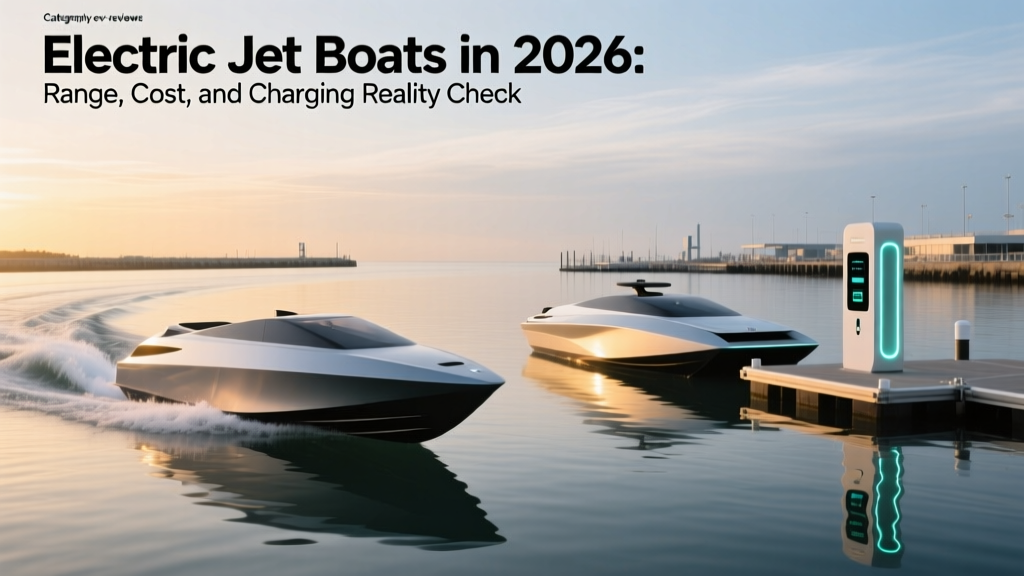
Electric jet boats are a niche, emerging category in 2026 — not a mainstream alternative to gas-powered jet boats. Current models offer roughly 30–60 miles of range depending on speed, cost $40,000–$120,000+, and require significant shore-power infrastructure (typically 240V Level 2 or DC fast-charging docks). They excel for short, quiet day trips on lakes and calm waterways but are not practical for long-distance cruising. If you boat primarily on a home lake with dock charging access and value silent, emission-free operation, an electric jet boat may work. If you need 100+ mile range, high speeds for extended periods, or trailer your boat to remote ramps, a gas jet boat remains the practical choice.
What Exactly Is an Electric Jet Boat?
An electric jet boat replaces the traditional internal-combustion engine and fuel tank with a battery pack (measured in kWh — kilowatt-hours, the energy capacity) and an electric motor driving a waterjet propulsion system. Unlike propeller-driven boats, jet boats use an impeller to draw water in and expel it at high velocity, providing shallow-water capability and quick acceleration.
Key players in the 2026 electric jet boat market include companies like Arc Boats (the Arc One, a premium electric runabout with jet-like performance), Navier (electric hydrofoil boats that reduce drag and extend range), and a handful of smaller builders adapting electric drivetrains into hull designs. Traditional jet-boat manufacturers like Scarab and Yamaha have not yet released full-electric jet-boat models as of early 2026, though some offer hybrid-electric concepts.
It is important to note that electric jet boats are outside the scope of federal §30D EV tax credits, which apply only to highway-registered, four-wheeled motor vehicles per IRS guidelines. Some states offer marine electrification incentives, but these vary widely.
Range and Battery: The Numbers That Matter
Range is the single biggest limitation of electric boats, and it behaves differently than in electric cars. Water resistance increases exponentially with speed, so while an EV on a highway might see a 10–15% range drop at 80 mph vs. 65 mph, an electric boat can see a 40–60% range reduction when pushing from cruising speed to wide-open throttle.
| Specification | Arc One (2025/2026) | Navier 27 (2026) | Typical Gas Jet Boat (e.g., Scarab 215) |
|---|---|---|---|
| Battery / Fuel | 226 kWh (NMC lithium-ion) | ~90 kWh (NMC) | 40-gallon gasoline tank |
| Motor Power | ~475 kW (~637 HP equivalent) | ~150 kW (~200 HP equivalent) | ~250 HP (gas) |
| Range (cruising speed) | ~50–60 miles at 22 mph | ~75 miles at 25 mph (hydrofoil-assisted) | ~150–200 miles at 25 mph |
| Top Speed | ~45 mph | ~35 mph | ~50+ mph |
| 0–30 mph (approx.) | ~4.5 seconds | ~6 seconds | ~5 seconds |
| Weight | ~9,300 lbs | ~4,500 lbs | ~3,200 lbs |
| Starting Price | ~$300,000 (limited production) | ~$175,000 (pre-order) | ~$55,000–$70,000 |
Charging an Electric Boat: Infrastructure and Time
Charging is where electric boat ownership diverges sharply from EV ownership. You cannot pull up to an Electrify America station and plug in a boat.
| Charging Level | Power (kW) | Typical Source | Time to Charge 20–80% (226 kWh battery) | Availability |
|---|---|---|---|---|
| Level 1 (120V shore power) | ~1.4 kW | Standard marina outlet | ~96+ hours (not practical for full charge) | Common at marinas |
| Level 2 (240V dock charger) | ~11.5–19.2 kW | Home dock or marina pedestal | ~8–12 hours | Requires installation |
| DC Fast Charge (marine) | ~50–150 kW | Specialized marina stations | ~1–3 hours | Very rare in 2026 |
Most electric boat owners in 2026 rely on Level 2 dock charging overnight. This means you need a slip or dock with a dedicated 240V circuit — not all marinas offer this, and installation at a private dock can cost $3,000–$8,000 depending on the electrical run distance and permit requirements. Marine-grade charging equipment (waterproof connectors, GFCI protection, corrosion-resistant hardware) adds cost versus a home EV charger.
DC fast charging for boats is still in early infrastructure stages. A few marinas in California, Florida, and the Pacific Northwest have installed marine DC chargers, but this is far from a national network. Plan your trips around your battery, not around a charging map.
Cost Breakdown: Electric Jet Boat vs. Gas Jet Boat
The upfront cost gap between electric and gas jet boats is enormous, but operating costs tell a different story over time.
| Cost Category | Electric Boat (e.g., Navier 27) | Gas Jet Boat (e.g., Scarab 215) |
|---|---|---|
| Purchase Price | $175,000+ | $55,000–$70,000 |
| Fuel / Electricity per hour (cruising) | ~$5–$10 (at $0.15/kWh, ~30 kWh/hr cruising) | ~$30–$50 (at $4/gal, ~10 gal/hr) |
| Annual fuel/energy (100 hrs/yr) | ~$500–$1,000 | ~$3,000–$5,000 |
| Annual Maintenance | ~$200–$500 (no oil changes, fewer moving parts) | ~$1,500–$3,000 (winterization, oil, impeller, exhaust) |
| Insurance (annual est.) | $2,500–$5,000+ (high-value asset) | $800–$1,500 |
| Dock Charging Install (one-time) | $3,000–$8,000 | N/A |
| Battery Replacement (projected, 10–15 yr) | $20,000–$40,000+ | Engine rebuild: $5,000–$10,000 |
| 5-Year Total Operating Cost (excl. purchase) | ~$8,000–$15,000 | ~$20,000–$30,000 |
The math is clear: electric boats save significantly on energy and maintenance per year, but the purchase-price premium is so large that most buyers will not break even on operating savings alone. The value proposition is less about economics and more about the experience — silent operation, instant torque, no exhaust fumes, and zero direct emissions on the water.
Electric vs. Gas: Performance and Experience Compared
| Factor | Electric Jet Boat | Gas Jet Boat |
|---|---|---|
| Noise Level | Near-silent at cruising speed | 75–90 dB at cruising speed |
| Acceleration | Instant torque, very quick off the line | Strong but requires RPM build-up |
| Range | 30–75 miles typical | 150–200+ miles typical |
| Refueling / Recharge Time | 1–12 hours depending on charger | 5–10 minutes at a fuel dock |
| Shallow Water Capability | Yes (jet drive, no lower unit) | Yes (jet drive) |
| Winterization | Simplified (no engine coolant, fewer fluids) | Required (engine flush, antifreeze, fuel stabilizer) |
| Emissions on Water | Zero direct | Exhaust, fuel spill risk, oil residue |
| Resale Market | Unproven, limited data | Established, predictable depreciation |
Common Misconceptions About Electric Jet Boats
| Myth | Fact |
|---|---|
| "Electric boats are just like electric cars on water." | Water resistance is far higher than rolling resistance. Boats consume energy at a much higher rate per mile, and there is no regenerative braking on open water. Range is proportionally much shorter than EVs. |
| "You can charge at any marina." | Most marinas offer only 120V (Level 1) shore power, which is far too slow to recharge a large marine battery in a practical timeframe. 240V Level 2 or DC fast-charging infrastructure is still rare. |
| "Electric boats qualify for the $7,500 EV tax credit." | Federal §30D clean vehicle credits apply to qualified highway motor vehicles per IRS rules. Boats do not qualify. Some local utility or state programs may offer rebates for marine electrification. |
| "The battery will need replacing every few years." | Marine-grade NMC and LFP battery packs are designed for 2,000–5,000+ charge cycles before significant degradation. At 50–100 cycles per year, that projects to 20–50+ years of use before capacity drops below 80%. However, saltwater exposure and thermal stress can accelerate degradation. |
| "Electric boats can't go fast." | Electric motors deliver instant torque. The Arc One reaches ~45 mph. However, sustaining high speed drains the battery extremely fast — similar to how an EV's range plummets at sustained 90+ mph highway speeds. |
Real-World Ownership Considerations
Before purchasing an electric jet boat, honestly assess these factors:
- Dock charging access: Do you have a private dock or marina slip where you can install a 240V/50-amp (or higher) circuit? Without overnight Level 2 charging, ownership is impractical for anything beyond very short outings.
- Typical trip distance: If your typical outing is 20–40 miles round-trip at cruising speed, an electric boat works well. If you regularly run 60+ miles to a sandbar or island, range limitations become a real concern.
- Water conditions: Choppy water, strong currents, and headwinds increase energy consumption dramatically. On a lake with calm conditions, range is predictable. On coastal or river waterways, plan conservatively.
- Climate and storage: Lithium-ion batteries degrade faster when stored at high state of charge in extreme heat. Cold climates reduce available capacity temporarily (similar to EVs). Proper climate-controlled winter storage is important for battery longevity.
- Trailer and tow vehicle: Electric boats are significantly heavier than gas equivalents due to battery weight. The Arc One weighs ~9,300 lbs — requiring a heavy-duty truck and trailer rated for that load.
- Service and support: Marine electric drivetrains are new. Traditional boat mechanics may not service them. Verify that the manufacturer provides warranty support and has service partners in your region.
Decision Framework: Is an Electric Jet Boat Right for You?
Choose an Electric Jet Boat If:
- You boat primarily on a calm lake or protected waterway with trips under 40–50 miles round-trip
- You have dock access with 240V charging capability (or can install it)
- Silent, fume-free operation is a high priority (e.g., entertaining guests, wildlife areas, noise-restricted lakes)
- You value instant acceleration and minimal maintenance
- Budget allows for a $100,000+ premium purchase and you accept unproven resale value
Stick with a Gas Jet Boat If:
- You regularly boat 60+ miles, run to offshore destinations, or multi-day cruise
- You trailer your boat to different ramps and lakes without charging infrastructure
- You need quick refueling (5 minutes at a fuel dock vs. hours of charging)
- Your budget is under $80,000
- You want established dealer service, predictable resale value, and widely available parts
Frequently Asked Questions
How long do electric jet boat batteries last?
Marine-grade lithium-ion packs (NMC or LFP chemistry) are typically rated for 2,000–5,000 charge cycles before degrading to 80% of original capacity. At typical recreational use (50–100 cycles/year), that translates to 20+ years before significant range loss. Most manufacturers offer 5–10 year battery warranties. Proper storage (50% state of charge, cool environment) extends longevity.
Can I charge an electric boat from solar panels on the boat?
Practically, no. Even a large solar array on a boat canopy (say, 2 kW of panels) would take 50+ hours of full sun to recharge a 100 kWh battery. Solar can supplement shore charging and maintain a battery during storage, but it cannot be a primary charging source.
Are electric jet boats safe in saltwater?
Saltwater corrosion is a significant engineering challenge for any boat, and high-voltage marine battery systems require robust waterproofing and isolation. Some electric boats are rated for saltwater use with appropriate corrosion protection, but fresh-water use reduces long-term maintenance risk. Always verify the manufacturer's saltwater rating and warranty terms.
What happens if I run out of battery on the water?
Unlike a gas boat that can be refueled from a jerry can in minutes, a depleted electric boat battery requires a tow back to a charger or a lengthy wait on shore power. Responsible electric boat operation requires conservative range planning — treat 30% remaining battery as your "reserve" and head home. Some manufacturers offer range-estimation software similar to EV trip planners.
Will electric jet boats get cheaper?
Battery costs have declined roughly 80–90% over the past decade, and continued declines in LFP cell pricing should reduce electric boat costs over time. However, low production volumes and marine-grade engineering requirements keep prices high. Expect meaningful price reductions as production scales, but electric boats will likely remain a premium product for the foreseeable future.
Do electric boats require a special boating license?
No. Standard state boating safety requirements and licensing apply regardless of propulsion type. However, understanding battery management, charging protocols, and electrical safety adds a learning curve for owners transitioning from gas boats.