The Short Answer
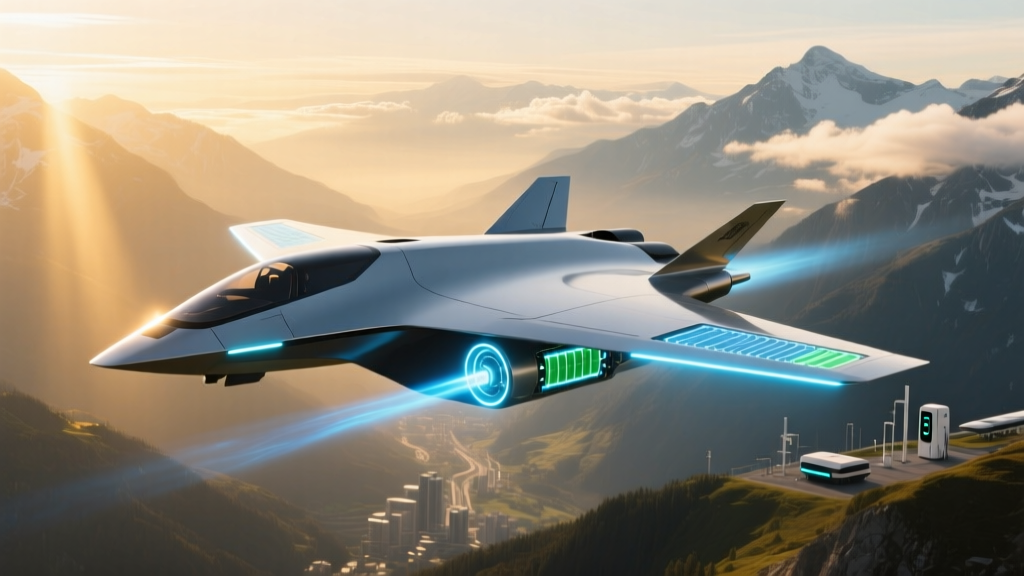
As of 2026, a true electric jet airplane capable of carrying passengers over commercial distances does not exist in operational service. Current lithium-ion battery energy density (~250–300 Wh/kg at the cell level) is roughly 40–50× lower than jet-A fuel (~12,000 Wh/kg usable), making battery-electric propulsion viable only for small 2–6 seat training and air-taxi aircraft with ranges under 150 miles. If you're researching electric jets because you're weighing the future of travel, the practical electrified decision for 2026 remains a ground-based EV or PHEV — and the rest of this guide explains why, with hard numbers.
Why Battery Physics Blocks the Electric Jet Airplane
The fundamental constraint isn't engineering ambition — it's electrochemistry. A Boeing 737-class aircraft carries roughly 20,000 kg of jet fuel, which contains about 240 MWh of chemical energy. Even assuming a generous 90% electric motor efficiency versus ~35% thermal efficiency for a turbofan, you'd need a battery pack storing approximately 95 MWh. At today's best-case pack-level density of ~200 Wh/kg (cell-to-pack, including cooling and structure), that battery would weigh 475,000 kg — over five times the maximum takeoff weight of a 737-800.
Companies like Eviation (Alice) and Heart Aerospace (ES-30) are building real electric and hybrid-electric regional aircraft, but these target 9–30 seat configurations with ranges of 150–250 miles. That's meaningful for island-hopping or short commuter hops, not transcontinental travel. For the foreseeable future, sustainable aviation fuel (SAF) and hydrogen remain the only plausible paths to decarbonizing flights beyond ~300 miles.
Your Real 2026 Decision: EV vs. Gas vs. Hybrid on the Ground
Since electric jet airplanes won't be replacing your 500-mile road trip, the actual purchase decision facing most readers is which electrified ground vehicle makes sense. Here's how the numbers stack up for a typical mid-size crossover in the 2026 model year.
| Metric | 2026 BEV (e.g., Hyundai Ioniq 5 Long Range) | 2026 PHEV (e.g., Toyota RAV4 Prime) | 2026 Gas (e.g., Toyota RAV4 AWD) |
|---|---|---|---|
| Base MSRP | $43,975 | $44,590 | $32,350 |
| EPA Range / Electric-Only | 318 mi (EPA) | 42 mi EV + 550 mi total | 449 mi (14.5 gal × 31 MPG) |
| Efficiency | 114 MPGe (29 kWh/100mi) | 94 MPGe (EV) / 38 MPG (gas) | 30 MPG combined |
| Fuel/Energy Cost per Mile | ~$0.045 (home, $0.15/kWh) | ~$0.05 EV / $0.12 gas | ~$0.12 ($3.60/gal) |
| Federal Tax Credit (§30D) | Up to $7,500 (if sourcing/income met) | Up to $7,500 | $0 |
| 0–60 mph | 5.1 sec (AWD) | 5.7 sec | 8.1 sec |
| Battery Warranty | 10 yr / 100,000 mi | 10 yr / 150,000 mi | N/A |
The BEV wins on running cost and performance; the PHEV wins for drivers without reliable home charging or who frequently exceed 300 miles between stops; the gas vehicle wins only on upfront price — and that gap closes substantially after the §30D credit.
Total Cost of Ownership: 5-Year Breakdown
Purchase price alone misleads. Here's a realistic 5-year / 75,000-mile ownership model assuming 70% home charging for the BEV, 60% electric-mode driving for the PHEV, and $3.60/gallon regular unleaded.
| Cost Category | BEV | PHEV | Gas |
|---|---|---|---|
| Purchase (after $7,500 credit) | $36,475 | $37,090 | $32,350 |
| Energy/Fuel (5 yr) | $3,375 | $5,400 | $9,000 |
| Maintenance (5 yr) | $1,800 | $3,200 | $4,100 |
| Insurance (5 yr avg) | $9,500 | $8,800 | $7,900 |
| Estimated Depreciation | $16,500 | $15,200 | $14,800 |
| 5-Year Total | $67,650 | $69,690 | $68,150 |
The BEV and gas vehicle land within $500 of each other over five years, with the BEV pulling ahead in years 6+ as fuel savings compound and depreciation curves flatten. The PHEV costs slightly more due to maintaining two full powertrains. Insurance remains the BEV's weak spot — typically 15–25% higher than equivalent gas models, per IIHS industry data.
Charging Reality: Home, Public, and the 10–80% Curve
A common misconception is that DC fast-charging a BEV takes as long as filling a gas tank. The reality is more nuanced — and better than most first-time buyers expect, provided you understand the charge curve.
The Ioniq 5's 84 kWh NMC battery peaks at 240 kW on a compatible CCS or NACS (with adapter) DC fast charger, reaching 10–80% State of Charge in roughly 18 minutes under ideal thermal conditions. However, charging above 80% tapers sharply to protect cell longevity — a full 10–100% session takes closer to 38 minutes. This is why road-trip strategy targets 80% and moves on.
| Charging Level | Power (kW) | Miles Added per Hour | Typical Use Case |
|---|---|---|---|
| Level 1 (120V household) | 1.4 kW | ~4 mi/hr | Overnight top-off, PHEV daily |
| Level 2 (240V home/work) | 7.7–11.5 kW | 25–40 mi/hr | Daily BEV charging, full overnight |
| DC Fast (50 kW) | 50 kW | ~150 mi/hr | Older public stations |
| DC Fast (150–250 kW) | 150–250 kW | 400–700 mi/hr (peak) | Modern highway corridors |
Home Level 2 installation typically costs $800–$2,500 including a 40–48A hardwired EVSE and electrician labor, assuming your panel has capacity. A 200A panel upgrade adds $1,500–$3,500 — a real gotcha for older homes.
Cold Weather, Range, and Other Honest Limitations
EPA range stickers assume moderate temperatures and mixed driving. In real-world conditions, plan for these reductions:
- Highway driving at 75 mph: expect 85–90% of EPA range (e.g., 318 mi EPA → ~270 mi actual)
- Cold weather (below 30°F): 20–35% range loss without preconditioning; LFP chemistry suffers slightly more than NMC in deep cold
- Mountain terrain: elevation gain consumes energy, but regenerative braking recovers ~30–50% on descent
- Charging deserts: rural Interstate corridors in the Mountain West and Great Plains still have gaps exceeding 70 miles between reliable DC fast stations — check AFDC before long trips
Preconditioning the battery (warming it to ~35°C before arriving at a DC fast charger) is critical for achieving advertised charge speeds in cold weather. Most modern BEVs do this automatically when you navigate to a charger in the infotainment system.
Federal Tax Credit: What §30D Actually Requires in 2026
The IRS §30D credit is up to $7,500, but eligibility is not universal. You must satisfy all of the following:
- Income caps: AGI ≤ $150,000 (single), $225,000 (head of household), $300,000 (joint)
- MSRP caps: ≤ $80,000 for SUVs/pickups/vans, ≤ $55,000 for sedans
- Battery sourcing: escalating percentages of critical minerals and battery components must originate from the U.S. or FTA partners — this disqualifies several popular models with China-sourced cells
- Point-of-sale transfer: you can apply the credit as a down-payment reduction at the dealer rather than waiting for tax filing
Always verify current eligibility on IRS.gov before committing to a purchase — the qualified model list updates frequently.
Decision Framework: Which Electrified Vehicle Fits You?
Choose a BEV if: you have Level 2 home charging access, drive under 300 miles/day, want the lowest per-mile operating cost, and can absorb the higher upfront price (offset by tax credits).
Choose a PHEV if: you lack guaranteed home charging, regularly exceed 250 miles between stops, or want electric commuting with gas flexibility for road trips.
Stick with gas/HEV if: you live in an apartment without charging, drive under 8,000 miles/year (fuel savings won't offset EV premiums), or operate in extreme cold for 5+ months annually.
Myths vs. Facts: EV Ownership in 2026
| Myth | Fact |
|---|---|
| "EV batteries need replacing every 5 years" | Modern NMC/LFP packs retain 85–92% capacity at 150,000 miles; warranties guarantee ≥70% at 8 years/100,000 mi |
| "Charging takes hours on road trips" | 2026 BEVs on 250 kW chargers add 150+ miles in 15 minutes — roughly a meal/rest break |
| "EVs are worse for the environment" | Even on coal-heavy grids, lifetime CO₂ is 50–70% lower than gas equivalents per EPA analysis; on clean grids, 80%+ lower |
| "Electric airplanes will replace road trips soon" | Battery energy density won't support 300+ passenger flights until solid-state or hydrogen matures — likely 2040+ |
Frequently Asked Questions
Will an electric jet airplane ever be commercially viable?
For short regional hops (under 200 miles, under 30 passengers), yes — Eviation's Alice and similar aircraft target this niche in the late 2020s. For mainstream commercial aviation, battery weight remains prohibitive; hydrogen-electric or SAF are more realistic pathways.
Should I wait for solid-state batteries before buying an EV?
Solid-state cells are entering limited production in 2026 (Toyota, Samsung SDI), but pack-level vehicles won't reach mainstream pricing until approximately 2030. Current NMC and LFP chemistries already deliver 250–350 mile ranges with 10-year warranties — waiting means 4+ years of higher fuel costs.
What if my apartment doesn't allow home charging?
A PHEV is strongly recommended over a BEV in this scenario. Relying solely on public DC fast charging costs roughly 2.5× more per mile than home Level 2 ($0.12/mi vs $0.045/mi) and accelerates battery wear due to frequent high-rate charging.
Do EVs really save money long-term?
Yes, but the breakeven depends on mileage. At 15,000 miles/year with home charging, a BEV typically reaches cost parity with a gas equivalent around year 4–5 after the tax credit. Below 8,000 miles/year, the premium may never recover.