Quick Answer: What Is an Electric Jeepney?
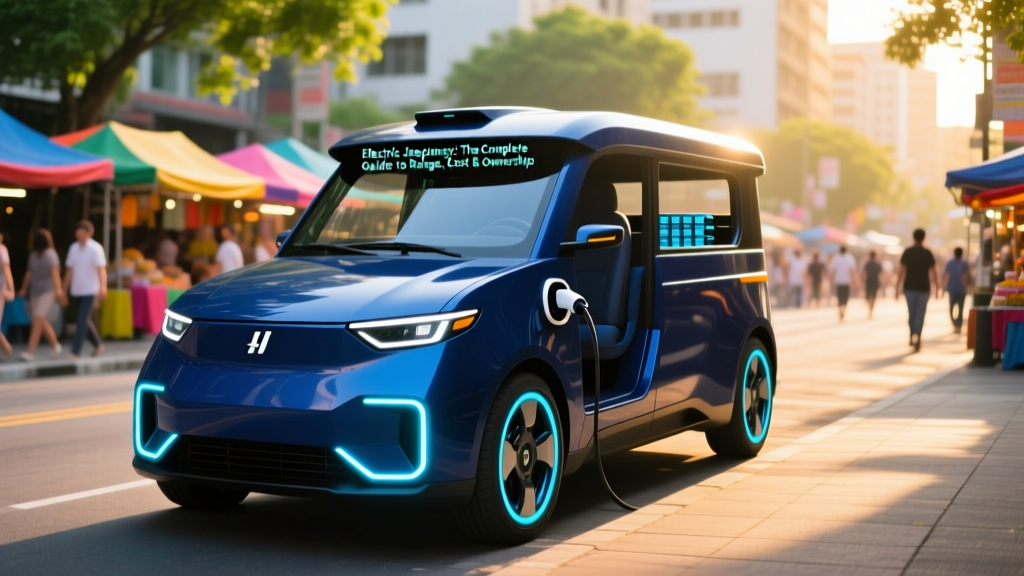
An electric jeepney (e-jeepney) is a battery-electric version of the Philippines' iconic public utility vehicle, replacing the traditional diesel powertrain with an electric motor and lithium-ion battery pack. Modern e-jeepneys typically offer 80–150 km (50–93 miles) of real-world range on a single charge, seat 16–22 passengers, and cost between ₱1.5 million and ₱2.5 million (~$26,000–$43,000 USD) depending on battery size and configuration. They charge via Level 2 AC (7–22 kW) or DC fast charging (30–60 kW), reaching 80% in roughly 45–90 minutes. For operators, the primary appeal is a 60–70% reduction in per-kilometer fuel cost compared to aging diesel units, alongside lower maintenance expenses and compliance with the Philippine government's Public Utility Vehicle Modernization Program (PUVMP).
Why Electric Jeepneys Are Gaining Traction in 2026
The push toward electric jeepneys isn't just an environmental play — it's an economic one. The Philippine government's PUV Modernization Program has consolidated thousands of individual operator franchises into cooperatives, creating fleet-scale buyers who evaluate total cost of ownership (TCO) over a vehicle's 10–15 year service life. Diesel fuel costs for a conventional jeepney running 150–200 km/day can consume 40–50% of daily revenue. An electric drivetrain slashes that to roughly 12–18%, depending on local electricity rates.
Several manufacturers now produce e-jeepneys at scale:
- Francisco Motors — offering the FMT E-Jeep with LFP battery options
- Global Electric Transport (GET) — producing the COMET e-jeepney, widely deployed in Metro Manila
- Tojo Motors — the E-Jeep line with modular battery configurations
- Star8 Green Technology — solar-assisted electric models for provincial routes
While this guide is written for an audience familiar with the US EV market, the e-jeepney represents one of the most consequential electrification stories in emerging-market transit — and a practical case study in how electric commercial vehicles can outperform their internal-combustion predecessors on pure economics.
E-Jeepney Specs: Range, Battery, and Charging
Unlike passenger EVs sold in the US, e-jeepneys are built for stop-and-go urban routes with frequent passenger loading. That duty cycle actually favors electric drivetrains — regenerative braking recovers significant energy in traffic, and the low average speeds reduce aerodynamic drag losses.
| Specification | E-Jeepney (Typical) | Diesel Jeepney (Typical) |
|---|---|---|
| Battery / Fuel | 40–80 kWh (LFP chemistry) | Diesel tank, ~60 liters |
| Real-World Range | 80–150 km (50–93 mi) | 200–300 km per tank |
| Motor Output | 40–80 kW (54–107 hp) | ~55–75 kW (74–100 hp) |
| Peak Torque | 200–400 Nm (instant) | 180–250 Nm @ 2,000 RPM |
| Energy Cost per km | ₱3–5 (~$0.05–0.09) | ₱8–12 (~$0.14–0.21) |
| Charging / Refuel Time | 45–90 min (DC fast) | 10–15 min (diesel pump) |
| Passenger Capacity | 16–22 | 16–20 |
| Maintenance Interval | Every 10,000 km (minimal) | Every 3,000–5,000 km |
Battery Chemistry: Why LFP Dominates
Most production e-jeepneys use lithium iron phosphate (LFP) cells rather than the nickel-manganese-cobalt (NMC) chemistry common in US-market long-range EVs. The trade-offs are deliberate:
- Cycle life: LFP cells tolerate 3,000–5,000 full charge cycles before degrading to 80% capacity — critical for a vehicle that charges daily for 10+ years
- Thermal stability: LFP is far less prone to thermal runaway, a major consideration for densely packed urban vehicles operating in tropical heat
- Cost: LFP cells are 20–30% cheaper per kWh than NMC, keeping e-jeepney purchase prices manageable for cooperatives
- Trade-off: Lower energy density means a heavier, bulkier pack for the same range — but since e-jeepneys run fixed routes and return to a depot nightly, the weight penalty is acceptable
Charging Realities for Fleet Operators
E-jeepney charging is fundamentally a depot operation. Most cooperatives install Level 2 AC chargers (7–22 kW) at their terminals, allowing overnight top-ups over 4–8 hours. For midday opportunity charging on longer routes, some operators deploy 30–60 kW DC fast chargers that can restore 80% in 45–90 minutes.
Key charging considerations:
- Grid capacity: A depot with 20 e-jeepneys charging simultaneously at 22 kW needs ~440 kW of dedicated electrical capacity — often requiring a transformer upgrade from the local utility
- Charge curve taper: As with all lithium-ion batteries, charging slows significantly above 80% SoC. Operators who need only 80% daily range can avoid the taper entirely
- Connector standards: Most e-jeepneys use GB/T (Chinese standard) or Type 2/CCS connectors, depending on the manufacturer's supply chain
Cost Breakdown: E-Jeepney vs Diesel Jeepney Ownership
The upfront cost of an e-jeepney is roughly 2–3× that of a new Euro-4 compliant diesel unit. The question for any operator is whether the fuel and maintenance savings justify the premium over a realistic payback period.
| Cost Category | E-Jeepney | Diesel Jeepney |
|---|---|---|
| Purchase Price | ₱1,800,000–2,500,000 | ₱800,000–1,200,000 |
| Daily Energy/Fuel (180 km) | ₱540–900 | ₱1,440–2,160 |
| Annual Energy/Fuel | ₱197,000–328,000 | ₱525,000–788,000 |
| Annual Maintenance | ₱25,000–40,000 | ₱80,000–150,000 |
| Battery Replacement (Year 8–10) | ₱300,000–500,000 | N/A (engine rebuild: ₱80,000–120,000) |
| 5-Year Total Operating Cost | ₱1,110,000–1,840,000 | ₱3,025,000–4,690,000 |
| Payback Period (vs diesel) | 2.5–4 years | — |
Note: Costs assume ₱10/kWh commercial electricity and ₱70/liter diesel. Actual figures vary by route, load, and utility rate structure. Philippine government subsidies under the PUVMP can offset ₱160,000–280,000 of the e-jeepney purchase price for qualified cooperatives.
What About Battery Replacement?
This is the single biggest concern for prospective e-jeepney operators — and it's where LFP chemistry pays off. A quality LFP pack rated for 4,000 cycles at 80% depth of discharge will deliver roughly 10–12 years of daily service before capacity drops below 80%. Most operators will retire or repurpose the chassis before the battery is fully spent. When replacement is needed, costs are trending downward: current LFP module pricing is approximately $80–120/kWh, meaning a 60 kWh replacement pack runs ₱300,000–500,000 — significant, but offset by years of fuel savings.
Real-World Ownership: What First-Time E-Jeepney Buyers Should Know
Whether you're a cooperative fleet manager in Metro Manila or an EV-curious transit planner evaluating the e-jeepney model, several practical realities shape the ownership experience:
Route Planning Is Non-Negotiable
Unlike a diesel jeepney that can refuel anywhere in 10 minutes, an e-jeepney must operate within its range envelope. Most units handle 80–150 km on a charge. Routes exceeding that need either midday opportunity charging or a battery swap arrangement. Operators who skip route-range analysis end up with vehicles stranded by 2 PM.
Climate Impact: Tropical Heat vs Cold
E-jeepneys operate primarily in tropical climates, which eliminates the cold-weather range loss (typically 20–30%) that plagues EVs in northern latitudes. However, sustained operation in 35°C+ ambient temperatures accelerates battery degradation if the pack lacks active thermal management. Most modern e-jeepneys include basic cooling systems, but operators in the hottest provinces should prioritize models with active liquid cooling.
Charging Infrastructure Gaps
Public DC fast charging for commercial vehicles in the Philippines remains sparse outside Metro Manila and a few economic zones. E-jeepney deployment currently works best when cooperatives control their own depot charging. Provincial routes with no depot access remain diesel-dominant for now.
Driver Acceptance and Training
Jeepney drivers accustomed to diesel manual transmissions need training on single-speed electric drivetrains, regenerative braking behavior, and SoC management. Most cooperatives report a 2–4 week adjustment period, after which drivers generally prefer the quieter, vibration-free electric experience.
Common Misconceptions About Electric Jeepneys
| Myth | Fact |
|---|---|
| "E-jeepneys can't handle hilly routes" | Electric motors deliver peak torque at zero RPM, making them superior to diesel on inclines. Range does decrease on steep grades — plan accordingly. |
| "The battery will die in 3 years" | LFP packs are rated for 3,000–5,000 cycles. At one full cycle per day, that's 8–13 years before hitting 80% capacity — not failure, just reduced range. |
| "Charging takes too long for commercial use" | Overnight depot charging (6–8 hours on Level 2) covers most daily routes. Midday DC fast charging adds 80% in under 90 minutes. |
| "E-jeepneys are too expensive" | Upfront cost is higher, but 5-year TCO is 40–60% lower than diesel. Government subsidies further narrow the gap. |
| "The grid can't support mass adoption" | Depot charging can be scheduled during off-peak hours (10 PM–5 AM), when grid demand is lowest. Smart charging management systems balance load across the fleet. |
Decision Framework: Should You Go Electric?
Choose an Electric Jeepney If:
- Your daily route is under 130 km and returns to a fixed depot
- You have access to depot-level charging (or can install it with utility coordination)
- You plan to operate the vehicle for 7+ years (to capture full TCO savings)
- Your cooperative qualifies for PUVMP modernization subsidies
- You operate in an area with commercial electricity rates below ₱12/kWh
Stick With Diesel (or Wait) If:
- Your routes regularly exceed 200 km/day with no midday charging option
- You operate in a province with unreliable grid power and no depot charging feasibility
- You need to rotate vehicles across unpredictable long-haul routes
- Your capital budget cannot absorb the upfront premium, even with financing
- Your current diesel units are less than 3 years old (sunk-cost consideration)
US Market Context: What EV Buyers Can Learn from the E-Jeepney
For US-based EV shoppers and fleet operators, the electric jeepney story offers a valuable perspective on commercial electrification economics. The core principle is identical to evaluating an electric delivery van or transit bus in North America: when daily mileage is predictable, fuel savings are massive, and depot charging is feasible, the higher upfront cost pays for itself — often faster than in the passenger car segment.
If you're evaluating commercial EV options in the US market, the US Department of Energy's fueleconomy.gov provides efficiency and cost data for electric commercial vehicles available stateside. For tax incentive details on commercial EV purchases, consult the IRS clean vehicle credit guidelines, which include provisions for commercial fleet vehicles under §45W (up to $40,000 for qualified commercial clean vehicles).
Frequently Asked Questions
How far can an electric jeepney go on a single charge?
Most production e-jeepneys achieve 80–150 km (50–93 miles) under typical loaded urban conditions. Range varies with passenger load, terrain, air conditioning use, and driving style. Manufacturers quote higher figures under ideal test conditions — budget for the lower end when planning routes.
How long does it take to charge an e-jeepney?
On a Level 2 AC charger (22 kW), a full charge takes 3–5 hours depending on battery size. On a DC fast charger (40–60 kW), reaching 80% takes roughly 45–90 minutes. Most fleet operators rely on overnight depot charging and avoid the need for midday fast charging.
What is the battery warranty on an electric jeepney?
Most manufacturers offer 5–8 year battery warranties guaranteeing 70–80% capacity retention. LFP chemistry typically exceeds these thresholds in real-world use, with many packs retaining 85%+ capacity after 5 years of daily cycling.
Can e-jeepneys handle air conditioning in tropical heat?
Yes, but A/C use reduces range by approximately 10–15%. Operators in the hottest climates should spec larger battery packs (60–80 kWh) to maintain adequate range with continuous A/C operation. Some newer models use heat pump systems that are more energy-efficient than resistive cooling.
Are electric jeepneys available outside the Philippines?
The e-jeepney is purpose-built for the Philippine market, but similar electric micro-transit vehicles are deployed across Southeast Asia, India, and parts of Africa. The underlying technology — LFP batteries, depot charging, fixed-route optimization — is directly transferable to any market with comparable transit needs.
How does e-jeepney maintenance compare to diesel?
Dramatically simpler. Electric drivetrains have no engine oil, filters, timing belts, fuel injectors, or exhaust systems to maintain. Routine service covers brake inspection (regenerative braking reduces pad wear by 50–70%), tire rotation, coolant checks, and battery health monitoring. Annual maintenance costs run ₱25,000–40,000 vs ₱80,000–150,000 for diesel equivalents.