The Short Answer on the Electric Jeep Wrangler
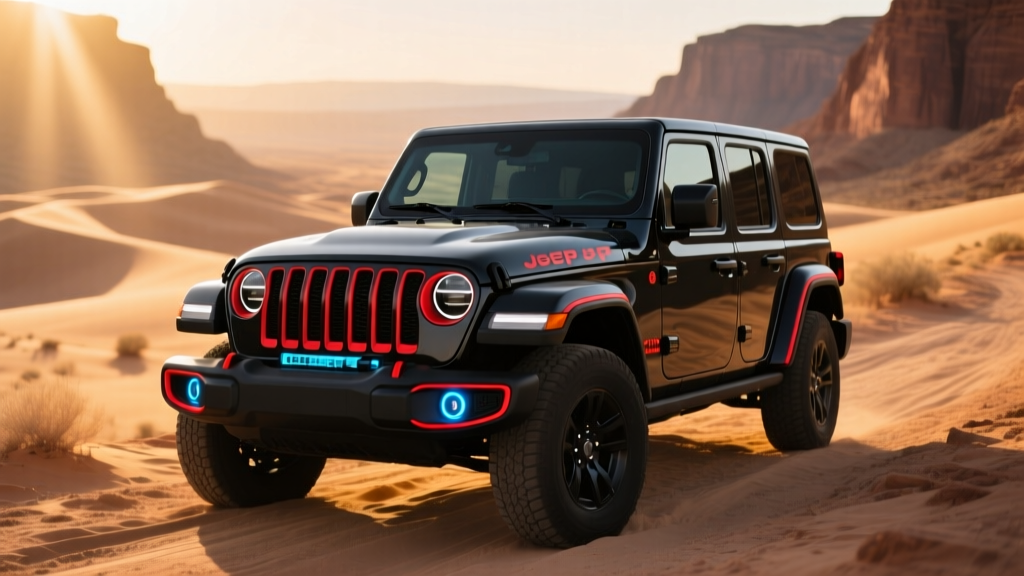
If you're searching for a fully electric Jeep Wrangler (battery-electric, zero gas), one does not exist yet for the 2026 model year. What Jeep does sell is the Wrangler 4xe, a plug-in hybrid (PHEV) that pairs a 2.0L turbocharged engine with a 17.3 kWh battery pack for an EPA-rated 22 miles of electric-only range and 49 MPGe combined. It qualifies for up to a $3,750 federal tax credit under current IRS §30D rules (subject to income, sourcing, and MSRP caps). For most Wrangler buyers, the 4xe is the closest thing to an "electric Wrangler" available — and whether it's worth the premium over the gas model depends entirely on your commute length and home-charging access.
What the Wrangler 4xe Actually Is (and Isn't)
The Wrangler 4xe is a plug-in hybrid, not a battery-electric vehicle (BEV). That distinction matters because buyers searching for an "electric Jeep Wrangler" often expect a vehicle that never uses gasoline. The 4xe can drive roughly 22 miles on electricity alone before the gas engine engages, after which it operates as a conventional hybrid. You still need to fill up at gas stations for longer trips — and given the Wrangler's aerodynamics, you'll fill up more often than in a sedan-shaped PHEV.
Here's the powertrain at a glance:
| Spec | Value |
|---|---|
| Battery (usable) | ~14.6 kWh of 17.3 kWh gross (NMC chemistry) |
| Electric-only range (EPA) | 22 miles |
| Combined MPGe (electric + gas) | 49 MPGe |
| Gas-only combined MPG | 20 MPG |
| Total system output | 375 hp / 470 lb-ft torque |
| 0–60 mph | |
| Level 2 charge rate | ~7.2 kW (full charge in ~2.5 hours) |
| DC fast charging | Not available |
| Towing capacity | 3,500 lbs |
| Ground clearance (Rubicon) | 10.8 inches |
A critical note: the 4xe does not support DC fast charging. You're limited to Level 1 (120V household outlet, roughly 12 hours for a full charge) or Level 2 (240V, about 2.5 hours). This means public fast-charging networks like Electrify America or Tesla Superchargers are irrelevant to 4xe ownership. Your charging experience lives and dies by your home setup.
Wrangler 4xe vs. Gas Wrangler: The Real Numbers
The most common question is whether the 4xe's premium over a gas Wrangler pays for itself. Let's break it down with real numbers.
| Cost Factor | Wrangler 4xe Willys | Gas Wrangler Willys (3.6L V6) |
|---|---|---|
| Base MSRP | $51,790 | $39,290 |
| Federal tax credit (§30D) | Up to $3,750* | $0 |
| Effective purchase price | ~$48,040 | $39,290 |
| Fuel/energy cost (5 yrs, 15k mi/yr) | ~$7,800† | ~$14,250‡ |
| Maintenance (5 yrs) | ~$2,800 | ~$3,400 |
| Insurance (5 yrs, avg) | ~$11,500 | ~$10,200 |
| Estimated 5-year total cost | ~$70,140 | ~$67,140 |
*Credit eligibility depends on income limits, battery sourcing requirements, and MSRP caps per IRS §30D rules. Consult a tax professional. †Assumes 70% of daily driving within 22-mi electric range, home charging at $0.14/kWh, and gas at $3.50/gal. ‡Assumes 20 MPG combined at $3.50/gal.
The 4xe saves roughly $6,450 on fuel over five years if you charge at home and keep most trips within electric range. But the purchase premium — even after the tax credit — is about $8,750. That means the 4xe does not break even on fuel savings alone within five years for most buyers. The math improves if your state offers additional PHEV rebates (check fueleconomy.gov for current incentive details), or if gas prices rise significantly above $3.50/gallon.
Real-World Range: What 22 Electric Miles Actually Feels Like
The EPA's 22-mile electric range assumes moderate temperatures, flat terrain, and conservative driving. Real-world conditions compress that number:
- Cold weather (below 32°F): Expect 14–17 electric miles. The battery's NMC chemistry loses efficiency in cold, and cabin heating draws heavily from the pack.
- Highway driving (70+ mph): Expect 16–18 miles. The Wrangler's boxy shape creates enormous aerodynamic drag at speed.
- Off-road or towing: The gas engine will engage almost immediately under heavy load. Plan for zero electric-only range in these scenarios.
- Ideal conditions (city, 55°F, flat): You may see 23–25 miles, slightly exceeding the EPA estimate thanks to regenerative braking in stop-and-go traffic.
For context, the average American commute is roughly 16 miles one way (FHWA data). If your round-trip commute is under 22 miles and you charge every night, you could drive months without burning gas. If your commute exceeds 30 miles, the 4xe becomes a conventional hybrid for most of your drive — and a thirsty one at 20 MPG combined.
Home Charging: What You Actually Need
Since the 4xe lacks DC fast charging, home charging isn't just convenient — it's essentially mandatory for getting value from the electric powertrain. Here's what that looks like:
| Level | Voltage | Charge Rate | Full Charge Time | Setup Cost |
|---|---|---|---|---|
| Level 1 (included cord) | 120V | ~1.4 kW | ~12 hours | $0 (uses standard outlet) |
| Level 2 (recommended) | 240V | ~7.2 kW | ~2.5 hours | $500–$2,000* |
*Level 2 installation cost includes a quality EVSE ($350–$700) and electrician labor ($200–$1,300 depending on panel proximity and permit requirements). A 200-amp panel upgrade adds $1,500–$3,000 if needed.
Level 1 charging works, but it means plugging in when you get home and still not having a full battery by morning if you depleted the pack. A Level 2 home charger is the practical standard — a 2.5-hour full charge means you can top up during evening hours and start every morning at 100% electric.
If you cannot install a home charger (apartment living, no dedicated parking, HOA restrictions), the 4xe's electric advantage shrinks dramatically. Relying on sporadic public Level 2 chargers to maintain a 14.6 kWh usable battery is inconvenient and often more expensive per mile than gasoline. In that scenario, a conventional gas Wrangler or a hybrid with a longer electric range may serve you better.
Common Misconceptions About the Electric Jeep Wrangler
| Myth | Fact |
|---|---|
| "The electric Wrangler is fully electric." | The 4xe is a plug-in hybrid. It has a gas tank (13.2 gal) and a tailpipe. Full-electric range is 22 miles max. |
| "I'll get $7,500 in federal tax credits." | The 4xe qualifies for up to $3,750, not $7,500, because only a portion of its battery meets critical-mineral and sourcing requirements under current §30D rules. Income and MSRP caps also apply. |
| "I can fast-charge it on road trips." | The 4xe has no DC fast-charge port. Charging is limited to Level 2 (7.2 kW max). Road-trip "refueling" means gasoline. |
| "It's more capable off-road than the gas Wrangler." | Off-road capability is nearly identical. The 4xe adds ~600 lbs of battery weight, which slightly affects approach/departure dynamics. The instant electric torque is useful for low-speed rock crawling, but ground clearance and articulation match the gas model. |
| "The battery will need expensive replacement soon." | Stellantis covers the 4xe battery with an 8-year/100,000-mile warranty (10 years/150,000 miles in CARB states). NMC degradation in PHEV applications is typically 10–15% over 8 years based on industry data. |
Who Should Buy the Wrangler 4xe (and Who Shouldn't)
The Decision Framework
Buy the Wrangler 4xe if:
- Your daily round-trip commute is under 25 miles and you can charge at home every night.
- You want Wrangler capability (removable doors/roof, solid axles, 4WD) but also want to reduce daily fuel consumption.
- You value the 375 hp / 470 lb-ft torque figure — the 4xe is the most powerful stock Wrangler short of the 392 V8.
- You qualify for the §30D tax credit (adjusted gross income under $150K single / $300K joint; vehicle MSRP under $80K for SUVs — the 4xe clears both).
Stick with the gas Wrangler if:
- Your daily driving regularly exceeds 40+ miles, making the electric range negligible.
- You cannot install a Level 2 home charger.
- You're budget-conscious and the ~$8,750 effective premium (after credit) isn't justified by your fuel savings.
- You tow frequently — the gas engine engages under load anyway, and the added battery weight reduces payload margin.
Consider a different PHEV entirely if:
- You want 35+ miles of electric range. The Toyota RAV4 Prime (42 mi electric, 94 MPGe) and Ford Escape PHEV (37 mi electric, 105 MPGe) both dramatically outperform the 4xe on electric-only efficiency — but neither offers removable doors or solid axles.
2026 Wrangler 4xe Pricing and Trims
The 2026 Wrangler 4xe is available across multiple trims. Pricing below reflects base MSRP before destination ($1,795) and before any incentives:
| Trim | Base MSRP | After Est. $3,750 Credit |
|---|---|---|
| Willys 4xe | $51,790 | ~$48,040 |
| Sahara 4xe | $56,290 | ~$52,540 |
| Rubicon 4xe | $59,290 | ~$55,540 |
| High Altitude 4xe | $63,790 | ~$60,040 |
All trims share the same powertrain, battery, and electric range. The differences are in off-road hardware (Rubicon gets front/rear lockers, sway-bar disconnect, 33-inch tires), interior luxury (High Altitude adds leather, body-color hardtop), and styling packages. The Willys 4xe is the value pick — it offers the same electric powertrain at the lowest entry price.
For the latest eligibility details on the federal credit, consult the IRS clean vehicle credit page, as battery-sourcing requirements shift annually and can affect the exact credit amount.
Frequently Asked Questions
Is there a fully electric Jeep Wrangler (BEV)?
Not as of the 2026 model year. Jeep has previewed electric off-road concepts (the Wrangler Magneto prototypes), but no production battery-electric Wrangler is on sale or officially announced with a firm release date. The 4xe PHEV is the only electrified Wrangler available.
Can the Wrangler 4xe charge itself while driving?
Partially. The 4xe uses regenerative braking to recapture energy during deceleration and downhill driving, and the gas engine can recharge the battery via the "eSave" drive mode. However, engine-generated charging is far less efficient and more expensive per mile than plugging in. Think of regen as a supplement, not a replacement for plug-in charging.
How much does it cost to charge the 4xe at home?
A full charge from empty uses roughly 14.6 kWh of usable energy. At the US average residential electricity rate of ~$0.16/kWh (EIA data), that's about $2.34 per full charge, which delivers approximately 22 miles of electric driving — roughly $0.11 per mile on electricity versus ~$0.18 per mile on gasoline at 20 MPG and $3.50/gallon.
Does the 4xe battery affect cargo space or ground clearance?
The battery pack is mounted under the rear seats, so cargo volume behind the second row is essentially unchanged versus the gas Wrangler (31.7 cu ft in the 4-door). Ground clearance is also unaffected — the Rubicon 4xe maintains 10.8 inches. The main trade-off is ~600 lbs of added weight, which slightly reduces payload capacity.
What happens if the battery degrades or fails?
Stellantis warranties the 4xe high-voltage battery for 8 years / 100,000 miles (extended to 10 years / 150,000 miles in California and states that follow CARB emissions standards). The warranty covers capacity loss below a defined threshold (typically 70% state of health). Out-of-warranty PHEV battery replacement costs are estimated at $8,000–$14,000 based on current parts pricing, though this is expected to decline as the battery supply chain matures.
Is the 4xe good for off-roading?
Yes. The Rubicon 4xe retains all the hardware that makes the gas Rubicon capable — Dana 44 axles, front and rear electronic lockers, electronic sway-bar disconnect, and a 4:1 low-range transfer case. The instant torque from the electric motor is actually an advantage in low-speed rock crawling. The main off-road consideration is the added weight, which can increase brake fade on long downhill descents and slightly reduce approach angle due to the underbody battery skid plate.