Quick Answer: Is There an Electric Jeep Wagoneer?
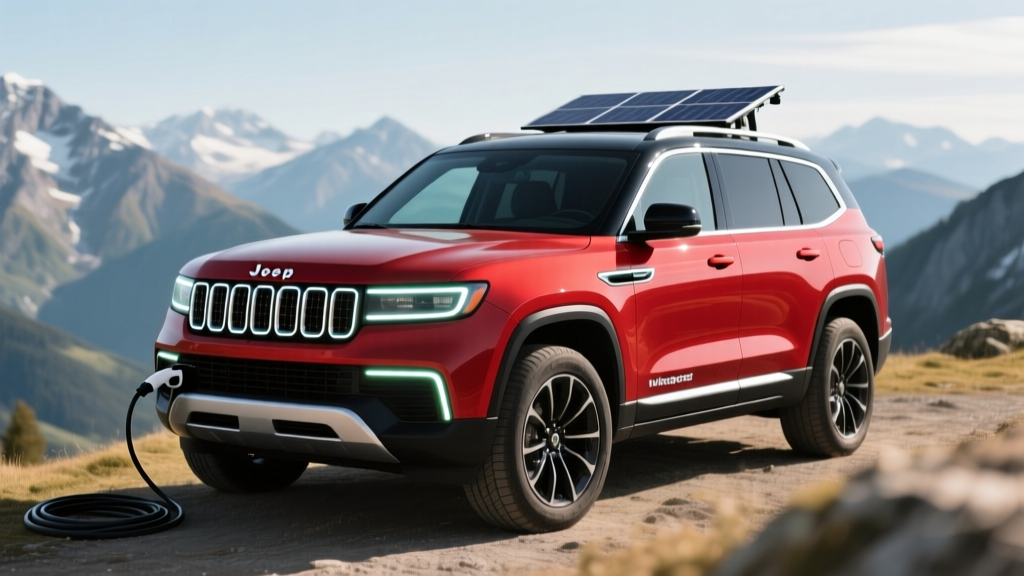
As of 2026, Jeep has not yet released a fully electric Wagoneer for the U.S. market. The current Wagoneer lineup (Wagoneer and Grand Wagoneer) is powered by the twin-turbocharged 3.0L Hurricane inline-six engine — a conventional gasoline powertrain. Stellantis has announced plans to electrify its Jeep portfolio, and an electric Grand Wagoneer is widely anticipated for the 2027–2028 timeframe, but no official EPA range, battery specs, pricing, or on-sale date has been confirmed. This guide covers what we know from official announcements, what to expect based on the STLA Large platform, and how a future electric Wagoneer would compare to the current gas model and competitors like the Rivian R1S, Cadillac Escalade IQ, and Tesla Model X.
What We Know About the Electric Jeep Wagoneer So Far
Stellantis has been public about its "Dare Forward 2030" electrification strategy, which includes launching battery-electric vehicles across its brands. Jeep debuted the Wagoneer S — a fully electric, smaller luxury SUV built on the STLA Large platform — which began deliveries in late 2024 as a 2025 model. The Wagoneer S is not a replacement for the full-size Wagoneer/Grand Wagoneer; it's a midsize, two-row EV targeting a different buyer segment.
For the full-size, three-row Wagoneer and Grand Wagoneer, Jeep continues to rely on the Hurricane I6 engine producing up to 420 hp (Wagoneer) and 510 hp (Grand Wagoneer). An electric variant of the full-size model has been referenced in Stellantis investor presentations, but the company has not published:
- Official battery capacity (kWh) or chemistry (LFP vs. NMC)
- EPA-estimated range
- DC fast-charging peak kW or 10–80% charging time
- MSRP or trim-level pricing
- Federal §30D tax credit eligibility
Any figures circulating online for an "electric Jeep Wagoneer" full-size model are preliminary estimates or speculation until Jeep publishes official specifications. We'll update this guide when confirmed data is available from jeep.com or EPA filings.
The Wagoneer S: Jeep's Actual Electric SUV
Because the full-size electric Wagoneer remains unconfirmed, the closest buyable electric Jeep in 2026 is the Wagoneer S. Here are the confirmed specs for the model currently on sale:
| Specification | Wagoneer S Launch Edition (2025/2026) |
|---|---|
| Powertrain | Dual-motor AWD, BEV |
| Horsepower | 600 hp |
| 0–60 mph | ~3.4 seconds |
| Battery (usable) | ~100 kWh (NMC estimated) |
| EPA Range | ~300 miles (est. per Stellantis pre-release) |
| DC Fast Charge (peak) | Up to ~200 kW (est.) |
| 10–80% DC Charge | ~23 minutes (est.) |
| Level 2 Charge Rate | ~11.5 kW onboard |
| Seating | 5 passengers (2-row) |
| Base MSRP | ~$71,995 (Launch Edition, before incentives) |
| Battery Warranty | 8 years / 100,000 miles (typical Stellantis EV) |
Real-World Range Expectation: If the Wagoneer S achieves an EPA rating near 300 miles, expect approximately 240–270 miles on sustained highway driving at 70–75 mph, and potentially 200–230 miles in sub-freezing winter conditions due to battery chemistry limitations and cabin heating load. These are typical BEV reductions of 15–30% from the EPA sticker.
Electric Wagoneer vs. Gas Wagoneer: What a Future EV Would Need to Beat
To understand what a full-size electric Wagoneer would need to deliver, it's useful to benchmark against the current gasoline Grand Wagoneer. The table below compares the known gas model against reasonable estimates for a future electric variant based on the STLA Large or STLA Frame platform.
| Metric | 2026 Grand Wagoneer (Gas, I6 Turbo) | Future Electric Grand Wagoneer (Estimated) |
|---|---|---|
| Powertrain | 3.0L Hurricane I6 TT, 510 hp | Dual/Tri-motor BEV, 500–700 hp (est.) |
| 0–60 mph | ~4.7 sec | ~3.0–4.0 sec (est.) |
| Fuel/Energy | 14 MPG combined (EPA) | ~75–85 MPGe (est.) |
| Range | ~360 mi (26-gal tank) | ~320–400 mi (est., 120–150 kWh pack) |
| Refuel/Recharge Time | ~5 minutes at pump | ~20–35 min 10–80% DC (est.) |
| Annual Fuel/Energy Cost | ~$3,800 (15k mi/yr, $3.50/gal) | ~$750–$1,100 (home L2, $0.14/kWh) |
| Base MSRP | ~$91,995 | ~$90,000–$110,000 (est.) |
| Federal Tax Credit (§30D) | Not eligible | Up to $7,500 (if sourcing/income/MSRP rules met) |
The gas Grand Wagoneer's combined 14 MPG makes it one of the most expensive mainstream SUVs to fuel annually. A BEV version would slash per-mile energy costs by roughly 70–80%, assuming mostly home Level 2 charging. However, buyers who regularly tow (the gas Wagoneer is rated up to 9,850 lbs) should expect a future electric variant to lose 30–50% of its range under heavy towing loads — a persistent BEV limitation.
Ownership Costs: What to Budget for a Future Electric Wagoneer
Until official pricing arrives, we can model expected ownership costs using the Wagoneer S as a proxy and scaling up for a full-size model. Below is a projected 5-year cost breakdown comparing a current gas Grand Wagoneer against a hypothetical electric Grand Wagoneer priced at $100,000 MSRP.
| Cost Category (5-Year) | Gas Grand Wagoneer ($92k MSRP) | Electric Grand Wagoneer ($100k est. MSRP) |
|---|---|---|
| Purchase Price (after incentives) | $91,995 | $92,500 (est., after $7,500 credit) |
| Fuel / Electricity | $19,000 | $4,500 |
| Maintenance (oil, filters, brakes) | $4,500 | $1,500 |
| Insurance (avg.) | $12,500 | $14,000 |
| Depreciation (est.) | $42,000 | $48,000 |
| Estimated 5-Year Total | ~$170,000 | ~$160,500 |
Key assumptions: 15,000 miles/year, $3.50/gallon for gas, $0.14/kWh average home electricity, 80% home charging. Insurance premiums for EVs tend to run 10–20% higher due to repair costs and battery replacement exposure. Depreciation for luxury EVs has been steeper than gas counterparts in recent years, though this gap may narrow as the market matures. Always check current rates with your insurer before committing.
Tax Credit Eligibility: §30D Rules That Will Apply
When an electric Wagoneer does arrive, buyers will need to navigate the IRS §30D clean vehicle credit requirements. As of 2026, the key rules include:
- MSRP Cap: SUVs must be priced at or below $80,000 to qualify. A Grand Wagoneer EV priced above this threshold would be ineligible for the full $7,500 credit.
- Buyer Income Limits: Modified adjusted gross income (MAGI) must not exceed $300,000 (joint filers), $225,000 (head of household), or $150,000 (single filers).
- Battery Sourcing: A percentage of critical minerals and battery components must be sourced from the U.S. or free-trade-agreement countries. These percentages increase annually.
- Point-of-Sale Transfer: Buyers can transfer the credit to the dealer at purchase, reducing the upfront price rather than waiting for a tax refund.
- VIN Registration: The vehicle's VIN must be reported and validated through the IRS energy credits portal.
Given the Grand Wagoneer's luxury positioning, the $80,000 MSRP cap is the most significant hurdle. If Jeep prices the electric Grand Wagoneer above $80,000 — which seems likely given the gas model starts near $92,000 — buyers would need to rely on state-level incentives (which vary by jurisdiction) rather than the federal credit. The standard Wagoneer (non-Grand) may fall under the cap if priced aggressively. Consult a tax professional for your specific eligibility.
Charging at Home and on the Road: What Full-Size EV Owners Face
Owning a large-battery EV like a future electric Wagoneer (likely 120–150 kWh) introduces practical charging considerations that first-time EV buyers should plan for:
Home Level 2 Charging
A battery this size needs a robust home charging setup. At a typical 11.5 kW Level 2 charger, fully replenishing a 130 kWh pack from 10% to 90% takes roughly 9–10 hours — fine for overnight charging. However, you'll need:
- A 240V circuit rated for at least 50–60 amps
- Electrical panel capacity — many homes need a panel upgrade ($1,500–$3,500) to support a 60A circuit alongside existing loads
- A licensed electrician for installation ($500–$2,000 for labor, plus equipment costs of $400–$800 for a quality Level 2 unit)
DC Fast Charging on the Road
Expect a future electric Wagoneer to support peak DC charging in the 200–350 kW range, depending on platform architecture. However, peak kW is not sustained kW. The charging curve tapers significantly above 80% state of charge to protect battery health. On a 350 kW-capable vehicle, real-world 10–80% charging typically takes 20–30 minutes at a compatible station, assuming battery preconditioning is active.
For the NACS (Tesla Supercharger) vs. CCS connector question: Stellantis has committed to adopting NACS for future EVs, so a future electric Wagoneer will likely ship with a NACS port, granting native access to the Tesla Supercharger network — currently the most reliable DC fast-charging network in the U.S. per fueleconomy.gov and third-party reliability surveys.
Decision Framework: Should You Wait or Buy Now?
Choose the Current Gas Wagoneer/Grand Wagoneer If:
- You regularly tow trailers or boats exceeding 5,000 lbs
- You live in a region with limited DC fast-charging infrastructure
- You need three rows of seating and cargo volume today
- Your driving includes frequent long highway trips in extreme cold
- You prefer established service networks and predictable maintenance schedules
Choose the Wagoneer S (Electric, Available Now) If:
- You want an electric Jeep today and can live with two rows / 5-passenger seating
- You have reliable home Level 2 charging access
- Your daily driving is under 200 miles with occasional road trips
- You want 600 hp and sub-3.5-second 0–60 performance
Wait for the Full-Size Electric Wagoneer If:
- You need three rows AND want a BEV — no current option satisfies both in the Jeep lineup
- You can defer purchase 12–24 months for official specs and pricing
- You want to compare against the Cadillac Escalade IQ, Rivian R1S (3-row), and Tesla Model X refresh
Common Misconceptions About an Electric Wagoneer
| Myth | Fact |
|---|---|
| "The electric Wagoneer is available to order now." | The full-size electric Wagoneer has not been officially released. Only the smaller, two-row Wagoneer S is on sale. |
| "An electric Wagoneer will tow just as far as the gas model." | BEVs lose 30–50% of range when towing heavy loads. A gas Wagoneer's 360-mile range under tow might translate to only 150–200 miles in an EV equivalent. |
| "I'll get the $7,500 tax credit no matter what." | The §30D credit requires meeting MSRP caps ($80,000 for SUVs), income limits, and battery-sourcing requirements. A luxury-priced Grand Wagoneer EV may exceed the MSRP cap. |
| "Fast charging means 10 minutes to full." | DC fast charging from 10–80% takes 20–35 minutes for large-battery SUVs. Charging from 80–100% can take as long as the 10–80% segment due to taper. |
| "EV batteries need replacing every few years." | Modern NMC and LFP packs are warranted for 8 years/100,000 miles with capacity retention thresholds of 70%+. Real-world degradation data shows most packs retain 85–90% capacity at 100,000 miles. |
Frequently Asked Questions
When will the full-size electric Jeep Wagoneer be available?
Stellantis has not confirmed an on-sale date. Industry analysts expect a reveal in the 2027 timeframe with deliveries in late 2027 or as a 2028 model. Until official specs are published on jeep.com, all range, pricing, and battery figures are estimates.
Will the electric Wagoneer have three rows of seating?
The full-size Wagoneer and Grand Wagoneer currently offer three rows. An electric version built on the STLA Frame platform is expected to maintain this layout, but Jeep has not confirmed interior packaging for the EV variant. The currently available Wagoneer S is a two-row, five-passenger vehicle.
How much will the electric Grand Wagoneer cost?
Given the gas Grand Wagoneer starts at ~$91,995 and the Wagoneer S Launch Edition is priced at ~$71,995, a full-size electric Grand Wagoneer will likely be positioned between $90,000 and $115,000 depending on trim and battery configuration. This is preliminary — official pricing will come with the formal reveal.
Can I charge an electric Wagoneer at a Tesla Supercharger?
Stellantis has announced adoption of the NACS connector for its future EVs. A full-size electric Wagoneer, when released, is expected to ship with a native NACS port, enabling direct access to Tesla Superchargers without an adapter.
What's the real-world range loss in cold weather for a large EV SUV?
Based on testing data from comparable large-battery EVs (Rivian R1S, Ford F-150 Lightning, Cadillac Lyriq), expect 20–35% range reduction in sustained sub-30°F driving. A future electric Wagoneer with an estimated 350-mile EPA rating could deliver 230–280 miles in winter highway conditions. A heat pump (expected but unconfirmed) would help mitigate cabin-heating energy draw.
Is it worth buying the gas Wagoneer now or waiting for electric?
If you need a three-row luxury SUV with strong towing capability today, the gas Grand Wagoneer remains the only option in Jeep's lineup. If your purchase timeline is flexible and you have home charging, waiting 12–24 months for the electric variant — and competing models like the Escalade IQ — gives you more data for an informed decision. Factor in that early-production EVs sometimes carry premium launch pricing and limited trim availability.