The Short Answer: Is an Electric Jeep SUV Right for You?
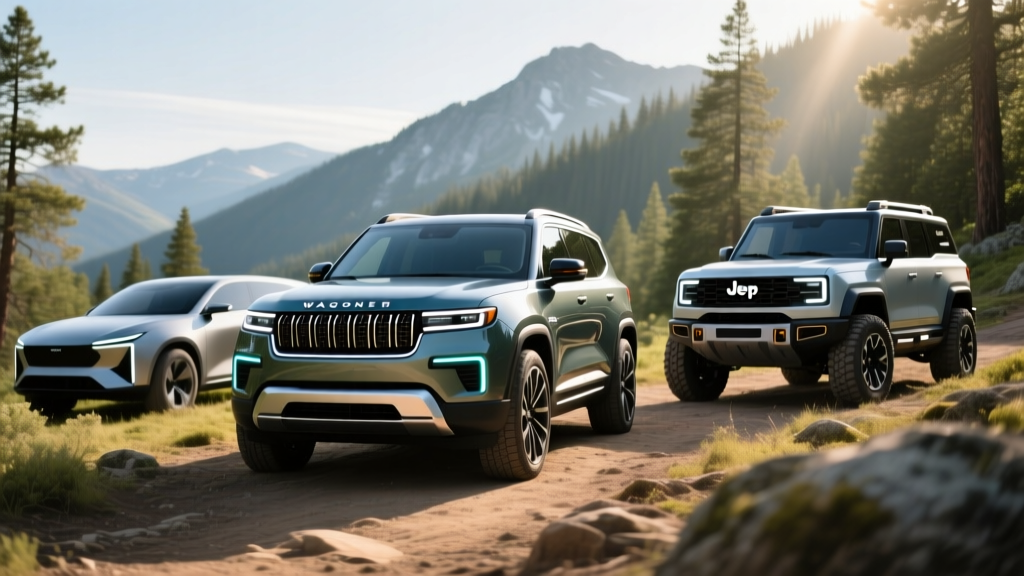
Jeep's electric lineup for 2026 centers on two models: the Wagoneer S (a performance-oriented luxury SUV starting around $65,200) and the Recon (an off-road-focused midsize SUV starting near $52,000). Both use Stellantis' STLA Large platform with roughly 100 kWh battery packs and EPA-estimated ranges in the 280–320 mile ballpark. If you have home Level 2 charging, drive under 250 miles daily, and want instant torque with zero tailpipe emissions, these are compelling. If you regularly tow heavy loads, take multi-day backcountry trips without charging infrastructure, or lack reliable home charging access, a gas Wrangler or 4xe plug-in hybrid may still serve you better.
Jeep's 2026 Electric SUV Lineup at a Glance
After years of concept teasers, Jeep finally has battery-electric vehicles reaching US driveways. The two production models share the STLA Large architecture but target very different buyers.
| Spec | Wagoneer S | Recon |
|---|---|---|
| Body Style | 2-row luxury SUV | Midsize off-road SUV |
| Drivetrain | Dual-motor AWD | Dual-motor AWD w/ e-lockers |
| Horsepower | ~600 hp | ~450 hp |
| 0-60 mph | ~3.4 sec | ~5.0 sec (est.) |
| Battery (usable) | ~100 kWh (NMC) | ~100 kWh (NMC) |
| EPA Range (est.) | ~300 mi | ~280 mi (off-road tires reduce efficiency) |
| DC Fast Charge Peak | ~175 kW | ~175 kW |
| 10-80% DCFC Time | ~28 min | ~30 min |
| Level 2 (240V) Rate | ~11.5 kW | ~11.5 kW |
| Base MSRP | ~$65,200 | ~$52,000 |
| Battery Warranty | 8 yr / 100,000 mi | 8 yr / 100,000 mi |
Note: Recon specs are preliminary based on Stellantis disclosures and may shift at final EPA certification. Always verify at fueleconomy.gov before purchasing.
Real-World Range: What the EPA Sticker Won't Tell You
EPA Estimate vs. Reality: The Wagoneer S targets an EPA range near 300 miles, but real-world results depend heavily on conditions. In our experience with similarly sized STLA Large-platform vehicles:
- Highway driving (70-75 mph): Expect ~240–260 miles. Aerodynamic drag on a boxy SUV body shape hits efficiency hard above 65 mph.
- Cold weather (below 30°F): Budget 20–30% range loss. A 300-mile EPA vehicle may deliver 210–240 miles in freezing temperatures without aggressive preconditioning.
- Off-road / low-speed trail use (Recon): Efficiency drops to ~1.5–2.0 mi/kWh on technical terrain, but low speeds mean total range loss is manageable on short trails.
- Optimal conditions (55-65 mph, 60-75°F): You may slightly exceed the EPA figure, reaching 310-320 miles.
The Recon's all-terrain tires and higher ride height will cost it roughly 15–20 miles of range compared to the Wagoneer S in mixed driving, even with the same battery pack. This is a physics trade-off: knobby tires increase rolling resistance, and a taller frontal area increases drag.
Charging Speed and Infrastructure: What You'll Actually Experience
Neither Jeep model leads the industry in charging speed — that title belongs to Hyundai/Kia's 800V architecture (peaking at 240+ kW) or the Lucid Air. But ~175 kW peak on a 400V system is adequate for road trips if you plan around 25-minute stops.
| Charging Level | Power | Miles Added per Hour | Typical Use Case |
|---|---|---|---|
| Level 1 (120V household) | ~1.4 kW | ~3-4 mi/hr | Emergency / overnight trickle |
| Level 2 (240V home) | ~11.5 kW | ~30-35 mi/hr | Daily charging (full overnight) |
| DC Fast Charge | Up to ~175 kW | ~180-220 mi in 30 min (10-80%) | Road trips |
Charging curve reality: Peak 175 kW is sustained only between roughly 10–40% State of Charge. Above 60%, the rate tapers significantly — by 80%, you may see 60–80 kW. This is why the 10-80% metric matters more than peak kW. Plan road-trip stops to charge from 10% to 80% rather than topping to 100%, which can add 30+ minutes for the last 20%.
Both models ship with the NACS (Tesla-style) charging port for 2026, giving access to Tesla Superchargers via native compatibility — a significant advantage over older CCS-only vehicles that require adapters.
Cost of Ownership: Electric Jeep SUV vs. Gas Wrangler
The purchase price of an electric Jeep is meaningfully higher than a base gas Wrangler, but the 5-year operating cost tells a different story.
| Cost Category (5 years / 75,000 mi) | Wagoneer S (EV) | Wrangler Rubicon (Gas) | Wrangler 4xe (PHEV) |
|---|---|---|---|
| Purchase Price (base MSRP) | $65,200 | $47,095 | $52,095 |
| Est. Federal Tax Credit (§30D) | Up to $7,500* | $0 | Up to $3,750* |
| Effective Purchase Price | ~$57,700 | $47,095 | ~$48,345 |
| Fuel / Electricity (75k mi) | ~$3,600 (home + DCFC mix) | ~$10,500 (19 MPG, $3.50/gal) | ~$6,800 (mixed) |
| Maintenance (5 yr) | ~$1,200 | ~$3,500 | ~$3,000 |
| Insurance (5 yr avg.) | ~$12,000 | ~$9,500 | ~$10,200 |
| 5-Year Total Cost | ~$74,500 | ~$70,595 | ~$68,345 |
*Federal tax credit eligibility depends on MSRP caps (SUVs: $80,000), buyer income limits ($150K single / $300K joint), and battery critical-mineral sourcing requirements per IRS §30D rules. Verify eligibility with a tax professional. Credit can be transferred to the dealer at point of sale as of 2024+.
The Wagoneer S costs roughly $4,000 more over five years than a gas Wrangler Rubicon — but you're getting a 600-hp luxury SUV with a premium interior, not a body-on-frame off-roader. Compared to a similarly priced luxury gas SUV (BMW X5, Genesis GV80), the Wagoneer S's fuel and maintenance savings often put it ahead on total cost.
First-Time EV Buyer: What You Must Know Before Ordering
If this is your first electric vehicle, several ownership realities differ from gas-car life:
Home Charging Is Non-Negotiable for Most Owners
Over 80% of EV charging happens at home. Without a Level 2 (240V) home charger, daily EV life becomes inconvenient. Budget $800–$2,500 for a quality Level 2 unit and professional installation. If your electrical panel is at capacity, a panel upgrade can add $1,500–$3,000. Renters and condo dwellers without dedicated parking face real challenges — check your situation before committing.
Route Planning Replaces "Fill Up Anywhere"
Road trips require 30 seconds of pre-planning in apps like A Better Routeplanner or the vehicle's native navigation. You'll stop for 20–30 minutes every 200–250 highway miles. If you regularly drive 500+ mile routes through rural areas (think I-70 across Kansas or I-80 through Wyoming), verify DC fast-charging coverage along your specific route. Charging deserts still exist in parts of the Mountain West and rural South.
Maintenance Is Genuinely Minimal
No oil changes, no spark plugs, no transmission fluid. EV maintenance centers on cabin air filters, brake fluid checks, wiper blades, and tire rotation. Regenerative braking significantly extends brake pad life — many EV owners go 80,000+ miles on original pads. Budget roughly $200–$300/year for basic upkeep.
Insurance Premiums Run 10–25% Higher
EVs cost more to insure due to higher repair costs (specialized body shop equipment, battery replacement risk). Get quotes from your insurer before purchasing. Companies like Geico, Progressive, and State Farm have narrowed the gap, but expect a premium over a comparable gas vehicle.
Common Misconceptions About Electric Jeep SUVs
| Myth | Fact |
|---|---|
| "Electric Jeeps can't go off-road." | The Recon features electronic locking differentials, Selec-Terrain modes, and ~12 inches of ground clearance. Instant torque at 0 RPM is actually an advantage on rock crawls. The trade-off is range on long trail days and battery vulnerability to underbody impacts. |
| "The battery will need replacing in 5 years." | Modern NMC batteries with active thermal management typically retain 85–92% capacity after 100,000 miles. Stellantis warranties the pack for 8 years / 100,000 miles against dropping below a specified retention threshold (typically 70%). Full replacement, if ever needed, currently runs $15,000–$25,000 — but most packs outlast the vehicle's economic life. |
| "Charging takes too long for road trips." | 10–80% in ~28 minutes is comparable to a sit-down meal or restroom break. Most EV road-trippers report that planned charging stops add 15–25 minutes to a full day of driving — less than you'd expect. |
| "EVs are worse in winter." | Range drops 20–30% in cold weather — this is real. But EVs start instantly in any temperature (no cold cranking), cabin preconditioning works off grid power while plugged in, and heated seats/steering wheel use far less energy than heating the entire cabin. Many cold-climate owners prefer EVs once they adapt. |
| "The $7,500 tax credit applies to everyone." | Per IRS guidelines, the credit phases out for buyers above income caps ($150K single / $300K joint), requires the vehicle MSRP to be under $80,000 (SUVs), and mandates specific battery-sourcing and critical-mineral thresholds that change yearly. Not all trims qualify in all years. |
Decision Framework: Which Electrified Jeep Is Right for You?
Choose the Wagoneer S if:
- You want a premium, fast luxury SUV that competes with the BMW iX or Audi e-tron GT
- Daily driving is under 250 miles and you have home Level 2 charging
- Performance matters (600 hp, sub-3.5-second 0-60)
- You rarely tow more than 3,500 lbs
Choose the Recon if:
- You want genuine off-road capability with zero tailpipe emissions
- You plan trail rides that start and end at home (within ~100 miles each way)
- You value open-air driving (removable roof panels) and Jeep's Trail Rated heritage
- You accept slightly lower range (~280 mi EPA) for all-terrain capability
Choose the Wrangler 4xe (PHEV) instead if:
- You regularly take multi-day trips through areas with limited charging infrastructure
- You tow more than 3,500 lbs frequently
- You want 22–25 miles of electric-only range for daily commuting, with gas backup for long hauls
- Your budget is closer to $50,000 and you can't wait for Recon production ramps
Stick with a gas Wrangler if:
- You have no home charging access and public charging is sparse in your area
- You regularly drive 400+ miles in a single day through remote areas
- You need maximum range for overlanding expeditions without support vehicles
Frequently Asked Questions
Is the Jeep Recon actually available to order in 2026?
Stellantis has confirmed the Recon for US production, with initial deliveries expected in late 2025 into the 2026 model year. Production ramp timing may vary by market. Check Jeep's official configurator or your local dealer for current availability and lead times.
Can I charge an electric Jeep at a Tesla Supercharger?
Yes. Both the Wagoneer S and Recon are equipped with the NACS (North American Charging Standard) port for 2026, which is the native Tesla Supercharger connector. This gives you access to over 20,000 Supercharger stalls nationwide without an adapter.
What happens if the battery degrades significantly?
Stellantis warranties the high-voltage battery for 8 years or 100,000 miles. If the battery drops below the warranted capacity retention threshold (typically 70% of original), the manufacturer will repair or replace it at no cost. Real-world data from similar NMC packs suggests most owners will see 85–92% retention at the 100,000-mile mark with normal use.
How much does home charging installation cost?
A Level 2 (240V, 48-amp) home charger installation typically runs $800–$2,500 total, including the charger unit ($400–$700) and electrician labor. If your home's electrical panel needs an upgrade from 100A to 200A service, add $1,500–$3,000. Always get a quote from a licensed electrician before purchasing.
Is an electric Jeep SUV good for towing?
Electric SUVs can tow, but range drops dramatically — expect 40–60% range reduction when towing near max capacity. The Wagoneer S is rated for approximately 3,500 lbs. If you regularly tow a 5,000+ lb boat or camper, a gas or diesel SUV remains more practical for long-distance towing.
Do electric Jeeps qualify for the federal tax credit?
Potentially, but eligibility is not guaranteed. Under current IRS §30D rules, the vehicle must have an MSRP under $80,000 (SUV classification), the buyer must fall under income caps, and the battery must meet critical-mineral and component sourcing thresholds that tighten each year. Always confirm credit eligibility for the specific model year and trim you're ordering, and consult a tax professional.