Quick Answer: Are Electric Jaguar Cars Worth It in 2026?
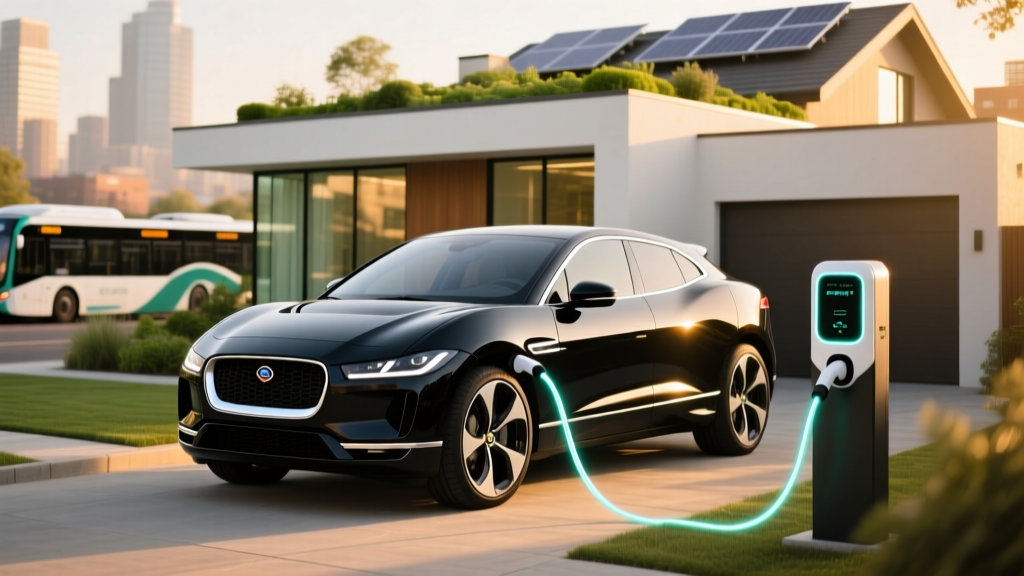
As of the 2026 model year, Jaguar's electric lineup centers on the I-PACE, a luxury all-electric SUV that was among the first premium EVs to challenge Tesla. The I-PACE delivers an EPA-estimated 246 miles of range from its 90 kWh battery pack, charges at up to 100 kW DC fast charging (10–80% in roughly 45 minutes), and starts around $73,100 MSRP. Compared to the gas-powered F-PACE, the I-PACE costs roughly $1,400–$1,800 less per year to fuel for an average driver, but carries higher insurance premiums and faces a more limited dealer service network. If you have home Level 2 charging and drive under 200 miles daily, the I-PACE is a compelling luxury EV. If you regularly road-trip beyond 250 miles or lack reliable home charging access, consider the trade-offs carefully before committing.
The 2026 Jaguar I-PACE: Range, Battery, and Charging in Detail
The I-PACE uses a 90 kWh lithium-ion NMC (nickel manganese cobalt) battery pack mounted low in the chassis, feeding dual permanent-magnet synchronous motors for standard all-wheel drive. Here's what the numbers look like on paper versus what you'll experience in daily driving:
| Specification | 2026 Jaguar I-PACE |
|---|---|
| EPA Range | 246 miles |
| Real-World Highway Range | ~200–220 miles (70+ mph) |
| Real-World Cold-Weather Range | ~170–195 miles (below 32°F) |
| Battery Capacity (Usable) | 90 kWh (NMC chemistry) |
| Peak DC Fast Charge Rate | 100 kW |
| 10–80% DC Fast Charge Time | ~45 minutes |
| Level 2 AC Charge Rate | 11 kW (onboard charger) |
| Level 2 Full Charge Time | ~8.5 hours (0–100%) |
| Combined MPGe | 82 MPGe |
| Efficiency | 41 kWh/100 mi |
| 0–60 mph | 4.5 seconds |
| Horsepower / Torque | 394 hp / 512 lb-ft |
| Drivetrain | AWD (dual motor) |
| Battery Warranty | 8 years / 100,000 miles |
| Base MSRP | ~$73,100 |
Real-World Range Reality Check
The I-PACE's EPA rating of 246 miles is achievable in mixed suburban driving at moderate temperatures. On sustained highway trips at 75 mph, expect 200–220 miles before needing a charge stop. In freezing weather with cabin heat running, that figure can drop to 170–195 miles. The I-PACE does not use a heat pump (it relies on resistive heating), which contributes to higher energy consumption in cold climates compared to rivals like the BMW iX or Hyundai Ioniq 5.
Charging Speed: The I-PACE's Most Notable Limitation
The I-PACE's 100 kW peak DC fast-charging rate was competitive at its 2019 launch, but it now lags behind the current luxury EV field. The BMW iX peaks at 150+ kW, the Porsche Macan Electric at 270 kW, and the Hyundai Ioniq 5 at 240 kW. On a road trip, this means the I-PACE will keep you at a DC fast charger for roughly 45 minutes for a 10–80% session, compared to 18–25 minutes for faster-charging competitors.
For home charging, the 11 kW onboard Level 2 charger is a bright spot — it adds roughly 28–30 miles of range per hour of charging, which means an overnight session easily replenishes a full day's driving. You'll need a 48-amp or 60-amp Level 2 home charger (hardwired, requiring a 240V circuit) to take full advantage.
I-PACE vs Gas F-PACE: Cost and Ownership Comparison
Many Jaguar shoppers cross-shop the electric I-PACE with the gas-powered F-PACE. Here's how the numbers stack up over a typical 5-year ownership period, assuming 12,000 miles per year, $3.50/gallon regular fuel, and $0.14/kWh average residential electricity:
| Cost Category | I-PACE (Electric) | F-PACE P250 (Gas) |
|---|---|---|
| Base MSRP | $73,100 | $57,000 |
| 5-Year Fuel / Energy Cost | $4,200 (electricity) | $10,500 (gasoline) |
| Annual Fuel Savings (EV) | ~$1,260/year savings with I-PACE | |
| 5-Year Maintenance (est.) | $2,500 | $5,500 |
| 5-Year Insurance (est. avg) | $14,500 | $11,000 |
| Federal Tax Credit (§30D) | $0 (does not qualify*) | $0 |
| Estimated 5-Year Total Cost** | $94,300 | $84,000 |
*The I-PACE does not qualify for the IRS §30D federal EV tax credit due to battery sourcing and critical mineral requirements, as well as MSRP cap rules for SUVs ($80,000). Always verify current eligibility with a tax professional.
**Total cost includes purchase price, fuel/energy, maintenance, and insurance. Does not include depreciation, state incentives, or financing costs. Source: fueleconomy.gov and manufacturer data.
The I-PACE's fuel and maintenance savings are significant — roughly $9,300 over five years — but they don't fully offset the higher purchase price, steeper insurance premiums, and lack of federal tax credit eligibility. The I-PACE makes financial sense primarily for buyers who prioritize the EV driving experience and are less sensitive to total cost of ownership.
Federal Tax Credits, State Incentives, and What the I-PACE Qualifies For
The IRS §30D clean vehicle credit offers up to $7,500 for qualifying new EVs, but eligibility hinges on several factors:
- MSRP Cap: SUVs must be priced at or below $80,000; sedans at or below $55,000
- Buyer Income Cap: Modified AGI must not exceed $150,000 (single), $225,000 (head of household), or $300,000 (joint)
- Battery Sourcing: Critical minerals and battery components must meet phased-in domestic/free-trade-agreement sourcing thresholds
- Final Assembly: Vehicle must undergo final assembly in North America
- Point-of-Sale Transfer: Eligible buyers can transfer the credit to the dealer for an upfront price reduction
The I-PACE is assembled in Graz, Austria (by Magna Steyr), which disqualifies it from the §30D credit on the final-assembly requirement alone. Additionally, its battery sourcing does not meet current critical-mineral thresholds.
However, state and utility incentives may still apply. States like California, Colorado, New York, and Massachusetts offer additional rebates or tax credits for EV purchases, and many utilities provide discounted electricity rates for EV owners or rebates on home charger installations. Check your state's energy office and local utility for current programs.
Real-World Ownership: What First-Time EV Buyers Must Know
Home Charging Is the Foundation
The I-PACE experience is fundamentally different depending on whether you can charge at home. With a Level 2 home charger (240V, 48A), you'll wake up to a full battery every morning — effectively eliminating range concerns for daily driving under 200 miles. Installation costs vary widely:
| Item | Estimated Cost Range |
|---|---|
| Level 2 Charger (hardware) | $400 – $800 |
| Electrician labor (standard install) | $600 – $1,500 |
| Electrical permit | $50 – $200 |
| Panel upgrade (if needed, 200A) | $1,500 – $3,500 |
| Total (typical, no panel upgrade) | $1,050 – $2,500 |
Have a licensed electrician assess your panel capacity before purchasing. The I-PACE's 11 kW onboard charger requires a 60-amp circuit to charge at full speed; a 48-amp circuit (most common home charger setup) will charge at roughly 9.6 kW, adding about 24 miles of range per hour — still sufficient for overnight replenishment.
Public Charging Network Compatibility
The I-PACE uses the CCS1 (Combined Charging System) connector for DC fast charging and the J1772 connector for Level 2 AC charging. It does not natively support the NACS (Tesla) connector, though adapters are available for Tesla Supercharger access. Major CCS-compatible networks include Electrify America, EVgo, and ChargePoint.
Reliability on public CCS networks remains a mixed experience. Plan road trips using tools like A Better Routeplanner or PlugShare, and always have a backup charging stop identified. The I-PACE's slower 100 kW charging speed means you should budget longer stops — roughly 45 minutes per session — compared to faster-charging competitors.
Cold-Weather and Climate Considerations
If you live in a region with sustained sub-freezing winters, the I-PACE's lack of a heat pump means cabin heating draws directly from the traction battery via resistive elements. Expect 20–30% range reduction in cold weather compared to the EPA estimate. Preconditioning the battery and cabin while plugged in (via the Jaguar Remote app) mitigates this significantly, but only if you have home or workplace charging access.
Common Misconceptions About Electric Jaguar Cars
| Myth | Fact |
|---|---|
| "The I-PACE battery will need expensive replacement within a few years." | NMC batteries in modern EVs typically retain 85–90% capacity after 100,000 miles. Jaguar warranties the I-PACE battery for 8 years/100,000 miles with a minimum 70% state-of-health guarantee. Full replacement, if ever needed, currently costs $15,000–$22,000. |
| "EVs are slower and less engaging than gas Jaguars." | The I-PACE hits 0–60 mph in 4.5 seconds with 512 lb-ft of instant torque — faster than the F-PACE P250 (6.8 seconds). The low center of gravity and AWD provide confident handling, though the I-PACE is heavier at ~4,800 lbs. |
| "You can't road-trip in an I-PACE." | You can, but it requires planning. With ~200 miles of real-world highway range and 45-minute charge stops, a 600-mile trip takes roughly 2–3 charge stops. It's feasible but noticeably slower than gas or faster-charging EVs. |
| "The I-PACE qualifies for the $7,500 federal tax credit." | It does not. The I-PACE fails the final-assembly-in-North-America requirement and battery-sourcing criteria under current IRS §30D rules. |
| "All Jaguar dealerships can service the I-PACE." | Not all Jaguar dealers have certified EV technicians or the equipment for high-voltage service. Verify EV service capability at your local dealer before purchase. |
Decision Framework: Should You Buy an Electric Jaguar?
Choose the I-PACE If:
- You have reliable home Level 2 charging and your daily commute is under 200 miles
- You want a luxury EV with distinctive design that stands apart from the Tesla-dominated market
- You value instant torque, AWD capability, and a quiet, refined cabin
- You live in a mild-to-moderate climate where cold-weather range loss is minimal
- Road trips are occasional (2–3 per year) and you can plan charge stops
- Total cost of ownership is secondary to the driving experience and brand appeal
Look Elsewhere If:
- You lack home charging access and would rely entirely on public chargers
- You regularly drive 300+ mile highway trips and need fast charge-and-go capability
- You live in a harsh-winter climate and need maximum cold-weather range retention (look for EVs with heat pumps)
- Federal tax credit eligibility is a priority for your purchase decision
- You want the latest in ADAS technology — the I-PACE's driver-assistance suite is competent but trails BMW, Mercedes, and Tesla in sophistication
- You want the fastest DC charging speeds available — competitors like the Hyundai Ioniq 5, BMW iX, and Porsche Macan Electric charge significantly faster
Looking Ahead: Jaguar's Electric Future Beyond the I-PACE
Jaguar has announced a dramatic brand transformation under its "Reimagine" strategy, targeting an all-electric lineup by 2025–2026. The company has previewed a new generation of ultra-luxury electric vehicles built on the bespoke Jaguar Electric Architecture (JEA), starting with a grand tourer expected to be positioned well above the I-PACE in price — likely in the $100,000+ range. These upcoming models are expected to feature significantly improved range (potentially 400+ miles), faster charging (likely 350 kW capable), and next-generation interior technology.
However, these new models remain announced/preliminary as of early 2026, with limited confirmed specifications. If you're considering an electric Jaguar today, the I-PACE is the model you can actually purchase and drive. If you're willing to wait for the next generation, monitor Jaguar's official announcements for confirmed pricing, range, and availability.
Frequently Asked Questions
What is the real-world range of the Jaguar I-PACE?
The EPA rates the I-PACE at 246 miles combined. In real-world highway driving at 70–75 mph, expect 200–220 miles. In freezing temperatures, that drops to roughly 170–195 miles. Efficiency is rated at 41 kWh/100 miles, which is on the higher side for a luxury EV — partly due to the vehicle's 4,800-lb weight and lack of a heat pump.
How long does it take to charge the I-PACE at home?
On a Level 2 home charger (240V), the I-PACE charges at up to 11 kW, adding about 28–30 miles of range per hour. A full 0–100% charge takes approximately 8.5 hours. Most owners plug in overnight and wake up fully charged.
Does the I-PACE use a Tesla (NACS) or CCS connector?
The I-PACE uses the CCS1 connector for DC fast charging and J1772 for Level 2 AC charging. It does not natively support NACS (Tesla's connector). A CCS-to-NACS adapter can enable access to Tesla Superchargers, though charging speed is limited by the I-PACE's 100 kW peak rate.
What does I-PACE maintenance cost compared to a gas Jaguar?
Significantly less. EVs have no engine oil, transmission fluid, spark plugs, or exhaust systems to service. Typical I-PACE maintenance includes tire rotation/replacement (EVs wear tires faster due to weight and instant torque), cabin air filter replacement, brake fluid checks, and windshield washer fluid. Expect roughly $500/year in routine maintenance versus $1,100+/year for a gas F-PACE.
Is the I-PACE battery reliable long-term?
NMC battery packs in modern EVs have demonstrated strong longevity. Industry data suggests 85–90% capacity retention at 100,000 miles for liquid-cooled packs like the I-PACE's. Jaguar warranties the battery for 8 years or 100,000 miles, guaranteeing a minimum of 70% state of health. If replacement is ever needed outside warranty, current costs range from $15,000 to $22,000.
How does I-PACE insurance compare to gas Jaguars?
EV insurance premiums tend to run 15–25% higher than comparable gas vehicles due to higher repair costs (specialized high-voltage components) and higher purchase prices. For the I-PACE, expect annual premiums in the $2,500–$3,500 range depending on your location, driving record, and coverage level. Get quotes from multiple insurers before purchasing.