Quick Answer: Is There an Electric Infiniti SUV You Can Buy in 2026?
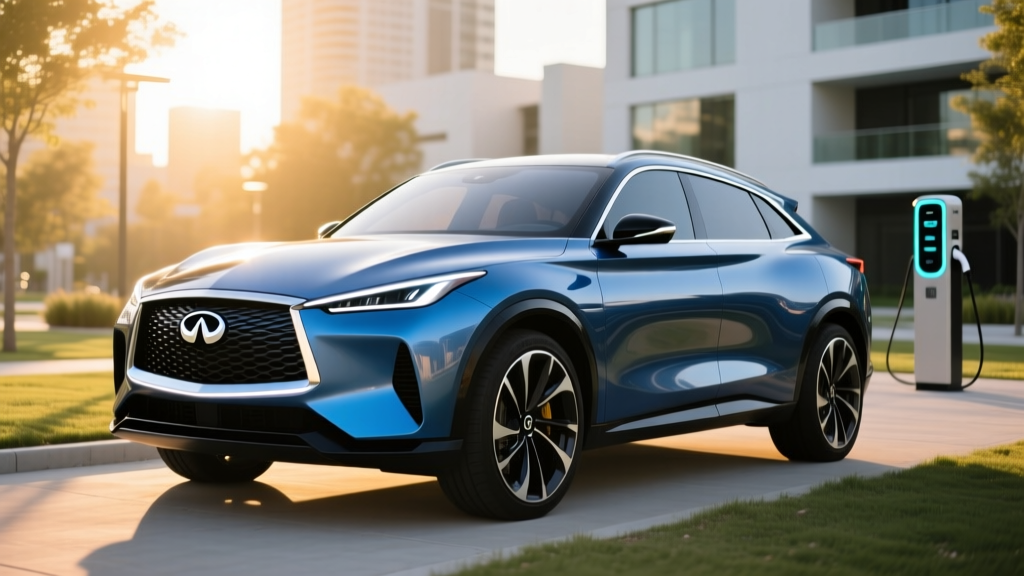
As of early 2026, Infiniti has not yet released a fully electric (BEV) SUV in the U.S. market. The brand's electrified offerings center on the QX60 e-POWER (a series hybrid, not a plug-in) and the upcoming QX55 EV, which Infiniti has previewed but not confirmed for U.S. sale with firm specs or a delivery date. If you need an electric luxury SUV today, competitors like the Genesis Electrified GV70, BMW iX, and Cadillac Lyriq are available and deliverable now. The QX55 EV remains in announced status — treat any published range or pricing as preliminary until Infiniti confirms U.S. specifications.
Infiniti's Electrification Strategy: Where Things Stand
Infiniti's parent company, Nissan, committed to an electrified lineup under its "Ambition 2030" plan, which includes launching multiple EV models globally. However, the pace for the Infiniti brand in North America has been slower than buyers expected. The original vision — an electric crossover based on the QX Inspiration concept — has evolved into what is now referred to as the QX55 EV, expected to ride on a new dedicated EV platform shared with upcoming Nissan electric models.
Meanwhile, the current U.S. Infiniti SUV lineup includes:
- QX50 — Turbocharged gas compact SUV with VC-Turbo engine
- QX55 — Gas-only coupe-styled variant of the QX50
- QX60 — Three-row gas SUV, with e-POWER hybrid variant announced for select markets
- QX80 — Full-size gas SUV, redesigned for 2025/2026 model years
None of these are plug-in hybrids (PHEVs) or battery-electric vehicles (BEVs). The e-POWER system is a series hybrid where a gasoline engine acts solely as a generator — it never drives the wheels directly. This means zero electric-only range, no plug, and no eligibility for federal EV tax credits. It delivers modest fuel-economy improvements (roughly 25–28 MPG combined vs. ~23 MPG for the standard QX60) but does not qualify as an electrified vehicle under IRS §30D rules.
What We Know About the QX55 EV (Announced)
The QX55 EV is the first confirmed battery-electric Infiniti SUV. Based on preview information and Nissan's platform strategy, here is what is known — and what remains speculative:
| Attribute | Estimated / Preliminary | Confidence Level |
|---|---|---|
| Platform | New dedicated EV architecture (CMF-EV evolution) | High — based on Nissan Ariya underpinnings |
| Battery Capacity | ~87–100 kWh usable (NMC chemistry likely) | Moderate — platform estimate |
| EPA Range | 280–320 miles (estimated) | Low — no official EPA certification yet |
| DC Fast Charge Rate | Up to 130–150 kW peak | Moderate — based on Ariya benchmark |
| 10–80% Charge Time | ~30–35 minutes (estimated) | Low — no confirmed charge-curve data |
| Drivetrain | Dual-motor AWD expected as standard | High — luxury segment norm |
| Horsepower | ~340–390 HP (estimated) | Low — no official powertrain specs |
| 0–60 mph | ~5.0–5.5 seconds (estimated) | Low — no testing data |
| U.S. Pricing (MSRP) | $55,000–$65,000 (estimated base) | Low — no pricing confirmed |
| U.S. Availability | Late 2026 at earliest, more likely 2027 | Moderate — based on Nissan timeline signals |
Critical caveat: These figures are derived from Nissan's Ariya platform data and industry estimates. Infiniti typically tunes for more power and a quieter, more refined ride than its mainstream sibling, which could mean a slightly heavier vehicle with marginally lower efficiency. Until official EPA testing and MSRP are published, treat every number above as directional, not definitive.
EV vs. Gas Infiniti SUV: Cost and Efficiency Comparison
For buyers weighing an electric Infiniti SUV against the current gas-powered QX55 or waiting for the QX55 EV, here is a grounded comparison using the gas QX55 as a baseline and the BMW iX xDrive50 as a stand-in for what the QX55 EV might deliver:
| Metric | 2026 Infiniti QX55 (Gas) | BMW iX xDrive50 (Proxy EV) |
|---|---|---|
| Powertrain | 2.0L VC-Turbo, CVT | Dual-motor AWD BEV |
| Horsepower | 268 HP | 516 HP |
| 0–60 mph | 6.3 sec | 4.4 sec |
| EPA Combined | 25 MPG | 86 MPGe |
| EPA Range | ~400 mi (15.9-gal tank) | 324 mi (fueleconomy.gov) |
| Real-World Highway Range | ~340 mi | ~260–280 mi (highway at 70+ mph) |
| Base MSRP | ~$48,000 | $87,250 |
| Fuel / Energy Cost per Mile | ~$0.15 (at $3.50/gal) | ~$0.04 (at $0.14/kWh home) |
| Annual Fuel / Energy (12k mi) | ~$1,800 | ~$480 |
| Federal Tax Credit (§30D) | $0 | Up to $7,500 (if eligible) |
The per-mile energy cost advantage of an EV is substantial — roughly $1,320/year savings at 12,000 miles driven. Over five years, that's $6,600 in fuel savings alone, before factoring in reduced maintenance (no oil changes, fewer brake replacements due to regenerative braking). However, the upfront price gap is significant. If the QX55 EV launches near $60,000, it will sit between these two benchmarks.
Real-World Ownership: What First-Time EV Buyers Must Plan For
Owning an electric SUV — whether from Infiniti or any luxury brand — introduces practical realities that gas-car buyers never consider. Here is what you need to evaluate before committing:
Home Charging Access Is Non-Negotiable for Convenience
Level 2 home charging (240V, typically 7.2–11.5 kW) is how 80%+ of EV charging happens for most owners. If you have a garage or dedicated parking space with access to a 240V circuit (or the ability to install one), EV ownership is seamless — plug in at night, wake up with a full battery. If you live in an apartment, condo, or street-parking situation without charging access, daily EV life becomes significantly harder.
Home Level 2 installation costs typically break down as follows:
| Item | Cost Range |
|---|---|
| Level 2 Charger (hardware) | $300–$700 |
| Electrician labor (40–60 ft run) | $800–$2,000 |
| Permit and inspection | $100–$400 |
| Panel upgrade (if 200A panel is full) | $1,500–$3,500 |
| Total (typical install) | $1,200–$3,100 |
| Total (with panel upgrade) | $2,700–$6,600 |
Cold-Weather Range Loss Is Real
Lithium-ion batteries lose efficiency in cold temperatures. Expect 15–30% range reduction in sustained freezing weather, depending on whether the vehicle has a heat pump (which the QX55 EV may include, but unconfirmed). A 300-mile EPA estimate could realistically drop to 210–255 miles in January in Chicago or Minneapolis. Preconditioning the battery while plugged in mitigates this, but only if you have home charging.
Public DC Fast Charging: Speeds and Reality
On road trips, DC fast charging is essential. Peak charge rate (in kW) matters, but the charge curve matters more. A vehicle rated at 150 kW peak might sustain that rate only from 10–40% State of Charge, then taper significantly. Expect 10–80% charging in 30–35 minutes for a mid-rate luxury EV, adding roughly 180–220 miles of range per session on networks like Electrify America or EVgo.
True Cost of Ownership: 5-Year Breakdown
Assuming a hypothetical QX55 EV at $60,000 MSRP and the current gas QX55 at $48,000, here is a five-year ownership comparison at 12,000 miles/year:
| Cost Category | Gas QX55 ($48K) | Est. QX55 EV ($60K) |
|---|---|---|
| Purchase Price | $48,000 | $60,000 |
| Federal Tax Credit (§30D) | $0 | Up to $7,500* |
| Effective Purchase | $48,000 | $52,500 |
| Fuel / Energy (5 years) | $9,000 | $2,400 |
| Maintenance (5 years) | $3,200 | $1,500 |
| Insurance (5 years, avg) | $9,500 | $11,000 |
| Home Charger Install | $0 | $2,000 |
| Estimated Depreciation | $18,000 | $22,000 |
| 5-Year Total Cost | $87,700 | $91,400 |
*Federal §30D credit eligibility depends on MSRP caps ($80,000 for SUVs), buyer income limits ($300K joint / $150K single), battery component sourcing, and critical-mineral requirements. Verify current-year rules at IRS.gov and consult a tax professional. Point-of-sale transfer is available at participating dealers.
The EV's higher purchase price and insurance premiums partially offset its fuel and maintenance savings. Over five years, the gap narrows to roughly $3,700 — and that's before accounting for potential state incentives, utility off-peak charging rates, or longer ownership horizons where the EV's savings compound.
Common Misconceptions About Electric Infiniti SUVs
| Myth | Fact |
|---|---|
| "Infiniti already sells an electric SUV." | As of 2026, no Infiniti BEV is available in the U.S. The e-POWER hybrid is a series hybrid, not a plug-in. |
| "e-POWER is basically the same as a plug-in hybrid." | e-POWER cannot be plugged in. It has no electric-only range. The gas engine generates all electricity onboard. |
| "EV batteries need replacing every 5 years." | Modern NMC and LFP batteries are warrantied for 8 years/100,000 miles minimum (federal mandate). Degradation is typically 10–15% over 8 years, not catastrophic failure. |
| "I'll save $7,500 no matter what." | The §30D credit has income caps, MSRP caps, and battery-sourcing requirements. Many luxury EVs and many buyers do not qualify. Always verify before purchasing. |
| "Charging takes too long for road trips." | A 10–80% DC fast charge takes 20–35 minutes at a capable station — comparable to a rest stop. Planning tools (A Better Routeplanner, built-in nav) make this manageable. |
Decision Framework: Should You Wait or Buy Now?
If-Then Guide for Electric Infiniti SUV Buyers
Wait for the QX55 EV if:
- You are committed to the Infiniti brand and want dealer-service familiarity
- Your current vehicle has 12+ months of life left and you're not in a rush
- You want to see confirmed EPA range, pricing, and §30D eligibility before committing
- You value Infiniti's ProPILOT Assist evolution and want the latest generation
Buy a competing electric luxury SUV now if:
- You need a vehicle within 3–6 months and can't wait for an unconfirmed timeline
- You want verified EPA range data and real-world charging performance today
- Federal tax-credit certainty matters — competitors like the Cadillac Lyriq and Genesis Electrified GV70 have confirmed eligibility
- You want access to the Tesla Supercharger network (via NACS) — most 2025+ luxury EVs now include NACS or adapters
Consider a PHEV or hybrid alternative if:
- You lack reliable home charging and public infrastructure is sparse in your area
- You frequently drive 400+ miles in a single day in regions with charging gaps
- You want some electric commuting without range-anxiety risk on long trips
Competitive Alternatives Available Today
If you're shopping for an electric luxury SUV and can't wait for Infiniti's entry, these are the strongest current alternatives with confirmed specs:
- Cadillac Lyriq — 314 mi EPA range, 102 kWh battery, 190 kW DC charging, starts ~$58,590. Eligible for §30D credit.
- Genesis Electrified GV70 — 236 mi EPA range, 77.4 kWh battery, 350 kW peak DC charging, starts ~$67,450. Credit eligibility varies by sourcing year.
- BMW iX xDrive50 — 324 mi EPA range, 111.5 kWh battery, ~200 kW DC charging, starts ~$87,250. Above §30D MSRP cap for SUVs.
- Audi Q8 e-tron — 285 mi EPA range, 114 kWh battery, 170 kW DC charging, starts ~$75,600. Within MSRP cap; credit eligibility depends on sourcing.
- Tesla Model Y Long Range — 320 mi EPA range, NACS native, 250 kW Supercharger access, starts ~$48,990. Most affordable but less luxury refinement.
Each of these delivers confirmed EPA data, real-world charging benchmarks, and verifiable tax-credit status — advantages the unreleased QX55 EV cannot yet match.
Frequently Asked Questions
Does Infiniti make a fully electric SUV in 2026?
No. Infiniti's U.S. SUV lineup in 2026 consists of gasoline models (QX50, QX55, QX60, QX80) and the e-POWER series hybrid variant in select markets. The QX55 EV has been announced but is not yet available for purchase with confirmed U.S. specifications.
Is the Infiniti e-POWER system a plug-in hybrid?
No. e-POWER is a series hybrid where the gasoline engine acts only as a generator to charge a small battery. It cannot be plugged in, has no electric-only driving range, and does not qualify for any federal EV tax credits.
When will the Infiniti QX55 EV be available?
Infiniti has not confirmed a U.S. launch date. Industry estimates suggest late 2026 at the earliest, with 2027 being more realistic for customer deliveries. Treat any timeline as preliminary until the manufacturer issues an official press release with EPA-certified figures.
Will the QX55 EV qualify for the $7,500 federal tax credit?
This cannot be confirmed until the vehicle's battery sourcing, MSRP, and the buyer's income are evaluated against current IRS §30D requirements. The SUV MSRP cap is $80,000, and the buyer income cap is $300,000 (joint) or $150,000 (single). Battery critical-mineral and component sourcing rules also apply and change annually.
What should I do if I want an electric luxury SUV but can't wait?
Consider the Cadillac Lyriq, Genesis Electrified GV70, Audi Q8 e-tron, or BMW iX. All have confirmed EPA range, verified charging performance, and established dealer networks. Test-drive at least two and compare real-world highway range (typically 15–25% below EPA at sustained 75+ mph speeds) before deciding.
How much does it cost to charge an electric luxury SUV at home?
At the U.S. average residential rate of ~$0.16/kWh, charging a 90 kWh battery from 10–80% costs roughly $10. Over 12,000 miles/year at 3 mi/kWh efficiency, annual home-charging cost is approximately $640 — compared to $1,700+ for gasoline at $3.50/gal and 25 MPG.