Quick Answer: Is Going Electric in Europe Worth It in 2026?
Yes — for most European drivers, an EV now costs less per mile than a petrol car, with public charging infrastructure exceeding 700,000 points across the EU and UK. A typical compact EV like the Volkswagen ID.3 (58 kWh battery, WLTP 426 km range) costs roughly €4.50 per 100 km to charge at home on off-peak electricity (€0.30/kWh), versus €10–€14 per 100 km in a comparable petrol Golf at €1.75/L fuel. Upfront purchase prices remain €3,000–€8,000 higher than ICE equivalents, but total cost of ownership (TCO) tips in the EV's favor within 3–5 years for drivers covering 15,000+ km/year. The key caveats: apartment dwellers without home charging access, frequent long-distance drivers in Eastern Europe, and those in extreme Nordic winters should plan carefully.
Why European EV Buyers Face a Different Landscape Than Americans
If you're researching going electric in Europe, the fundamentals differ significantly from the US market. European drivers benefit from denser charging networks, smaller average trip distances, higher petrol prices (making the EV cost advantage starker), and purchase incentives that vary dramatically by country — from Norway's near-total tax exemptions to Italy's more modest subsidies. Most European EV specs are published under WLTP (Worldwide Harmonised Light Vehicle Test Procedure), which tends to yield range figures 10–15% higher than the US EPA cycle. When you see a "500 km range" claim from a European manufacturer, expect real-world highway driving to deliver closer to 380–420 km, and 30–40% less in freezing Nordic winters.
The connector standard across Europe is Type 2 (AC) and CCS2 (DC fast charging) — not the NACS (Tesla-style) connector now dominant in North America. Tesla Superchargers in Europe have used CCS2 since the Model 3 launched, and many are now open to non-Tesla vehicles via the Tesla app. This means connector compatibility is largely a non-issue: virtually every new EV sold in Europe charges via CCS2 for DC and Type 2 for AC.
Real-World Costs: EV vs Petrol vs Hybrid in Europe
The most common question from first-time European EV buyers is whether the math works. Here's a concrete comparison using representative 2026 models in the compact family car segment — the highest-volume category in Europe.
| Cost Category | VW ID.3 Pro (BEV) | VW Golf 1.5 TSI (Petrol) | Toyota Corolla Hybrid (HEV) |
|---|---|---|---|
| Purchase price (approx.) | €39,990 | €30,500 | €32,800 |
| Purchase incentive (Germany Umweltbonus 2026) | -€4,500 | €0 | €0 |
| Net purchase cost | €35,490 | €30,500 | €32,800 |
| Fuel/energy (5 years, 75,000 km) | €3,375 (home charging) | €8,750 | €5,625 |
| Maintenance (5 years) | €900 | €2,500 | €2,200 |
| Insurance (5 years, avg) | €5,250 | €4,500 | €4,750 |
| Vehicle tax (5 years) | €0 (exempt through 2030) | €600 | €450 |
| 5-Year Total | €45,015 | €46,850 | €45,825 |
| Cost per km | €0.60 | €0.62 | €0.61 |
The BEV wins narrowly on TCO even before accounting for brake savings from regenerative braking (expect 60,000+ km on original brake pads with heavy regen use). The gap widens significantly if you rely on public DC fast charging at €0.50–€0.79/kWh — that pushes the ID.3's 5-year energy cost to €5,500–€7,000, erasing the advantage. Home charging access is the single largest variable in European EV economics.
Charging Infrastructure: What's Actually Available
Europe's public charging network has expanded aggressively. As of early 2026, the Alternative Fuels Data Center and the European Alternative Fuels Observatory (EAFO) report over 750,000 public charging points across the EU-27 and UK. However, distribution is highly uneven:
| Country/Region | Public Chargers per 100 EVs | DC Fast Charger Share | Reliability Rating |
|---|---|---|---|
| Netherlands | ~28 | ~15% | High (95%+ uptime) |
| Germany | ~18 | ~22% | Moderate-High |
| France | ~16 | ~18% | Moderate |
| Norway | ~12 | ~35% | High |
| Italy | ~10 | ~14% | Moderate |
| Spain | ~7 | ~12% | Moderate-Low |
| Poland | ~5 | ~20% | Moderate-Low |
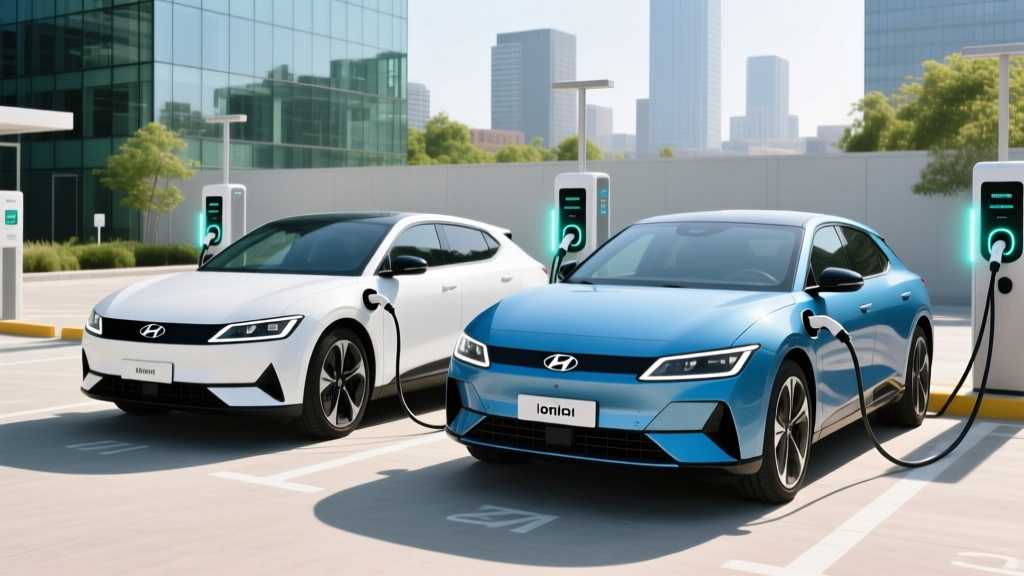
Major pan-European networks include Ionity (350 kW CCS2 chargers along motorways, now 1,000+ stations), Shell Recharge, EnBW, Fastned, and Tesla Supercharger (open to non-Tesla EVs at many locations). A typical 350 kW Ionity stop in a VW ID.3 (max DC charge rate 135 kW) adds 10–80% in roughly 28 minutes, though you'll pay €0.69/kWh without a subscription. With an Ionity subscription (~€17.99/month), the rate drops to €0.39/kWh — worthwhile if you fast-charge more than twice monthly.
Top EVs for European Buyers: Specs That Matter
Here are five of the most relevant EVs for the European market in 2026, with the exact figures buyers need.
| Model | Battery (kWh, usable) | WLTP Range | Real-World Range (est.) | Max DC Charge (kW) | 10–80% Time | 0–100 km/h | Starting Price (€) |
|---|---|---|---|---|---|---|---|
| Volvo EX30 Single Motor | 66 (NMC) | 476 km | 370–400 km | 153 | ~26 min | 7.3 sec | €39,990 |
| VW ID.3 Pro | 58 (NMC) | 426 km | 330–360 km | 135 | ~28 min | 7.3 sec | €39,990 |
| Tesla Model Y RWD | 60 (LFP) | 455 km | 350–390 km | 170 | ~25 min | 6.9 sec | €44,990 |
| Renault Scenic E-Tech 87 kWh | 87 (NMC) | 625 km | 470–520 km | 150 | ~37 min | 7.9 sec | €46,990 |
| Hyundai Ioniq 5 77 kWh | 77.4 (NMC) | 507 km | 390–430 km | 240 (800V) | ~18 min | 5.2 sec (AWD) | €51,900 |
Chemistry note: The Tesla Model Y RWD uses an LFP (lithium iron phosphate) battery, which tolerates regular 100% charging better than NMC chemistries and typically offers longer cycle life, but sacrifices some energy density (heavier pack for the same kWh) and performs less well in extreme cold. If you live in Scandinavia and charge outdoors in winter, NMC packs with active thermal preconditioning (standard on Hyundai, VW, Volvo) will deliver faster DC charging in sub-zero temperatures.
Common Misconceptions About Going Electric in Europe
| Myth | Fact |
|---|---|
| "EV batteries need replacing every 5–8 years" | Modern NMC and LFP packs are warrantied for 8 years / 160,000 km at 70% capacity retention. Real-world data from Geotab's fleet study shows average degradation of ~2.3% per year, meaning a 10-year-old pack typically retains 75–80% of original capacity. |
| "There aren't enough chargers for road trips" | Western and Northern Europe have motorway DC charger spacing of 40–80 km on major corridors. The challenge is Southern and Eastern Europe, where gaps of 150+ km still exist on secondary routes. Plan ahead with ABRP or PlugShare. |
| "EVs are worse in winter" | Range drops 20–40% in sub-zero conditions (worst at -15°C or below, short trips without preconditioning). A 400 km WLTP EV realistically delivers 260–300 km in a Scandinavian January. Heat pumps (standard on most 2026 models) recover 10–15% of that loss. Preconditioning while plugged in is essential. |
| "Charging takes too long" | At a 150+ kW DC charger, most modern EVs add 200–300 km in 15–20 minutes. The charge curve tapers significantly above 80% SoC — the 80–100% top-up can take as long as 10–80%. Best practice: charge to 80% and move on. |
| "The electricity grid can't handle mass EV adoption" | European grid operators manage EV demand through time-of-use tariffs and smart charging mandates (EU Regulation 2023/...). Most home charging occurs overnight at 7–11 kW, adding minimal peak load. V2G (vehicle-to-grid) pilots in the Netherlands and Denmark are already feeding power back during demand peaks. |
First-Time European EV Buyer Checklist
Before signing a purchase or lease agreement, work through these practical considerations:
- Home charging access: Do you have a garage, driveway, or approved building-installation point? A 7–11 kW wallbox costs €500–€1,200 (hardware) plus €400–€1,500 (electrician installation), depending on cable run length and whether your building's electrical panel needs an upgrade. This single factor determines whether your per-km cost is €0.03 or €0.08.
- Daily and weekly driving distance: The median European commute is under 30 km one-way. Any current EV handles this effortlessly. If your regular weekly mileage exceeds 800 km including motorway driving, prioritize models with 500+ km WLTP range and 150+ kW DC charging.
- Country-specific incentives: Germany's Umweltbonus, France's bonus écologique, Norway's VAT exemption, and the UK's plug-in grant all have different eligibility rules, income caps, and MSRP limits. Check your national transport ministry's current-year guidance — these change annually.
- Lease vs. buy: In many European markets, EV leasing (€299–€499/month for compact models) includes maintenance and sometimes charging credits. For drivers who want to avoid battery degradation risk and plan to upgrade in 3–4 years, leasing often makes more financial sense than purchasing.
- Insurance quotes: EV insurance premiums run 10–25% higher than equivalent ICE vehicles in most European markets, driven by higher repair costs for battery-adjacent damage. Get quotes before committing.
- Apartment/condo charging rights: EU Directive 2024/... ("Right to Plug") strengthens tenants' and co-owners' rights to install chargers in shared buildings, but implementation varies. Check your country's transposition of this directive.
Decision Framework: Which EV Path Is Right for You?
Choose a Battery EV (BEV) If:
- You have reliable home or workplace charging (7+ kW AC)
- Your daily driving is under 200 km with occasional 400–500 km trips
- Your country offers purchase incentives of €3,000+ and reduced annual taxes
- You drive 15,000+ km/year (the fuel savings justify the upfront premium faster)
- You want minimal maintenance (no oil changes, fewer brake replacements, no exhaust system)
Choose a Plug-In Hybrid (PHEV) If:
- You lack reliable home charging and can't install a wallbox
- Your commute is under 50 km (covering electric-only range of 50–80 km on most 2026 PHEVs)
- You regularly drive 600+ km in areas with sparse DC charging (rural Spain, Eastern Europe)
- You want EV-like daily driving without range anxiety on holiday road trips
- Your country still offers PHEV incentives (many have phased these out)
Stick With a Hybrid (HEV) or Delay If:
- You live in an apartment with no charging prospect and street parking only
- Your annual mileage is under 8,000 km (the EV upfront premium won't pay back)
- You're in a region with electricity prices above €0.45/kWh and petrol below €1.50/L (rare, but check locally)
- You tow frequently — EV towing range loss of 40–50% makes long caravan trips impractical for current models
Frequently Asked Questions
Can I drive an EV across multiple European countries on one charge network?
Yes. The CCS2 connector is standard across the EU, UK, Norway, and Switzerland. Networks like Ionity, Shell Recharge, and Tesla Supercharger (open to non-Tesla EVs at select stations) accept most payment methods or RFID cards. Apps like A Better Route Planner (ABRP) and PlugShare aggregate real-time charger availability across borders. The main friction point is payment: some networks still require proprietary apps or RFID cards, though EU regulation now mandates ad-hoc payment via credit card or contactless at new DC chargers.
How does cold weather in Scandinavia affect EV range and charging?
At -10°C to -20°C, expect 25–40% range reduction depending on trip length, use of cabin heating, and whether you precondition the battery. DC fast charging speeds also drop significantly when the battery is cold — a car that charges 10–80% in 25 minutes at 20°C may take 40–50 minutes at -15°C without preconditioning. Always precondition while still plugged in at home. A heat pump (standard on most 2026 European-market EVs) reduces cabin heating energy consumption by roughly 30–50% compared to resistive heating.
What happens if my EV battery degrades significantly?
Every major manufacturer warranties the traction battery for 8 years / 160,000 km (whichever comes first) at a minimum of 70% capacity retention. If your battery drops below that threshold within the warranty period, the manufacturer must repair or replace it at no cost. Out-of-warranty battery replacement costs vary: €8,000–€15,000 for a compact EV pack, €15,000–€25,000 for a large SUV pack. However, real-world failure rates remain very low — most packs retain 85–92% capacity at 150,000 km based on fleet data.
Is buying a used EV in Europe a good idea?
Used EVs offer excellent value, especially 2–4 year-old models where the initial depreciation hit (typically 30–45%) has already occurred. Prioritize models with verifiable battery State of Health (SoH) reports — many dealers now provide these, and OBD-II tools like OBDeleven can read SoH on most VW Group and Hyundai/Kia EVs. Check whether the original battery warranty transfers (it does in most EU countries). Avoid early-generation models with passive battery cooling (e.g., early Nissan Leaf) if you plan to DC fast-charge frequently, as these degrade faster.
Do European EV incentives still exist in 2026?
Yes, but they're narrowing. Germany's Umweltbonus was reduced and now applies only to BEVs (not PHEVs) with income caps. France's bonus écologique favors EVs under €47,000 and includes a "social lease" program for lower-income buyers. Norway's VAT exemption now applies only to the first NOK 500,000 of the purchase price. The UK offers reduced VED (vehicle excise duty) for zero-emission cars. Always verify current rules on your national transport ministry's website — incentive structures are revised annually and sometimes mid-year.
The Bottom Line
Going electric in Europe in 2026 is a financially sound decision for the majority of drivers — provided you have access to affordable home charging and your driving patterns align with current range and charging realities. The total cost of ownership advantage over petrol is real and measurable, typically €1,500–€3,000 over five years for a compact family car. The gap versus hybrids is narrower and depends heavily on your mileage and charging access. Start by auditing your daily driving distance, confirming your home charging options, and getting insurance quotes before choosing a model. The infrastructure is ready for most use cases; the question is whether it's ready for yours.