Quick Answer: Which Electric Hyundai Is Right for You?
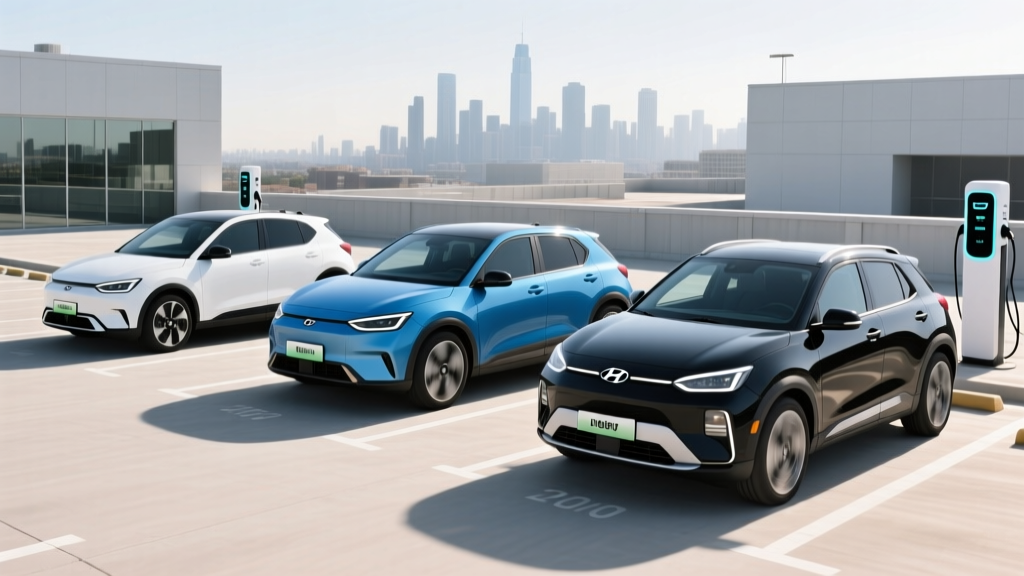
Hyundai's 2026 electric lineup spans three distinct BEVs. The Kona Electric starts around $32,975 with up to 261 miles of EPA range — best for budget-conscious commuters with home charging. The Ioniq 5 (from ~$42,900) delivers up to 311 miles, ultra-fast 800V charging (10–80% in ~18 minutes), and crossover practicality — the lineup's sweet spot. The Ioniq 6 (from ~$38,650) maximizes efficiency at up to 361 miles EPA in its SE Long Range trim, ideal for high-mileage drivers prioritizing range over cargo space. All three use Hyundai's E-GMP platform (Ioniq models) or K1 EV architecture (Kona) and carry a 10-year/100,000-mile battery warranty.
The 2026 Electric Hyundai Lineup at a Glance
Hyundai has steadily expanded its EV portfolio, and the 2026 model year represents the brand's most mature electric offering yet. The Ioniq 5 received a significant refresh for 2025 with a larger 84.0 kWh battery pack, NACS charge port standard (no adapter needed at Tesla Superchargers), and updated infotainment — those changes carry into 2026. The Ioniq 6 continues with its aerodynamic sedan profile and class-leading efficiency. The second-generation Kona Electric, introduced for 2024, remains Hyundai's entry point into battery-electric ownership.
| Spec | Kona Electric SEL | Ioniq 5 SE Std Range | Ioniq 5 SE Long Range AWD | Ioniq 6 SE Long Range RWD |
|---|---|---|---|---|
| Base MSRP | $32,975 | $42,900 | $49,100 | $38,650 |
| EPA Range | 261 mi | 245 mi | 311 mi | 361 mi |
| Battery (usable) | 65.0 kWh (NMC) | 63.0 kWh (NMC) | 84.0 kWh (NMC) | 77.4 kWh (NMC) |
| Horsepower | 201 hp | 168 hp | 320 hp | 225 hp |
| 0–60 mph | ~7.6 sec | ~8.3 sec | ~4.5 sec | ~6.9 sec |
| Peak DC Fast Charge | 100 kW | 180 kW | 240 kW | 240 kW |
| 10–80% DC Charge | ~43 min | ~18 min | ~18 min | ~18 min |
| Level 2 (240V) Rate | 10.9 kW | 10.9 kW | 10.9 kW | 10.9 kW |
| Charge Port | CCS1 / NACS adapter | NACS (native) | NACS (native) | NACS (native) |
| Combined MPGe | 110 MPGe | 110 MPGe | 97 MPGe | 140 MPGe |
| Cargo Volume | 25.8 cu ft | 27.2 cu ft | 27.2 cu ft | 11.7 cu ft |
| Battery Warranty | 10 yr / 100,000 mi | 10 yr / 100,000 mi | 10 yr / 100,000 mi | 10 yr / 100,000 mi |
Sources: EPA fueleconomy.gov, Hyundai Newsroom. MSRP excludes destination. Specs reflect 2026 model-year data available at publication.
Real-World Range Reality Check
EPA range stickers are tested under controlled conditions. In real-world driving, expect:
- Highway driving (70–80 mph): Deduct 10–15% from EPA. An Ioniq 5 LR AWD rated at 311 mi will deliver roughly 265–280 mi at sustained highway speed.
- Cold weather (below 32°F): Expect 20–30% range loss depending on cabin heating use. That 311-mile Ioniq 5 could drop to ~220–250 mi in January in Minnesota.
- Mixed city/highway in mild weather: You'll typically match or slightly beat EPA numbers thanks to regenerative braking in stop-and-go traffic.
The Ioniq 6's sedan shape gives it a ~0.21 drag coefficient, making it the most efficient Hyundai EV and the least affected by highway-speed range loss in the lineup.
Charging: 800V Architecture vs. 400V — What It Means for You
The biggest technical divide in Hyundai's electric lineup is the charging architecture. Both the Ioniq 5 and Ioniq 6 use Hyundai's E-GMP platform with 800V battery architecture, which allows peak DC fast-charge rates of up to 240 kW at compatible chargers. The Kona Electric uses a conventional 400V system that peaks around 100 kW.
Here's why that matters: kW (kilowatts) measures charging power — the rate at which energy flows into the battery. kWh (kilowatt-hours) measures battery capacity — the total energy stored. A higher kW charge rate fills the battery faster, but only if the charger and the battery's thermal management system cooperate.
| Charging Level | Power (kW) | Ioniq 5 / Ioniq 6 (800V) | Kona Electric (400V) |
|---|---|---|---|
| Level 1 (120V household) | ~1.4 kW | ~4 mi/hr | ~4 mi/hr |
| Level 2 (240V home/work) | 10.9 kW | ~32–38 mi/hr | ~28 mi/hr |
| DC Fast (50 kW station) | 50 kW | ~130 mi/hr | ~100 mi/hr |
| DC Fast (150 kW station) | 150 kW | ~180+ mi/hr | ~100 mi/hr (peak ~100 kW) |
| DC Fast (350 kW station) | Up to 240 kW | ~250+ mi/hr (peak) | N/A (limited to ~100 kW) |
Understanding the Charge Curve
Peak kW ratings are not sustained across the entire session. The Ioniq 5 LR can pull 240 kW at a low state of charge (around 10–20%) on a 350 kW charger, but the rate tapers as the battery fills. The advertised "10–80% in ~18 minutes" reflects this curve averaged across the session. Above 80%, charging slows dramatically — often to under 40 kW — to protect battery health. If you're road-tripping, plan stops around 10–80% rather than topping to 100%.
For 2026, the Ioniq 5 and Ioniq 6 ship with a native NACS (North American Charging Standard) port, meaning you can plug directly into Tesla Supercharger V3 and V4 stalls without an adapter. This is a significant advantage over CCS-only vehicles, as Tesla's Supercharger network remains the most reliable DC fast-charging network in the US. The Kona Electric still uses a CCS1 port; Hyundai provides a NACS adapter, but native access is always preferable for connection reliability.
Electric Hyundai vs. Gas and Hybrid: The Cost Breakdown
Let's put numbers to the EV-vs-gas debate. We'll compare the Ioniq 5 SE Long Range RWD (the best-selling Ioniq 5 configuration) against the gas-powered Hyundai Tucson and the Hyundai Tucson Hybrid — similar-sized crossovers from the same showroom.
| Cost Category | 2026 Ioniq 5 SE LR RWD | 2026 Tucson SEL (Gas) | 2026 Tucson Hybrid SEL |
|---|---|---|---|
| Base MSRP | $46,600 | $31,250 | $35,500 |
| Est. Federal Tax Credit (§30D) | Up to $7,500* | $0 | $0 |
| Effective Purchase Price | ~$39,100 | $31,250 | $35,500 |
| Fuel/Energy Cost (60k mi) | ~$3,600** | ~$7,500*** | ~$5,200*** |
| Maintenance (60k mi) | ~$600 | ~$2,400 | ~$2,000 |
| Est. Insurance (5 yr avg) | ~$9,500 | ~$7,200 | ~$7,600 |
| 5-Year Total | ~$52,800 | ~$48,350 | ~$50,300 |
*§30D credit eligibility depends on MSRP caps, buyer income limits, battery component and critical-mineral sourcing requirements per IRS rules. Consult a tax professional. **Based on $0.15/kWh national avg residential electricity. ***Based on $3.50/gal gas, Tucson 28 MPG combined, Tucson Hybrid 38 MPG combined. Insurance estimates are illustrative; get personal quotes.
The Ioniq 5 costs more upfront but narrows the gap significantly after the federal tax credit, lower energy costs, and minimal maintenance (no oil changes, no spark plugs, reduced brake wear from regenerative braking). The breakeven point versus the gas Tucson typically arrives around year 4–5 depending on your electricity rate and driving volume. If you drive more than 15,000 miles/year, the math shifts faster in the EV's favor.
Federal Tax Credit: What You Actually Need to Know
The §30D Clean Vehicle Credit can provide up to $7,500 for eligible buyers of new EVs, but the rules are complex for 2026:
- Income caps: Modified AGI ≤ $150,000 (single), $225,000 (head of household), $300,000 (joint).
- MSRP caps: ≤ $55,000 for sedans (Ioniq 6), ≤ $80,000 for SUVs/crossovers (Ioniq 5, Kona).
- Battery sourcing: Percentages of battery components and critical minerals must be manufactured or sourced from the US or FTA partners — thresholds increase annually.
- Point-of-sale transfer: You can transfer the credit to the dealer at purchase, reducing your out-of-pocket cost immediately rather than waiting for tax filing.
Hyundai manufactures the Ioniq 5 at its Metaplant in Ellabell, Georgia, as of 2025, which resolved the domestic-production issue that disqualified Korea-built models from the credit in 2023–2024. Verify current eligibility at IRS.gov before purchasing, as sourcing rules tighten each year.
Real-World Ownership: What First-Time EV Buyers Should Know
Spec sheets don't tell the whole story. Here's what living with an electric Hyundai actually looks like, based on the practical realities that shape daily satisfaction.
Home Charging Is Non-Negotiable for Most Owners
If you can install a Level 2 (240V) home charger, an EV becomes remarkably convenient — you wake up every morning with a "full tank." A typical Level 2 installation (40-amp circuit, hardwired wall connector) costs $800–$2,500 depending on panel proximity and local permit fees. Homes with 200-amp electrical panels usually accommodate this without a panel upgrade; older homes with 100-amp service may need a $1,500–$3,000 panel upgrade first.
If you cannot charge at home (apartment, street parking, no garage), EV ownership becomes significantly harder. Public DC fast charging costs roughly 2–3× more per kWh than home charging and adds time to your routine. Be honest about your situation before buying.
Cold Climate Considerations
All three Hyundai EVs use liquid-cooled, thermally managed NMC battery packs. The Ioniq 5 and Ioniq 6 include a heat pump (standard on most trims) that recovers waste heat from the powertrain to warm the cabin — significantly reducing winter range loss compared to resistive heating. The Kona Electric also includes a battery preconditioning feature for DC fast charging, warming the pack before you arrive at a charger to optimize charge speed in cold weather.
Expect 20–30% range reduction in sustained sub-freezing temperatures. An Ioniq 5 LR AWD rated at 311 miles EPA will realistically deliver 220–250 miles in a Minnesota January. If your daily round-trip commute is under 80 miles, this is a non-issue. If you regularly drive 200+ miles in winter cold, plan charging accordingly.
Insurance and Depreciation
EV insurance premiums typically run 15–25% higher than equivalent gas vehicles due to higher repair costs (especially battery replacement after collision damage) and elevated MSRP. Get quotes from your insurer before committing. On the positive side, Hyundai's 10-year/100,000-mile battery and powertrain warranty provides long-term peace of mind that most competitors don't match.
Common Misconceptions About Electric Hyundais
| Myth | Fact |
|---|---|
| "The battery will need replacing in 5 years and cost $20,000." | NMC batteries in E-GMP vehicles are showing less than 10% degradation after 100,000 miles based on fleet data. Hyundai warranties the pack for 10 years/100,000 miles at ≥70% capacity retention. Full replacements are rare and typically covered under warranty. |
| "I can't take an EV on road trips." | The Ioniq 5's 800V system charges 10–80% in ~18 minutes at a 350 kW station. On a 600-mile trip, two 20-minute charging stops add ~40 minutes total. With native NACS, you get access to 20,000+ Tesla Superchargers plus Electrify America and other networks. |
| "Hyundais aren't built in America, so no tax credit." | Since late 2024, the Ioniq 5 is assembled at Hyundai's Metaplant in Georgia. Eligible buyers can receive up to $7,500 via point-of-sale transfer. Verify current sourcing compliance per IRS rules. |
| "EVs are worse in the rain and snow." | AWD Ioniq 5 models deliver 320 hp with instant torque to all four wheels. EVs have a low center of gravity (battery pack under the floor), improving traction. There is no engine to hydroplane or stall in water. |
| "Level 2 driver assist means I don't have to pay attention." | Hyundai's Highway Driving Assist 2 is an SAE Level 2 system. The driver must remain engaged, hands on or near the wheel, eyes on the road. It assists with steering, acceleration, and braking but is not self-driving. |
SAE Automation Level: What Hyundai's Driver Assist Actually Does
Hyundai's Highway Driving Assist 2 (HDA2) and available Highway Driving Assist with Lane Change are SAE Level 2 driver-assistance systems. They combine adaptive cruise control with lane-centering on divided highways. The driver is the responsible operator at all times and must supervise. Only Level 4 services (like Waymo in designated geofenced areas) operate without a human driver. Do not treat HDA2 as autonomous driving.
Decision Framework: Which Electric Hyundai Should You Buy?
If-Then Buyer Guide
- Choose the Kona Electric if: Your budget is under $35,000, your daily commute is under 100 miles, you have home Level 2 charging, and you don't need DC fast charging for frequent road trips. It's a practical, affordable daily driver — just accept its slower 100 kW peak charge rate.
- Choose the Ioniq 5 if: You want the best all-around EV in the lineup — crossover cargo space, fast 800V charging for road trips, AWD availability, and native NACS/Supercharger access. The Long Range AWD at $49,100 (before credit) is the volume configuration for good reason.
- Choose the Ioniq 6 if: Maximum range and efficiency are your priorities. The SE Long Range RWD achieves 361 EPA miles and 140 MPGe combined — the most efficient vehicle in Hyundai's electric lineup. Trade-offs include less cargo space (11.7 cu ft trunk) and no AWD option on the longest-range trim.
- Consider a Hyundai hybrid (Tucson Hybrid, Santa Fe Hybrid) instead if: You lack home charging access, regularly drive in extreme cold with no charging infrastructure, or your budget is strictly under $30,000. Hybrids eliminate range anxiety while still improving fuel economy.
Frequently Asked Questions
Does the Hyundai Ioniq 5 qualify for the $7,500 federal tax credit in 2026?
The Ioniq 5 assembled at Hyundai's Georgia Metaplant is eligible for the §30D credit, provided the buyer meets income caps ($150K single / $300K joint), the vehicle MSRP is under $80,000 (SUV cap), and battery-sourcing requirements are met. The credit can be transferred at the point of sale to reduce your purchase price immediately. Check current eligibility at IRS.gov and confirm with your dealer, as critical-mineral sourcing thresholds increase annually.
How long does it take to charge a Hyundai Ioniq 5 at home?
With a 10.9 kW Level 2 (240V) home charger, a full charge from 10% to 100% on the 84.0 kWh Long Range battery takes approximately 7.5–8 hours. Most owners plug in overnight and wake up fully charged. A standard 120V outlet (Level 1) adds only about 4 miles per hour — suitable only for emergency trickle charging or very low-mileage drivers.
What is the real-world range of the Ioniq 6 in winter?
The Ioniq 6 SE Long Range RWD carries a 361-mile EPA rating. In sustained sub-freezing temperatures with cabin heating, expect roughly 250–290 miles of real-world range — a 20–30% reduction. The standard heat pump helps mitigate this loss compared to EVs without one. Preconditioning the cabin while still plugged in preserves battery charge for driving.
Is Hyundai's 10-year battery warranty transferable to a second owner?
Hyundai's 10-year/100,000-mile powertrain and battery warranty is partially transferable. The original owner receives the full 10/100,000 coverage. If the vehicle is sold, the warranty transfers to the second owner as a 5-year/60,000-mile powertrain warranty. The battery capacity warranty (≥70% retention) generally follows the vehicle for 10 years/100,000 miles regardless of ownership, but confirm this with Hyundai at purchase as terms can vary by state.
Can I use Tesla Superchargers with a Hyundai EV?
Yes. The 2026 Ioniq 5 and Ioniq 6 have a native NACS charge port, so you can plug directly into Tesla Supercharger V3 and V4 stalls. The Kona Electric uses a CCS1 port; Hyundai includes a NACS adapter for Supercharger access. Tesla's network remains the most reliable and widely available DC fast-charging network in the US, with over 20,000 stalls nationally.
How much does it cost to replace a Hyundai EV battery out of warranty?
Out-of-warranty battery replacement for an Ioniq 5 or Ioniq 6 currently ranges from $12,000 to $18,000 including labor, depending on the pack size. However, industry data shows NMC packs with active thermal management (like Hyundai's E-GMP platform) retaining 85–90% capacity at 100,000 miles. Combined with Hyundai's 10-year warranty, most owners will never face an out-of-pocket battery replacement. Battery costs continue to decline year over year.
Data sourced from EPA fueleconomy.gov, Hyundai Newsroom, and IRS.gov. Specifications and pricing reflect 2026 model-year information available at time of publication. Always verify with your local dealer and tax professional before purchasing.