Quick Answer: Are Electric Hypercars Practical to Own?
Electric hypercars like the Rimac Nevera (1,914 HP, 294-mile EPA range, $2.2M+) deliver unmatched performance but are not daily drivers. Expect 200–240 miles of real-world highway range, DC fast charging at up to 250 kW (10–80% in ~22 minutes), and annual insurance premiums exceeding $30,000. These vehicles exist for collectors and track enthusiasts, not commuters. Total 5-year ownership costs routinely surpass $2.8 million when factoring depreciation, insurance, and specialized maintenance.
What Defines an Electric Hypercar in 2026?
Electric hypercars occupy the extreme upper tier of EV performance. Unlike mainstream EVs focused on efficiency and range, these machines prioritize power density, acceleration, and exclusivity. Current production models share common traits: quad-motor torque vectoring, carbon-fiber monocoque chassis, battery packs between 85–120 kWh, and price tags starting well above $1 million.
The segment remains tiny—combined annual production across all manufacturers hovers around 300–400 units globally. Buyers are typically collectors adding to multi-vehicle garages rather than first-time EV shoppers. Still, the technology developed in these vehicles often trickles down to mainstream EVs within 3–5 years, particularly in thermal management and power electronics.
Current Electric Hypercars: Spec-by-Spec Comparison
| Specification | Rimac Nevera | Lotus Evija | Pininfarina Battista |
|---|---|---|---|
| Horsepower | 1,914 HP | 2,011 HP | 1,877 HP |
| 0–60 mph | 1.85 sec | <3.0 sec | 1.9 sec |
| Battery Capacity | 120 kWh (NMC) | 70 kWh (NMC) | 120 kWh (NMC) |
| EPA Range | 294 mi | ~250 mi (est.) | 287 mi |
| Real-World Highway Range | ~220–250 mi | ~180–210 mi | ~210–240 mi |
| Peak DC Charge Rate | 250 kW | 350 kW | 250 kW |
| 10–80% Charge Time | ~22 min | ~12 min | ~22 min |
| Base MSRP | $2,200,000 | $2,300,000 | $2,800,000 |
| Units Produced | 150 | 130 | 150 |
| Battery Warranty | 8 yr / unlimited mi | 8 yr / 100,000 mi | 8 yr / unlimited mi |
Sources: Rimac Automobili, Lotus Cars, Pininfarina. Real-world range estimates based on high-speed driving patterns typical of hypercar use; expect 20–30% reduction from EPA figures at sustained 80+ mph speeds.
Real-World Range and Charging: What Sticker Numbers Don't Tell You
EPA range figures assume a mix of city and highway driving at moderate speeds. Hypercar owners rarely drive that way. At sustained highway speeds above 80 mph, aerodynamic drag increases exponentially, and the Rimac Nevera's 294-mile EPA rating drops to roughly 220–250 miles. Push the car on a track or canyon road, and range can fall below 100 miles per charge due to extreme power draw.
Cold weather compounds range loss. Lithium-ion batteries lose 15–30% capacity in freezing temperatures, and hypercar battery thermal management systems prioritize performance over efficiency. A Nevera driven in 30°F weather may deliver only 200 miles of mixed-use range.
Charging curves tell a similar story. The Nevera peaks at 250 kW but sustains that rate only between 10–40% state of charge. Above 60%, charge rates taper significantly—often below 100 kW. A 10–80% charge takes approximately 22 minutes under ideal conditions (battery preconditioned, ambient temperature 65–80°F). In cold weather or without preconditioning, expect 30+ minutes.
Total Cost of Ownership: Beyond the Sticker Price
| Cost Category | Rimac Nevera (5 Years) | Ferrari SF90 Stradale (Gas Hypercar) | Tesla Model S Plaid (5 Years) |
|---|---|---|---|
| Purchase Price | $2,200,000 | $625,000 | $108,490 |
| Depreciation (Est. 40%) | $880,000 | $250,000 | $43,396 |
| Insurance (Annual × 5) | $175,000 | $45,000 | $15,000 |
| Energy/Fuel | $8,500 | $22,000 | $5,200 |
| Maintenance | $35,000 | $18,000 | $2,800 |
| Tires (5 Sets) | $25,000 | $15,000 | $4,500 |
| Total 5-Year Cost | $3,323,500 | $975,000 | $179,386 |
Electric hypercars eliminate oil changes and transmission service, but maintenance costs remain high. Carbon-ceramic brake replacements run $15,000–$25,000 per axle. Specialized tires (Michelin Pilot Sport Cup 2 or equivalent) cost $3,000–$5,000 per set and wear quickly under track use. Battery replacement, while unlikely under warranty, would exceed $200,000 if needed out-of-warranty.
Insurance is the largest ongoing expense. Specialty insurers like Hagerty or Chubb underwrite these policies, and premiums reflect both replacement value and performance risk. Annual premiums of $30,000–$40,000 are typical for a Nevera, compared to $8,000–$12,000 for a Ferrari SF90.
Electric vs. Gas Hypercars: Performance and Practicality
The performance case for electric hypercars is decisive. Instant torque delivery enables 0–60 times below 2 seconds—something no internal-combustion hypercar achieves without hybrid assistance. Quad-motor torque vectoring provides cornering precision that mechanical differentials cannot match.
However, gas hypercars retain advantages in weight and refueling logistics. The Rimac Nevera weighs 4,739 lbs; a Ferrari SF90 Stradale weighs 3,461 lbs. That mass difference affects handling feel and tire wear. Gas hypercars refuel in 5 minutes at any station, while electric hypercars require 20+ minutes at DC fast chargers—and public charging infrastructure for vehicles this wide and low remains problematic.
For track use, electric hypercars face thermal limitations. Sustained high-power laps generate immense battery heat, and most models enter reduced-power modes after 2–3 hot laps to protect the battery. Gas hypercars can run full sessions with proper cooling.
Common Misconceptions About Electric Hypercars
| Myth | Fact |
|---|---|
| "Electric hypercars qualify for the $7,500 federal tax credit" | False. The IRS §30D credit has an MSRP cap of $80,000 for sedans and $85,000 for SUVs/trucks. All current electric hypercars exceed these caps by over 20×. |
| "You can charge an electric hypercar at any public station" | Partially true, but impractical. Most public chargers have standard parking spaces that cannot accommodate hypercar width (Nevera: 81.5 inches wide). Low front splinters risk damage from parking blocks. |
| "Electric hypercars are maintenance-free" | False. While they eliminate oil changes, they require specialized service for carbon-ceramic brakes, suspension components, cooling systems, and software updates. Annual service visits cost $5,000–$10,000. |
| "Battery replacement will bankrupt owners" | Unlikely under warranty. All current models include 8-year battery warranties with capacity retention guarantees (typically 70% minimum). Post-warranty replacement would cost $150,000–$250,000. |
| "Electric hypercars are self-driving" | False. These vehicles include basic Level 2 driver-assist features (adaptive cruise, lane-keeping) but require full driver attention. They are not autonomous in any SAE Level 4 sense. |
Home Charging and Infrastructure Reality
Every electric hypercar owner will need a dedicated Level 2 home charger. These vehicles typically accept 11–22 kW AC charging, adding 30–60 miles of range per hour. A full overnight charge (8–10 hours) restores the battery completely.
Installation costs for a 22 kW Level 2 charger (requiring a 100-amp dedicated circuit) range from $3,500–$7,500, including electrical panel upgrades common in older homes. Most hypercar owners have garages with sufficient electrical capacity, but a licensed electrician should assess the panel before purchase.
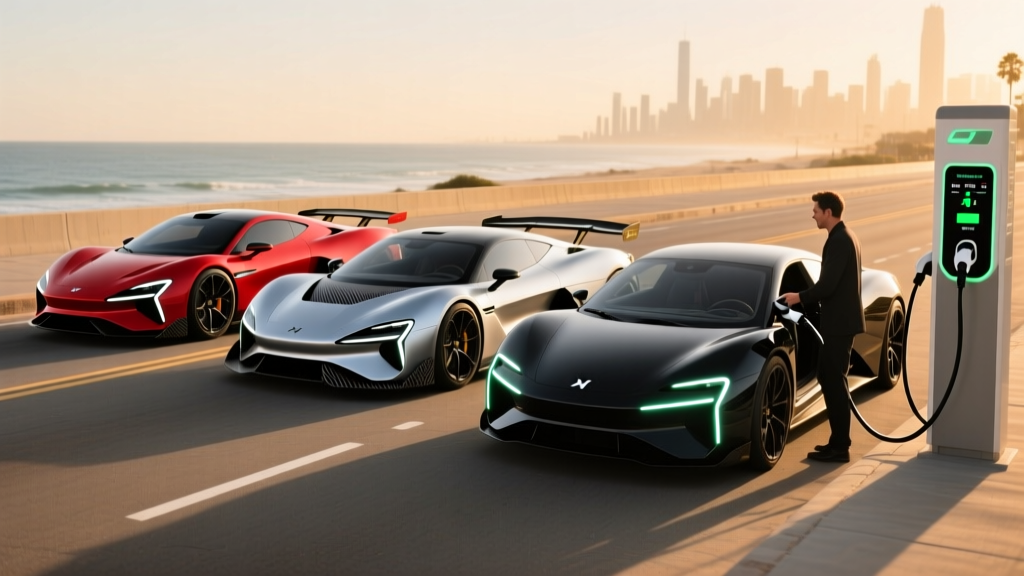
Public DC fast charging is feasible but logistically challenging. Hypercars require pull-through or oversized parking spaces due to length and width. Networks like Electrify America and Tesla Superchargers (with NACS adapters) offer 150–350 kW charging, but finding stations with adequate clearance and space requires route planning.
Decision Framework: Should You Buy an Electric Hypercar?
Choose an electric hypercar if:
- You prioritize record-breaking acceleration and cutting-edge EV technology
- You have a climate-controlled garage with dedicated Level 2 charging
- You understand this is a collector vehicle, not a daily driver
- Your net worth supports $30,000+ annual insurance premiums
- You value exclusivity (150-unit production runs) over practicality
Choose a gas or hybrid hypercar if:
- You plan regular track days and need sustained performance without thermal limits
- You want the emotional engagement of a high-revving engine
- You need flexibility for long-distance drives without charging logistics
- You prefer established service networks (Ferrari, McLaren dealers nationwide)
Choose a high-performance EV (Tesla Model S Plaid, Lucid Air Sapphire) if:
- You want hypercar acceleration (0–60 under 2 seconds) at 1/20th the price
- You need daily usability with 400+ mile range and practical charging
- You want access to robust public charging networks
- You value warranty coverage and mainstream service infrastructure
Frequently Asked Questions
What is the fastest electric hypercar in 2026?
The Rimac Nevera holds the record for fastest production EV, with a verified 0–60 mph time of 1.85 seconds and a top speed of 258 mph. The Pininfarina Battista achieves 0–60 in 1.9 seconds. Both use quad-motor configurations with over 1,800 HP.
Can I daily-drive an electric hypercar?
Technically yes, but practically no. Real-world range of 200–250 miles requires frequent charging, and the cars' width, low ground clearance, and stiff suspension make them unsuitable for typical roads and parking. Most owners drive them 1,000–3,000 miles annually.
How long do electric hypercar batteries last?
Current NMC batteries in hypercars are warrantied for 8 years with minimum 70% capacity retention. Real-world degradation data is limited due to low production volumes and low mileage accumulation, but similar chemistries in mainstream EVs show 10–15% degradation over 150,000 miles.
Do electric hypercars depreciate faster than gas hypercars?
Depreciation varies by model rarity and brand prestige. Limited-production electric hypercars (150 units or fewer) may hold value similarly to gas equivalents. However, the broader EV market's rapid technological advancement could accelerate depreciation as newer models surpass current performance benchmarks.
What happens if the battery fails out of warranty?
Out-of-warranty battery replacement would cost $150,000–$250,000 depending on the model. Most manufacturers offer extended warranty options. Given the low mileage these vehicles accumulate, battery failure within the first decade is statistically unlikely.