Quick Answer: What Are Electric Hydrofoil Boats?
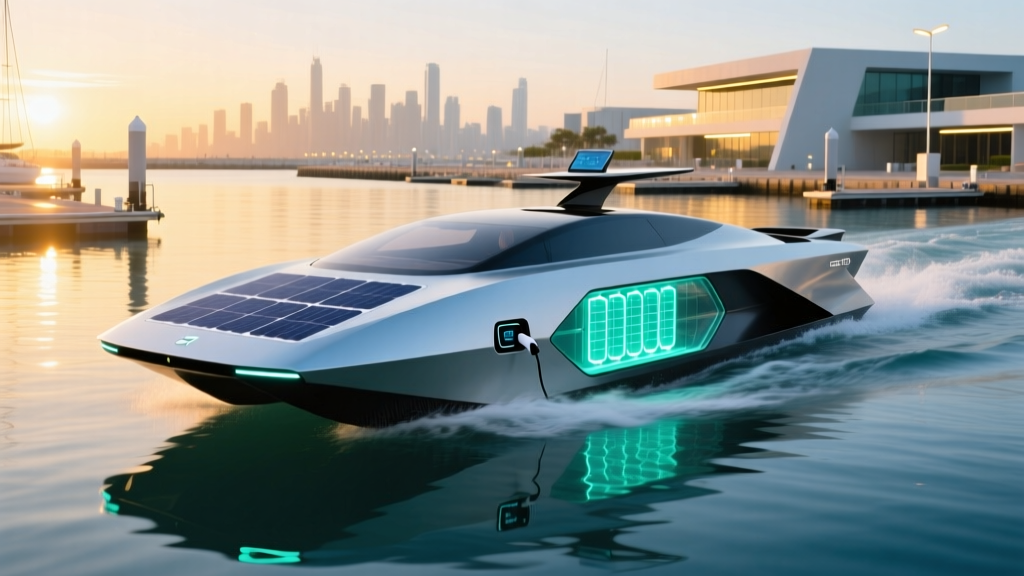
Electric hydrofoil boats use battery-powered electric motors paired with submerged hydrofoil wings that lift the hull above water at speed, dramatically reducing drag. This combination yields 2–3× the efficiency of conventional planing hulls, translating to longer range per kWh and smoother rides. As of 2026, consumer models like the Candela C-8 (starting around €390,000 / ~$420,000 USD) and emerging entrants from Navier and Quadrofoil offer 40–57 nautical miles of real-world range on battery packs ranging from 44 to 80 kWh. They charge via standard marine shore-power or DC fast-charging setups, with 10–80% top-ups taking roughly 30–70 minutes depending on the charger kW rating.
Key caveat: These are marine vessels, not automobiles. They do not qualify for the IRS §30D federal EV tax credit, which applies only to highway-capable motor vehicles. If you're an EV owner exploring electric boating, this guide breaks down the real costs, charging logistics, and ownership realities.
How Electric Hydrofoil Boats Work — and Why Efficiency Matters
A hydrofoil generates lift the same way an airplane wing does, but underwater. Once the boat reaches roughly 12–16 knots, the foils raise the hull entirely out of the water. Drag drops by 80% or more compared to a traditional displacement or planing hull. For an electric powertrain, this efficiency gain is transformative.
Consider the numbers: a conventional 28-foot gas-powered planing boat might burn 15–25 gallons per hour at cruising speed. That's roughly $60–$100/hour in fuel at 2026 marina gas prices ($4.00–$4.50/gal in most coastal areas). An electric hydrofoil like the Candela C-8 cruises at 22 knots drawing approximately 15–20 kW from its 44 kWh (usable) NMC battery pack. At residential electricity rates of $0.16/kWh, that's $2.40–$3.20 per hour of cruising — a 95%+ reduction in energy cost.
| Metric | Electric Hydrofoil (Candela C-8 class) | Gas Planing Boat (typical 28-ft) |
|---|---|---|
| Energy consumption at cruise | ~17 kW (electric) | ~20 gal/hr (gasoline) |
| Cost per hour at cruise | $2.50–$3.50 (residential charging) | $80–$100 (marina fuel) |
| Range (real-world) | 40–57 nmi depending on speed | 150–250 nmi (with extra tanks) |
| Noise at cruise | ~55 dB (conversation-level) | ~85 dB (shouting required) |
| Wake/wave generation | Minimal (foiling) | Significant (planing wake) |
| Maintenance (annual) | $500–$1,500 | $2,000–$5,000 |
2026 Electric Hydrofoil Models: Specs, Range, and Pricing
The market remains niche but is expanding. Here are the primary consumer-available models as of early 2026, with verified specs from manufacturer data:
| Model | Battery (usable kWh) | Chemistry | Range (nmi, real-world) | Cruise Speed | Max DC Charge kW | 10–80% Time | Starting Price (USD est.) |
|---|---|---|---|---|---|---|---|
| Candela C-8 | 44 kWh | NMC | ~40–50 nmi at 22 kn | 22 kn (25 mph) | ~50 kW (CCS) | ~40 min | ~$420,000 |
| Candela C-8 Polestar Edition | 44 kWh | NMC | ~40–50 nmi at 22 kn | 22 kn | ~50 kW | ~40 min | ~$450,000 |
| Navier N30 | ~80 kWh (announced) | NMC | ~75 nmi at 20 kn (est.) | 20 kn (23 mph) | ~80 kW (announced) | ~45 min (est.) | ~$350,000 (pre-order) |
| Quadrofoil Q30 | ~52 kWh | NMC | ~45 nmi at 18 kn | 18 kn (21 mph) | ~40 kW | ~55 min | ~$280,000 |
Real-World Range Reality Check: Manufacturer range claims assume calm water, moderate temperatures (60–75°F), and steady cruise speed. In choppy conditions or headwinds, expect 15–25% range reduction. Cold water (below 50°F) can reduce battery performance by 5–10%, similar to cold-weather EV range loss on land. Always plan routes with a 20% reserve margin.
Charging an Electric Hydrofoil Boat: What EV Owners Need to Know
If you already own an EV and have a home Level 2 charger, you'll find electric boat charging conceptually familiar — but the infrastructure is far less mature.
Charging Levels for Electric Boats
| Level | Power (kW) | Typical Source | Miles (nmi) Added per Hour | Availability |
|---|---|---|---|---|
| Level 1 (120V shore power) | 1.4–1.9 kW | Standard marina outlet | ~1–2 nmi/hr | Widely available at docks |
| Level 2 (240V shore power) | 7–22 kW | Marina pedestal or home dock | ~5–15 nmi/hr | Growing; requires 30A or 50A marine outlet |
| DC Fast Charge | 40–80 kW | Dedicated marine DC stations | ~30–50 nmi/hr | Very limited; a handful of marinas in Scandinavia, SF Bay, Miami |
Home Dock Charging Installation
Most electric hydrofoil owners charge at their private dock or slip. Installation parallels home EV charging but with marine-grade components:
| Component | Cost Range | Notes |
|---|---|---|
| Marine-grade Level 2 EVSE (240V, 32–48A) | $1,200–$3,000 | Must be IP67-rated for saltwater environments |
| Electrical panel upgrade (if needed) | $1,500–$4,000 | Dock circuits often need 60A+ dedicated breaker |
| Underground/underwater conduit run | $2,000–$8,000 | Distance from main panel to dock is the major cost driver |
| Marina permit / HOA approval | $200–$1,500 | Varies wildly by jurisdiction and marina rules |
| Electrician labor (marine-certified) | $2,000–$5,000 | Marine electricians charge 30–50% more than residential |
| Total estimated install | $6,900–$21,500 | Average: ~$12,000 for a 50-ft dock run |
Important: Always hire a marine-certified electrician. Saltwater corrosion, GFCI requirements for dock-side circuits, and ABYC (American Boat & Yacht Council) standards add complexity beyond residential EV charger installs. The ABYC publishes the relevant marine electrical standards.
Electric Hydrofoil vs Gas Boat: 5-Year Cost of Ownership
The purchase price of an electric hydrofoil is steep — comparable to a luxury gasoline powerboat. But the operating cost advantage is massive. Here's a 5-year ownership comparison assuming 150 hours of cruising per year:
| Cost Category | Electric Hydrofoil (~$350K) | Gas Planing Boat (~$180K) |
|---|---|---|
| Purchase price | $350,000 | $180,000 |
| Dock charging install (one-time) | $12,000 | $0 |
| Fuel/energy (5 years) | $2,250 (at $0.16/kWh) | $67,500 (at $4.25/gal, 20 gal/hr) |
| Maintenance (5 years) | $5,000 (foil bearings, software, minor) | $20,000 (engine service, winterization, impeller, exhaust) |
| Insurance (5 years) | $22,500 (~$4,500/yr) | $12,500 (~$2,500/yr) |
| Depreciation (est. 5-yr) | $105,000 (~30%) | $90,000 (~50%) |
| Total 5-year cost | $496,750 | $370,000 |
| Cost per hour on the water | ~$17 (energy + maintenance) | ~$233 (fuel + maintenance) |
The electric hydrofoil's higher purchase price and insurance premiums (specialized underwriting for novel technology) mean it doesn't break even in 5 years on pure cost. However, the per-hour operating cost is roughly 1/14th of the gas equivalent. For owners who log 200+ hours annually, the payback window shortens considerably. And the experience — silent, wake-free, no exhaust fumes — is qualitatively different.
Tax Credits and Incentives: What Does (and Doesn't) Apply
This is where many EV owners get tripped up. The IRS §30D Clean Vehicle Credit applies exclusively to on-road motor vehicles with four wheels. Electric boats — hydrofoil or otherwise — do not qualify for the federal $7,500 EV tax credit.
- §30D Federal EV Credit ($7,500): Not applicable — boats are not eligible vehicles under IRS rules
- State EV rebates (e.g., CA, CO, NY): Generally not applicable — most state programs mirror federal vehicle definitions
- Clean marine / port electrification grants: Some coastal states (CA, WA, FL) offer marina electrification grants that can offset dock charging installation — check your state energy office
- Commercial vessel incentives: If used for commercial ferry operations, federal and state clean-fleet programs may apply (e.g., EPA Clean Ports Program, EPA Green Ports)
- Depreciation (Section 179 / bonus depreciation): If used for business (charter, ferry), standard marine asset depreciation rules apply — consult a tax professional
Common Misconceptions About Electric Hydrofoil Boats
| Myth | Fact |
|---|---|
| "Electric boats qualify for the $7,500 EV tax credit" | False. IRS §30D applies only to highway vehicles. No federal purchase incentive exists for recreational electric boats as of 2026. |
| "Hydrofoils are unstable in rough water" | Modern flight-control systems (like Candela's C-FOIL) use GPS, IMU, and sonar to adjust foil angle 100× per second. They handle 3–4 ft swells comfortably, though extreme conditions require coming off foil. |
| "Battery replacement will cost a fortune" | NMC marine packs are warrantied for 8–10 years / 3,000+ cycles. A 44 kWh replacement pack is estimated at $15,000–$25,000 — significant, but comparable to a gas engine rebuild. |
| "You can't go far enough to be practical" | 40–75 nmi covers most day-cruising use cases (lake loops, coastal hops, island runs). For extended passages, gas boats still win on range — just as gas cars still win on road-trip convenience vs EVs in charging deserts. |
| "They're silent, so they're dangerous" | All modern electric boats are required to carry sound-signaling devices. At dock speed, they produce audible propeller noise. At foil speed, water flow noise is detectable. |
Decision Framework: Is an Electric Hydrofoil Boat Right for You?
Choose an Electric Hydrofoil If:
- You boat primarily on lakes, protected bays, or coastal routes under 50 nmi round-trip
- You have (or can install) Level 2 charging at your dock or slip
- You value silence, zero wake (important in no-wake zones and environmentally sensitive areas), and zero exhaust
- You log 100+ hours per year on the water, making the per-hour savings meaningful
- You're comfortable with a $280K–$450K purchase and understand this is a premium, early-adopter product
Stick with Gas (or Wait) If:
- You regularly cruise 80+ nmi in a single outing or need open-ocean range
- Your marina lacks shore power and installation isn't feasible (floating docks with no electrical infrastructure, remote moorings)
- You need towing capacity for water sports that exceed current electric hydrofoil ratings
- Your budget is under $200K — the used electric hydrofoil market is essentially nonexistent as of 2026
- You want the flexibility to refuel in 5 minutes at any marina — marine DC fast-charging infrastructure is still in its infancy
What First-Time Electric Boat Buyers Should Know
If you're coming from the EV world, many concepts transfer directly — but marine ownership adds layers:
- Battery degradation is real but manageable. Marine NMC packs experience similar degradation curves to EVs: expect ~85–90% State of Health after 5 years / 1,500 cycles. Most manufacturers warranty 70% capacity retention at 8 years.
- Preconditioning matters on water too. Cold battery packs charge slower and deliver less peak power. Some models include battery preheating for cold-climate marinas.
- Foil maintenance is a new cost category. The hydrofoil struts and bearings require annual inspection and occasional replacement ($1,000–$3,000). This is analogous to EV tire wear — a cost gas-boat owners don't have.
- Insurance is specialized. Standard marine insurers may not cover electric hydrofoils. Companies like BoatUS and Markel are beginning to offer policies, but expect premiums 40–80% higher than equivalent gas boats due to repair-cost uncertainty.
- Resale value is uncertain. With fewer than 1,000 electric hydrofoils sold globally as of 2026, there's no established depreciation curve. Early adopters should plan for a 5–7 year ownership horizon minimum.
Frequently Asked Questions
Can I charge an electric hydrofoil boat from a standard marina power outlet?
Yes, but slowly. A standard 120V/15A marina outlet delivers ~1.4 kW, adding roughly 1–2 nautical miles of range per hour. Overnight charging (12 hours) adds ~15–20 nmi — enough for a short outing but not a full pack. For practical daily use, you'll want a 240V Level 2 connection at your slip.
How does cold water affect electric hydrofoil range?
Cold water (below 50°F / 10°C) increases battery internal resistance and reduces usable capacity by roughly 5–10%, similar to cold-weather range loss in EVs. Additionally, cold water is denser, which slightly increases hydrodynamic drag. Combined, expect 10–15% range reduction in winter conditions versus peak summer performance.
Do electric hydrofoil boats require a special license to operate?
No special license beyond what your state requires for powerboats of equivalent length. However, the foiling flight dynamics are unique — manufacturers strongly recommend their training programs (Candela offers a 2-hour familiarization session). Think of it like transitioning from a regular car to one with performance regen braking: same rules, different feel.
What happens if the battery runs out on the water?
All major electric hydrofoil models include a reserve buffer (typically 5–8% of pack capacity) and multiple warning stages. If you deplete fully, the boat settles onto its hull and becomes a displacement vessel — slow (3–5 knots) but floatable. Most include a small auxiliary motor or tow-point for emergency recovery. It's the marine equivalent of an EV's "turtle mode" — you're not sinking, but you're not going anywhere fast.
Are electric hydrofoil boats safe in lightning storms?
The carbon-fiber hull and submerged foil struts create a partial Faraday cage effect, but electric boats are not certified lightning-safe to the same degree as metal-hulled vessels. Standard marine lightning-protection practices apply: avoid open water during thunderstorms, and ensure your dock charging equipment includes surge protection rated for marine environments.
Sources: Candela Technology AB official specifications (candelatechnology.com), IRS §30D Clean Vehicle Credit guidelines (irs.gov), American Boat & Yacht Council electrical standards (abycinc.org).