The Short Answer: Who Is the Electric Husqvarna Dirt Bike For?
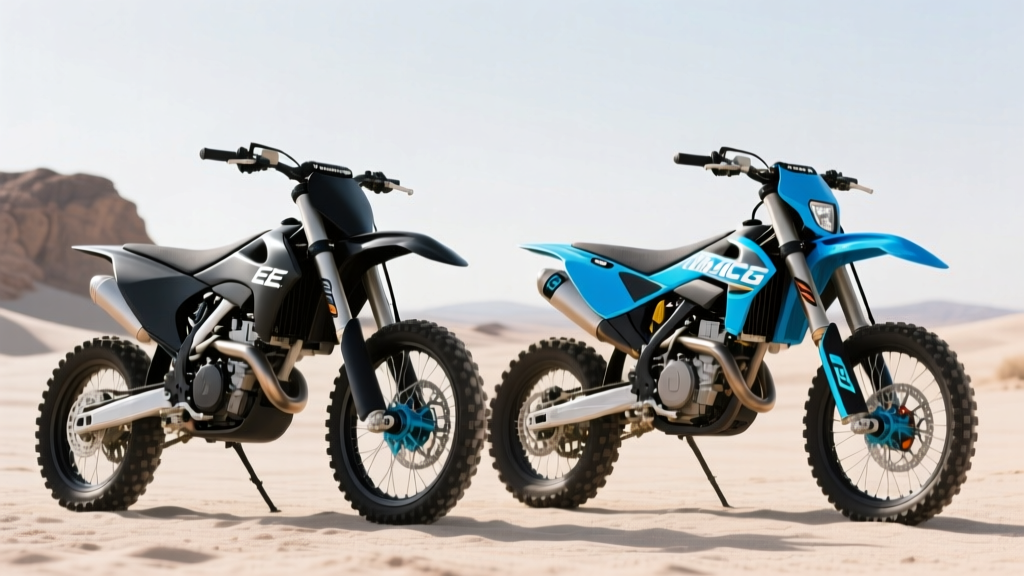
Husqvarna's electric motocross lineup — led by the EE 5 (mini, youth) and the full-size MC-E 2 through MC-E 5 — targets young riders and competitive amateur motocross families who want near-silent operation, zero trailside emissions, and dramatically lower running costs compared to gas equivalents. The EE 5 starts at approximately $5,599 MSRP with a 1.84 kWh battery delivering 25–45 minutes of ride time depending on throttle map and intensity. The full-size MC-E 5 carries a 3.9 kWh pack, roughly 30–50 minutes of hard riding, and an MSRP around $10,999. These are off-road competition machines, not street-legal EVs — meaning no EPA range rating, no federal §30D tax credit eligibility, and no highway use. They charge from a standard 120V outlet in 1–2 hours.
Husqvarna's Electric Dirt Bike Lineup: Models and Key Specs
Husqvarna Motorcycles (owned by Pierer Mobility Group, which also owns KTM and GasGas) has invested heavily in electric off-road machines. As of 2026, the lineup spans youth mini-bikes to full-size motocross racers. Here's how the core models stack up on the numbers that matter:
| Spec | EE 5 (Youth Mini) | MC-E 2 | MC-E 3 | MC-E 4 | MC-E 5 |
|---|---|---|---|---|---|
| Battery Capacity | 1.84 kWh (Li-ion) | 1.84 kWh | 3.9 kWh | 3.9 kWh | 3.9 kWh |
| Peak Power | 5 kW (6.7 HP) | 5 kW | ~10 kW (13.4 HP) | ~15 kW (20 HP) | ~19 kW (25.5 HP) |
| Ride Time (Typical) | 25–45 min | 25–45 min | 30–50 min | 30–50 min | 30–50 min |
| Charge Time (120V) | ~70 min (full) | ~70 min | ~120 min | ~120 min | ~120 min |
| Seat Height | ~22.6 in (adjustable) | ~23.2 in | ~27.6 in | ~29.5 in | ~37.0 in |
| Weight (Ready to Ride) | ~92 lbs | ~105 lbs | ~160 lbs | ~175 lbs | ~207 lbs |
| Power Modes | 6 selectable maps | 6 maps | 6 maps | 6 maps | 6 maps |
| Approx. MSRP (2026) | $5,599 | $6,499 | $8,999 | $9,999 | $10,999 |
Critical distinction — kW vs kWh: In the table above, kW (kilowatts) measures motor power output — how much thrust the bike delivers at peak. kWh (kilowatt-hours) measures battery energy capacity — how much total fuel-equivalent the pack stores. A 3.9 kWh battery with a 19 kW peak motor is analogous to a small gas tank paired with a high-revving engine: punchy but limited in duration.
Electric vs Gas Dirt Bikes: A Real Cost and Performance Comparison
The closest gas equivalent to the EE 5 is the Husqvarna EE 5's platform-mate, the KTM SX-E 5, or a conventional KTM 50 SX (2-stroke, 50cc). For the MC-E 5, the gas benchmark is the Husqvarna FC 250 or KTM 250 SX-F. Here's how ownership economics actually compare over a typical competitive season:
| Factor | Electric (EE 5 / MC-E 5) | Gas (50cc 2-stroke / 250 4-stroke) |
|---|---|---|
| Upfront MSRP | $5,599 / $10,999 | $4,599 / $9,599 |
| Fuel/Energy Cost per Moto (30 min) | ~$0.05–$0.10 (electricity) | ~$2.50–$5.00 (premix or race fuel) |
| Annual Fuel/Energy (50 motos) | ~$5 | ~$150–$250 |
| Oil/Air Filter Changes per Season | Zero | 4–8 oil changes; 3–5 air filter cleans |
| Top-End Rebuild Interval | N/A | 30–60 hours (2-stroke); 50–100 hours (4-stroke) |
| Rebuild Cost | N/A | $300–$800 |
| Noise Level | ~60 dB (conversation level) | ~94–105 dB (hearing protection required) |
| Trail/Track Access Restrictions | Often exempt from noise limits | Frequently restricted at noise-sensitive venues |
The math favors electric for operating costs: a full season of electricity for an MC-E 5 is roughly $5–$15 depending on local rates (national average ~$0.16/kWh per EIA data). That same season on a 250 4-stroke burning race fuel at $10–$15/gallon runs $150–$250 in fuel alone, plus $200–$500 in consumables (oil, filters, top-end work).
However, the electric bike's upfront premium is $1,000–$1,400 over its gas counterpart, and battery replacement (if capacity degrades significantly after 3–5 years of hard use) runs $1,500–$2,500 depending on the model. The break-even point on pure running costs typically arrives within 2–3 competitive seasons.
Real-World Ride Time, Charging, and Battery Longevity
Manufacturer-claimed ride times assume moderate throttle maps (Maps 1–3) on flat terrain. In real-world competitive use — full-throttle motocross with jumps, berms, and hard acceleration — expect the lower end of the range:
EE 5 (1.84 kWh): Claimed up to 45 min → Real-world hard riding: 20–30 minutes. Sufficient for one practice moto, not a full race day.
MC-E 5 (3.9 kWh): Claimed up to 50 min → Real-world hard riding: 25–35 minutes. Matches a typical 250-class moto length plus a few warm-up laps.
Cold-weather note: Lithium-ion cells lose 10–20% effective capacity below 40°F. If you ride in cold conditions, plan for shorter sessions and store the battery indoors before riding.
Charging logistics are straightforward but slow. All current Husqvarna electric dirt bikes charge via an included onboard charger connected to a standard 120V household outlet. There is no DC fast charging — these batteries are too small to benefit from it, and the charge rates are appropriate:
| Charge Method | Power (kW) | EE 5 (1.84 kWh) Time | MC-E 5 (3.9 kWh) Time |
|---|---|---|---|
| 120V AC (included charger) | ~0.5–0.8 kW | ~70 min (0–100%) | ~120 min (0–100%) |
| Optional 240V fast charger | ~1.0–1.5 kW | ~35 min (0–100%) | ~60 min (0–100%) |
For race-day logistics, most competitive families purchase two batteries ($1,500–$2,500 for a spare) and cycle them through motos while the depleted pack charges. A portable generator (Honda EU2200i or similar, ~$1,200) at the pits can serve as a mobile charging station if track power isn't available.
Battery longevity: Husqvarna uses lithium-ion cells rated for approximately 500–800 full charge cycles before reaching 80% state of health (SoH). For a competitive youth rider doing 50 motos/year, that translates to roughly 5–8 years before noticeable capacity loss. The battery warranty is typically 6 months (standard for off-road competition vehicles — this is not a consumer EV with an 8-year/100,000-mile battery warranty).
Ownership Costs: The Full Breakdown
Here's what a 3-year ownership cycle actually costs for a competitive youth rider on an EE 5 versus a gas 50cc:
| Cost Category (3 Years) | EE 5 (Electric) | Gas 50cc (2-Stroke) |
|---|---|---|
| Purchase Price | $5,599 | $4,599 |
| Spare Battery / Top-End Rebuilds | $1,800 (1 spare battery) | $900 (3 top-end rebuilds @ $300) |
| Fuel/Energy (150 motos total) | $15 | $525 |
| Oil, Filters, Consumables | $0 | $350 |
| Tires, Chains, Brakes (both) | $600 | $600 |
| Insurance (off-road, optional) | $150/yr × 3 = $450 | $150/yr × 3 = $450 |
| 3-Year Total | $8,464 | $7,424 |
| Resale Value Estimate (Year 3) | ~$2,500–$3,000 | ~$1,500–$2,000 |
| Net Cost After Resale | ~$5,464–$5,964 | ~$5,424–$5,924 |
The net 3-year cost is remarkably similar. The electric bike wins on convenience (no mixing fuel, no jetting changes, no noise complaints), while the gas bike wins on unlimited ride time (just refill the tank) and established aftermarket support.
Common Misconceptions About Electric Dirt Bikes
| Myth | Fact |
|---|---|
| "Electric dirt bikes have no power" | The MC-E 5 produces ~25.5 HP peak — comparable to a 125cc 2-stroke and enough to clear most amateur motocross jumps. Instant torque means power delivery feels stronger off the corner than the HP figure suggests. |
| "You can't ride them in the rain" | Husqvarna's electric motocross bikes carry IP67-rated battery enclosures and sealed connectors. They are designed for wet-weather motocross. Submersion (deep water crossings) is a different story — avoid it. |
| "The battery will die in a year" | Lithium-ion cells rated for 500–800 cycles at 80% SoH translate to years of competitive use. The real risk is improper storage: leaving a pack at 0% or 100% SoC for months accelerates degradation. Store at 40–60% SoC when not riding. |
| "They qualify for the $7,500 federal EV tax credit" | They do not. The IRS §30D credit applies to on-road, street-legal vehicles meeting specific MSRP, income, and battery-sourcing requirements. Off-road competition motorcycles are excluded. See IRS guidelines for eligible vehicle categories. |
| "Electric bikes are banned from motocross tracks" | The opposite is true. Many tracks encourage electric bikes because they eliminate noise complaints — the #1 reason tracks lose permits and close. Some venues restrict gas bikes to specific hours but allow electrics anytime. |
Decision Framework: Should You Buy an Electric Husqvarna Dirt Bike?
Choose the Electric Husqvarna Dirt Bike If:
- You ride at noise-restricted venues — electric bikes are often the only option at suburban tracks or private property where neighbors file complaints.
- You're a youth rider's parent who wants adjustable power (6 throttle maps let you limit a beginner to 5 kW and unlock power as skill develops, without buying a new bike).
- You want near-zero maintenance — no carburetor jetting, no premix, no valve checks, no oil changes. Charge it and ride.
- You practice 2–3 times per week for 30-minute sessions — the battery duration aligns perfectly with focused practice motos.
- You have access to power at the track or are willing to invest in a spare battery and generator setup.
Stick With Gas (or Wait) If:
- You ride all-day enduro or trail events — 25–35 minutes of ride time is a non-starter for multi-hour trail rides or hare scrambles. Gas bikes run 2+ hours per tank.
- You compete in AMA-sanctioned pro/am events where electric classes are not yet established. Check your sanctioning body's rulebook.
- You're on a tight budget and need maximum ride time per dollar. A used gas 85cc at $2,500 is still the value king for developing riders.
- You ride in remote areas with no grid power and don't want to haul a generator. Swapping a gas can is simpler than recharging in the backcountry.
What First-Time Buyers Need to Know
If you're coming from gas dirt bikes, the transition involves a few practical adjustments:
- Plan your practice sessions around the battery. One hard moto, then 60–120 minutes of charging. Buy a second battery ($1,500–$2,500) if you want back-to-back motos.
- Learn the throttle maps. Map 1 is a low-power beginner mode (~2 kW); Map 6 is full race power. The ability to electronically limit a young rider's power is a genuine safety advantage over mechanically restricting a gas engine.
- Store the battery correctly. Never leave it fully charged or fully depleted for extended periods. Husqvarna recommends 40–60% SoC for storage. A $30 battery storage bag (fireproof LiPo bag) is cheap insurance.
- Check your local track's class structure. Electric classes are growing but not universal. Some tracks lump electrics into gas classes by power output; others have dedicated e-moto heats.
- Budget for the spare battery from day one. Treat it like buying a second set of race wheels — it's not optional for competitive use.
Frequently Asked Questions
How fast does the electric Husqvarna EE 5 go?
Top speed on Map 6 (full power) is approximately 40–45 mph depending on gearing, rider weight, and terrain. On lower maps, speed is electronically limited — Map 1 tops out around 10–15 mph for beginners.
Can I convert a gas Husqvarna to electric?
Not practically. Husqvarna's electric models use purpose-built frames designed around the battery and motor placement. Aftermarket conversion kits exist for some dirt bikes but compromise weight distribution, suspension geometry, and safety. The cost ($3,000–$5,000 for a quality kit plus labor) rarely justifies the effort versus buying a purpose-built electric model.
How does the MC-E 5 compare to the KTM SX-E 5 and GasGas MC-E 5?
All three are built on the same Pierer Mobility platform with identical battery capacity (3.9 kWh), motor output, and frame geometry. Differences are cosmetic (bodywork, color, graphics) and minor suspension tuning. Choose based on dealer proximity and parts availability — the machines are functionally identical.
Is there a full-size adult electric Husqvarna motocross bike?
The MC-E 5 is the largest current model, sized for riders approximately 5'4" to 5'10". As of 2026, Husqvarna has not released a full-size 450-class electric motocross bike. The technology exists (KTM's E-XC concept demonstrated it), but battery energy density hasn't reached the point where a 450-equivalent can deliver a full 30-minute pro moto without excessive weight. Expect announcements in the 2027–2028 timeframe.
What's the warranty on a Husqvarna electric dirt bike?
Husqvarna typically provides a 6-month limited warranty on electric off-road competition models. This covers manufacturing defects but excludes normal wear, crash damage, and battery capacity loss from improper storage or use. This is standard for competition off-road vehicles — it is not comparable to the 8-year/100,000-mile battery warranties on street-legal EVs.