The Real Electric Hummer Cost: Beyond the Sticker Price
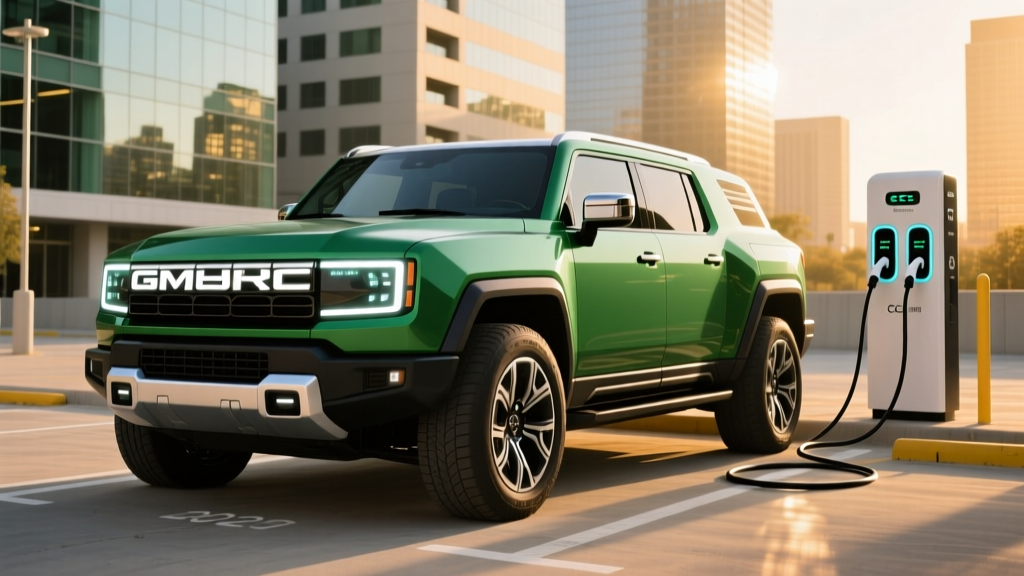
The GMC Hummer EV is one of the most polarizing electric vehicles on the road. At nearly 9,000 pounds and up to 1,000 horsepower, it's a rolling statement piece. But the question most buyers quietly ask is: what does this thing actually cost to own? The electric Hummer cost isn't just the MSRP — it's a five-year equation involving federal tax credits, home charging infrastructure, insurance premiums that can sting, and depreciation curves that differ sharply from gas trucks.
Below, we break down every dollar of owning a 2026 GMC Hummer EV over five years and 75,000 miles, using current IRS §30D rules, real utility rates, and insurance data. If you're cross-shopping this against a Rivian R1T, Tesla Cybertruck, or even a gas GMC Sierra, these numbers will tell you exactly where you stand.
2026 GMC Hummer EV Quick Specs
| Attribute | 2X (Pickup) | 3X (Pickup) |
|---|---|---|
| Base MSRP | $99,995 | $119,495 |
| EPA Range | 314 mi | 329 mi |
| Battery (usable) | ~212 kWh (NMC, Ultium) | ~212 kWh (NMC, Ultium) |
| Peak DC Fast Charge | 350 kW | 350 kW |
| 10-80% Charge Time | ~32 min (350 kW station) | ~32 min |
| Horsepower | 625 hp | 830 hp |
| 0-60 mph | ~4.5 sec | ~3.0 sec (Watts to Freedom) |
| EPA Efficiency | 47 MPGe | 45 MPGe |
| Battery/Powertrain Warranty | 8 yr / 100,000 mi | 8 yr / 100,000 mi |
Sources: fueleconomy.gov, GMC press specifications. Real-world highway range at 70 mph: expect ~240-270 miles depending on temperature and payload. Cold weather (below 30°F) can reduce range 20-30%.
Federal Tax Credit: Does the Hummer EV Qualify for $7,500?
This is where the electric Hummer cost gets complicated. The IRS §30D Clean Vehicle Credit offers up to $7,500 — but eligibility hinges on a web of requirements that change year to year. Here's where the 2026 Hummer EV stands:
- MSRP Cap: Trucks/SUVs/vans must be under $80,000 MSRP. The 2026 Hummer EV 2X starts at $99,995 — it exceeds the cap. No federal credit at purchase.
- Buyer Income Limits: Even if MSRP qualified, AGI caps are $300K (married filing jointly), $225K (head of household), $150K (single). High-end truck buyers often exceed these.
- Battery Sourcing / Critical Minerals: The credit splits into $3,750 for battery components (North American assembly) and $3,750 for critical minerals (US or FTA-partner sourcing). GM's Ultium cells are US-built, but critical-mineral sourcing for the massive 212 kWh pack faces tightening 2026 thresholds.
- Point-of-Sale Transfer: Since 2024, qualifying buyers can transfer the credit to the dealer at purchase for an immediate price reduction — but only if the vehicle itself qualifies.
- Commercial Vehicle Loophole (§45W): If you purchase through a business entity, the Hummer EV (over 14,000 lbs GVWR on 3X trims) may qualify for the commercial clean vehicle credit under §45W, which has no MSRP cap and offers up to $7,500 (or 30% of cost up to $40,000 for heavy vehicles). Consult a tax professional.
State & Utility Incentives Vary Widely: Even without the federal credit, some states and utilities offer relief. California's CVRP is income-dependent and currently paused for new applications as of early 2026. Colorado offers up to $5,000 in state tax credits for EVs over $80K (with income phase-outs). Utility rebates for Level 2 home charger installation typically range $250-$1,500 depending on your provider. Check your state's energy office and local utility for current programs — these change frequently and are jurisdiction-specific. Reference: IRS §30D official guidance.
5-Year Total Cost of Ownership: The Full Ledger
Let's model the 2026 GMC Hummer EV 3X over five years and 75,000 miles (15,000 miles/year). We'll compare it against a similarly priced gas truck — the 2026 GMC Sierra Denali Ultimate (~$82,000 MSRP, 15 MPG combined) — to show where dollars flow.
| Cost Category | Hummer EV 3X | Sierra Denali (Gas) | Notes |
|---|---|---|---|
| Purchase Price (MSRP) | $119,495 | $82,000 | Before any credits/rebates |
| Federal Tax Credit | $0 (MSRP cap) | N/A | Business purchase may qualify §45W |
| Home Charger Install | $1,200-$2,500 | $0 | Level 2, 48A/11.5kW; panel upgrade may add $1,500-$3,000 |
| Fuel / Energy (75K mi) | $3,940 | $17,500 | EV: $0.14/kWh avg, 2.1 kWh/mi; Gas: $3.50/gal, 15 MPG |
| Maintenance (5 yr) | $1,800 | $4,200 | No oil, fewer brake pads (regen), cabin filter, wipers, tire rotation |
| Insurance (5 yr) | $18,500 | $12,000 | EV premiums ~30-50% higher; weight/repair cost driven |
| Estimated Depreciation | $54,000 | $32,800 | EV: ~45% over 5yr; Gas: ~40% over 5yr |
| Total 5-Year Cost | ~$197,935 | ~$148,500 |
The numbers are stark. The Hummer EV 3X costs roughly $49,000 more to own over five years than a comparably equipped gas Sierra Denali. The fuel savings ($13,560 over 75K miles) and maintenance savings ($2,400) are real, but they don't overcome the $37,495 purchase-price gap, the ~$6,500 insurance premium, and the steeper depreciation.
Where the math shifts: If you qualify for §45W commercial credit ($7,500), live in a state with additional incentives ($5,000 in Colorado, for example), charge primarily on cheap overnight utility rates ($0.08/kWh), and keep the vehicle beyond five years, the gap narrows meaningfully.
Charging vs. Gas: Cost Per Mile Under the Microscope
| Scenario | $/kWh or $/gal | Cost Per Mile (Hummer EV) | Cost Per Mile (Sierra Gas) |
|---|---|---|---|
| Home Level 2 (national avg) | $0.14/kWh | $0.053 | $0.233 (15 MPG, $3.50/gal) |
| Home overnight (utility off-peak) | $0.08/kWh | $0.030 | $0.233 |
| DC Fast Charging (public) | $0.40/kWh | $0.151 | $0.233 |
| Tesla Supercharger (NACS adapter) | $0.30/kWh | $0.113 | $0.233 |
The Hummer EV's 212 kWh battery is massive — that's the equivalent of roughly 6 gallons of gasoline in energy terms, but at a far lower cost per unit. At home on average residential rates, you're paying about a nickel per mile. That's an 80%+ savings versus the gas Sierra.
The catch: The Hummer EV's efficiency is just 47 MPGe (2.1 kWh/mile). That's one of the lowest in the EV market, driven by its 9,000-lb curb weight and brick-wall aerodynamics. If you rely heavily on DC fast charging at $0.35-$0.48/kWh (common on Electrify America and EVgo networks), your per-mile cost can approach or even exceed a gas truck's. Home charging access isn't optional for Hummer EV economics — it's mandatory.
Charging infrastructure cost: Expect to spend $800-$1,500 on a quality 48-amp Level 2 home charger (ChargePoint Home Flex, Wallbox Pulsar Max, or GM's own Dual Level Charge Cord) plus $400-$1,500 for electrician installation on an existing 240V/50A circuit. If your electrical panel needs an upgrade to 200A service, add $1,500-$3,000. The Hummer EV's onboard charger accepts up to 11.5 kW on Level 2, adding roughly 16-18 miles of range per hour — a full charge from 10% takes roughly 18-20 hours on Level 2.
Maintenance Savings: Where EVs Actually Win
| Service Item | Hummer EV (5 yr / 75K mi) | Sierra Gas (5 yr / 75K mi) |
|---|---|---|
| Oil Changes | $0 (none required) | $750-$1,200 (6-8 changes) |
| Brake Pads | $0-$400 (regen extends life 2-3x) | $800-$1,500 (1-2 replacements) |
| Transmission Fluid | $0 (single-speed reduction gear) | $200-$400 |
| Coolant / Engine Service | $0-$200 (battery thermal loop check) | $400-$800 |
| Cabin Air Filter | $150-$300 | $150-$300 |
| Tire Rotation / Replacement | $2,500-$4,000 (heavy EV = faster wear; 35" tires are $400-$600 each) | $1,200-$2,000 |
| Total Maintenance | ~$1,800-$3,500 | ~$3,500-$6,200 |
The Hummer EV saves you $1,700-$2,700 in maintenance over five years. The biggest savings come from eliminated oil changes and dramatically extended brake pad life — the regenerative braking system handles most deceleration, meaning the friction brakes see far less use. Some EV owners report original brake pads lasting 100,000+ miles.
The tire caveat: At nearly 9,000 lbs with instant torque, the Hummer EV chews through tires faster than any gas truck. The available 35-inch all-terrain tires run $400-$600 per corner. Budget for at least one full tire replacement during a five-year ownership period. This is the single maintenance item where EV costs can exceed gas equivalents.
Insurance: The Hidden EV Cost That Catches Buyers Off Guard
Insurance is where the electric Hummer cost bites hardest. Expect annual premiums of $3,200-$4,500 depending on your driving record, location, and coverage levels — roughly 30-55% higher than an equivalent gas Sierra Denali.
Why EVs cost more to insure:
- Repair complexity: The Ultium battery platform requires specialized high-voltage training for body shops. Minor collision damage near the battery enclosure can trigger full-pack inspection protocols.
- Replacement parts cost: The 212 kWh battery pack replacement runs $20,000-$30,000+ out of warranty. Insurers price this risk into every policy.
- Vehicle weight: At 9,000+ lbs, the Hummer EV causes more damage in multi-vehicle collisions. Insurers factor this into liability premiums.
- Total-loss thresholds: Insurers declare total loss when repair costs exceed ~70-80% of vehicle value. With expensive battery components and specialized labor, even moderate damage can cross this threshold.
How to reduce premiums: Shop quotes from EV-friendly insurers (Geico, Progressive, and USAA tend to be more competitive for EVs). Bundle with homeowners insurance. Take a defensive driving course. Some insurers now offer usage-based programs that reward low-mileage drivers — if the Hummer is a weekend vehicle, this can help significantly.
Depreciation and Resale Value: The Uncertain Frontier
EV depreciation has been volatile. The Hummer EV launched with massive dealer markups ($150,000+ for early Edition 1 models), but as production ramped and demand normalized, prices settled closer to MSRP. Current five-year depreciation projections for the Hummer EV sit around 40-50%, compared to 35-45% for a gas Sierra Denali.
Factors working against Hummer EV resale:
- High initial price means larger absolute depreciation dollars
- Rapid EV tech advancement makes older models feel dated faster (charging speed, battery chemistry, ADAS features)
- Concerns about out-of-warranty battery replacement cost ($20,000-$30,000) depress used-EV demand
- Niche market — fewer buyers can absorb a $60,000+ used 9,000-lb electric truck
Factors working in its favor:
- GM's Ultium battery warranty (8 years / 100,000 miles, retaining 70%+ capacity) provides used-buyer confidence
- The Hummer name carries enthusiast cachet that supports collector-style demand
- CrabWalk and Extract Mode features are unique differentiators with no direct competitor
Plan to hold the Hummer EV for 7+ years if depreciation minimization is a priority. The steepest value loss occurs in years 1-3.
Frequently Asked Questions
How much does it really cost to own a GMC Hummer EV over 5 years?
Approximately $195,000-$200,000 for a 3X trim over five years and 75,000 miles, including purchase price, home charger installation, electricity, insurance, maintenance, and depreciation. Fuel savings of $13,000-$14,000 versus a comparable gas truck are real, but they don't offset the higher purchase price, insurance, and depreciation. Total cost is roughly $45,000-$50,000 more than a gas Sierra Denali over the same period.
Do I qualify for the $7,500 federal tax credit on the Hummer EV?
Almost certainly not as a personal purchase. The Hummer EV's MSRP ($99,995-$119,495) exceeds the IRS §30D cap of $80,000 for trucks, SUVs, and vans. Income limits ($150K single / $300K joint) and battery critical-mineral sourcing rules add further barriers. However, purchasing through a business entity may qualify the vehicle for the §45W commercial clean vehicle credit, which has no MSRP cap. Consult a tax professional for your specific situation. See IRS guidance for current rules.
How much do I save on fuel and maintenance with the Hummer EV?
Over five years and 75,000 miles, expect to save approximately $13,500 on energy (home charging at $0.14/kWh vs. $3.50/gallon gas at 15 MPG) and $2,000-$2,700 on maintenance (no oil changes, extended brake life). Combined savings of $15,500-$16,200 are significant, but don't fully bridge the purchase-price gap. Savings increase substantially if you have access to off-peak utility rates ($0.08/kWh) or solar-charged home energy.
Are EVs more expensive to insure than gas vehicles?
Yes, typically 30-55% more. The Hummer EV's insurance premium runs $3,200-$4,500 annually versus $2,000-$2,800 for a gas Sierra Denali. Higher repair costs (specialized high-voltage training, expensive battery components), vehicle weight (more damage in collisions), and total-loss thresholds all contribute. Shop multiple insurers and ask specifically about EV discounts.
How well does the GMC Hummer EV hold its value?
Current projections estimate 40-50% depreciation over five years, meaning a $119,495 Hummer EV 3X might be worth $60,000-$72,000 at year five. This is slightly worse than comparable gas trucks (35-45% depreciation) due to rapid EV technology advancement and buyer concerns about out-of-warranty battery costs. The 8-year/100,000-mile Ultium battery warranty and the Hummer's enthusiast following provide some floor. Plan longer ownership to minimize depreciation impact.
What does home charging setup cost for the Hummer EV?
Expect $1,200-$2,500 for a quality 48-amp Level 2 charger and professional installation on an existing 240V circuit. If your home's electrical panel needs upgrading to support a 50A dedicated circuit (common in older homes with 100A service), add $1,500-$3,000 for a panel upgrade to 200A. The Hummer EV accepts up to 11.5 kW on Level 2, delivering about 16-18 miles of range per hour of charging. Always get a quote from a licensed electrician before purchasing equipment.
Tax credit rules, incentive programs, and utility rates referenced are current as of early 2026 and subject to legislative change. Always verify eligibility with IRS.gov and your state energy office before making purchase decisions.