Quick Answer: What Is an Electric Horse, and Should You Buy One?
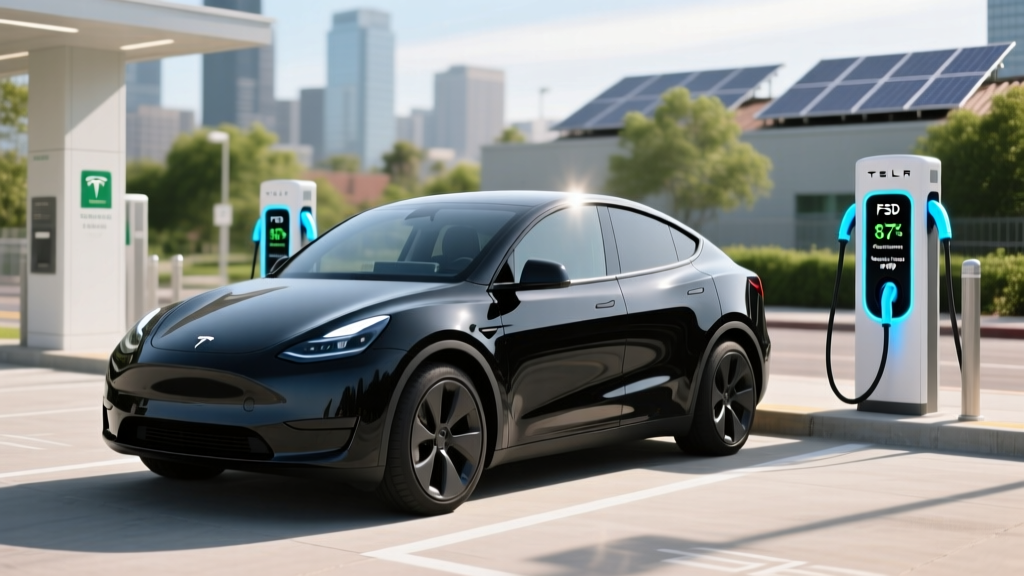
An "electric horse" refers to the instant torque and horsepower delivered by battery-electric vehicles (BEVs) — without the mechanical lag of a gas engine. A typical 2026 EV like the Tesla Model Y Long Range produces 384 hp and 375 lb-ft of torque available from 0 RPM, launching to 60 mph in 4.8 seconds. The real question isn't whether EVs have enough power — it's whether the total ownership math works for your driving patterns, charging access, and budget. For buyers with home Level 2 charging and mostly sub-250-mile daily routes, an EV saves an average of $4,000–$6,000 over 5 years versus a comparable gas SUV. Without home charging or in extreme cold climates, a plug-in hybrid (PHEV) may be the smarter play.
Electric Horsepower vs. Gas: The Numbers That Actually Matter
The term "horsepower" originated with steam engines, but in an EV, the delivery is fundamentally different. Internal combustion engines must rev to a specific RPM band to hit peak power; electric motors deliver maximum torque instantly. That's why a 3,900-lb Hyundai Ioniq 5 with 320 hp feels quicker off the line than a gas sedan with similar paper specs.
Here's how three popular 2026 models compare to their gas and hybrid equivalents on power, efficiency, and real-world cost:
| Spec | Tesla Model Y LR (BEV) | Toyota RAV4 Hybrid (HEV) | Honda CR-V EX (Gas) |
|---|---|---|---|
| Horsepower | 384 hp | 219 hp (combined) | 190 hp |
| 0–60 mph | 4.8 sec | 7.4 sec | 8.2 sec |
| EPA Range / MPG | 330 mi / 122 MPGe | 39 MPG combined | 29 MPG combined |
| Annual Fuel/Energy Cost | ~$540 (electricity) | ~$1,350 (gas) | ~$1,810 (gas) |
| Base MSRP | $44,990 | $33,425 | $34,550 |
| Federal Tax Credit (§30D) | Up to $7,500* | None (HEV) | None |
*Eligibility depends on buyer AGI, vehicle MSRP cap, and battery critical-mineral sourcing. Verify current rules at IRS.gov §30D. Point-of-sale transfer available at participating dealers.
The Model Y's electric horsepower advantage is obvious in acceleration, but the efficiency gap is where ownership costs separate. At 12,000 miles/year and a national average electricity rate of $0.16/kWh, the Model Y costs roughly $540/year to charge at home. The gas CR-V costs over 3× that at the pump.
Real Costs of Owning an Electric Horse: 5-Year Breakdown
Sticker price is just the entry fee. Here's a realistic 5-year/60,000-mile total cost of ownership (TCO) comparing a Tesla Model Y Long Range against a Toyota RAV4 Hybrid, assuming 12,000 miles/year, home Level 2 charging, and $0.16/kWh electricity:
| Cost Category | Tesla Model Y LR (BEV) | Toyota RAV4 Hybrid (HEV) |
|---|---|---|
| Purchase Price (after $7,500 credit) | $37,490 | $33,425 |
| Home Level 2 Charger + Install | $1,200 | $0 |
| Fuel / Electricity (5 years) | $2,700 | $6,750 |
| Maintenance (5 years) | $900 | $2,800 |
| Insurance (5-year avg) | $7,500 | $5,500 |
| Estimated Depreciation | $14,000 | $11,000 |
| 5-Year Total | $63,790 | $59,475 |
The BEV saves roughly $2,850 on energy and $1,900 on maintenance (no oil changes, fewer brake replacements thanks to regenerative braking), but pays more in insurance (EV premiums run 15–25% higher on average) and depreciation. The net 5-year gap is narrow — about $4,300 — but the BEV pulls ahead in years 6–10 as gas and maintenance costs compound while battery degradation remains minimal on modern LFP and NMC packs (typically 8–12% loss over 100,000 miles per fueleconomy.gov data).
First-Time EV Buyer? What You Must Know Before Signing
If you've never owned an EV, the learning curve is shorter than you think — but a few realities catch new owners off guard:
1. Home Charging Is the Make-or-Break Factor
Over 80% of EV charging happens at home. A Level 2 (240V) home charger adds 25–44 miles of range per hour of charging, depending on the vehicle's onboard charger capacity. Expect to pay $600–$1,200 for a quality Level 2 unit (ChargePoint Home Flex, Emporia V2) plus $500–$2,000 for electrician installation. If your home has a 200-amp panel with spare capacity, you're likely fine. Older homes with 100-amp service may need a $2,000–$4,000 panel upgrade — get a licensed electrician to assess before buying the car.
2. Real-World Range Is Not the EPA Sticker
The EPA range figure is tested under controlled conditions. In real-world highway driving at 70+ mph, expect 10–15% less range. In freezing temperatures (below 30°F), range can drop 20–35% due to battery chemistry limitations and cabin heating demands. A Model Y rated at 330 miles EPA may deliver 250–270 miles on a winter highway trip. Vehicles with a heat pump (standard on Tesla, Hyundai/Kia E-GMP models) recover some of this loss.
3. DC Fast Charging Tapers Above 80%
When you see "charges from 10–80% in 18 minutes" on a spec sheet, that's accurate — but the final 20% can take just as long due to the charge curve tapering to protect the battery. Plan road-trip stops around the 80% mark for time efficiency.
Common EV Misconceptions — Myth vs. Fact
| Myth | Fact |
|---|---|
| "EV batteries need replacing every 5 years." | Federally mandated battery warranty is 8 years/100,000 miles. Real-world data from Tesla and Hyundai shows 88–92% capacity retention at 150,000 miles. Full replacement costs $8,000–$18,000 but is rarely needed. |
| "The grid can't handle EVs." | Most charging happens overnight during off-peak hours. Smart chargers and utility time-of-use rates actually stabilize grid load. A single EV draws about the same as a central AC unit. |
| "EVs are worse for the environment because of battery mining." | Per EPA lifecycle analysis, an EV produces fewer lifetime emissions than a gas car in every U.S. grid region, even coal-heavy ones, within 1–2 years of driving. |
| "You can't take an EV on a road trip." | The U.S. now has 5,000+ DC fast-charging stations. Tesla's Supercharger network (open to NACS-equipped Fords, Rivians, and GM EVs via adapter) averages one station every 150 miles on major interstates. |
| "EVs cost more to insure and always will." | Premiums are dropping as repair networks mature and crash data improves. GEICO and Progressive now offer EV-specific discounts in many states. |
Decision Framework: Is an Electric Horse Right for You?
If-This-Then-That EV Buyer Guide
- IF you have a garage/driveway with a 240V outlet or panel capacity for one AND your daily round-trip commute is under 150 miles → Buy a BEV. Models like the Hyundai Ioniq 5 ($42,600, 310 mi EPA) or Tesla Model 3 ($38,990, 341 mi EPA) are optimal.
- IF you live in an apartment without charging access AND public DC chargers are more than 10 minutes away → Consider a PHEV like the Toyota RAV4 Prime (42 mi electric-only, 38 MPG after battery depletes) or wait until workplace/public charging improves.
- IF you regularly drive 400+ miles in sub-freezing weather (rural Upper Midwest, mountain passes) → A PHEV or efficient HEV is still more practical in 2026. BEV charging infrastructure in these corridors is improving but not yet seamless.
- IF you tow frequently (5,000+ lbs) → Look at the Ford F-150 Lightning (230–320 mi EPA, 7,700 lb tow rating) but expect a 40–50% range reduction while towing. Plan charging stops every 100–130 miles under load.
- IF your household AGI exceeds $300,000 (joint) or $150,000 (single) → You don't qualify for the §30D federal credit. Factor the full MSRP into your math, or explore used-EV credits (up to $4,000 on vehicles under $25,000).
EV vs. Hybrid vs. Gas: Which Powertrain Fits Your Life?
The powertrain decision comes down to three variables: charging access, daily mileage, and climate.
Battery Electric (BEV): Best for home-charging households with predictable commutes. Lowest per-mile energy cost ($0.04–$0.06/mile on home electricity). Zero tailpipe emissions. Trade-off: longer refueling time on road trips (20–30 min per DC fast-charge stop).
Plug-in Hybrid (PHEV): Best for one-car households that need electric commuting range but gas flexibility for road trips. The 2026 Toyota RAV4 Prime offers 42 miles electric-only — enough for most errands — then switches to hybrid at 38 MPG. Trade-off: two powertrains to maintain, smaller battery (18.1 kWh) with faster degradation risk.
Hybrid (HEV): Best for apartment dwellers or those without charging access. No plug needed, 35–50 MPG real-world. Trade-off: no electric-only driving, no federal tax credit, still dependent on gas prices.
Frequently Asked Questions
How much does it cost to charge an EV at home vs. public chargers?
Home Level 2 charging averages $0.12–$0.20/kWh depending on your utility, translating to $0.04–$0.06 per mile. Public DC fast chargers (Electrify America, EVgo) typically cost $0.35–$0.55/kWh, or $0.10–$0.16 per mile — still cheaper than gas at $3.20/gallon but noticeably more expensive than home charging. Budget-conscious owners do 90%+ of charging at home.
Do I qualify for the $7,500 federal EV tax credit?
Under current IRS §30D rules, eligibility requires: buyer AGI under $300,000 (joint) or $150,000 (single); vehicle MSRP under $80,000 for SUVs/trucks or $55,000 for sedans; battery components and critical minerals meeting phased-in domestic sourcing thresholds; and final assembly in North America. The credit is now transferable at point of sale, reducing your purchase price directly. Always verify current-year rules at IRS.gov and consult a tax professional.
Will an EV battery last as long as the car?
Modern LFP (lithium iron phosphate) and NMC (nickel manganese cobalt) batteries are engineered for 1,500–3,000 full charge cycles before reaching 80% capacity. That translates to 200,000+ miles for most drivers. Federal law mandates 8-year/100,000-mile battery warranties (10 years/150,000 miles in CARB states like California). Real-world fleet data shows most EVs retain 85–92% capacity at 100,000 miles.
What happens if I can't install a home charger?
You can still own an EV using public Level 2 chargers (workplaces, grocery stores, gyms) and DC fast chargers, but it's less convenient and more expensive. If home installation isn't feasible, strongly consider a PHEV instead — you'll get 30–45 miles of electric range from any standard 120V outlet overnight, which covers most daily driving without dedicated infrastructure.
Are EVs actually cheaper to maintain?
Yes. BEVs have no engine oil, spark plugs, timing belts, or exhaust systems to replace. Brake pads last 2–3× longer thanks to regenerative braking. The main maintenance items are cabin air filters, windshield washer fluid, tire rotation (EVs wear tires 15–20% faster due to instant torque and heavier weight), and occasional coolant flushes. Expect $150–$250/year in routine maintenance vs. $500–$800 for a gas vehicle.