The Quick Answer on Electric Hondas
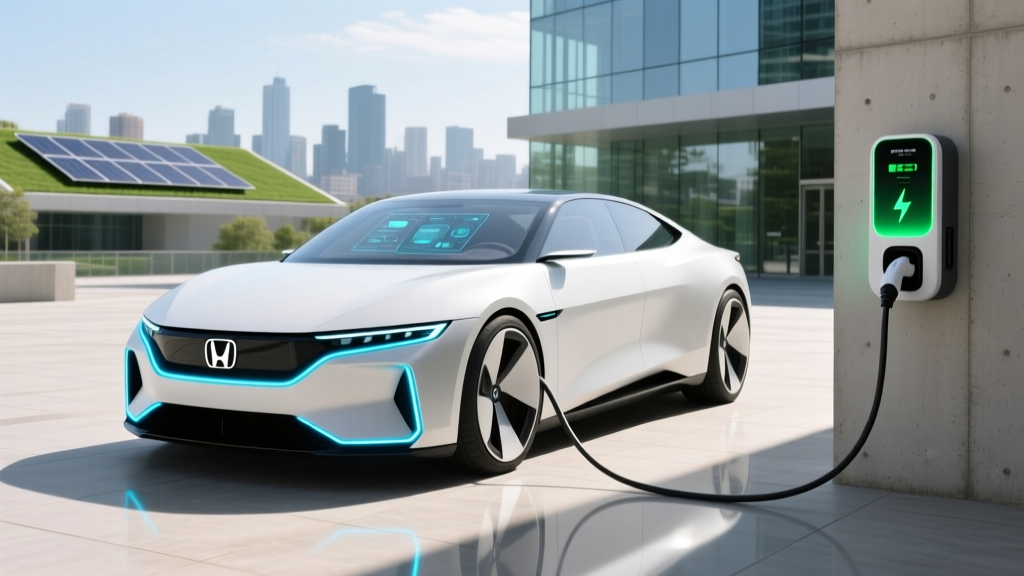
As of 2026, Honda's electric vehicle lineup in the US centers on the Honda Prologue, a midsize electric SUV built on General Motors' Ultium platform. The Prologue delivers an EPA-estimated range of up to 296 miles (FWD Elite trim), DC fast charging at up to 150 kW, and a starting MSRP around $47,400. It competes directly with the Hyundai Ioniq 5, Kia EV6, and Tesla Model Y. Honda has also announced upcoming in-house EVs, but the Prologue remains the only electric Honda you can buy today. For buyers who want Honda's Honda Sensing safety suite and dealer network in an electric package, it's a solid choice — but it isn't the range or charging-speed leader in its segment.
What Electric Hondas Can You Actually Buy?
Honda's path to electrification has been deliberate, and some would say slow. The Clarity EV was discontinued years ago, and the Honda e never came to the US. That leaves the Prologue as Honda's sole battery-electric offering for American buyers in 2026.
The Prologue is a product of the Honda-GM partnership: it rides on GM's Ultium (BEV3) platform, shares underpinnings with the Chevrolet Blazer EV, and uses GM's battery and powertrain technology. Honda designed the exterior, interior, and tuned the driving dynamics. For 2026, Honda has also introduced the Acura ZDX as the luxury counterpart, but we're focusing on the Honda-badged model here.
| Spec | FWD (EX / Touring) | AWD (Elite) |
|---|---|---|
| EPA Range | 296 mi (FWD) | 281 mi (AWD) |
| Battery (usable) | ~85 kWh, NMC (Ultium) | |
| Motor Output | 212 hp / 236 lb-ft | 288 hp / 333 lb-ft |
| 0-60 mph | ~7.4 sec | ~6.0 sec |
| DC Fast Charge (peak) | 150 kW (CCS1) | |
| 10-80% DC Charge | ~32 minutes | |
| Level 2 AC Charge | ~11.5 kW (approx. 9.5 hrs 0-100%) | |
| EPA Efficiency (FWD) | ~99 MPGe combined | |
| Base MSRP | $47,400 (EX) | $52,900 (Elite AWD) |
| Battery Warranty | 8 yr / 100,000 mi | |
Source: fueleconomy.gov, Honda Newsroom. Real-world highway range at 70+ mph typically drops 10-15% below EPA; expect ~250-265 miles in mixed highway driving for the FWD model.
Prologue Range and Charging: The Real Numbers
The 296-mile EPA figure on the FWD Prologue is competitive but not class-leading. The Hyundai Ioniq 5 (Long Range RWD) achieves 311 miles EPA, and the Tesla Model Y Long Range AWD hits approximately 310 miles. Where the Prologue falls further behind is DC fast charging speed.
Real-World Range Expectations
EPA Sticker: 296 mi (FWD) / 281 mi (AWD)
Mixed Highway (65-75 mph): ~250-265 mi (FWD) / ~235-250 mi (AWD)
Cold Weather (below 32°F): ~210-235 mi (FWD) — NMC batteries lose 15-25% in freezing temps without consistent preconditioning
City / Moderate Climate: Close to EPA or slightly above thanks to regenerative braking
The Prologue's 150 kW peak DC charge rate means a 10-80% session takes roughly 32 minutes on a capable CCS1 station. That's noticeably slower than the Hyundai Ioniq 5 or Kia EV6, which leverage 800V architecture to peak at 235-240 kW and achieve 10-80% in approximately 18 minutes. If you road-trip frequently, that 14-minute gap per stop adds up.
One important note: Honda confirmed that Prologue owners receive access to the Tesla Supercharger network via a GM-approved NACS adapter (included or available depending on trim and model year). This significantly expands usable fast-charging infrastructure, particularly in rural corridors where CCS1 stations remain sparse.
| Level | Power | Miles Added per Hour | Typical Use Case |
|---|---|---|---|
| Level 1 (120V) | ~1.4 kW | ~4-5 mi/hr | Emergency / overnight top-up |
| Level 2 (240V, 48A) | ~11.5 kW | ~34-38 mi/hr | Home / workplace daily charging |
| DC Fast (CCS1) | Up to 150 kW | ~170 mi in 30 min (peak) | Road trips, rapid top-ups |
Electric Honda vs. Gas CR-V: Cost Comparison
The natural cross-shop for most Honda buyers is the CR-V, Honda's best-selling compact SUV. Let's compare the Prologue EX ($47,400) against a 2026 CR-V EX AWD (~$35,500 MSRP) over five years and 75,000 miles.
| Category | Prologue EX (EV) | CR-V EX AWD (Gas) |
|---|---|---|
| Purchase Price (MSRP) | $47,400 | $35,500 |
| Est. Federal Tax Credit (§30D) | Up to $7,500* | $0 |
| Effective Purchase Price | ~$39,900 | $35,500 |
| Fuel / Energy (75k mi) | ~$3,000 (home L2 at $0.14/kWh) | ~$7,500 (28 MPG avg, $3.50/gal) |
| Maintenance (5 yr) | ~$600 (tire rotations, cabin filter, wiper fluid) | ~$2,800 (oil changes, brakes, filters) |
| Insurance (est. avg/yr) | ~$2,100/yr ($10,500 total) | ~$1,600/yr ($8,000 total) |
| Estimated Depreciation | ~$18,000 | ~$13,500 |
| Total 5-Year Cost | ~$46,500 | ~$46,300 |
*Federal §30D tax credit eligibility depends on MSRP caps (vans/SUVs: $80,000), buyer income limits ($150k single / $300k joint AGI), and battery critical-mineral sourcing requirements. The Prologue, built on GM's Ultium platform in North America, has qualified for the full credit in prior model years, but always verify current eligibility at irs.gov. Credit can now be transferred to the dealer at point of sale as a down-payment reduction.
The takeaway: the Prologue is cost-competitive with the CR-V over five years if you qualify for the full tax credit and charge primarily at home. Without the credit, or if you rely heavily on paid public DC fast charging (which can cost $0.35-$0.50/kWh), the CR-V pulls ahead on pure economics. EV insurance premiums also run 20-35% higher on average — factor that into your budget.
Home Charging: What First-Time EV Buyers Must Know
The single biggest ownership advantage of an EV comes from charging at home. If you can install a Level 2 (240V) home charger, the Prologue wakes up "full" every morning, eliminating gas station visits entirely for daily driving.
| Item | Cost Range | Notes |
|---|---|---|
| Level 2 Charger (hardware) | $300 - $700 | ChargePoint Home Flex, Emporia, Wallbox |
| Electrician (240V/50A circuit) | $800 - $2,500 | Depends on panel proximity and conduit run |
| Electrical Panel Upgrade (if needed) | $1,500 - $3,500 | Required if panel is maxed at 100A; 200A recommended |
| Permits / Inspection | $100 - $400 | Varies by municipality |
| Total (no panel upgrade) | $1,200 - $3,600 | |
| Total (with panel upgrade) | $2,700 - $7,100 |
A licensed electrician should assess your panel capacity before committing. The Prologue's onboard charger accepts up to 11.5 kW on Level 2, so a 48-amp circuit (60-amp breaker) delivers the fastest home charging. On a standard 32-amp Level 2, expect roughly 25-28 miles of range per hour of charging — still more than enough to replenish a day's driving overnight.
If you cannot charge at home (apartment dwellers, street parking), the Prologue's 150 kW DC charging speed becomes a genuine limitation. You'll spend 30+ minutes at public chargers several times a week, and public charging costs significantly more per mile than home electricity. In this scenario, a Honda hybrid (CR-V Hybrid or Accord Hybrid, both achieving 40+ MPG combined) may be a more practical electrified choice until reliable charging access is secured.
Common Misconceptions About Electric Hondas
| Myth | Fact |
|---|---|
| "The Prologue is 100% Honda-engineered." | It uses GM's Ultium platform, battery, and motors. Honda designed the body, interior, infotainment, and suspension tuning. |
| "EV batteries need replacing every few years." | The Prologue's NMC Ultium battery is warrantied for 8 years/100,000 miles against degradation below ~70% capacity. Industry data shows most liquid-cooled EV batteries retain 85-90% capacity at 100k miles. |
| "I'll never be able to road-trip." | With Supercharger access via NACS adapter plus the growing CCS1 network, cross-country travel is feasible — just plan for 30-minute charging stops every 200-240 miles. |
| "EVs are worse in winter." | Range drops 15-25% in freezing temperatures due to battery chemistry and cabin heating demands. Preconditioning while plugged in mitigates this, but plan for shorter effective range. |
| "I'll save money no matter what." | Without the federal credit or with expensive public charging, a hybrid like the CR-V Hybrid (40 MPG, ~$36,000) often has a lower total cost of ownership. |
Honda's Electric Future: What's Coming Next
Honda has signaled a shift away from the GM partnership for its next-generation EVs. The company's "Honda 0 Series" concept vehicles — previewed at CES — outline a lineup of in-house electric platforms launching later this decade, with thinner batteries, lighter weight, and a new dedicated EV architecture. The first Honda 0 Series production models are expected around 2026-2027, initially for the Japanese and Chinese markets, with US availability to follow.
For buyers shopping today, these future models are announced but not yet available. The Prologue is what you can drive home now, and it represents a competent first effort — just not a segment leader in charging speed or efficiency.
Decision Framework: Should You Buy an Electric Honda?
Choose the Honda Prologue if:
- You want a midsize electric SUV from a mainstream brand with a large US dealer network
- You qualify for the §30D federal tax credit (check income and sourcing rules at irs.gov)
- You can install Level 2 home charging and drive under 200 miles daily
- You value Honda Sensing ADAS and a familiar Honda interior layout
- Supercharger network access via NACS adapter matters to you for road trips
Consider a different EV (Ioniq 5, EV6, Model Y) if:
- DC fast charging speed is a priority (the Prologue's 150 kW trails 800V competitors at 235+ kW)
- You want maximum range — the Ioniq 5 and Model Y both exceed 300 miles EPA
- You want a fully in-house Honda EV and can wait for the Honda 0 Series
Choose a Honda Hybrid (CR-V Hybrid, Accord Hybrid) if:
- You lack reliable home or workplace charging access
- You live in an extreme cold-weather climate where EV range loss is a regular concern
- Your budget is closer to $35,000-$38,000 and you don't qualify for EV tax credits
- You frequently tow or haul heavy loads (hybrids don't suffer range penalties under load the way EVs do)
Frequently Asked Questions
Does Honda make a fully electric car in 2026?
Yes. The Honda Prologue is a midsize electric SUV and currently Honda's only fully electric vehicle available in the US. It uses GM's Ultium platform and offers up to 296 miles of EPA-estimated range.
Is the Honda Prologue eligible for the $7,500 federal tax credit?
The Prologue has qualified for the full §30D credit in prior model years due to its North American assembly and Ultium battery sourcing. However, eligibility depends on your income (AGI caps: $150k single, $300k joint), the vehicle's MSRP (under $80,000 for SUVs), and current-year battery mineral sourcing rules. Always verify at irs.gov before purchasing, and ask the dealer about point-of-sale credit transfer.
How long does it take to charge the Prologue at home?
On a Level 2 (240V, 48-amp) home charger, a full 0-100% charge takes approximately 9.5 hours. Most owners charge overnight and rarely deplete the battery fully — a typical 50-mile daily commute requires roughly 1.5 hours of Level 2 charging.
Can the Prologue use Tesla Superchargers?
Yes. Honda/GM provides a NACS adapter that allows Prologue owners to charge at Tesla Supercharger stations (V3 and V4). This significantly expands fast-charging options, especially on highway corridors where Tesla's network dominates.
What's the Prologue's real-world range on the highway?
In real-world highway driving at 70-75 mph, expect approximately 250-265 miles from the FWD model and 235-250 miles from the AWD model. In freezing temperatures, plan for 210-235 miles. Always build in a 15-20% buffer below the EPA sticker for trip planning.
Should I wait for Honda's next-generation EVs?
Honda's "0 Series" in-house EV platform is expected to produce vehicles later this decade, but no US-market model is currently available for purchase. If you need an electric Honda now, the Prologue is your option. If you can wait 2-3 years, Honda's next-gen EVs may offer improved range, faster charging, and a more distinctly Honda character.