The Short Answer
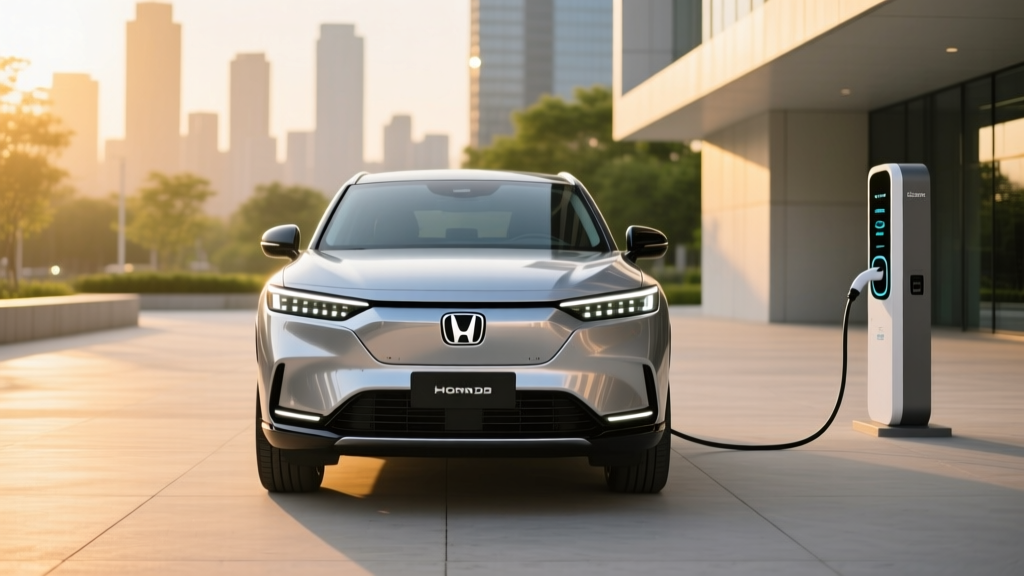
As of early 2026, Honda sells one battery-electric vehicle in the U.S.: the Honda Prologue, a midsize SUV built on GM's Ultium platform with up to 308 miles of EPA range, a 85 kWh NMC battery, and starting at $47,400. A second model, the Honda 0 Series Saloon, is announced for late 2026/early 2027 with a dedicated Honda EV architecture. If you want a Honda EV today, the Prologue is your only option — and it's a credible, if derivative, family crossover. If you can wait, the 0 Series models promise lighter weight, faster charging, and a more distinctly Honda driving character.
Honda's Current EV Lineup: What's Actually for Sale
Honda's path to electrification has been more cautious than rivals like Hyundai/Kia or Tesla. After the discontinued Clarity EV (a compliance car with just 89 miles of range) and the limited-run Honda e (never sold in the U.S.), the 2024 Prologue marked Honda's first serious mass-market EV. For 2026, the Prologue carries over with minor trim adjustments, while the 0 Series Saloon remains in pre-production.
| Spec | Prologue (On Sale) | 0 Series Saloon (Announced) |
|---|---|---|
| Platform | GM Ultium (shared with Blazer EV) | Honda 0 Series dedicated EV |
| Battery | 85 kWh usable, NMC lithium-ion | ~80-90 kWh est., thin-pack NMC |
| EPA Range | 294-308 mi (FWD/AWD) | ~300-350 mi (preliminary) |
| Peak DC Charge Rate | 150 kW | ~200+ kW (target) |
| 10-80% DC Fast Charge | ~32 minutes | ~20-25 min (target) |
| Level 2 Charging | 11.5 kW (onboard) | TBD |
| Power (AWD) | 288 hp / 333 lb-ft | TBD |
| 0-60 mph (AWD) | ~6.0 sec | TBD |
| Connector | NACS (native Tesla Supercharger access) | NACS (confirmed) |
| Starting MSRP | $47,400 (EX FWD) | ~$45,000-$50,000 est. |
| Availability | On sale now | Late 2026 / early 2027 |
Sources: Honda Prologue official specs, fueleconomy.gov
Real-World Range Reality Check
The Prologue's EPA-rated 308 miles (EX FWD) drops to about 294 miles for the AWD Elite. In real-world highway driving at 70-75 mph, expect roughly 250-270 miles before needing to charge. In cold weather (below 30°F), range can drop an additional 15-25%, putting winter highway range closer to 210-230 miles. The Prologue does not include a heat pump, which contributes to greater cold-weather efficiency loss compared to competitors like the Hyundai Ioniq 5 or Tesla Model Y.
Prologue Deep Dive: The Honda EV You Can Buy Today
Trims and Pricing
The 2026 Prologue comes in three trims:
- EX (FWD): $47,400 — 308 mi EPA range, 212 hp, 19" wheels
- Touring (FWD): $50,400 — 304 mi, 212 hp, 21" wheels, panoramic roof
- Elite (AWD): $53,400 — 294 mi, 288 hp, 21" wheels, HUD, premium audio
All trims include Google Built-in infotainment, an 11.3" touchscreen, wireless Apple CarPlay/Android Auto, and the Honda Sensing ADAS suite.
Charging Performance
The Prologue's 150 kW peak DC fast-charge rate is adequate but not class-leading. The Hyundai Ioniq 5 peaks at 240 kW, and the Tesla Model Y at 250 kW. Here's what that means in practice:
- At a 150+ kW charger: 10-80% in approximately 32 minutes
- Charge curve tapers significantly above 80% — a full 10-100% session takes closer to 55 minutes
- Level 2 home charging at 11.5 kW adds roughly 35 miles per hour, fully recharging overnight in ~8 hours
- Level 1 (120V) trickle charging adds about 3-4 miles per hour — viable only for topping off
Connector note: The 2026 Prologue uses the NACS connector natively, meaning direct access to Tesla Supercharger stalls without an adapter. This is a significant practical advantage over CCS-equipped rivals in 2026, as the Supercharger network remains the most reliable public DC fast-charging option in the U.S.
Tax Credit Eligibility
The Prologue's eligibility for the federal §30D tax credit is limited and uncertain. Because it's built on a GM platform with a GM-sourced Ultium battery, critical-mineral and battery-component sourcing rules under current IRS guidelines may reduce or eliminate the credit. As of early 2026:
- Check the latest fueleconomy.gov tax credit listings for current Prologue eligibility
- MSRP cap for SUVs: $80,000 — Prologue qualifies on price
- Buyer income cap: $150K single / $300K joint — must meet to qualify
- Point-of-sale transfer is available if the credit applies, reducing your dealer price directly
Bottom line: Do not assume the full $7,500 credit applies. Verify current eligibility with your tax professional and the IRS source pages before purchasing.
EV vs. Gas vs. Hybrid: How the Prologue Compares
The Prologue competes in the midsize crossover segment against both EVs and gas/hybrid alternatives. Here's a cost and capability comparison against Honda's own CR-V Hybrid and a key EV rival:
| Factor | Honda Prologue Elite AWD | Honda CR-V Hybrid Sport-L AWD | Hyundai Ioniq 5 SEL AWD |
|---|---|---|---|
| MSRP (approx.) | $53,400 | $39,845 | $49,850 |
| Est. Federal Tax Credit | $0-$7,500* | $0 | $7,500** |
| Effective Purchase Price | $45,900-$53,400 | $39,845 | $42,350 |
| Energy Cost (5 yr / 75K mi) | ~$4,100*** | ~$7,500 | ~$3,900 |
| Maintenance (5 yr) | ~$1,800 | ~$3,200 | ~$1,700 |
| Est. Insurance (5 yr) | ~$11,500 | ~$8,800 | ~$10,200 |
| EPA Range / MPG | 294 mi / 95 MPGe | 40 MPG combined | 290 mi / 110 MPGe |
| 5-Year Total (approx.) | $63,300-$70,800 | $59,345 | $58,150 |
* Prologue credit eligibility uncertain; verify at purchase. ** Ioniq 5 credit subject to current IRS sourcing rules. *** Based on $0.14/kWh national average, 70% home / 30% public charging.
Decision Framework: Which Powertrain Fits You?
- Choose the Prologue if: You have reliable Level 2 home charging, drive under 250 miles daily, want a quiet/refined family SUV, and value Supercharger network access via NACS.
- Choose the CR-V Hybrid if: You lack home charging access, regularly drive in extreme cold, take frequent 400+ mile road trips, or need the lowest upfront cost with no charging logistics.
- Choose the Ioniq 5 if: You prioritize faster DC charging (240 kW), a heat pump for cold-weather efficiency, and a more distinctive design — and don't mind using a CCS-to-NACS adapter for Superchargers.
- Wait for the Honda 0 Series Saloon if: You want a sedan, prefer a purpose-built Honda EV platform, and can delay your purchase into 2027.
Real-World Ownership: What First-Time Honda EV Buyers Must Know
Home Charging Is Non-Negotiable for Most Owners
The Prologue's 85 kWh battery means Level 1 (standard 120V outlet) charging is impractical as a primary strategy — it would take over 24 hours for a full charge. Budget $500-$1,500 for a quality Level 2 home charger (e.g., ChargePoint Home Flex, Emporia Vue) and $800-$2,500 for professional electrician installation of a 240V/50A circuit. If your electrical panel needs an upgrade to 200A, add $1,500-$3,500.
Without home charging, the Prologue's ownership experience becomes significantly less convenient. Public DC fast charging costs roughly 2-3x more per kWh than home charging and requires time commitment. If you live in an apartment without charging access, a PHEV like the CR-V Hybrid or a Toyota RAV4 Prime may be more practical until public infrastructure matures.
Cold Weather and Range Loss
The Prologue's lack of a heat pump means cabin heating draws directly from the traction battery via resistive heating. In sustained sub-30°F conditions:
- Expect 15-25% range reduction on top of normal highway losses
- Preconditioning the battery while plugged in mitigates this somewhat — always precondition before a DC fast-charge session in cold weather
- Seat heaters and a heated steering wheel (standard on Touring/Elite) are more efficient than blasting cabin heat
Insurance Costs Are Higher
EV insurance premiums run 15-30% higher than equivalent gas vehicles due to repair costs, battery replacement risk, and specialized labor. For the Prologue, expect annual premiums in the $2,000-$2,600 range depending on your state, driving record, and coverage level. Get quotes before purchasing — this is a real cost that surprises many first-time EV buyers.
Maintenance Savings Are Real
The Prologue eliminates oil changes, spark plugs, transmission fluid, and exhaust system maintenance. Brake wear is significantly reduced thanks to regenerative braking. Honda's EV powertrain warranty covers the battery for 8 years / 100,000 miles (with a capacity retention threshold typically around 70%). Expect to spend primarily on tires (EVs are heavier and wear tires faster), cabin air filters, and wiper fluid.
Upcoming: Honda 0 Series — What We Know So Far
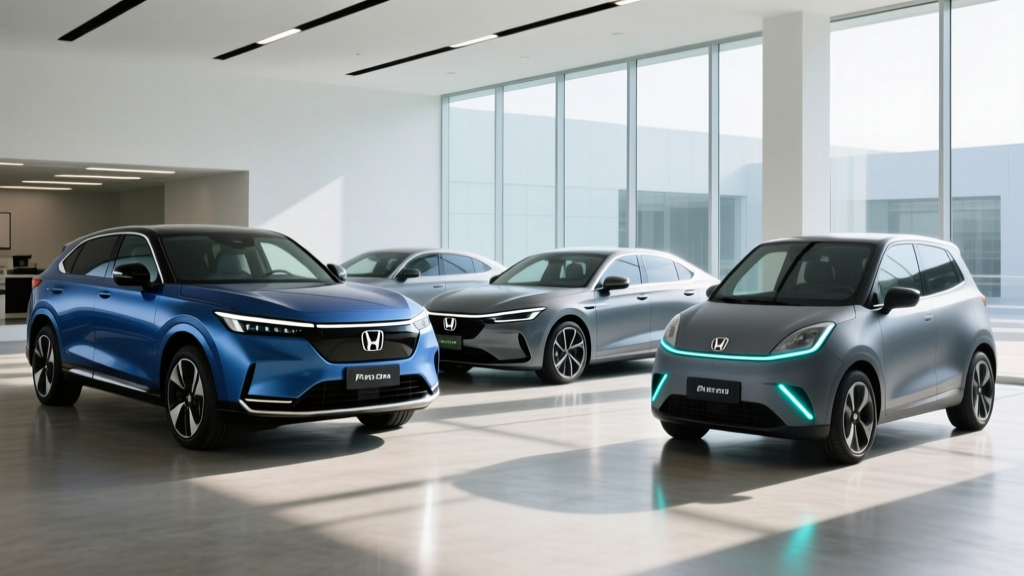
Honda's 0 Series represents the company's in-house EV future, moving away from the GM Ultium partnership. Announced models include:
- Saloon: A sleek sedan positioned as the flagship, targeting ~300+ miles of range with a thin battery pack, rear-wheel-drive bias, and wire-controlled steering. Expected late 2026 or early 2027.
- Space-Hub: A compact MPV/crossover concept emphasizing interior volume. Timing TBD.
Honda has stated the 0 Series will target a 20-25 minute 10-80% DC fast charge and a lighter, more efficient platform than the Ultium-based Prologue. However, all specs remain preliminary and unverified — we'll update this guide when EPA-certified numbers are available.
Common Misconceptions About Honda EVs
| Myth | Fact |
|---|---|
| "Honda doesn't make real EVs" | The Prologue is a legitimate 300-mile midsize SUV with NACS Supercharger access and competitive specs. It's built by GM, but it's a real Honda product sold through Honda dealers with Honda warranty coverage. |
| "The Prologue qualifies for the full $7,500 tax credit" | Eligibility depends on current battery-sourcing and critical-mineral rules under §30D. As of 2026, verify on fueleconomy.gov before assuming the credit applies. |
| "I can charge on a regular outlet — it's fine" | Level 1 adds ~3-4 miles per hour. Fully charging the 85 kWh battery takes 24+ hours. It works for occasional top-offs, not daily use. |
| "EV batteries need replacing every few years" | Modern NMC batteries like the Prologue's are warrantied for 8 years/100,000 miles with ~70% capacity retention. Real-world degradation data from similar Ultium packs shows 5-10% loss over 5 years with normal use. |
| "The Prologue is just a rebadged Chevy" | While the platform and powertrain are shared with the Chevy Blazer EV, Honda tunes the suspension, steering, interior materials, and software experience independently. The driving character and cabin are distinct. |
Frequently Asked Questions
Is the Honda Prologue a good EV for a first-time electric car buyer?
Yes, with caveats. The Prologue is familiar, comfortable, and benefits from Supercharger access via NACS — a big deal for road-trip confidence. However, its 150 kW peak charging speed and lack of a heat pump mean it's not the most efficient or fastest-charging option in its class. If you have home charging and drive mostly under 200 miles a day, it's a solid choice. If you want best-in-class efficiency and charging speed, also test-drive the Ioniq 5, Model Y, and EV6.
How does the Prologue compare to the Acura ZDX?
The Acura ZDX is the Prologue's luxury twin, also built on the Ultium platform. The ZDX offers a more powerful Type S variant (up to 500 hp), premium materials, and a higher starting price (~$57,000+). Range and charging specs are similar. If you want Honda pricing and branding, go Prologue. If you want more power and luxury features, the ZDX or even the Cadillac Lyriq (same platform) may appeal more.
Will the Honda 0 Series Saloon be worth waiting for?
If you prefer a sedan over an SUV and want a purpose-built Honda EV, the Saloon is promising. Honda's targets include faster charging, lighter weight, and a more engaging driving experience. But it won't arrive until late 2026 at the earliest, with realistic availability in early 2027. If you need a car now, the Prologue or an established EV rival is the pragmatic choice.
Does the Prologue support vehicle-to-load (V2L) or vehicle-to-home (V2H)?
No. The 2026 Prologue does not offer V2L or V2H capability. If you need to power external devices or home backup from your EV, look at the Hyundai Ioniq 5, Kia EV6, or Ford F-150 Lightning, which all support V2L.
What's the actual cost to charge the Prologue at home?
At the U.S. national average of ~$0.14/kWh, a full 85 kWh charge costs roughly $11.90, yielding about 300 miles. That's approximately $0.04 per mile — compared to $0.12-$0.15 per mile for a 30 MPG gas car at $3.50/gallon. Over 15,000 miles per year, home charging saves roughly $1,200-$1,600 annually versus gasoline.
Always verify current pricing, tax-credit eligibility, and specifications with Honda's official site, fueleconomy.gov, and IRS §30D guidelines before purchasing. Rules and availability change frequently.