Quick Answer: Honda does not currently sell an electric mini bike in the U.S. as a 2026 model. The Honda Motocompacto — a foldable electric scooter announced in 2023 — was positioned as a micro-mobility commuter rather than a traditional mini bike like the iconic 1980s Motocompo. Honda has not confirmed a U.S. retail launch or pricing for the Motocompacto as of early 2026, and it remains unavailable through American Honda dealerships. If you're searching for an electric Honda mini bike, your current options are limited to the used market, third-party imports, or alternative electric micro-mobility products.
What Buyers Mean by "Electric Honda Mini Bike"
The term "electric Honda mini bike" typically refers to one of two things: the legendary Honda Motocompo (a 2.5-hp, 50cc gas-powered foldable mini bike sold in Japan from 1981–1983) or Honda's modern electric successor concept, the Motocompacto. The original Motocompo was designed to fit inside the trunk of the Honda City hatchback — a quirky urban last-mile solution decades ahead of its time.
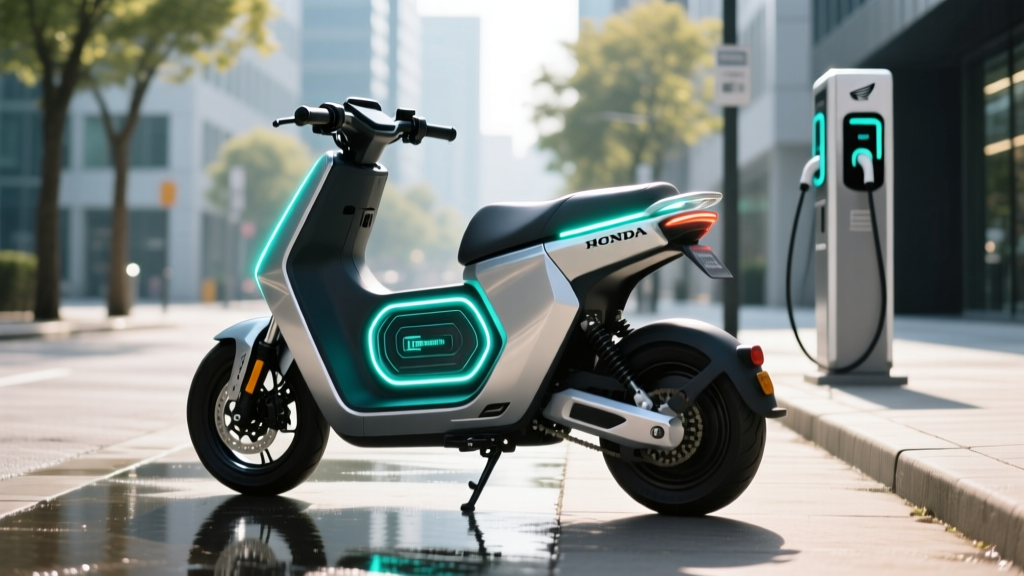
Honda's U.S. division unveiled the Motocompacto concept in September 2023 as a compact, foldable, front-wheel-drive electric scooter with a claimed 12-mile range and a top speed of 15 mph. It was widely interpreted as a homage to the Motocompo, reimagined for modern urban commuters. However, Honda has not brought the Motocompacto to U.S. showrooms or confirmed production volumes, MSRP, or a retail distribution strategy.
Motocompacto Specs: What We Know So Far
Based on Honda's 2023 reveal and subsequent concept documentation, here are the preliminary specifications for the Motocompacto. Treat these as announced/estimated figures — final production specs may differ if and when Honda brings this product to market.
| Specification | Motocompacto (Announced) |
|---|---|
| Motor | Front-wheel hub motor, ~490 W peak |
| Top Speed | 15 mph (24 km/h) |
| Claimed Range | ~12 miles (19 km) |
| Battery | Lithium-ion (exact kWh not disclosed) |
| Charge Time (120V) | ~3.5 hours (Level 1 household outlet) |
| Folded Dimensions | ~38.1" L × 17.7" W × 3.6" H |
| Weight | ~41.3 lbs (18.7 kg) |
| Seat | Integrated padded bench |
| Connectivity | Bluetooth app (concept) |
| U.S. MSRP | Not confirmed — not on sale |
Real-World Range Reality: Honda's claimed 12-mile range is likely measured under ideal conditions (flat terrain, mild temperature, single rider under 150 lbs, low speed). In real-world commuting with stops, hills, and a heavier rider, expect closer to 8–10 usable miles. Cold weather (below 40°F) can reduce lithium-ion battery output by 20–30%, further shrinking range to roughly 6–8 miles.
Electric Honda Mini Bike vs. Gas Mini Bike vs. E-Scooter
If you're weighing an electric Honda mini bike against alternatives, here's how the categories compare on cost, range, and practicality. Since the Motocompacto isn't available, we've included the closest comparable electric scooter (the NIU MQi+ Sport) and a representative gas mini bike for context.
| Attribute | Motocompacto (Concept) | NIU MQi+ Sport (E-Scooter) | Honda Grom (Gas Mini Bike) |
|---|---|---|---|
| Powertrain | Electric (FWD hub) | Electric (rear hub) | 125cc gas, 4-speed |
| Top Speed | 15 mph | 28 mph | 55+ mph |
| Range | ~12 mi (claimed) | ~43 mi (EPA est.) | ~130 mi (1.6 gal tank) |
| Energy Cost/Mile | ~$0.003 | ~$0.004 | ~$0.04 (at $3.50/gal, 130 mpg) |
| Est. Price | TBD (not on sale) | $2,499 | $3,499 MSRP |
| Registration Required | Varies by state | Varies by state | Yes — motorcycle title |
| Maintenance/Year | Minimal | Minimal | $150–$300 (oil, chain, tires) |
The Honda Grom is a street-legal 125cc motorcycle — a fundamentally different product from a foldable electric scooter. If your goal is a fun, road-legal mini bike with real range, the Grom is the closest Honda product currently on sale. If you want zero-emissions micro-mobility for short campus or campus-to-transit commutes, a commercially available e-scooter like the NIU or Segway Ninebot fills the gap the Motocompacto was designed to address.
Real Costs: Electric Micro-Mobility vs. Gas Mini Bike
Even without a confirmed Motocompacto price, we can model the economics of electric micro-mobility versus a gas mini bike like the Honda Grom over a typical 3-year ownership period. This assumes 15 miles/day, 250 riding days/year.
| Cost Category (3 Years) | Electric Scooter (~$2,500) | Honda Grom ($3,499) |
|---|---|---|
| Purchase Price | $2,500 | $3,499 |
| Fuel/Energy (3 yrs, 11,250 mi) | $34 (at $0.13/kWh) | $302 (at $3.50/gal, 130 mpg) |
| Maintenance | $75 (tires, brake pads) | $600 (oil, chain, filters, tires) |
| Insurance | $0–$150 (often not required) | $600–$900 (motorcycle policy) |
| Registration/Title | $0–$50 | $150–$300 |
| 3-Year Total | $2,609–$2,779 | $5,151–$5,601 |
The electric scooter wins on operating cost by a wide margin — roughly $268 saved on fuel alone over three years, plus substantially lower maintenance and insurance. The Grom, however, offers road-legal highway capability, 10× the range, and a proven dealer service network. The right choice depends entirely on your use case.
Tax Credits and Incentives: Does a Mini Bike Qualify?
This is a common misconception. The IRS §30D Clean Vehicle Credit applies to four-wheeled motor vehicles with a gross vehicle weight rating (GVWR) under 14,000 lbs that meet battery-sourcing, MSRP, and buyer-income requirements. Electric scooters, e-bikes, and mini bikes — including the Motocompacto — do not qualify for the federal EV tax credit.
§30D Credit Requirements (vehicles that DO qualify):
- Four wheels, GVWR under 14,000 lbs
- MSRP under $55,000 (sedans) or $80,000 (SUVs/trucks/vans)
- Buyer AGI under $150K single / $300K joint
- Battery components and critical minerals meet U.S./FTA sourcing thresholds
- Final assembly in North America
Some states and municipalities do offer rebates for electric micro-mobility devices (e-bikes and e-scooters). Check your local air quality management district or state energy office — programs like California's e-bike incentive or Denver's e-bike rebate have offered $300–$1,200 toward qualifying electric two-wheelers. These are separate from federal vehicle credits and vary by jurisdiction.
Common Misconceptions About Electric Mini Bikes
| Myth | Fact |
|---|---|
| "Honda sells an electric mini bike in the U.S." | As of 2026, the Motocompacto has not been confirmed for U.S. retail sale. Honda's U.S. electric lineup includes the Prologue SUV; no electric two-wheeler is available through American Honda dealers. |
| "Electric mini bikes are street-legal everywhere." | Street legality depends on top speed, motor wattage, and state classification. Many states classify devices under 20 mph as "motorized scooters" with restricted road access. Check your state DMV before riding on public roads. |
| "You need a special charger." | Most electric scooters and micro-mobility devices charge from a standard 120V household outlet — no Level 2 installation needed. Charge times typically run 3–5 hours from empty. |
| "Electric mini bikes are maintenance-free." | Batteries degrade over time (typically 500–1,000 charge cycles before 80% capacity retention). Tires, brake pads, and controllers still require periodic service. Budget $50–$100/year for consumables. |
| "The $7,500 federal tax credit covers e-scooters." | §30D applies only to four-wheeled vehicles meeting strict sourcing and assembly rules. Two- and three-wheeled electric devices are excluded from the federal credit. |
Decision Framework: What Should You Actually Buy?
Choose an available electric scooter (NIU, Segway, etc.) if:
- You need a sub-15 mph, short-range commuter for campus, office parks, or last-mile transit connections
- You want zero maintenance, zero fuel cost, and no registration hassle
- You can charge at home or at a standard 120V outlet daily
- Your budget is $1,500–$3,000
Choose the Honda Grom (gas mini bike) if:
- You want a street-legal mini motorcycle with 55+ mph capability and 130-mile range
- You plan to ride on public roads and need full registration, insurance, and licensing compliance
- You want Honda dealer service and parts availability
- Your budget is $3,500–$4,500 (including gear and registration)
Wait for the Motocompacto if:
- You specifically want Honda branding, build quality, and design language
- You're comfortable with an unconfirmed timeline and no guaranteed U.S. launch
- A 12-mile range and 15 mph top speed fits your commute
- You have a backup plan (current e-scooter) in the meantime
Real-World Ownership Considerations
If you do purchase an electric scooter or micro-mobility device, plan for these practical realities:
Charging access: Unlike EVs, most e-scooters charge on a standard 120V outlet — no electrician or panel upgrade needed. However, you'll need secure indoor storage near an outlet. Apartment dwellers should check whether their building allows lithium-ion battery charging in units; some property managers restrict it.
Climate impact: Lithium-ion batteries lose 20–30% of usable capacity in freezing temperatures. If you commute in sub-40°F weather, a claimed 12-mile range may shrink to 8 miles or less. Store and charge your scooter indoors to preserve battery health.
Battery longevity: Expect 500–1,000 full charge cycles before the battery degrades to 80% of original capacity. At one charge per day, that's roughly 2–3 years before noticeable range loss. Replacement batteries typically cost $200–$500 depending on the brand and chemistry.
Theft and security: At 40 lbs, a foldable electric scooter is highly portable — and highly stealable. Budget for a U-lock or chain lock ($30–$80), and consider whether your renter's or homeowner's insurance covers personal mobility devices.
Frequently Asked Questions
Is there an electric Honda mini bike I can buy in 2026?
No. Honda has not released the Motocompacto for U.S. retail sale as of early 2026. The concept was unveiled in September 2023, but Honda has not confirmed production, pricing, or a U.S. launch date. The closest Honda product currently on sale is the gas-powered Grom (125cc mini motorcycle, $3,499 MSRP) or the all-electric Prologue SUV.
How much would the Honda Motocompacto cost?
Honda has not announced U.S. pricing. Industry analysts estimated a price between $1,500 and $2,500 based on comparable electric scooters, but this is speculative. If Honda brings the Motocompacto to market, pricing will likely be confirmed on Honda Powersports or the main Honda U.S. site.
Can I import a Honda Motocompacto from Japan?
The Motocompacto was originally announced as a U.S.-market concept by American Honda. There is no Japan-market version currently available for import. Importing any motorized vehicle requires compliance with DOT, EPA, and Customs regulations — a process that typically costs more than the vehicle itself for low-volume products.
Do electric scooters qualify for the $7,500 federal EV tax credit?
No. The IRS §30D Clean Vehicle Credit applies only to four-wheeled vehicles. Electric scooters, e-bikes, and mini bikes are excluded. Some state and local programs offer separate incentives for electric two-wheelers — check your state energy office or visit IRS.gov for federal credit rules.
What's the best alternative to an electric Honda mini bike?
For a foldable electric commuter scooter, consider the NIU MQi+ Sport ($2,499, ~43-mile range, 28 mph) or the Segway Ninebot MAX G3 ($899, ~25-mile range, 18.6 mph). For a Honda-branded mini bike with real street capability, the gas-powered Honda Grom ($3,499, 125cc, 55+ mph) is the current option through Honda Powersports dealers.
How long does an electric scooter battery last?
Most lithium-ion scooter batteries are rated for 500–1,000 full charge cycles before degrading to 80% of original capacity. With daily charging, that translates to roughly 1.5–3 years of peak performance. Storing the battery between 20–80% state of charge and avoiding extreme temperatures extends lifespan. Replacement batteries cost $200–$500 depending on the model.