Quick Answer: Does an Electric Honda Element Exist?
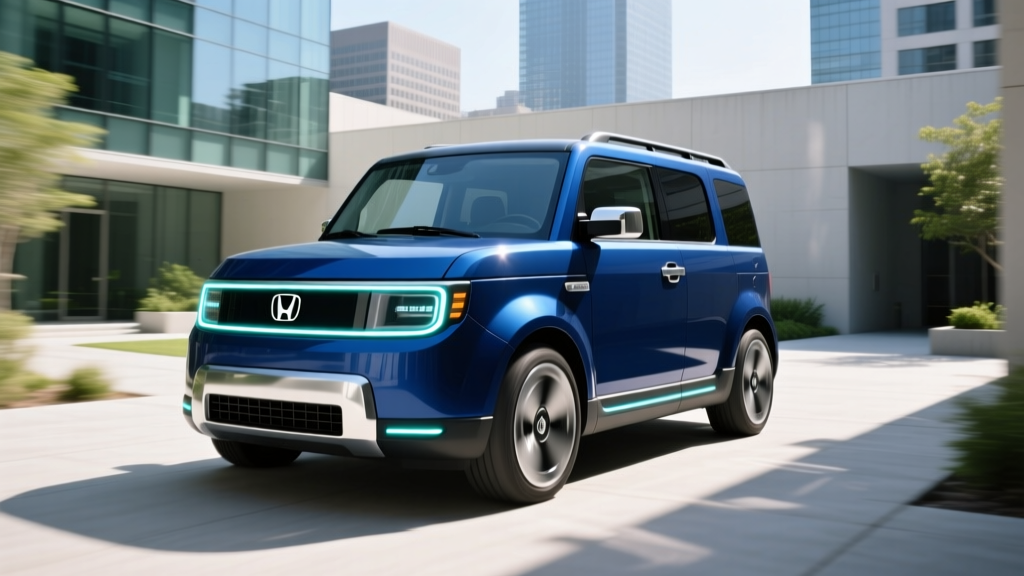
As of early 2026, Honda has not officially announced a production electric Honda Element. The original Element (2003–2011) was discontinued over a decade ago, and while Honda has teased retro-styled EV concepts and confirmed a next-generation EV lineup built on its new 0 Series platform, no boxy Element-branded electric vehicle is currently on sale or formally confirmed for production.
What does exist: Honda's Prologue (a midsize electric SUV sharing GM's Ultium platform, EPA range up to 296 miles, starting ~$47,400) and the upcoming Honda 0 Series EVs debuting in 2026–2027. If an electric Element revival happens, it would most likely emerge from the 0 Series family — but buyers should not expect one in showrooms before late 2027 at the earliest.
Why the Electric Honda Element Rumor Won't Die
The original Honda Element built a cult following that few vehicles ever achieve. Its boxy silhouette, suicide doors, washable interior, and genuine utility made it a favorite among outdoor enthusiasts, dog owners, and younger buyers who wanted something that wasn't a crossover blob. When Honda retired it in 2011, demand never fully disappeared — it just migrated to the used market, where clean Examples still command premium prices.
Every time Honda shows a concept with squared-off styling — the Honda Saloon concept (shown at CES 2024) or the Space-Hub concept — speculation reignites. The logic seems sound: a boxy, practical, affordable electric SUV wearing the Element nameplate would be an instant hit in a market saturated with sleek, swoopy crossovers.
But Honda's EV strategy has been anything but straightforward. The company canceled its planned affordable EV program with GM in late 2023, pivoted to its own 0 Series architecture, and has focused initial production on sedans and larger SUVs. A compact, utilitarian EV like an electric Element would require volume justification that Honda hasn't publicly signaled.
Honda's Actual 2026 EV Lineup: What You Can Buy Today
Rather than wait for a speculative Element revival, here's what Honda currently offers in the electric and electrified space:
| Model | Powertrain | EPA Range / MPG | Starting MSRP | Notes |
|---|---|---|---|---|
| Honda Prologue (2026) | BEV (Ultium, 85 kWh NMC) | 296 mi (FWD) / 281 mi (AWD) | ~$47,400 | GM-based; 10-80% in ~32 min at 150 kW peak |
| Honda CR-V Hybrid (2026) | HEV (2.0L + 2-motor) | 43 city / 36 hwy / 40 combined MPG | ~$35,395 | No plug; best-selling Honda |
| Honda Accord Hybrid (2026) | HEV (2.0L + 2-motor) | 51 city / 44 hwy / 48 combined MPG | ~$34,995 | Sedan; strong efficiency |
| Honda 0 Series (announced) | BEV (Honda platform) | TBD (est. 300+ mi) | TBD | Expected 2026–2027; thin battery, RWD/AWD |
The Prologue is Honda's only current battery-electric offering. It's a competent midsize SUV with competitive range, but at nearly $48,000, it sits well above the affordable, no-frills spirit of the original Element. It also uses GM's Ultium platform rather than Honda's own engineering — a stopgap before the 0 Series vehicles arrive.
For buyers who want Honda efficiency without going fully electric, the CR-V Hybrid delivers 40 MPG combined with no range anxiety and a starting price roughly $12,000 lower than the Prologue. According to fueleconomy.gov, it's one of the most efficient non-plug-in compact SUVs available.
What an Electric Honda Element Would Need to Compete
If Honda does greenlight an electric Element, it would enter a compact EV SUV segment that's already crowded and price-sensitive. Here's the competitive landscape it would face:
| Vehicle | EPA Range | Battery (kWh) | Peak DC Charge | 10–80% Time | Base MSRP |
|---|---|---|---|---|---|
| Hyundai Ioniq 5 (2026) | 318 mi | 84 kWh (NMC) | 240 kW | ~18 min | ~$43,975 |
| Kia EV6 (2026) | 310 mi | 84 kWh (NMC) | 240 kW | ~18 min | ~$44,500 |
| VW ID.4 (2026) | 291 mi | 82 kWh (NMC) | 170 kW | ~28 min | ~$40,790 |
| Ford Mustang Mach-E (2026) | 320 mi | 91 kWh (NMC) | 150 kW | ~33 min | ~$42,995 |
| Honda Prologue (2026) | 296 mi | 85 kWh (NMC) | 150 kW | ~32 min | ~$47,400 |
To succeed, an electric Element would need to undercut these rivals on price while delivering at least 250–280 miles of EPA range. The original Element's appeal was affordability and simplicity — a $38,000–$42,000 electric version with a smaller (~65 kWh) battery, LFP chemistry for longevity, and a genuinely utilitarian interior could carve out a unique niche. But Honda has given no indication that this is the direction the 0 Series will take.
The Real Cost of EV Ownership vs. a Honda Hybrid
Many Element-curious buyers are practical by nature. They care about total cost of ownership, not just the sticker price. Here's how a current Honda EV (the Prologue) stacks up against the CR-V Hybrid over a 5-year, 60,000-mile ownership period:
| Cost Category | Honda Prologue (EV) | Honda CR-V Hybrid (HEV) |
|---|---|---|
| Purchase Price (base MSRP) | $47,400 | $35,395 |
| Federal Tax Credit (§30D) | Up to $7,500 (eligibility varies) | $0 |
| Effective Purchase Price | ~$39,900 (if credit applies) | $35,395 |
| Fuel/Energy (60k mi) | ~$3,600 (home L2, $0.13/kWh avg) | ~$5,400 (30 MPG avg, $2.70/gal) |
| Maintenance (5 yr) | ~$1,200 | ~$2,800 |
| Insurance (5 yr avg) | ~$9,500 | ~$7,800 |
| Estimated Depreciation | ~$18,000 | ~$12,500 |
| 5-Year Total Cost | ~$72,200 | ~$63,895 |
Even with the full $7,500 federal credit (and not all buyers qualify — see the IRS §30D requirements for income caps, MSRP limits, and battery-sourcing rules), the Prologue costs roughly $8,300 more over five years. The EV saves on fuel and maintenance, but higher insurance premiums and steeper depreciation eat into those gains.
The calculus shifts if you have access to free or cheap workplace charging, live in a state with additional EV rebates (California's CVRP, Colorado's state credit, etc.), or drive significantly more than 12,000 miles per year. But for an average driver, a CR-V Hybrid remains the more economical Honda purchase in 2026.
What First-Time EV Buyers Should Know Before Waiting
If you're holding out for an electric Element, here are the practical realities to weigh:
Home Charging Is Non-Negotiable for Most Owners
Over 80% of EV charging happens at home. Without access to a Level 2 (240V) home charger — or at minimum a dedicated 120V circuit for slow Level 1 overnight charging — EV ownership becomes significantly more inconvenient and expensive. A Level 2 home installation typically costs $800–$2,500 depending on panel capacity and run length. If your home has a 100-amp electrical panel, a panel upgrade to 200 amps can add $2,000–$4,000. Always get a licensed electrician's assessment before purchasing any EV.
Real-World Range Is Not EPA Range
The EPA range sticker is a useful baseline, but real-world results vary considerably. Expect:
- Highway driving (70+ mph): 15–20% below EPA
- Cold weather (below 32°F): 20–35% below EPA, depending on cabin heating and battery preconditioning
- Mixed driving (moderate temps, city/highway blend): within 5–10% of EPA
A hypothetical electric Element with a 270-mile EPA rating would realistically deliver 215–230 miles on a cold highway trip. That's adequate for most daily driving but requires planning for road trips beyond ~200 miles.
Charging Speed Matters More Than Peak kW
Automakers advertise peak DC fast-charge rates (e.g., "240 kW"), but that peak is sustained for only a small portion of the charging session. The charge curve tapers significantly above 80% state of charge (SoC) to protect battery health. A vehicle that peaks at 240 kW but tapers aggressively may not save much real time over one peaking at 170 kW with a flatter curve. Always look at 10–80% charge time — that's the number that matters for road-trip stops.
Common EV Misconceptions
| Myth | Fact |
|---|---|
| "EV batteries need replacing every 5 years" | Modern NMC and LFP batteries are warranted for 8 years/100,000 miles at ≥70% capacity retention. Real-world data shows most lose only 10–15% over 100k miles. |
| "All EVs qualify for the $7,500 tax credit" | §30D has strict MSRP caps ($55k sedans, $80k SUVs/trucks), buyer income limits ($150k single/$300k joint), and critical-mineral/battery-sourcing requirements. Many popular EVs qualify for only $3,750 or nothing. Check fueleconomy.gov for current eligibility. |
| "EVs are always cheaper to own" | Lower fuel and maintenance costs are real, but higher purchase prices, insurance premiums, and depreciation can offset savings. TCO depends on your mileage, electricity rates, and how long you keep the vehicle. |
| "I can charge any EV at any station" | Connector standards differ. Tesla's NACS connector is becoming the North American standard (adopted by Honda, Ford, GM, and others for 2025+ models), but CCS1 stations still dominate non-Tesla networks. CHAdeMO is effectively legacy. Adapters exist but add friction. |
Decision Framework: Should You Wait or Buy Now?
If You're Considering an Electric Honda Element...
Buy a Honda CR-V Hybrid now if:
- You need a practical, efficient Honda SUV within the next 6 months
- You don't have reliable home charging access
- Your budget is under $40,000
- You regularly drive in extreme cold or remote areas with sparse charging infrastructure
- You want proven long-term reliability data and lower insurance costs
Buy a Honda Prologue now if:
- You want a Honda-badged EV today and have home Level 2 charging
- You qualify for the full §30D credit (check IRS guidelines) and your state offers additional incentives
- You primarily drive under 200 miles per day and road-trip infrequently
- You're comfortable with a GM-based platform (shared with Chevy Blazer EV)
Wait for Honda's 0 Series (2027+) if:
- You specifically want a Honda-engineered EV on Honda's own platform
- You're hoping for a compact, boxy, Element-like design (possible but unconfirmed)
- You can comfortably keep your current vehicle another 12–24 months
- You want faster DC charging than the Prologue's 150 kW peak
Look at the Hyundai Ioniq 5 or Kia EV6 instead if:
- You want the best charging speed in the segment (240 kW peak, ~18 min 10–80%)
- You value a spacious, boxy interior that echoes the Element's practical vibe
- You want a vehicle available now with strong IIHS Top Safety Pick+ ratings
The Honest Take: Element Nostalgia vs. EV Market Reality
The electric Honda Element is one of the most wished-for vehicles in the EV space — and one of the least likely to materialize in the form enthusiasts imagine. Honda's EV strategy is focused on sedans and larger SUVs through its 0 Series, and the company has not signaled any intent to revive the Element nameplate.
That doesn't mean the spirit of the Element is dead. The Ioniq 5's flat floor, boxy proportions, and versatile interior capture much of what made the Element special. The upcoming Honda 0 Series models may yet surprise us with a utilitarian variant. And for buyers who simply want Honda reliability with maximum efficiency, the CR-V Hybrid delivers 40 MPG combined with zero lifestyle compromise.
Don't put your life on hold for a vehicle that doesn't exist. The EV market in 2026 offers genuine choices with real data behind them. Pick based on what's in showrooms, not what's on rendering forums.
Is Honda making an electric Element?
No. As of early 2026, Honda has not announced any production electric vehicle bearing the Element name. The company's EV plans center on its 0 Series platform, with initial models expected in 2026–2027, but none have been confirmed as an Element successor.
What is Honda's current electric vehicle?
The Honda Prologue is Honda's only battery-electric vehicle on sale in 2026. It's a midsize SUV built on GM's Ultium platform with up to 296 miles of EPA range and a starting price around $47,400.
Would an electric Element qualify for the $7,500 tax credit?
It would depend on its MSRP, battery sourcing, and your income. Under current §30D rules, SUVs must have an MSRP at or below $80,000, buyers must earn under $150,000 (single) or $300,000 (joint), and the vehicle must meet critical-mineral and battery-component sourcing thresholds. These rules change frequently — always verify at irs.gov.
What's the closest thing to an electric Honda Element I can buy today?
The Hyundai Ioniq 5 comes closest in spirit: boxy styling, a flat floor, spacious interior, and strong charging performance. The Honda Prologue offers the Honda badge but in a larger, more conventional SUV shape. For maximum Honda practicality without going electric, the CR-V Hybrid at 40 MPG combined is hard to beat.
How much does home EV charger installation cost?
A Level 2 (240V) home charger installation typically runs $800–$2,500 for the equipment and electrician labor, assuming your electrical panel has sufficient capacity. If you need a panel upgrade from 100A to 200A, add $2,000–$4,000. Always get a site assessment from a licensed electrician before purchasing an EV.
Is a Honda hybrid better than an EV for most buyers in 2026?
For buyers without home charging, who drive in extreme cold, or who frequently take long road trips, a Honda hybrid (like the CR-V Hybrid at 40 MPG) offers lower upfront cost, zero range anxiety, and simpler ownership. EVs make more financial sense for high-mileage drivers with cheap home electricity and access to the federal tax credit.