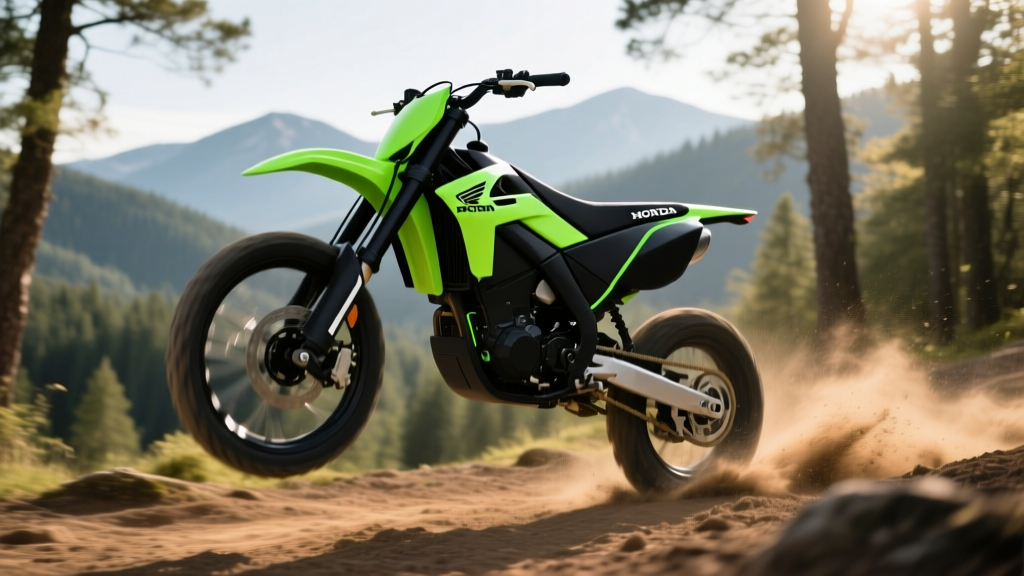
Quick Answer: As of early 2026, Honda does not sell a full-size production electric dirt bike in the United States. The closest Honda offers is the EM1 e: electric scooter (available in select markets) and the CRF-E concept lineage, but neither is a dedicated off-road motocross machine you can buy from a US dealer today. If you're searching for an electric Honda dirt bike, your real options are: (1) wait for Honda to expand its electric off-road lineup, (2) look at competitors like the KTM Freeride E-XC, Sur-Ron Ultra Bee, or Stark Varg, or (3) consider Honda's gas-powered CRF250R/CRF450R as proven alternatives. Below, we break down the real specs, costs, and ownership realities of electric off-road motorcycles versus their gas counterparts so you can make an informed decision.
Why Everyone Is Searching for an Electric Honda Dirt Bike
The search term "electric Honda dirt bike" has grown steadily because riders see the electric revolution hitting street motorcycles and assume off-road models are next. Honda has invested heavily in electrification — the brand committed to offering 30 electric models globally by 2030 and has showcased electric off-road concepts. The Honda Powersports division already sells the EM1 e: compact electric scooter in Asian and European markets, proving Honda's battery-swap platform (Honda Mobile Power Pack) works in practice.
However, the gap between concept and showroom remains significant for dirt bikes. Off-road motorcycles face unique engineering challenges that electric street bikes do not: extreme suspension travel, constant high-torque demand in mud and sand, crash resilience, and the need for lightweight construction. Honda's CRF gas lineup — particularly the CRF250R (44.9 hp, ~$8,299 MSRP) and CRF450R (55+ hp, ~$9,799 MSRP) — remains the brand's core off-road offering in 2026.
The Electric Dirt Bike Market in 2026: What Actually Exists
While Honda hasn't launched a production electric dirt bike in the US, several competitors have filled the space. Here's what the market looks like with real numbers:
| Model | Type | Power | Battery (kWh) | Est. Ride Time | Price (MSRP) |
|---|---|---|---|---|---|
| KTM Freeride E-XC | Electric Enduro | ~18 hp (continuous) / 24 hp (peak) | 3.9 kWh (NMC) | ~90 min (mixed trail) | ~$11,499 |
| Sur-Ron Ultra Bee | Electric Moto | ~12.5 kW peak (~16.8 hp) | 3.68 kWh (NMC) | ~75 min (trail riding) | ~$5,999 |
| Stark Varg MX | Electric Motocross | 80 hp | 6.0 kWh (NMC) | ~6 hrs (claimed, light use) | ~$13,860 |
| Honda CRF250R (gas) | Gas Motocross | ~44.9 hp | N/A (1.7 gal tank) | ~2 hrs per tank | $8,299 |
| Honda CRF450R (gas) | Gas Motocross | ~55 hp | N/A (1.7 gal tank) | ~1.5-2 hrs per tank | $9,799 |
Note: Electric dirt bike ride times vary enormously based on throttle use, terrain, and rider weight. The figures above assume mixed trail riding at moderate pace, not full-throttle motocross laps.
Electric vs. Gas Dirt Bikes: Real Cost Comparison
The economics of electric off-road motorcycles differ sharply from electric cars because the use case is fundamentally different. You're not commuting — you're riding trails or hitting jumps for 1-3 hours at a time. Let's break down the actual ownership costs.
| Cost Factor | Electric Dirt Bike (e.g., KTM Freeride E-XC) | Gas Dirt Bike (e.g., Honda CRF250R) |
|---|---|---|
| Purchase Price | $11,499 | $8,299 |
| "Fuel" Cost Per Ride (2 hrs) | ~$0.60-$1.20 (home charging at $0.15/kWh) | ~$8-$12 (premium 91 octane, ~1.5 gal) |
| Annual Fuel/Energy (50 rides) | ~$30-$60 | ~$400-$600 |
| Oil Changes (annual) | $0 | ~$60-$100 (multiple per season) |
| Air Filter Maintenance | $0 | ~$30-$50/year |
| Chain & Sprocket Wear | Similar | Similar |
| Battery Replacement (est.) | ~$3,000-$5,000 at end of life (5-8 yrs) | N/A |
| Top-End Rebuild | N/A | ~$800-$1,500 every 100-200 hrs |
| Insurance (annual, avg) | ~$200-$400 | ~$200-$400 |
| 5-Year Estimated Total Cost | ~$13,500-$15,500 | ~$12,000-$14,500 |
The electric bike saves significantly on per-ride energy costs and eliminates engine maintenance (no valves, piston rings, or carburetor/EFI tuning). However, the higher upfront price and eventual battery replacement narrow the gap. If you ride 100+ times per year, the electric bike's operating savings compound quickly. If you ride 20 times per year, the gas bike's lower purchase price is harder to beat.
Charging an Electric Dirt Bike: What First-Time Buyers Must Know
This is where electric dirt bike ownership diverges sharply from electric car ownership. You won't be using DC fast chargers or Tesla Superchargers.
Typical Charging Setup
- Level 1 (standard 120V outlet): Most electric dirt bikes charge from a standard household outlet using the included charger. Expect 0-100% in 1.5 to 3 hours depending on battery capacity and charger wattage (typically 500W-1000W).
- Level 2 (240V): Some models like the KTM Freeride E-XC support optional faster chargers that cut charge time to under 1 hour. This requires a 240V outlet (like a dryer outlet) in your garage or shop.
- Swappable batteries: Honda's Mobile Power Pack platform and some competitors offer removable batteries. You charge the battery indoors and swap it into the bike — a major advantage if you lack garage outlet access or want to carry a spare battery for extended rides.
Real-World Charging Considerations
Unlike an EV that charges overnight while you sleep, a dirt bike session often demands mid-ride charging or battery swaps. If you ride at a remote motocross track or trailhead with no electrical access, you're limited to whatever charge you arrived with. This is the single biggest practical limitation of electric dirt bikes in 2026, and no manufacturer has fully solved it yet.
Key distinction: kW (kilowatts) measures charging power — how fast energy flows into the battery. kWh (kilowatt-hours) measures battery capacity — how much total energy is stored. A 3.9 kWh battery charged at 1 kW takes roughly 3.9 hours from empty to full. Understanding this prevents the most common buyer confusion.
Common Misconceptions About Electric Dirt Bikes
| Myth | Fact |
|---|---|
| "Electric dirt bikes have no power." | The Stark Varg MX produces 80 hp — more than most 450cc gas motocross bikes. Electric motors deliver instant torque from 0 RPM, giving explosive hole-shot acceleration. However, sustained high-power use drains batteries rapidly. |
| "They're silent, so trail access is unlimited." | While electric bikes are far quieter than gas bikes (typically 60-70 dB vs. 95-110 dB), many public land managers still classify them as motorized vehicles subject to the same trail restrictions. Noise isn't the only reason for access limits — erosion and wildlife impact also matter. Check local regulations before assuming silent equals unrestricted. |
| "No maintenance means no cost." | Electric dirt bikes eliminate engine maintenance but still require chain lubrication, brake pad replacement, suspension service, tire changes, and cooling system checks. Budget ~$200-$400/year in consumables. |
| "The battery will die after a year." | Modern NMC lithium-ion cells in quality electric dirt bikes are rated for 500-1,000+ full charge cycles before reaching 80% capacity. At 50 rides per year, that's 10-20 years of use before significant degradation. Store the battery at ~50% charge during off-seasons to maximize lifespan. |
| "Honda already makes one — I just can't find it." | Honda has showcased electric off-road concepts and sells the EM1 e: scooter, but no full-size electric dirt bike is available from Honda in the US as of 2026. Any listing claiming otherwise is either a third-party conversion or a scam. |
Real-World Ownership: Climate, Terrain, and Riding Patterns
Electric dirt bike performance is not constant — it shifts with conditions in ways gas bikes mostly don't.
Cold Weather Impact
Lithium-ion batteries lose capacity and power output in cold temperatures. Expect 15-30% reduced ride time when riding in temperatures below 40°F (4°C). Charging speed also slows in cold conditions. If you primarily ride in winter months in northern states, this is a material limitation.
Hot Weather and Battery Thermal Management
Aggressive motocross riding in 95°F+ heat pushes battery cells hard. Unlike electric cars with active liquid cooling, most electric dirt bikes use passive air cooling. Sustained full-throttle use can trigger thermal protection that limits power output. The KTM Freeride E-XC and Stark Varg have more sophisticated thermal management than budget options, but the physics of a compact, lightweight package limits cooling capacity.
Terrain-Specific Energy Use
- Flat trail riding (moderate pace): Lowest energy consumption — closest to rated ride time.
- Hill climbs and sand: High continuous load — expect 30-50% less ride time than flat trail estimates.
- Motocross track (full throttle): Maximum drain — a 3.9 kWh battery may last only 25-40 minutes at race pace.
Decision Framework: Should You Buy Electric or Gas?
Choose an Electric Dirt Bike If:
- You ride primarily on private property or noise-restricted areas where silent operation matters
- You have reliable access to a 120V or 240V outlet at your riding location or can carry spare batteries
- You ride 50+ times per year and want to minimize per-ride energy and maintenance costs
- You value instant torque delivery and simplified controls (no clutch, no shifting on most models)
- You're willing to accept 1-2 hours of ride time per charge as sufficient for your sessions
Choose a Gas Dirt Bike (Honda CRF or equivalent) If:
- You ride at remote trailheads or tracks with no electrical infrastructure
- You need 2+ hours of continuous hard riding without stopping
- You compete in organized motocross or enduro events where refueling speed matters
- Your budget is under $8,500 and you want a proven, race-ready machine
- You ride in extreme cold regularly and need consistent performance regardless of temperature
- You want a Honda specifically — the CRF250R and CRF450R are class-leading gas bikes with decades of development
Federal Tax Credits and Incentives: Do Electric Dirt Bikes Qualify?
The short answer: almost certainly not. The federal §30D clean vehicle tax credit applies to new qualified plug-in electric vehicles with four wheels (or three wheels meeting specific criteria) that are street-legal for use on public roads. Off-road-only dirt bikes — whether electric or gas — do not qualify for the §30D credit because they lack a VIN associated with highway registration.
Some states offer separate incentives for off-road electric vehicles or electric powersports equipment, but these vary widely by jurisdiction and change frequently. Check your state's energy or environmental agency website for current programs. Consult a tax professional for eligibility specifics.
What to Watch: Honda's Electric Off-Road Future
Honda's electrification roadmap suggests an electric dirt bike is plausible before 2030, though no official US product announcement exists as of early 2026. Key signals to monitor:
- Honda Mobile Power Pack ecosystem: The swappable battery platform currently used in the EM1 e: scooter could scale to larger vehicles. Honda has demonstrated prototype off-road vehicles using this system.
- Competitive pressure: If KTM, Stark, and Sur-Ron continue gaining market share in the electric off-road segment, Honda's Powersports division will face pressure to respond.
- Regulatory trends: Some riding areas (particularly in California and European markets) are beginning to restrict gas-powered off-road vehicles due to noise and emissions. This regulatory push could accelerate Honda's timeline.
For now, riders specifically seeking an electric Honda dirt bike will need to either wait, choose a competitor's electric model, or ride Honda's proven gas-powered CRF lineup.
Frequently Asked Questions
Does Honda make an electric dirt bike I can buy in 2026?
No. Honda does not currently sell a production electric dirt bike in the United States. The EM1 e: is an electric scooter, not an off-road motorcycle. Honda's off-road lineup remains gas-powered (CRF series).
What's the best electric dirt bike available right now?
It depends on your use case. For serious motocross, the Stark Varg MX ($13,860, 80 hp) offers the closest performance to a 450cc gas bike. For trail riding on a budget, the Sur-Ron Ultra Bee (~$5,999) provides reasonable capability. For enduro-style riding, the KTM Freeride E-XC ($11,499) is the most established option from a major manufacturer.
How long does an electric dirt bike battery last on a single charge?
Ride time ranges from 25 minutes (full-throttle motocross) to 90+ minutes (moderate trail riding) depending on battery capacity, terrain, rider weight, and throttle use. A 3.9 kWh battery at moderate trail pace typically delivers 60-90 minutes.
Can I charge an electric dirt bike from a regular outlet?
Yes. Most electric dirt bikes charge from a standard 120V household outlet. Full charges typically take 1.5-3 hours. This is practical for home use but limits mid-session recharging at remote locations unless you bring a generator.
Will Honda release an electric CRF in the future?
Honda has not announced an electric CRF model for the US market as of 2026. The company has demonstrated electric off-road concepts and invested in swappable battery technology, making a future product plausible. However, no timeline or specs have been confirmed. Any claimed release dates from unofficial sources should be treated as speculative.
Are electric dirt bikes street legal?
Most are not. Electric dirt bikes like the KTM Freeride E-XC, Sur-Ron Ultra Bee, and Stark Varg are designed for off-road use only and lack the lighting, mirrors, and DOT certification required for street registration. Some states allow limited road use of off-road vehicles, but this is jurisdiction-specific. Check your local DMV regulations.