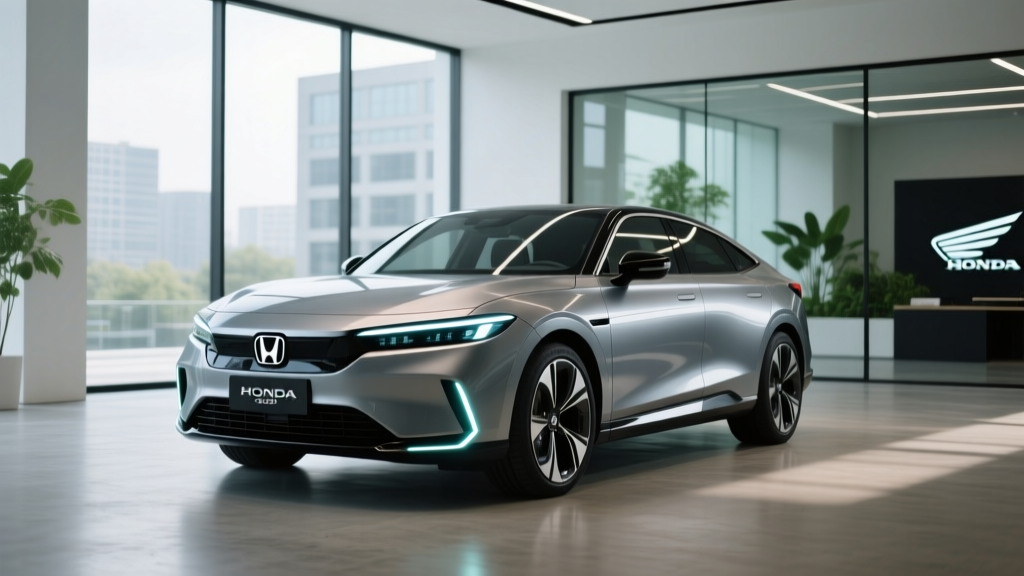
The short answer: The 2026 Honda Prologue is currently the only all-electric Honda car available in the U.S., offering up to 296 miles of EPA-estimated range, starting around $47,400 before incentives. It's a solid midsize electric SUV for buyers who want Honda reliability with zero tailpipe emissions — but it's not the most efficient or fastest-charging EV in its class. If you're searching for an electric Honda car, the Prologue is your only new option for now, with Honda's next-generation EVs not expected until 2026–2027.
The 2026 Honda Prologue: What You're Actually Buying
Honda's EV journey has been slow compared to rivals. The Prologue, built on GM's Ultium platform (a result of the Honda-GM partnership), is a midsize two-row SUV competing directly with the Hyundai Ioniq 5, Tesla Model Y, and Ford Mustang Mach-E. For 2026, Honda has expanded the trim lineup and made minor software improvements, but the core hardware remains the same as the 2024 launch.
| Spec | EX (FWD) | Touring (AWD) |
|---|---|---|
| EPA Range | 296 mi | 273 mi |
| Usable Battery | 85 kWh (NMC, Ultium) | 85 kWh (NMC, Ultium) |
| Horsepower | 212 hp | 288 hp |
| 0–60 mph | ~7.2 sec | ~5.8 sec |
| Peak DC Fast Charge | 150 kW | 150 kW |
| 10–80% DCFC Time | ~35 min | ~35 min |
| Level 2 Charge Rate | 7.7 kW (240V) | 7.7 kW (240V) |
| Efficiency (MPGe) | 114 MPGe combined | 100 MPGe combined |
| Base MSRP | $47,400 | $57,900 |
| Battery Warranty | 8 yr / 100,000 mi | 8 yr / 100,000 mi |
Source: EPA fueleconomy.gov, Honda Newsroom. Specs reflect 2025 model year data carried into 2026; confirm with dealer for final MY2026 adjustments.
⚡ Real-World Range Check: The EPA rates the FWD Prologue at 296 miles, but expect ~240–260 miles in sustained highway driving at 70+ mph, and ~200–230 miles in freezing temperatures. The AWD Touring model's 273-mile EPA figure drops to roughly 220–240 miles on a road trip. Plan charging stops around 200 miles for comfort.
Prologue vs. Gas CR-V: The Real Cost Comparison
Many Honda shoppers cross-shop the Prologue against the gasoline CR-V. Here's how the numbers actually stack up over five years and 75,000 miles of mixed driving:
| Category | Prologue EX (FWD) | CR-V EX (AWD Gas) |
|---|---|---|
| Purchase Price (MSRP) | $47,400 | $37,500 |
| Federal Tax Credit (§30D)* | –$0 (see below) | $0 |
| Fuel/Energy (75k mi) | $4,125 (home L2, $0.15/kWh) | $8,930 ($3.50/gal, 28 MPG) |
| Maintenance (5 yr) | $1,800 | $3,600 |
| Insurance (5 yr est.) | $11,250 | $9,000 |
| Net 5-Year Cost | $64,575 | $59,030 |
*The Prologue does not qualify for the $7,500 federal §30D tax credit as of 2025/2026 because its battery cells and critical minerals do not meet the domestic-sourcing requirements mandated by the Inflation Reduction Act. Always verify current eligibility at IRS.gov. State and utility rebates may still apply — check your local programs.
The Prologue costs roughly $5,500 more over five years than a gas CR-V when you factor in the higher purchase price, lack of federal credit, and elevated insurance premiums. The fuel and maintenance savings (~$6,600 combined) partially offset the gap, but don't fully close it. The math improves if your state offers a separate EV rebate or if you have access to cheap overnight electricity (under $0.10/kWh).
Charging the Prologue: Home Setup and Public Networks
The Prologue uses a CCS1 connector for DC fast charging and a J1772 inlet for Level 2 AC charging. Honda has announced adoption of the NACS (Tesla-style) connector for future models, but the 2026 Prologue retains CCS1. You will need an adapter to use Tesla Superchargers, and Honda provides a NACS adapter with new Prologue purchases.
| Level | Power (kW) | Miles Added per Hour | Full Charge Time |
|---|---|---|---|
| Level 1 (120V standard outlet) | ~1.4 kW | ~4 mi/hr | ~70+ hours |
| Level 2 (240V, 32A home charger) | 7.7 kW | ~25 mi/hr | ~11 hours (0–100%) |
| DC Fast Charge (CCS1) | Peak 150 kW | N/A (burst) | 10–80% in ~35 min |
Charging curve reality: The Prologue peaks at 150 kW only briefly between roughly 10–30% State of Charge. From 50–80%, the rate tapers to 60–80 kW. This means the advertised 35-minute 10–80% time assumes a well-preconditioned battery on a functioning 150+ kW charger. In real-world conditions — especially cold weather without adequate preconditioning — expect 40–50 minutes.
Home charging setup cost: Installing a 240V/48A hardwired Level 2 charger (like a ChargePoint Home Flex or Emporia V2) typically runs $800–$2,200 total, including the unit ($400–$650) and electrician labor ($400–$1,500). If your electrical panel needs a 200A upgrade, add $1,500–$3,000. The Prologue's onboard charger maxes at 7.7 kW, so a 32A circuit is sufficient — you don't need a 48A charger, though installing one future-proofs for your next EV.
Prologue vs. the Competition: Where It Stands
| Metric | Honda Prologue EX | Hyundai Ioniq 5 SEL | Tesla Model Y LR |
|---|---|---|---|
| EPA Range | 296 mi | 303 mi | 320 mi |
| Battery (kWh usable) | 85 kWh | 77.4 kWh | ~78 kWh |
| Peak DC Charge | 150 kW | 240 kW | 250 kW |
| 10–80% DCFC | ~35 min | ~18 min | ~22 min |
| Efficiency (kWh/100mi) | 29 kWh | 26 kWh | 26 kWh |
| Base MSRP | $47,400 | $42,600 | $44,990 |
| Federal §30D Credit | ❌ No | ✅ Up to $7,500 | ✅ Up to $7,500 |
The Prologue's weakest competitive points are its charging speed and efficiency. The Ioniq 5's 800V architecture delivers a 10–80% charge in roughly half the time, and the Model Y's Supercharger network access remains the gold standard for road trips. The Prologue's 85 kWh battery is also physically larger than both competitors' packs, yet delivers less range — a sign of less efficient powertrain and thermal management.
Where the Prologue wins: ride quality and interior space. The Ultium platform gives it a comfortable, composed ride that feels more traditional than the Ioniq 5's firm suspension or the Model Y's minimalism. If you prioritize Honda's brand trust, dealership network, and a conventional SUV layout, it has appeal.
Common Misconceptions About the Electric Honda
| Myth | Fact |
|---|---|
| "The Prologue gets the $7,500 federal tax credit." | No. As of 2025/2026, the Prologue does not meet the IRA's battery-component and critical-mineral sourcing requirements. Verify at IRS.gov before purchase. |
| "It's a fully Honda-engineered EV." | Not quite. The Prologue rides on GM's Ultium platform and shares its battery and powertrain architecture with the Chevy Blazer EV and Cadillac Lyriq. Honda designed the interior, exterior, and tuning. |
| "I can charge it at any Tesla Supercharger." | Yes, but with an adapter. Honda includes a NACS adapter, but charging speed and station compatibility may vary. Always check the HondaLink app for verified stations. |
| "The battery will need expensive replacement in a few years." | Unlikely. NMC Ultium batteries are warranted for 8 years/100,000 miles at ≥70% capacity retention. GM's Ultium packs in early fleet use show less than 5% degradation at 60,000 miles. Full replacement would cost $12,000–$18,000 out of warranty, but this is rare. |
| "EVs have no maintenance costs." | Lower, not zero. You'll skip oil changes and transmission fluid, but still need tire rotations (EVs wear tires faster due to weight and instant torque), cabin air filters, brake fluid checks, and wiper fluid. Budget ~$350–$450/year. |
Is the Prologue Right for You? A Decision Framework
Choose the Honda Prologue if:
- You have home Level 2 charging (garage or driveway with 240V access) and drive under 250 miles/day.
- You value Honda's dealership network for service and prefer a traditional SUV feel over tech-forward designs.
- Your state offers a separate EV rebate ($2,000–$5,000) that helps close the price gap with competitors.
- You primarily commute and take occasional road trips under 300 miles, where a single DC fast-charge stop suffices.
Choose a competitor (Ioniq 5, Model Y, EV6) if:
- You take frequent road trips over 300 miles — the Prologue's 150 kW peak charge and ~35-min 10–80% time means more time at chargers than the Ioniq 5 (18 min) or Model Y (22 min).
- You need the $7,500 federal tax credit — the Ioniq 5 (U.S.-built) and Model Y (U.S.-built) currently qualify, subject to income caps and MSRP limits under IRS §30D rules.
- Efficiency matters — the Prologue uses 29 kWh/100mi vs. 26 kWh for rivals, meaning higher electricity costs over time.
- You want access to Tesla's Supercharger network natively (Model Y) or the fastest public charging (Ioniq 5/EV6 with 800V).
Choose a Honda hybrid (CR-V Hybrid, Accord Hybrid) instead if:
- You lack home charging access (apartment, street parking) and rely on public infrastructure.
- You live in a region with extreme cold (frequent sub-20°F winters) and regularly drive long distances — the CR-V Hybrid's 40 MPG combined with zero range anxiety may be more practical.
- Your budget is under $38,000 and you want Honda reliability without the EV price premium.
What First-Time EV Buyers Must Know Before Purchasing
If the Prologue is your first EV, here are the ownership realities no brochure mentions:
1. Home charging is non-negotiable for convenience. Relying solely on public DC fast charging is expensive ($0.35–$0.55/kWh at networks like Electrify America and EVgo) and time-consuming. At $0.45/kWh, filling the Prologue's 85 kWh battery costs ~$38 per session — nearly as much as gas for the same range. Home Level 2 charging at $0.12–$0.15/kWh drops that to $10–$13.
2. Your electrical panel may need an upgrade. A 240V/40A circuit for Level 2 charging requires two breaker slots and sufficient panel capacity. Homes with 100A service often need a $1,500–$3,000 panel upgrade to 200A. Get a quote from a licensed electrician before ordering your car.
3. Cold weather cuts range 20–35%. The Prologue's NMC battery loses efficiency in freezing temperatures, and using cabin heat draws significant energy. The Prologue does have a heat pump (standard on Touring, available on EX), which helps — but expect a 296-mile EPA range to drop to ~200–230 miles at 15°F on the highway.
4. Insurance costs more. EV insurance premiums run 15–25% higher than comparable gas vehicles, driven by higher repair costs and battery replacement risk. Get quotes from Geico, Progressive, and State Farm before committing — the Prologue's annual premium averages $2,100–$2,400 depending on your profile.
5. Depreciation is steeper than gas Hondas. Used EV prices have dropped 25–30% over the past two years as new models flooded the market and Tesla cut prices. Expect the Prologue to retain ~45–50% of its value after 3 years, compared to ~60% for a CR-V. If you lease, this is the manufacturer's problem; if you buy, factor it in.
What's Next: Honda's Upcoming Electric Cars
Honda has announced a shift away from GM's Ultium platform for its next-generation EVs, developing its own "e:Architecture" for models launching in 2026–2027. The Honda 0 Series concept vehicles — a sedan and an SUV — preview thinner, lighter, more aerodynamic EVs with a target range exceeding 300 miles and faster charging. However, these remain announced/preliminary as of early 2026, with no U.S. pricing, EPA certification, or on-sale date confirmed.
If you're not in a rush, waiting for Honda's in-house EVs could yield a more efficient, faster-charging product with potential federal tax credit eligibility (if battery sourcing shifts to qualifying suppliers). If you need an electric Honda now, the Prologue is your only option.
Frequently Asked Questions
Does the Honda Prologue qualify for the $7,500 federal EV tax credit?
No. As of 2025/2026, the Prologue does not meet the battery-component and critical-mineral sourcing requirements under IRS §30D. This could change if Honda/GM restructure their supply chain, but buyers should assume no federal credit and verify at IRS.gov before purchasing. State incentives and utility rebates may still apply.
Can I charge the Prologue at Tesla Superchargers?
Yes, with the NACS adapter that Honda includes with new Prologue purchases. However, not all Supercharger stalls may be compatible, and you'll need to use the HondaLink or Tesla app to initiate sessions at some locations. Charging speed is limited by the Prologue's 150 kW peak — you won't benefit from V3 Superchargers' 250 kW capability.
How long does it take to charge the Prologue at home?
On a 240V Level 2 home charger at 7.7 kW, a full 0–100% charge takes approximately 11 hours. Most owners plug in overnight and wake up to a full battery. On a standard 120V outlet (Level 1), expect roughly 4 miles of range per hour of charging — only practical for topping off or very low-mileage drivers.
Is the Prologue a fully Honda-designed vehicle?
No. The Prologue is built on General Motors' Ultium platform, sharing its battery pack, electric motors, and core EV architecture with the Chevrolet Blazer EV and Cadillac Lyriq. Honda designed the exterior, interior, infotainment, suspension tuning, and Honda Sensing driver-assist suite. The partnership is ending — future Honda EVs will use Honda's own platform.
What is the real-world range of the Honda Prologue in winter?
In temperatures below 32°F, expect the FWD Prologue's 296-mile EPA range to drop to approximately 200–230 miles on highway trips, depending on cabin heat usage, speed, and terrain. The AWD Touring model starts at 273 EPA miles and may deliver 180–210 real-world winter miles. Preconditioning the battery while plugged in helps preserve range and improves charging speed at DC fast stations.
Should I lease or buy the Prologue?
Leasing is currently the smarter financial move for the Prologue. Honda frequently offers aggressive lease deals ($299–$399/month) that absorb the vehicle's steep depreciation, and some leases pass through a $7,500 lease credit (structured as a commercial clean vehicle credit under §45W, which the lessor receives and may pass to you as a cap reduction). Buying makes sense only if your state rebate is substantial, you plan to keep the vehicle 7+ years, or you drive enough miles to exceed lease limits.