The Short Answer: Is There an Electric Hellcat?
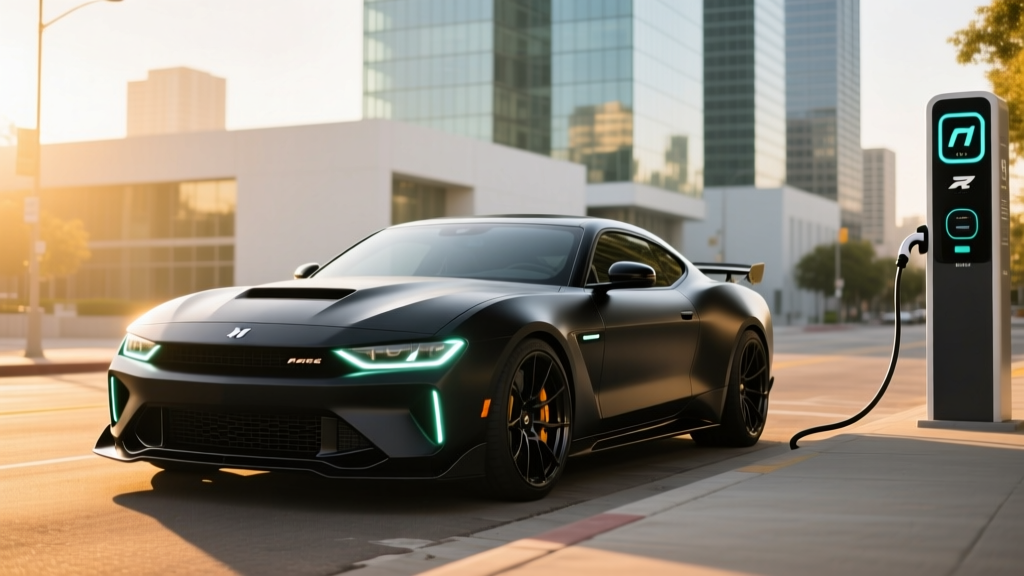
There is no vehicle officially badged "Hellcat" in Dodge's 2026 lineup. The supercharged 6.2L V8 Hellcat engine was discontinued after the 2023 model year. What Dodge offers instead is the 2026 Dodge Charger Daytona — a battery-electric muscle car available in R/T and Scat Pack trims. The Scat Pack, with its all-wheel-drive dual-motor setup producing up to 670 horsepower and a 0–60 mph time of 3.3 seconds, is the closest thing to a Hellcat successor in the electric era. The base MSRP for the Scat Pack starts around $73,585, and it carries an EPA-estimated range of up to 260 miles.
What the Dodge Charger Daytona EV Actually Offers
Dodge positioned the Charger Daytona as a spiritual successor to its muscle car legacy, not a one-to-one Hellcat replacement. The 2026 lineup carries over from the 2024 launch with two primary trims:
- R/T (496 hp, 404 lb-ft): EPA range up to 317 miles, 0–60 mph in approximately 4.7 seconds. Starting around $61,590.
- Scat Pack (670 hp, 627 lb-ft): EPA range up to 260 miles, 0–60 mph in 3.3 seconds. Starting around $73,585.
Both trims use a 100.5 kWh (gross) lithium-ion NMC battery pack with approximately 92 kWh usable. The 400-volt architecture supports DC fast charging at up to 150 kW, yielding a 10–80% charge in roughly 27 minutes. Level 2 AC charging tops out at 11 kW, which means a full overnight replenishment takes about 9–10 hours on a 48-amp home charger.
| Spec | R/T | Scat Pack |
|---|---|---|
| Horsepower | 496 hp | 670 hp |
| Torque | 404 lb-ft | 627 lb-ft |
| 0–60 mph | ~4.7 sec | 3.3 sec |
| EPA Range | 317 mi | 260 mi |
| Battery (usable) | ~92 kWh (NMC) | |
| DC Fast Charge (peak) | 150 kW | |
| 10–80% DCFC Time | ~27 min | |
| Level 2 (AC) | 11 kW (~10 hr full) | |
| Drivetrain | AWD (dual motor) | |
| Base MSRP | $61,590 | $73,585 |
Real-World Range Expectations
The Scat Pack's 260-mile EPA figure assumes mixed driving in moderate temperatures. In real-world highway testing at 70–80 mph, expect closer to 220–240 miles. In cold weather (below 30°F), range can drop 20–30%, putting realistic winter range at roughly 180–210 miles. The Charger Daytona does not currently feature a heat pump, meaning cabin heating draws directly from the traction battery — a meaningful efficiency penalty in northern climates.
Electric Muscle vs. Gas Hellcat: By the Numbers
For buyers cross-shopping the last-generation Challenger SRT Hellcat (2023 final model year) against the Charger Daytona Scat Pack, the comparison reveals genuine trade-offs — not a clean win for either side.
| Metric | 2023 Hellcat (Redeye Widebody) | 2026 Daytona Scat Pack |
|---|---|---|
| Horsepower | 797 hp | 670 hp |
| 0–60 mph | 3.4 sec | 3.3 sec |
| Quarter Mile | 10.8 sec | ~11.5 sec (est.) |
| Fuel / Energy | 13 MPG combined (premium) | ~78 MPGe combined |
| Range / Tank | ~270 mi (18.5-gal tank) | 260 mi (EPA) |
| Refuel / Recharge Time | ~5 min (gas station) | ~27 min (10–80% DCFC) |
| "Fuel" Cost per Mile | ~$0.28 (at $4.00/gal premium) | ~$0.05–$0.12 (home vs. public) |
| Annual Fuel/Energy (12k mi) | ~$3,360 | ~$600–$1,440 |
| MSRP (base) | ~$89,990 (2023) | $73,585 |
The Charger Daytona Scat Pack actually matches or beats the Hellcat Redeye to 60 mph, thanks to instant electric torque and all-wheel-drive launch grip. Where it falls short is top-end power (670 hp vs. 797 hp) and the visceral experience — Dodge added a "Fratzonic" synthetic exhaust system to simulate engine sound, but it's a speaker-based emulation, not a mechanical rumble. On the cost side, the Daytona Scat Pack undercuts the Hellcat's last MSRP by over $16,000 and slashes per-mile energy cost dramatically.
Real Ownership Costs: What You'll Actually Spend
The sticker price is only the start. Here's a five-year ownership cost projection for the Scat Pack, assuming 12,000 miles per year and a mix of 80% home charging / 20% public DC fast charging.
| Category | Estimated Cost | Notes |
|---|---|---|
| Purchase Price | $73,585 | Before options, destination, taxes |
| Federal Tax Credit (§30D) | $0–$7,500 | Subject to battery sourcing, income caps, MSRP limits — see IRS rules |
| Home Charger Install (Level 2) | $800–$2,200 | 48A hardwired; panel upgrade may add $1,500–$3,000 |
| Energy (5 years, 60k mi) | $2,800–$5,500 | Depends on local electricity rates and public charging share |
| Maintenance (5 years) | $1,200–$2,000 | No oil changes; tires, cabin filter, brake fluid, wipers |
| Insurance (annual avg.) | $2,800–$4,200/yr | High-performance EV; varies by ZIP, driving record |
| Tires (5 years) | $1,800–$3,000 | Performance rubber wears faster under 670 hp; expect 20–30k mi per set |
A few things to flag for first-time EV buyers eyeing this car:
- Federal tax credit eligibility is not guaranteed. Under current IRS §30D rules, the vehicle must meet critical-mineral and battery-component sourcing thresholds, the buyer must fall under income caps ($150k single / $300k joint MAGI), and the MSRP must not exceed $55,000 for sedans. At $73,585 base, the Scat Pack exceeds the sedan MSRP cap — meaning the new-vehicle §30D credit likely does not apply. Always verify current rules at irs.gov before counting on a credit.
- Insurance premiums run high. A 670-hp AWD coupe with a $73k+ price tag will carry insurance costs comparable to or exceeding the old Hellcat. Get quotes before committing.
- Tire costs are real. Heavy EVs with big torque eat through performance tires. Budget for at least one replacement set within five years.
Charging Reality: Home, Public, and Road Trips
The Charger Daytona's 150 kW peak DC fast-charge rate is modest by 2026 standards — competitors like the Hyundai Ioniq 5 and Porsche Taycan charge at 250–320 kW. This matters for road trips.
| Level | Power | Approx. Miles Added per Hour |
|---|---|---|
| Level 1 (120V) | ~1.4 kW | ~4–5 mi/hr |
| Level 2 (240V, 48A) | ~11 kW | ~33–38 mi/hr |
| DC Fast Charge | Up to 150 kW (peak) | ~10–80% in ~27 min |
Home charging is essential for this car. Without Level 2 access at home, owning a high-performance EV becomes a significant inconvenience. Public DC fast charging at 150 kW means a typical road-trip stop (10–80%) takes roughly 27 minutes — acceptable, but noticeably longer than vehicles on 800V architectures that accomplish the same in 15–18 minutes.
The Charger Daytona uses the CCS1 connector. As of 2026, Dodge has not yet transitioned to NACS (Tesla's connector), though Stellantis has signaled future adoption. For now, you'll rely on Electrify America, EVgo, and ChargePoint networks for DC fast charging. Check fueleconomy.gov for the official efficiency and range data.
Common Misconceptions About the Electric Hellcat
| Myth | Fact |
|---|---|
| "There's a 2026 Dodge Hellcat EV." | The Hellcat nameplate is retired. The Charger Daytona Scat Pack (670 hp) is the electric successor. |
| "It qualifies for the $7,500 federal tax credit." | The Scat Pack's $73,585 MSRP exceeds the §30D sedan cap of $55,000. The credit is very likely unavailable for this trim. |
| "Electric muscle cars can't do burnouts." | The Daytona includes a "PowerShot" feature and launch control. Dodge also engineered a line-lock front brake feature for burnouts — electric torque makes them easier, not harder. |
| "The range is too low for daily driving." | 260 miles covers the average American's daily round-trip commute (roughly 37 miles per DOT data) with ample margin. The issue is road trips, not commuting. |
| "EVs don't need maintenance." | No oil changes, yes. But tires, brake fluid, cabin filters, coolant checks, and 12V battery replacement still apply. Budget $1,200–$2,000 over five years. |
Decision Framework: Is the Charger Daytona Right for You?
Choose the Charger Daytona Scat Pack if:
- You want near-Hellcat acceleration (3.3 sec 0–60) with dramatically lower per-mile energy costs.
- You have reliable Level 2 home charging (or can install it).
- Your daily driving is under 200 miles and road trips are occasional.
- You're okay with a synthetic exhaust note instead of a supercharged V8 howl.
- You accept that the federal tax credit likely won't apply at this price point.
Look elsewhere if:
- You need 300+ miles of real-world range for frequent long-distance travel — consider the Tesla Model S or Lucid Air.
- Fast DC charging (sub-20-min stops) is a priority — vehicles on 800V platforms (Ioniq 5, Taycan, EV6) charge significantly faster.
- You want a true 700+ hp experience — the used Hellcat market or the gas-only Dodge Charger SIXPACK (Hurricane I6, 550 hp) may serve better.
- You rely on street parking with no charging access — a PHEV or HEV is a more practical electrified option.
Battery Warranty and Longevity
Stellantis provides an 8-year / 100,000-mile warranty on the Charger Daytona's high-voltage battery pack, covering defects and capacity loss below 70% of original capacity. This is the industry-standard federal mandate for emissions-related components and aligns with what Tesla, Hyundai, and Ford offer.
The NMC chemistry in the Daytona prioritizes energy density and power delivery over the extreme cycle life of LFP (lithium iron phosphate) batteries. For a performance-oriented vehicle, this is the expected trade-off. Based on current degradation data from similar NMC packs, expect roughly 8–12% capacity loss over the first 100,000 miles under normal use. Frequent DC fast charging and regular 100% state-of-charge sessions will accelerate degradation — aim for 80% daily charge limits and precondition the battery before fast charging to minimize stress.
Frequently Asked Questions
Will Dodge ever bring back the Hellcat name on an EV?
As of 2026, Dodge has not announced any plans to badge an EV with the Hellcat name. The brand is using Scat Pack and R/T heritage designations for its electric muscle lineup. Stellantis executives have hinted that iconic nameplates could return, but nothing is confirmed.
How does the Charger Daytona handle in snow and rain?
The all-wheel-drive dual-motor setup provides strong traction in adverse conditions. However, the car's performance tire compound (available with summer rubber) can reduce cold-weather grip. If you live in a region with real winters, plan for a dedicated winter tire set.
Can I tow with the Charger Daytona EV?
The Charger Daytona is not rated for towing. If you need an electric vehicle with towing capability, look at the Ford F-150 Lightning, Rivian R1S, or Hyundai Ioniq 5 (with the tow package).
What's the actual cost to charge at home vs. a gas Hellcat?
At the U.S. average residential electricity rate of roughly $0.16/kWh, fully charging the ~92 kWh usable battery costs about $14.70 — yielding 260 miles for under $15. A gas Hellcat at 13 MPG combined on $4.00/gal premium fuel costs roughly $80 to cover the same 260 miles. Over 12,000 annual miles, that's approximately $680 in electricity vs. $3,700 in fuel — a savings of roughly $3,000 per year.
Does the Charger Daytona qualify for any state incentives?
State-level incentives vary widely and change frequently. Some states offer rebates, HOV lane access, or reduced registration fees for EVs. Check your state's energy or DMV website, or consult fueleconomy.gov's incentive tool for current local programs. Do not rely on third-party summaries — rules shift yearly.