Quick Answer: Heating an 800 Sq Ft Garage With an EV Inside
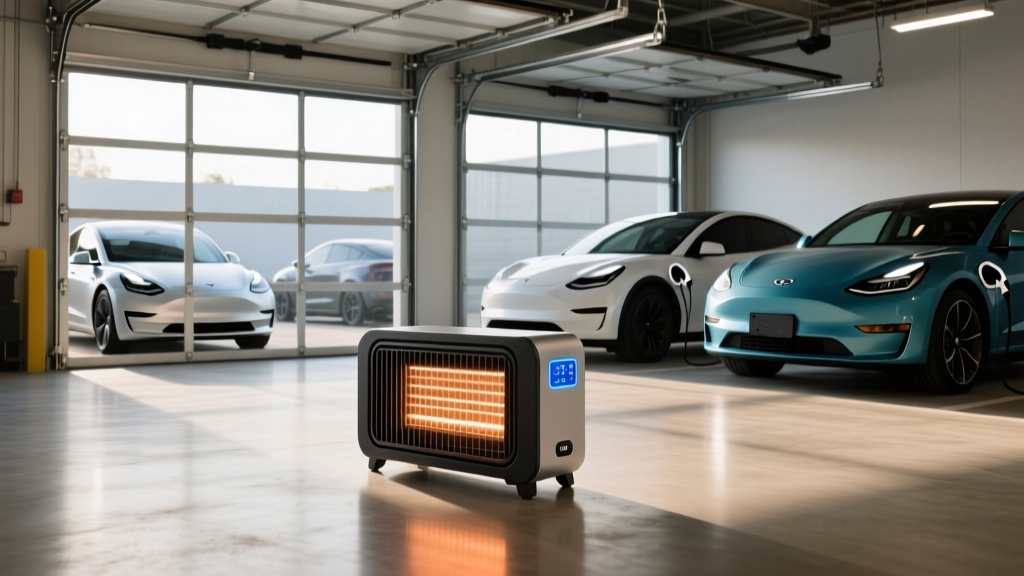
Short answer: For an 800 sq ft garage (roughly a 2-car garage), you'll typically need a 30,000–45,000 BTU (9–13 kW) electric heater depending on insulation and climate zone. Running a 10 kW heater for 8 hours nightly costs roughly $9.60–$14.40 per night at the 2026 US average electricity rate of $0.16–$0.18/kWh. If you're also Level 2 charging an EV in that same garage, your electrical panel needs to support both loads simultaneously — typically requiring a 200-amp panel minimum, and possibly a 400-amp service upgrade in older homes.
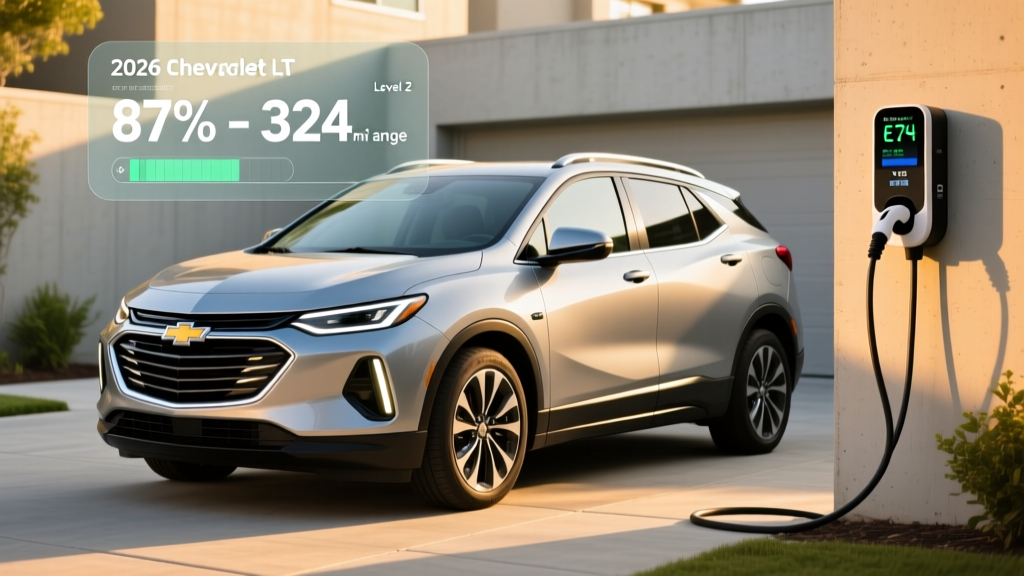
Garage heating isn't just a comfort question for EV owners — it directly affects your battery's State of Health (SoH), charging speed, and daily usable range. Cold-soaked batteries charge slower, lose range, and degrade faster over time. This guide breaks down the exact heater sizing, electrical requirements, cost implications, and EV-specific considerations for keeping your 800 sq ft garage warm and your EV performing optimally in winter.
Why Garage Temperature Matters for EV Battery Health
Lithium-ion batteries — whether NMC (nickel manganese cobalt) or LFP (lithium iron phosphate) — operate best between 68°F and 77°F (20°C–25°C). When ambient temperatures drop below freezing, three things happen to your EV:
- Range loss: Expect 20–40% range reduction at 20°F compared to EPA estimates, according to fueleconomy.gov. A 310-mile EPA-rated EV may deliver only 185–250 real-world miles in deep cold.
- Charging slowdown: DC fast charging speeds can drop 50% or more when a battery is cold-soaked. A vehicle that normally peaks at 240 kW and charges 10–80% in 18 minutes may take 35–45 minutes if parked outside overnight in sub-freezing temps.
- Accelerated degradation: Repeatedly charging a freezing-cold battery stresses the cells. Over 5–8 years, this can mean 3–5% additional capacity loss compared to a garage-kept vehicle.
Keeping your garage at a minimum of 45°F–55°F (not necessarily room temperature) is enough to prevent cold-soak penalties. You don't need to heat the space to 72°F — that would be wasteful. The goal is keeping the battery above the threshold where charging and range are compromised.
Sizing an Electric Heater for 800 Sq Ft: The Real Numbers
The general rule of thumb is 10 watts per square foot for a moderately insulated garage in a cold climate (Zone 5–7). But garages vary enormously in insulation quality, ceiling height, and air leakage. Here's how it breaks down:
| Insulation Level | Watts/Sq Ft | Total kW Needed | BTU Equivalent | Estimated Heater Cost |
|---|---|---|---|---|
| Well-insulated (R-19+ walls, R-30+ ceiling, sealed door) | 7–8W | 5.6–6.4 kW | 19,000–22,000 BTU | $300–$600 |
| Moderate (R-13 walls, R-19 ceiling, some gaps) | 10W | 8 kW | 27,000 BTU | $400–$800 |
| Poor (uninsulated or minimal, drafty garage door) | 13–15W | 10.4–12 kW | 35,000–41,000 BTU | $500–$1,200 |
Heater types to consider:
- Electric unit heater (forced air): Wall- or ceiling-mounted, 5–10 kW, $400–$900. Best for even heating of the full space. Requires a 240V dedicated circuit (30–50 amp).
- Infrared radiant panel: Heats objects (your car) directly rather than air, 3–6 kW, $200–$600. More efficient if you only need to keep the EV warm, not the whole garage air.
- Mini-split heat pump: 12,000–18,000 BTU unit, $1,200–$3,000 installed. Most efficient option — delivers 2–3x the heat per kWh compared to resistance heating. Requires 240V, 15–20 amp circuit.
For EV owners, the mini-split heat pump is usually the smartest investment. A 1.5-ton (18,000 BTU) mini-split drawing roughly 1.5–2 kW can maintain 50°F in a moderately insulated 800 sq ft garage even when it's 10°F outside — using 75% less electricity than a 8 kW resistance heater.
Electrical Panel Reality: Can Your Home Handle Heater + EV Charger?
This is the question most EV buyers overlook until their electrician shows up. Here's the math:
| Equipment | Voltage | Amperage | kW Draw |
|---|---|---|---|
| Level 2 EV charger (48A continuous) | 240V | 48A (60A breaker) | 11.5 kW |
| Electric unit heater (8 kW) | 240V | 33A (40A breaker) | 8.0 kW |
| Combined simultaneous load | — | — | 19.5 kW |
A standard 100-amp main panel provides roughly 24 kW of total capacity — but that must serve your entire home (HVAC, water heater, stove, dryer, lighting, outlets). Adding 19.5 kW of garage loads alone would likely exceed available headroom.
What this means in practice:
- 100-amp panel: You'll likely need a panel upgrade to 200A ($1,500–$3,500) to run both a high-power EV charger and a large electric heater simultaneously.
- 200-amp panel: Usually sufficient, but an electrician should perform a load calculation per NEC Article 220. You may need to charge at 32A (7.7 kW) instead of 48A to leave headroom for the heater.
- Smart load management: Devices like the Emporia Smart Load Center or SPAN panel can dynamically allocate power — running the heater when the EV isn't charging and vice versa. This avoids a panel upgrade entirely in many homes ($500–$2,000 for the controller).
Always consult a licensed electrician for final specifications. The numbers above are planning estimates — your home's actual wiring, service entrance, and local code requirements determine what's possible.
Cost Breakdown: Heating Your Garage vs. Cold-Weather EV Penalties
Here's the ownership math that actually matters. We'll compare the cost of heating an 800 sq ft garage all winter against the real-world costs you absorb by not heating it.
| Factor | Heated Garage (50°F) | Unheated / Outdoor Parking |
|---|---|---|
| Heating electricity cost (mini-split, 2 kW avg, 10 hrs/night) | $384–$432/season | $0 |
| Heating electricity cost (resistance heater, 8 kW, 8 hrs/night) | $1,843–$2,074/season | $0 |
| Winter range loss (310-mi EPA vehicle) | ~5% loss (295 mi usable) | ~30% loss (217 mi usable) |
| Extra public DC fast charging needed (cold-soak penalty) | Minimal | +$180–$320/season (longer sessions, more stops) |
| Long-term battery degradation (5-year projection) | ~8–10% capacity loss | ~12–15% capacity loss |
The mini-split heat pump pays for itself in one to two winters if you factor in avoided public charging costs and preserved battery health. The resistance heater is harder to justify economically unless your garage is extremely well-insulated.
For context on EV vs gas ownership costs in cold climates: a gas vehicle idling in a cold driveway gets roughly 12–22% worse fuel economy in short-trip winter driving. An EV with a heated garage avoids most of its cold-weather efficiency penalty, narrowing the winter cost gap between EVs and gas cars.
Common Misconceptions About Garage Heating and EVs
| Myth | Fact |
|---|---|
| "You need to keep the garage at 72°F for the battery." | Ambient temps of 45–55°F are sufficient to prevent cold-soak. The battery management system (BMS) handles the rest during charging. |
| "EV batteries don't degrade in cold weather." | Cold doesn't directly degrade cells, but charging a freezing battery causes lithium plating — a permanent capacity-loss mechanism. Garage heating prevents this. |
| "I can just use a space heater on a regular outlet." | A 120V space heater maxes out at ~1.5 kW (5,100 BTU). That's not enough for 800 sq ft. You need 240V dedicated circuits for adequate heating. |
| "Preconditioning replaces garage heating." | Preconditioning warms the battery before driving — it doesn't help with overnight charging speed or long-term degradation from cold-soaking. |
| "My home warranty covers battery degradation from cold." | Most EV battery warranties (8 years/100,000 miles, 70% capacity retention threshold per IRS §30D compliance standards) cover manufacturing defects, not environmental damage. Keeping your battery in a temperate environment protects your warranty claim. |
Decision Framework: What's Right for Your Situation
Choose a mini-split heat pump if:
- You park your EV in the garage nightly and charge at home
- You live in USDA Zone 5 or colder (sustained sub-30°F winters)
- You have a 200A electrical panel with available capacity
- You plan to keep the EV 5+ years (battery health ROI)
Choose an electric unit heater (forced air) if:
- Your garage is well-insulated (R-19+ walls) and you want fast warm-up
- You use the garage as a workshop and need full-space comfort
- You can accommodate a 40–50 amp 240V dedicated circuit
Choose infrared radiant panels if:
- You only need to keep the EV warm, not the entire garage air volume
- Your garage is poorly insulated and heating all the air is impractical
- You want the lowest operating cost and don't need human comfort
Skip active heating (use battery preconditioning only) if:
- You live in Zone 4 or warmer (rare sub-20°F nights)
- You charge at work or use DC fast charging exclusively
- Your electrical panel has no upgrade path and you're renting
- You plan to sell the EV within 2–3 years
Frequently Asked Questions
Can I run my EV charger and garage heater on the same circuit?
No. NEC code requires each to have its own dedicated circuit. A 48A Level 2 charger needs a 60A breaker on its own circuit; a 8 kW heater needs a 40A breaker on a separate circuit. Your electrician will pull two dedicated 240V lines from your panel.
Will a heated garage affect my EV's battery warranty?
Positively, yes. Battery warranties typically guarantee 70% capacity retention over 8 years/100,000 miles. Keeping the battery in a temperate environment reduces stress and helps you stay well within warranty thresholds. There's no warranty penalty for heating your garage.
How much does it cost to install a 240V circuit for a garage heater?
Expect $400–$1,200 for a dedicated 240V circuit installation, depending on the distance from your panel, whether conduit is needed, and local labor rates. If a panel upgrade from 100A to 200A is required, add $1,500–$3,500. Always get quotes from at least two licensed electricians.
Is a heat pump heater effective in very cold garages?
Modern cold-climate mini-splits (from Mitsubishi, Daikin, or Fujitsu) maintain full heating capacity down to -5°F and partial capacity to -15°F. For a garage maintained at 50°F, even a standard mini-split will operate efficiently in any US climate zone.
Does the federal EV tax credit cover garage heater installation?
No. The IRS §30D clean vehicle credit covers the vehicle itself (up to $7,500, subject to MSRP caps, buyer income limits, and battery sourcing requirements). However, the separate §25C Energy Efficient Home Improvement Credit may cover some insulation or heat pump upgrades — check current-year IRS guidance or consult a tax professional.
What's the cheapest way to protect my EV battery from cold without a heater?
Three zero-cost strategies: (1) Plug in your EV overnight even on a 120V Level 1 trickle — the BMS will use grid power to maintain battery temperature. (2) Schedule preconditioning 30 minutes before departure using your EV's app. (3) Park in the most sheltered spot available, even an unheated garage — ambient wind protection alone reduces cold-soak by 5–10°F.