Quick Answer: Is the Electric Grand Cherokee Right for You?
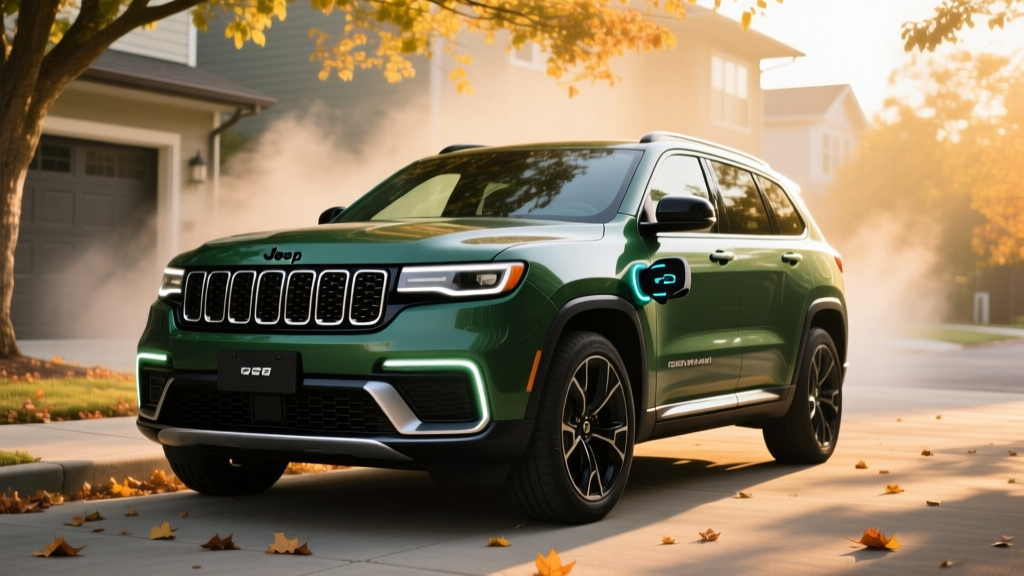
The 2026 Jeep Grand Cherokee 4xe is a plug-in hybrid (PHEV), not a fully electric vehicle. It delivers 26 miles of EPA-rated electric-only range and 56 MPGe combined when using both battery and gas. If your daily commute is under 25 miles and you can charge at home, you'll drive mostly on electricity. For longer trips, the 2.0L turbo hybrid powertrain kicks in, eliminating range anxiety. Starting around $61,660 MSRP (before incentives), the 4xe targets buyers who want electric daily driving without sacrificing Jeep's off-road capability or towing capacity. It qualifies for a up to $3,750 federal tax credit under current §30D rules — not the full $7,500 — due to battery sourcing requirements.
Range, Battery, and Efficiency: What the Numbers Actually Mean
The Grand Cherokee 4xe pairs a 17.3 kWh lithium-ion battery pack (NMC chemistry) with a 2.0L turbocharged inline-4 engine and two electric motors. Combined system output is 375 horsepower and 470 lb-ft of torque, delivering a 0–60 mph time of approximately 6.0 seconds.
| Spec | Value |
|---|---|
| EPA Electric Range | 26 miles |
| EPA MPGe (combined) | 56 MPGe |
| Gas-Only MPG (combined) | 23 MPG |
| Battery Capacity | 17.3 kWh (NMC) |
| Level 2 Charge Time (0–100%) | ~2 hours at 7.2 kW |
| Total System Range | ~440 miles |
| 0–60 mph | 6.0 seconds |
| Horsepower | 375 hp |
| Towing Capacity | 6,000 lbs |
| Base MSRP (2026) | $61,660 |
Real-World Range Reality Check
The EPA's 26-mile electric estimate assumes moderate temperatures and mixed driving. In real-world testing, expect 20–24 miles in cold weather (below 40°F) and 22–26 miles in mild conditions. Highway-only driving at 75+ mph reduces electric range to roughly 18–20 miles. The battery's thermal management system helps, but NMC chemistry is temperature-sensitive — preconditioning while plugged in helps preserve range in winter.
Once the battery depletes, the Grand Cherokee 4xe operates as a conventional hybrid, returning 23 MPG combined. That's a modest improvement over the gas-only V6 Grand Cherokee's 22 MPG combined, but the real efficiency gain happens when you're running on electricity. According to fueleconomy.gov, the 4xe's 56 MPGe rating reflects the energy equivalence of electricity and gasoline combined.
Charging at Home: What You'll Actually Need
The Grand Cherokee 4xe charges via a J1772 connector (Level 2) and does not support DC fast charging. This is typical for PHEVs with smaller battery packs — the 17.3 kWh battery doesn't need 150 kW speeds.
| Charging Level | Power | Time (0–100%) | Use Case |
|---|---|---|---|
| Level 1 (120V outlet) | 1.4 kW | ~12 hours | Overnight top-up, occasional use |
| Level 2 (240V, 32A) | 7.2 kW | ~2 hours | Daily home charging |
| DC Fast Charging | Not supported | N/A | N/A |
Most 4xe owners charge at home using a Level 2 wallbox. Installation costs vary widely based on your electrical panel's capacity and distance from the panel to your parking spot. Here's a realistic breakdown:
| Item | Cost Range |
|---|---|
| Level 2 Charger (hardware) | $400–$700 |
| Electrician labor (standard install) | $800–$1,500 |
| Permit fees | $50–$200 |
| Panel upgrade (if needed, 100A→200A) | $1,500–$3,000 |
| Total (no panel upgrade) | $1,250–$2,400 |
| Total (with panel upgrade) | $2,750–$5,400 |
If you can't install a home charger — say you live in an apartment or park on the street — the 4xe becomes less compelling. Level 1 charging from a standard 120V outlet takes 12 hours for a full charge, which may not replenish the battery if you drive more than 20 miles daily. Public Level 2 chargers are an option, but relying on them for daily PHEV charging is inconvenient and often more expensive than home electricity.
Cost Comparison: Grand Cherokee 4xe vs. Gas vs. Hybrid
Let's compare the 2026 Grand Cherokee 4xe to its gas-only sibling and a comparable three-row SUV. We'll assume 15,000 miles per year, $3.50/gallon gas, and $0.14/kWh electricity (national averages).
| Factor | Grand Cherokee 4xe | Grand Cherokee V6 (Gas) | Toyota Highlander Hybrid |
|---|---|---|---|
| Base MSRP | $61,660 | $42,095 | $40,970 |
| Federal Tax Credit | Up to $3,750 | $0 | $0 |
| Effective Price | ~$57,910 | $42,095 | $40,970 |
| Annual Fuel/Energy Cost | ~$1,650 | ~$2,385 | ~$1,785 |
| 5-Year Fuel/Energy Cost | $8,250 | $11,925 | $8,925 |
| 5-Year Total (Vehicle + Fuel) | ~$66,160 | ~$54,020 | ~$49,895 |
| Maintenance (5-year est.) | ~$3,200 | ~$4,100 | ~$3,500 |
The 4xe saves roughly $735 per year in fuel compared to the gas V6 — but only if you charge regularly. If you rarely plug in, the 4xe's 23 MPG combined is barely better than the V6's 22 MPG, and you've paid a $19,565 premium for the powertrain. The math works when:
- You charge daily and drive under 30 miles on most days
- Electricity costs under $0.18/kWh in your area
- You keep the vehicle 5+ years to recoup the upfront premium
Maintenance costs are lower on the 4xe because regenerative braking reduces brake wear, and the engine runs less frequently. However, PHEV powertrains are more complex — you have both an internal combustion engine and electric motors, which means more potential failure points long-term. Jeep's 5-year/60,000-mile powertrain warranty and 8-year/100,000-mile hybrid battery warranty provide some protection.
Federal Tax Credit: What You'll Actually Get
Under current IRS §30D rules, the Grand Cherokee 4xe qualifies for a partial federal tax credit of up to $3,750, not the full $7,500. Here's why:
- MSRP Cap: The 4xe's base price is under the $80,000 SUV cap ✓
- Income Limits: Your modified AGI must be under $150,000 (single) or $300,000 (joint) ✓
- Battery Sourcing: The 4xe meets critical mineral requirements but may not meet all battery component sourcing rules, limiting the credit to $3,750
- Point-of-Sale Transfer: You can transfer the credit to the dealer at purchase, reducing your out-of-pocket cost immediately
The credit amount can change based on Treasury Department sourcing determinations, which update periodically. Always verify current eligibility on IRS.gov before purchasing. State incentives vary widely — California's CVRP program, for example, may offer additional rebates, while other states have no PHEV incentives.
Real-World Ownership: What First-Time PHEV Buyers Should Know
Owning a plug-in hybrid is different from owning a full EV or a gas car. Here's what actually matters:
Charging discipline is everything. The 4xe's efficiency advantage disappears if you don't plug in. Set a routine: plug in when you get home, charge overnight, start each day with a full 26-mile battery. If you forget or skip charging for weeks, you're just driving a heavier, more expensive gas Grand Cherokee.
Cold weather cuts electric range. Expect 15–20% range loss in freezing temperatures. The 4xe's battery thermal management helps, but NMC chemistry is less cold-tolerant than LFP. Preconditioning while plugged in mitigates this — schedule your departure time in the Uconnect app, and the 4xe will warm the battery and cabin using grid power, preserving range.
Towing reduces electric range dramatically. The 4xe can tow 6,000 lbs, but expect electric range to drop to 10–15 miles when towing a trailer. The gas engine will do most of the work. This is fine for occasional towing, but if you tow frequently, the PHEV premium may not pay off.
Insurance costs are higher. PHEVs and EVs typically cost 10–15% more to insure than gas equivalents due to higher repair costs and battery replacement risk. Get quotes before buying — the annual premium difference may be $200–$400.
Off-road capability is real. The 4xe's Trailhawk trim includes Jeep's Quadra-Trac II 4WD system, skid plates, and 10.9 inches of ground clearance. You can drive in electric-only mode on trails (silent, zero-emission crawling), which is genuinely useful for noise-sensitive areas. The battery is mounted under the rear seat, protected from impacts.
Decision Framework: Should You Buy the Grand Cherokee 4xe?
Choose the Grand Cherokee 4xe if:
- Your daily commute is under 30 miles round-trip
- You can install a Level 2 charger at home
- You want electric daily driving but need 400+ mile range for road trips
- You need 6,000-lb towing capacity and off-road capability
- You plan to keep the vehicle 5+ years
- You qualify for the $3,750 federal tax credit
Choose the gas Grand Cherokee or a different vehicle if:
- You can't charge at home or work
- Your daily driving exceeds 40 miles consistently
- You're on a tight budget (the 4xe premium is $19K+ over the gas V6)
- You want a full EV with 250+ mile range (consider the Rivian R1S or Tesla Model X)
- You rarely drive — the fuel savings won't offset the higher purchase price
Common Misconceptions About the Electric Grand Cherokee
| Myth | Fact |
|---|---|
| "The electric Grand Cherokee is a full EV with 300-mile range" | It's a PHEV with 26 miles electric-only range. Jeep does not currently sell a fully electric Grand Cherokee. |
| "You'll save $7,500 on taxes" | The 4xe qualifies for up to $3,750 under current §30D rules, subject to income and sourcing requirements. |
| "It charges at Tesla Superchargers" | The 4xe uses J1772 for Level 2 charging and has no DC fast-charging capability. Superchargers are for full EVs. |
| "The battery will need replacement in 5 years" | Jeep warranties the hybrid battery for 8 years/100,000 miles. PHEV batteries typically last 10–15 years with minimal degradation due to smaller cycle depth. |
| "You can't tow or go off-road with a PHEV" | The 4xe tows 6,000 lbs and offers Trailhawk off-road trim with 4WD, skid plates, and electric-only trail mode. |
Frequently Asked Questions
Is there a fully electric Jeep Grand Cherokee?
No. As of 2026, Jeep offers the Grand Cherokee 4xe as a plug-in hybrid only. Stellantis (Jeep's parent company) has announced plans for more EVs, but a fully electric Grand Cherokee is not currently available or officially confirmed for production.
How much does it cost to charge the Grand Cherokee 4xe at home?
A full charge from 0–100% uses about 17.3 kWh. At the national average of $0.14/kWh, that's $2.42 per charge. If you charge daily and drive 25 miles on electricity, your cost is roughly $0.10 per mile — about 40% cheaper than gas at $3.50/gallon and 23 MPG.
Can I drive the Grand Cherokee 4xe on electricity only?
Yes, for up to 26 miles (EPA) at speeds up to 87 mph. Beyond that range or at higher speeds, the gas engine engages automatically. You can select "Electric" mode via the Uconnect system to prioritize battery power.
What happens if the battery dies or degrades?
Jeep's hybrid battery warranty covers 8 years/100,000 miles with a capacity retention threshold (typically 60–70% of original capacity). If the battery degrades below that threshold, Jeep will repair or replace it. Out-of-warranty replacement costs $8,000–$12,000, but PHEV batteries rarely fail catastrophically — gradual degradation is more common.
Is the Grand Cherokee 4xe worth it over the gas version?
It depends on your driving patterns. If you charge daily and drive under 30 miles, you'll save $700–$800 annually in fuel and enjoy electric acceleration. But the $19,565 price premium takes 24+ years to recoup through fuel savings alone. The 4xe makes sense if you value electric driving, want the tax credit, and plan to keep the vehicle long-term — not purely for economics.