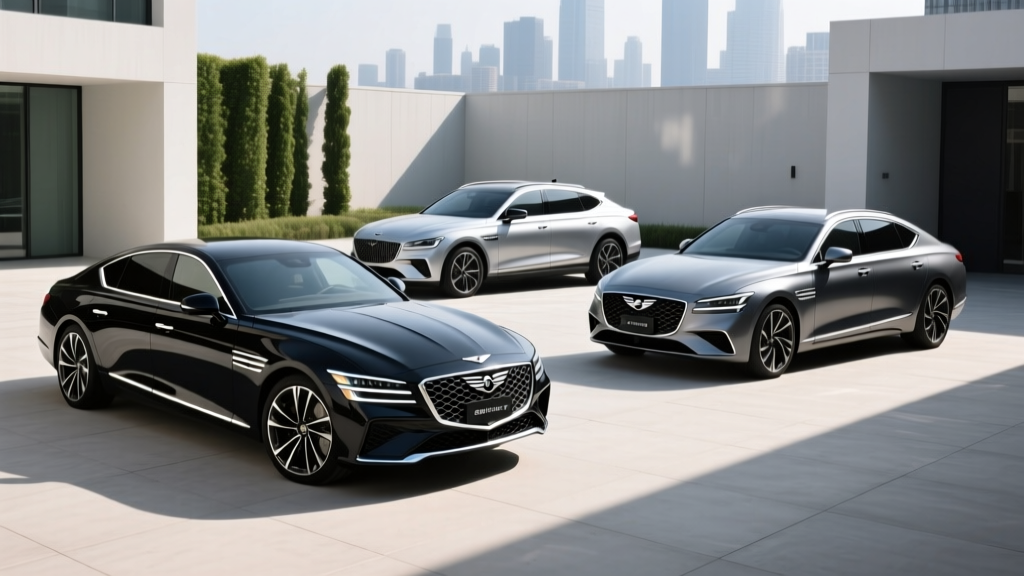
Quick Answer: Genesis currently offers three fully electric vehicles for the 2026 model year: the GV60 (compact luxury crossover, EPA 264–294 mi, from ~$53,350), the Electrified G80 (executive sedan, EPA 282 mi, from ~$80,300), and the Electrified GV70 (mid-size luxury SUV, EPA 236 mi, from ~$67,200). All three use an 800V architecture capable of 250 kW DC fast charging (10–80% in ~18 minutes) and come with Genesis's 10-year/100,000-mile powertrain warranty. Federal §30D tax credit eligibility varies by model, sourcing, and buyer income — check current IRS rules before purchase.
The Electric Genesis Lineup at a Glance
Genesis has carved a deliberate path into the luxury EV space. Rather than building dedicated EV platforms from scratch like Tesla or Hyundai's E-GMP vehicles (though the GV60 does share E-GMP), Genesis electrified its existing luxury lineup while maintaining the brand's hallmark refinement. The result is a trio of EVs that prioritize cabin quietness, ride comfort, and design over outright performance numbers — though the dual-motor variants are genuinely quick.
| Spec | GV60 (AWD) | Electrified G80 (AWD) | Electrified GV70 (AWD) |
|---|---|---|---|
| EPA Range | 264–294 mi | 282 mi | 236 mi |
| Battery (usable) | 77.4 kWh (NMC) | 87.2 kWh (NMC) | 77.4 kWh (NMC) |
| Horsepower | 314–429 hp | 365 hp | 429 hp (Boost) |
| 0–60 mph | 4.5–3.9 sec | 4.9 sec | 4.2 sec (Boost) |
| Max DC Charge | 250 kW | 350 kW capable | 250 kW |
| 10–80% DCFC | ~18 min | ~22 min | ~18 min |
| Level 2 Rate | 10.9 kW | 10.9 kW | 10.9 kW |
| MPGe (combined) | 90–95 MPGe | 89 MPGe | 85 MPGe |
| Base MSRP (2026) | ~$53,350 | ~$80,300 | ~$67,200 |
| Warranty | 10 yr / 100k mi | 10 yr / 100k mi | 10 yr / 100k mi |
All three models use NMC (nickel manganese cobalt) lithium-ion cells. This chemistry prioritizes energy density — important for achieving competitive range in luxury vehicles packed with heavy features — but it means you should avoid routinely charging to 100% for daily driving. Set your charge limit to 80% for daily use and reserve 100% for road trips. Genesis's battery management system includes a buffer to protect longevity, and the 10-year/100,000-mile warranty covers the battery pack against capacity loss below 70%.
Real-World Range vs. the EPA Sticker
EPA range estimates are standardized laboratory tests. Your actual range depends on driving style, terrain, temperature, and climate control usage. Here's what to expect from each electric Genesis model in practice:
GV60: EPA 294 mi (RWD) / 264 mi (AWD Performance). Expect 240–270 mi on highway road trips at 70–75 mph. In freezing temperatures (below 32°F), plan for 190–230 mi due to battery chemistry and cabin heating demand. The heat pump (standard on all trims) helps mitigate cold-weather losses compared to resistive heaters.
Electrified G80: EPA 282 mi. Real-world highway: 240–260 mi. Cold weather: 200–230 mi. The G80's larger 87.2 kWh pack provides a useful buffer, but the sedan's weight (~5,000 lbs) works against efficiency at sustained high speeds.
Electrified GV70: EPA 236 mi. Real-world highway: 190–215 mi. Cold weather: 160–190 mi. The GV70's boxier shape and SUV weight make it the least efficient of the three — this is the model where range planning matters most.
For context, the average American drives roughly 37 miles per day according to FHWA data. Even the Electrified GV70 handles daily commuting easily on a single charge. Range anxiety becomes relevant primarily on road trips exceeding 200 miles or in extreme cold climates where charging infrastructure is sparse.
Charging Speed and Infrastructure
Genesis's 800V electrical architecture is a genuine advantage. While many luxury competitors still use 400V systems (capping DC fast charging around 150 kW), the electric Genesis models can accept up to 250–350 kW at compatible chargers. Here's what that translates to in practice:
| Charging Level | Power | Miles Added per Hour | Typical Use |
|---|---|---|---|
| Level 1 (120V) | 1.2–1.4 kW | ~4–5 mi/hr | Emergency / overnight trickle |
| Level 2 (240V home) | 10.9 kW | ~33–38 mi/hr | Daily home charging |
| DC Fast (150 kW station) | ~130 kW sustained | ~200 mi in 20 min | Public road-trip charging |
| DC Fast (350 kW station) | ~230 kW peak | ~180 mi in 15 min | Fastest public option |
Important charging-curve reality: Peak kW ratings are not sustained across the entire session. The GV60 and Electrified GV70 hit approximately 230–240 kW between 10–40% state of charge, then taper progressively. By 70% SoC, you're typically seeing 80–100 kW, and above 85% it drops below 50 kW. This is why the 10–80% time (~18 minutes) is the meaningful metric — charging beyond 80% at a DC fast charger is rarely worth the wait.
Genesis provides access to Electrify America's network (typically 3 years of complimentary 30-minute sessions), which operates many 350 kW-capable stations. With the industry's shift toward NACS connectors, note that current Genesis models use CCS1. Adapters for Tesla Supercharger access are available and increasingly standard.
Cost Breakdown: Electric Genesis vs. Gas Equivalents
Luxury EVs carry higher sticker prices than their gas counterparts, but operating costs tell a different story. Here's a 5-year comparison between the Electrified GV70 and its gas sibling, the GV70 3.5T:
| Cost Category (5 Years) | Electrified GV70 | GV70 3.5T (Gas) |
|---|---|---|
| Purchase Price (base) | ~$67,200 | ~$53,000 |
| Estimated Federal Tax Credit | $0–$7,500* | $0 |
| Fuel / Electricity (75k mi) | ~$3,800–$5,200 | ~$9,400 |
| Maintenance | ~$1,200 | ~$3,500 |
| Insurance (avg) | ~$12,500 | ~$10,800 |
| 5-Year Depreciation (est.) | ~$28,000 | ~$22,000 |
| Total 5-Year Cost | ~$107,700–$114,700 | ~$98,700 |
*Federal §30D credit eligibility depends on battery component sourcing, critical mineral requirements, buyer income caps ($150k single / $300k joint), and MSRP limits ($80k for SUVs). Genesis models have faced sourcing challenges that affect credit eligibility — verify current status at IRS.gov before purchase.
The electrified GV70 costs roughly $9,000–$16,000 more over five years, driven primarily by the higher purchase price and steeper luxury-EV depreciation. However, if you qualify for the full $7,500 credit (applied at point of sale), can charge at home on off-peak electricity rates, and plan to keep the vehicle beyond five years, the gap narrows substantially. The Electrified G80 faces an even wider gap against the gas G80 due to its $80,000+ MSRP, which exceeds the §30D SUV/van cap of $80,000 (sedans cap at $55,000, which the G80 also exceeds).
Maintenance savings are real. EVs eliminate oil changes, transmission fluid, spark plugs, and exhaust system repairs. Brake wear is dramatically reduced thanks to regenerative braking — expect original brake pads to last 80,000+ miles. The main maintenance items are cabin air filters, wiper fluid, tire rotation, and tire replacement (EVs wear tires faster due to instant torque and heavier weight).
Tax Credits and Incentives: What Actually Applies
The federal EV tax credit landscape has tightened considerably. Here's what you need to know about §30D eligibility for electric Genesis models:
- MSRP Cap: Vans/SUVs capped at $80,000; sedans at $55,000. The Electrified G80 (~$80,300 sedan) exceeds the sedan cap. The Electrified GV70 qualifies on MSRP. The GV60 qualifies on MSRP.
- Buyer Income Cap: AGI must not exceed $150,000 (single), $225,000 (head of household), or $300,000 (joint filing).
- Battery Sourcing: Battery components must be manufactured or assembled in North America; critical minerals must be sourced from the US or FTA partners. Genesis, as a Korean manufacturer, has faced challenges meeting these thresholds — eligibility shifts periodically.
- Point-of-Sale Transfer: If eligible, you can transfer the credit to the dealer at purchase for an immediate price reduction rather than waiting for a tax refund.
- State Incentives: Vary widely — some states offer $1,000–$5,000 additional rebates. Check your state's energy office for current programs.
Always verify eligibility on the official fueleconomy.gov tax credit tool and consult a tax professional before relying on credit assumptions.
Common Misconceptions About Electric Genesis Vehicles
| Myth | Fact |
|---|---|
| "The Electrified GV70 has the same range as the gas GV70's total driving range." | The gas GV70 3.5T gets ~22 mpg combined with a 18.5-gallon tank — about 407 miles total. The Electrified GV70's 236 EPA miles is substantially less. You'll stop more often on road trips, but each "fill-up" costs $8–$15 at home vs. $60+ for premium gas. |
| "800V charging means I'll always get 250 kW." | 800V architecture enables faster peak charging, but actual speed depends on the station's output, battery temperature, and state of charge. Preconditioning the battery (navigation to a DC charger triggers this automatically) is essential for hitting peak rates. |
| "The battery will need expensive replacement in 5–7 years." | Modern NMC packs with active thermal management (standard on all Genesis EVs) show degradation of roughly 10–15% over 100,000 miles based on industry data. The 10-year/100,000-mile warranty covers capacity below 70%. Most owners will never need a pack replacement. |
| "Genesis EVs can't use Tesla Superchargers." | While Genesis uses CCS1 natively, CCS-to-NACS adapters are available and increasingly included or offered by dealers. Tesla has opened portions of its Supercharger network to non-Tesla vehicles with adapters. Check current compatibility at your local stations. |
| "I need a special electrical panel upgrade to charge at home." | Most homes with a 200-amp panel can support a 48-amp Level 2 charger (10.9 kW) on a 60-amp circuit. A licensed electrician will assess your panel capacity — installations typically cost $500–$2,000 if no panel upgrade is needed, or $2,000–$5,000 if a panel upgrade is required. |
Home Charging: The Make-or-Break Factor
Home charging access is the single most important factor in EV ownership satisfaction. If you can install a Level 2 charger at home, an electric Genesis will feel effortless — plug in at night, wake up to a full battery every morning. If you rely solely on public charging, the experience becomes a recurring chore, especially with the Electrified GV70's 236-mile range.
Level 2 installation cost breakdown:
| Item | Cost Range |
|---|---|
| Level 2 Charger (48A, hardwired) | $400–$700 |
| Electrician labor (60A circuit install) | $500–$1,500 |
| Permit (varies by jurisdiction) | $50–$200 |
| Panel upgrade (if needed) | $1,500–$4,000 |
| Total (no panel upgrade) | $950–$2,400 |
| Total (with panel upgrade) | $2,450–$6,400 |
Genesis does not currently include a complimentary home charger with purchase (unlike some competitors), so budget $400–$700 for a quality Level 2 unit such as the ChargePoint Home Flex or Emporia Vue. All Genesis EVs accept the standard J1772 connector for Level 2 charging.
Decision Framework: Which Electric Genesis (or Alternative) Is Right for You?
Choose the GV60 if: You want the most affordable entry point into the electric Genesis lineup, prioritize the longest available range (294 mi RWD), and don't need more than 4–5 passenger seats. The GV60 shares its E-GMP platform with the Hyundai Ioniq 5 and Kia EV6 but delivers a significantly more refined interior. Best for urban and suburban luxury buyers.
Choose the Electrified G80 if: You want an executive sedan with exceptional ride quality, a spacious rear seat, and don't mind the 282-mile range limitation. This is a niche pick — the $80,000+ price eliminates tax credit eligibility, and the sedan segment is competitive with the Tesla Model S, BMW i5, and Mercedes EQE. Best for buyers who prioritize comfort over efficiency and already have home charging.
Choose the Electrified GV70 if: You need SUV practicality (cargo, towing up to 3,500 lbs), want the most powerful Genesis EV (429 hp with Boost), and can live with 236 miles of range. This model makes the most sense if your daily driving stays under 150 miles and you have reliable home charging. Best for families who want luxury EV credentials without the range-optimized packaging of a dedicated EV platform.
Consider alternatives if: You regularly drive 300+ miles between charging stops, live in an apartment without charging access, or need maximum range per dollar. The Hyundai Ioniq 5 (EPA 310+ mi, from ~$42,000) or Tesla Model Y (EPA 320+ mi, from ~$44,000) offer significantly more range at lower prices, though with less luxury refinement. The BMW iX (EPA 307+ mi, from ~$87,000) competes directly with the Electrified GV70 but delivers substantially more range.
Frequently Asked Questions
Are electric Genesis vehicles reliable?
Genesis as a brand consistently ranks near the top of J.D. Power dependability studies. The electric models have fewer moving parts than gas equivalents (no transmission, no exhaust, no starter motor), which reduces failure points. The 10-year/100,000-mile powertrain and battery warranty is among the best in the luxury segment. Early owner reports on the GV60 and Electrified GV70 (both launched for 2023) show no systemic issues, though individual experiences with dealership EV service capability vary by region.
How much does it cost to charge an electric Genesis at home?
At the US average residential electricity rate of ~$0.16/kWh (per EIA data), fully charging the GV60's 77.4 kWh battery costs roughly $12.40. The Electrified G80's 87.2 kWh pack costs about $14.00. For comparison, filling the gas GV70's 18.5-gallon tank at $3.80/gallon costs about $70. If you have time-of-use rates and charge overnight at $0.08–$0.10/kWh, costs drop to $6–$9 per full charge — making the per-mile fuel cost roughly one-quarter to one-fifth of gasoline.
Does Genesis offer any all-electric models beyond these three?
As of the 2026 model year, the GV60, Electrified G80, and Electrified GV70 are the three production electric Genesis models available in the US. Genesis has announced plans for a dedicated EV lineup built on the Hyundai Motor Group's next-generation platforms, including the expected GV70 redesign and additional crossover/sedan models. These remain announced/preliminary — check Genesis's official site for availability updates.
How does Genesis ADAS compare to Tesla Autopilot or GM Super Cruise?
Genesis equips its EVs with Highway Driving Assist 2 (HDA2), a Level 2 driver-assistance system per SAE classification. It provides adaptive cruise control with stop-and-go, lane centering, and lane-change assist on divided highways. It requires continuous driver supervision — hands on or near the wheel, eyes on the road. This is comparable to Tesla Autopilot and BMW Driving Assistant Professional but does not offer hands-free driving like GM Super Cruise or Ford BlueCruise on mapped highways. Genesis has not announced a hands-free Level 2+ system as of this writing.
What happens if the battery degrades significantly?
Genesis's EV battery warranty covers capacity loss below 70% of original capacity for 10 years or 100,000 miles, whichever comes first. Industry data from similar NMC packs (Hyundai/Kia E-GMP vehicles, which share components with the GV60) shows typical degradation of 8–12% over the first 100,000 miles when properly maintained (avoiding frequent 100% charges and extreme heat exposure). If a warranty claim is needed, Genesis covers repair or replacement. Out-of-warranty pack replacement costs are not commonly published but industry estimates for 77–87 kWh luxury packs range from $12,000–$20,000 including labor.