Is There an Electric Subaru Forester?
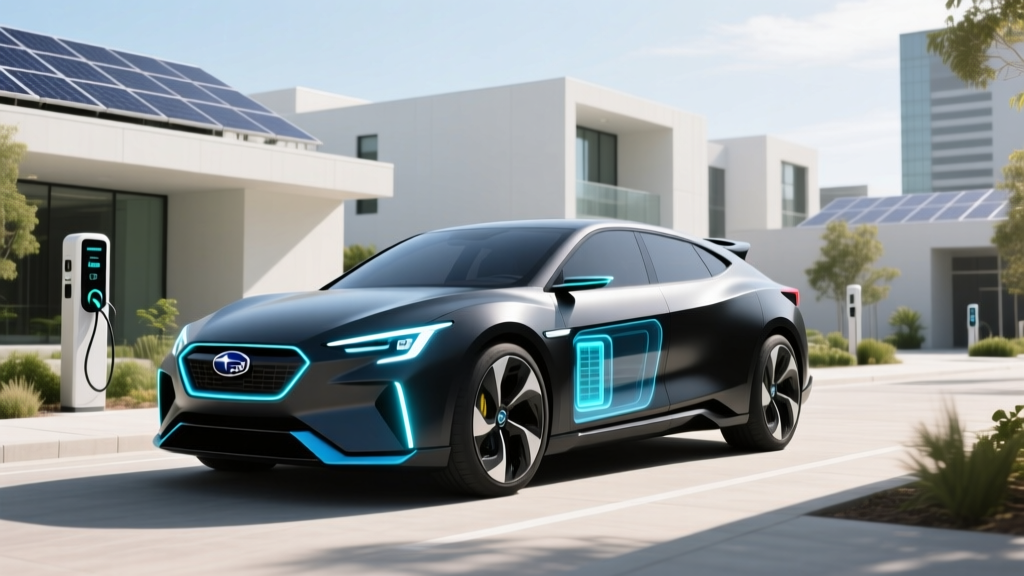
Yes — but not by that name. Subaru's compact electric SUV, the 2026 Subaru Uncharted EV, is the spiritual and practical successor to the Forester's role in Subaru's lineup. Built on a co-developed platform with Toyota (shared underpinnings with the bZ4X), the Uncharted is Subaru's first ground-up battery-electric vehicle sold in the US. It targets the same adventure-oriented, all-weather buyer who has made the Forester a perennial bestseller — now with an all-electric powertrain and standard symmetrical AWD via dual motors.
Quick specs: EPA-estimated range up to ~280 miles (Long Range AWD), ~71.4 kWh usable battery (NMC chemistry), peak DC fast charging at ~150 kW (10–80% in approximately 30 minutes), and a starting MSRP near $39,000 before any incentives.
Range, Battery, and Real-World Expectations
The Uncharted EV launches with two battery configurations. The Standard Range trim carries a ~58 kWh usable NMC (nickel-manganese-cobalt) pack with an EPA-estimated 227 miles. The Long Range AWD bumps capacity to ~71.4 kWh usable and achieves an EPA-estimated 280 miles. Both use liquid-cooled thermal management, critical for sustained charging performance and cold-weather preservation.
EPA vs. Real-World Range: What to Actually Expect
EPA sticker: 280 miles (Long Range AWD)
Real-world highway (70 mph, mild weather): ~240–255 miles. Subaru's boxy, upright design creates more aerodynamic drag than sleeker crossovers, and highway efficiency suffers accordingly.
Cold-weather (below 30°F): ~195–220 miles. NMC chemistry loses 15–25% capacity in freezing temperatures even with the heat pump and battery preconditioning active.
City/mixed driving (regenerative braking active): ~265–280 miles. Stop-and-go driving maximizes regen recovery.
For context against the outgoing gas Forester: the 2025 Forester AWD achieves 29 MPG combined per fueleconomy.gov, yielding roughly 420 miles from its 14.5-gallon tank. The Uncharted EV trades some total range for dramatically lower per-mile energy cost and zero tailpipe emissions — but the range gap is real and worth planning around for road trips exceeding 200 miles one-way.
Charging Speed, Connectors, and Home Setup
The Uncharted EV adopts the NACS (North American Charging Standard) connector natively for 2026, giving it direct access to the Tesla Supercharger network — a significant advantage over CCS-equipped competitors that still require adapters.
| Level | Power (kW) | Miles Added per Hour | Notes |
|---|---|---|---|
| Level 1 (120V household) | ~1.4 kW | ~4–5 mi/hr | Emergency/trickle only; full charge in 50+ hours |
| Level 2 (240V home, 48A) | ~11.5 kW | ~35–40 mi/hr | Full charge in ~7 hours (Long Range) |
| DC Fast Charge (peak) | ~150 kW | ~170 mi in 10 min (10–80%) | Peak rate sustained to ~55% SoC; tapers significantly above 80% |
The 150 kW peak charge rate is competitive but not class-leading. The Hyundai Ioniq 5 peaks at 240 kW on 800V architecture, completing 10–80% in roughly 18 minutes. The Uncharted's ~30-minute 10–80% session is adequate for most road-trip stops, but expect to spend a few extra minutes at the charger compared to 800V rivals.
Home charging installation reality: A Level 2 home charger requires a 240V circuit (typically NEMA 14-50 or hardwired). Installation costs range from $500 (simple outlet near the panel) to $2,500+ (long conduit runs or a panel upgrade from 100A to 200A service). Budget $1,200–$1,800 for a typical install with a quality Level 2 unit like the ChargePoint Home Flex or Emporia Vue. Always get a quote from a licensed electrician before committing to the vehicle.
Cost Breakdown: Uncharted EV vs. Gas Forester
The purchase-price premium is the first hurdle. The Uncharted EV starts roughly $8,000–$10,000 higher than a base gas Forester. Federal and state incentives narrow that gap, but they are not guaranteed for every buyer.
| Category | Uncharted EV (Long Range AWD) | 2025 Forester AWD (Gas) |
|---|---|---|
| Base MSRP | ~$42,500 | ~$33,500 |
| Federal Tax Credit (§30D) | Up to $7,500 (if eligible) | $0 |
| Effective Purchase Price | ~$35,000 | $33,500 |
| Fuel/Energy (5 yrs, 60k mi) | ~$3,600 (home charging at $0.14/kWh) | ~$7,800 (gas at $3.40/gal, 29 MPG) |
| Maintenance (5 yrs) | ~$1,200 (no oil, fewer fluids) | ~$3,200 (oil, filters, brakes) |
| Insurance (5 yrs avg) | ~$9,500 | ~$7,800 |
| Estimated Depreciation | ~$18,000 | ~$14,500 |
| 5-Year Total | ~$67,300 | ~$66,800 |
The totals are remarkably close over five years, with the EV pulling ahead in years 6–10 as fuel and maintenance savings compound and the gas powertrain ages. The critical variable is tax credit eligibility: without the $7,500 credit, the EV costs roughly $7,500 more over five years.
Federal Tax Credit: Do You Actually Qualify?
The IRS §30D Clean Vehicle Credit offers up to $7,500, but eligibility depends on multiple requirements that change frequently:
- Income caps: Modified AGI must not exceed $150,000 (single), $225,000 (head of household), or $300,000 (joint filers).
- MSRP cap: SUVs/vans/pickups must have an MSRP at or below $80,000. The Uncharted EV clears this easily.
- Battery sourcing: A percentage of critical minerals and battery components must be sourced from the US or free-trade-agreement countries. These thresholds tighten annually. Verify current-year compliance on the fueleconomy.gov tax credit page before purchasing.
- Point-of-sale transfer: As of 2024, buyers can transfer the credit to the dealer at purchase, reducing the sale price directly — you don't need to wait until tax filing.
- Final assembly: Vehicle must undergo final assembly in North America. The Uncharted EV is assembled at Subaru's Lafayette, Indiana plant.
Important: Tax credit rules are subject to legislative change. Always confirm eligibility with a tax professional and the latest IRS guidance before making a purchase decision.
EV vs. Gas Forester: Which Powertrain Fits You?
| Attribute | Uncharted EV (Long Range AWD) | 2025 Forester AWD |
|---|---|---|
| EPA Range / Tank Range | 280 miles | ~420 miles |
| Energy Cost per Mile | ~$0.06 (home charging) | ~$0.13 (gas) |
| 0–60 mph | ~5.8 seconds | ~8.9 seconds |
| Horsepower | ~338 hp (dual motor) | 180 hp |
| AWD System | Dual-motor electronic | Mechanical symmetrical |
| Towing Capacity | ~2,000 lbs (est.) | 1,500 lbs |
| Cargo Volume | ~28 cu ft (rear seats up) | 28.9 cu ft |
| Ground Clearance | ~8.3 in | 8.7 in |
The Uncharted EV delivers substantially more power and a lower center of gravity (battery pack under the floor), improving handling dynamics. However, the gas Forester still wins on total range, refueling speed, and ground clearance — factors that matter for remote trailhead access or rural living.
Real-World Ownership Considerations
Home charging access is the single biggest ownership variable. If you can install a Level 2 charger at home, the Uncharted EV is a low-friction daily driver — plug in overnight, wake up to a full battery every morning, and visit a DC fast charger only on road trips. If you rely solely on public charging, the experience becomes more expensive ($0.30–$0.50/kWh at public DC stations vs. $0.14/kWh at home) and time-consuming.
Cold-climate buyers should plan around the 20–25% winter range reduction. In Minnesota or Maine, the 280-mile Long Range model becomes a ~210-mile vehicle in January. The heat pump helps cabin efficiency, and battery preconditioning (activate via the Subaru app before a DC charging stop) preserves charge speed, but physics is unforgiving in deep cold.
Driving pattern matters. Urban and suburban commuters who drive under 80 miles round-trip will rarely think about range. Frequent long-distance drivers who cover 300+ miles in a day will need to plan one or two 30-minute DC fast charging stops — manageable, but a behavioral change from the gas Forester's 420-mile tank.
Should You Buy the Electric Forester (Uncharted EV)?
Choose the Uncharted EV if:
- You have home charging access (garage, driveway, or workplace Level 2)
- Your daily round-trip commute is under 100 miles
- You qualify for the federal tax credit (bringing effective price near gas Forester territory)
- You want dual-motor AWD with 338 hp and instant torque for snow and trail roads
- You're ready to plan road-trip charging stops
Stick with the gas Forester (or wait for the Forester Hybrid) if:
- You live in an apartment or street-park with no charging access
- You regularly drive 300+ miles in a single day through areas with sparse charging infrastructure
- You live in extreme cold and cannot tolerate a 20%+ winter range penalty
- You tow frequently (the gas Forester's established towing profile is better documented)
- The upfront price premium, even after incentives, stretches your budget
Common Misconceptions About the Electric Forester
| Myth | Fact |
|---|---|
| "The battery will need replacing in 5 years." | Subaru warranties the battery pack for 8 years/100,000 miles against defects and excessive degradation (below 70% capacity). Real-world NMC degradation data shows most packs retain 85–90% capacity at 100,000 miles with normal use. |
| "It can't handle snow without a mechanical AWD system." | Dual-motor AWD provides independent torque vectoring to each axle. In many conditions, electronic AWD reacts faster than a mechanical system. Subaru's X-Mode traction software carries over for snow/mud/deep-snow settings. |
| "Charging takes hours on road trips." | At a 150 kW DC fast charger, a 10–80% session takes approximately 30 minutes — enough time for a meal or rest stop. Plan routes via A Better Routeplanner or the Subaru app to minimize wait times. |
| "EVs are worse for the environment because of battery mining." | Over its lifetime, even on a US-average electricity grid, the Uncharted EV produces significantly fewer total CO₂-equivalent emissions than the gas Forester. The battery carbon debt is repaid within approximately 1–2 years of driving, per lifecycle analyses from Argonne National Laboratory. |
| "I'll save $7,500 no matter what." | The §30D credit has income caps, battery-sourcing requirements, and MSRP limits. Not every buyer qualifies. Verify before purchasing. |
What First-Time EV Buyers Should Know
If the Uncharted EV is your first electric vehicle, prepare for a learning curve that pays off quickly:
kW vs. kWh — the essential distinction. kWh (kilowatt-hours) measures battery capacity — how much energy the tank holds. The Long Range pack is ~71.4 kWh. kW (kilowatts) measures power flow — how fast energy moves. A 150 kW charger delivers energy faster than an 11.5 kW home charger. Confusing these is the most common new-owner mistake.
Charge curve taper is real. The 150 kW peak rate applies only between roughly 10% and 55% State of Charge. Above 80%, charging slows dramatically to protect battery health — often dropping below 50 kW. On road trips, it's faster to charge from 10% to 80% and hit the road than to wait for a full 100%.
Preconditioning matters. Use the Subaru app to warm the battery while plugged in before a DC fast charging stop. A cold battery charges far more slowly — preconditioning can cut a 45-minute session to 30 minutes in cold weather.
One-pedal driving changes habits. The Uncharted EV offers adjustable regenerative braking. Set to maximum, you can drive most city routes without touching the brake pedal — lifting off the accelerator slows the car and recovers energy. It takes a few days to adapt, then becomes second nature.
Frequently Asked Questions
Is the Subaru Uncharted EV the same as the electric Forester?
Effectively, yes. Subaru chose a new nameplate for its first ground-up EV, but the Uncharted occupies the same compact-SUV segment as the Forester, targets the same buyer, and offers comparable cargo space, AWD capability, and ground clearance. Think of it as the Forester's electric sibling.
What is the battery warranty on the Uncharted EV?
Subaru covers the high-voltage battery for 8 years or 100,000 miles (whichever comes first) against defects and capacity loss below 70% of original. This is standard across the industry and consistent with EPA and NHTSA warranty norms for EV powertrains.
Can I tow with the Uncharted EV?
Subaru estimates a towing capacity of approximately 2,000 lbs for the dual-motor AWD configuration — slightly more than the gas Forester's 1,500-lb rating. However, towing significantly reduces range (expect a 30–40% reduction at highway speeds with a loaded trailer). Plan charging accordingly.
How does insurance cost compare?
EV insurance premiums run 15–25% higher than equivalent gas vehicles, driven by higher repair costs (specialized labor, battery-adjacent damage protocols) and higher replacement values. Budget roughly $150–$250 more per year. Shop quotes from EV-friendly insurers before purchasing.
Will the Uncharted EV get the full $7,500 federal tax credit?
It qualifies on MSRP (under $80,000 cap for SUVs) and North American assembly (Lafayette, Indiana). The variable is battery-sourcing compliance, which tightens each year. Check the latest eligibility on fueleconomy.gov and confirm with your tax professional before finalizing a purchase.
Does the Uncharted EV work with Tesla Superchargers?
Yes. The 2026 Uncharted EV ships with a native NACS charge port, granting direct access to the Tesla Supercharger network without an adapter. This is a major practical advantage for road-trip charging reliability.