Quick Answer: Are Electric Ford Vans Worth It?
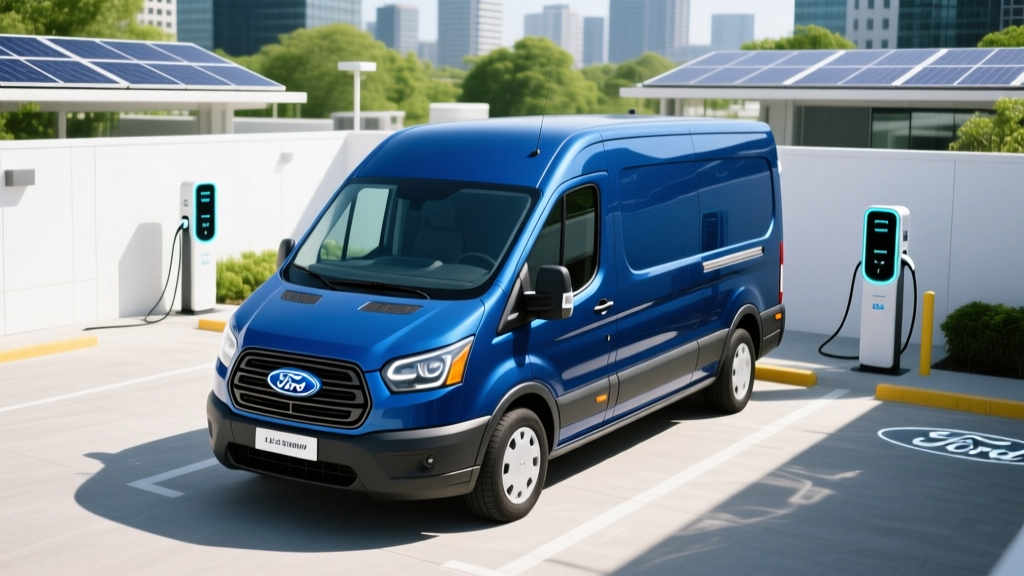
For urban delivery fleets and tradespeople driving under 150 miles per day with access to overnight Level 2 charging, the 2026 Ford E-Transit delivers meaningful fuel and maintenance savings with a total cost of ownership that undercuts the gas Transit within 3-4 years. With an EPA-estimated 126 miles of range (low-roof cargo van), a 68 kWh usable battery, and DC fast charging up to 115 kW (15-80% in ~45 minutes), the E-Transit is purpose-built for predictable, short-haul commercial routes. However, for long-haul routes exceeding 200 miles daily, cold-climate operations, or businesses without depot charging infrastructure, the conventional gas Transit remains the more practical choice.
2026 Ford E-Transit: Core Specs at a Glance
Ford's electrified commercial van enters the 2026 model year with incremental software refinements but retains the core hardware that has defined it since launch. Here are the exact numbers fleet buyers and owner-operators need:
| Specification | 2026 Ford E-Transit (Low Roof Cargo Van) |
|---|---|
| EPA Estimated Range | 126 miles (low roof); 108 mi (medium roof); 107 mi (high roof) |
| Battery Capacity (Usable) | 68 kWh, Lithium-Ion (NMC chemistry) |
| Motor Output | 266 hp (198 kW), 317 lb-ft torque |
| 0-60 mph | ~8.5 seconds (unladen) |
| Max DC Fast Charge Rate | 115 kW peak |
| DC Charge 15-80% | ~45 minutes |
| Level 2 AC Charge Rate | 10.5 kW (onboard charger) |
| Level 2 Full Charge Time | ~8 hours (0-100%) |
| Max Payload | Up to 3,880 lbs (low roof cargo van) |
| Cargo Volume | 246.7 cu ft (low roof); 311.8 cu ft (medium); 363.6 cu ft (high) |
| Starting MSRP (Cargo Van) | ~$49,995 (before incentives) |
| Warranty (Battery) | 8 years / 100,000 miles (≥70% capacity retention) |
| Warranty (Bumper-to-Bumper) | 3 years / 36,000 miles |
| Efficiency | ~2.0 kWh/mile (combined) |
Real-World Range Reality
The EPA 126-mile figure assumes ideal mixed-driving conditions. In real-world fleet operations, expect the following:
- Urban stop-and-go delivery routes (40-50 mph avg): ~115-125 miles achievable, thanks to regenerative braking recapturing energy.
- Highway-heavy routes (65-70 mph sustained): ~90-105 miles — electric vans lose efficiency at speed faster than in city driving.
- Cold weather (below 32°F): Expect 20-30% range reduction, bringing usable range to ~85-100 miles. Cabin heating is a significant energy draw without a heat pump (the E-Transit uses resistive heating).
- Full payload (3,800+ lbs): Adds approximately 8-12% energy consumption vs. unladen figures.
Bottom line: if your daily route exceeds 100 miles in temperate weather or 80 miles in winter, you'll need mid-day DC fast charging or should consider the gas Transit.
E-Transit vs. Gas Ford Transit: The Numbers That Matter
The decision between the electric Ford E-Transit and the conventional gas-powered Transit isn't about which van is "better" in the abstract — it's about which fits your route profile and infrastructure. Here's a direct comparison:
| Metric | 2026 Ford E-Transit (EV) | 2026 Ford Transit 250 (3.5L V6 Gas) |
|---|---|---|
| Base MSRP | ~$49,995 | ~$47,500 |
| Fuel/Energy Cost per Mile | ~$0.07-$0.10/mile (commercial electricity at $0.14-$0.20/kWh) | ~$0.22-$0.28/mile (14-16 MPG combined at $3.50/gal) |
| Annual Fuel/Energy (15,000 mi) | $1,050-$1,500 | $3,300-$4,200 |
| Maintenance per Year | ~$400-$600 (no oil, no transmission fluid, less brake wear) | ~$1,200-$1,800 (oil changes, transmission, exhaust, brakes) |
| Estimated Annual Savings (EV) | $2,500-$4,000/year in fuel + maintenance combined | |
| EPA Range / Tank Range | 126 miles | ~310 miles (25-gal tank) |
| Refuel/Recharge Time | 45 min (15-80% DC); 8 hrs (Level 2) | ~5 minutes (gas station) |
| Cargo Volume (Low Roof) | 246.7 cu ft | 246.7 cu ft |
| Payload Capacity | 3,880 lbs | 4,030 lbs |
| Towing | Not rated for towing | Up to 6,900 lbs (properly equipped) |
The E-Transit commands a modest upfront premium (~$2,500-$3,000 over a comparably equipped gas Transit 250), but the per-mile operating cost is roughly one-third that of the gas model. For a fleet van covering 15,000 miles annually, the payback period on the price premium is typically under one year from fuel savings alone.
Total Cost of Ownership: 5-Year Fleet Breakdown
Commercial buyers think in total cost of ownership (TCO), not sticker price. Here's a realistic 5-year / 75,000-mile projection for a single van in a metro-area delivery operation:
| Cost Category (5 Years) | E-Transit (EV) | Transit 250 (Gas) |
|---|---|---|
| Purchase Price | $49,995 | $47,500 |
| Federal Commercial Clean Vehicle Credit (§45W) | -$7,500 | $0 |
| Net Purchase Cost | $42,495 | $47,500 |
| Energy/Fuel (75,000 mi) | $6,000 | $18,750 |
| Maintenance (5 Years) | $2,500 | $7,500 |
| Insurance (Est. Annual) | $12,500 ($2,500/yr) | $10,000 ($2,000/yr) |
| Level 2 Charger Install (Depot) | $3,000-$6,000 (one-time) | $0 |
| Estimated Resale Value (Year 5) | -$15,000 | -$18,000 |
| Net 5-Year TCO | ~$51,495-$54,495 | ~$65,750 |
Key takeaway: Over five years, the E-Transit saves approximately $11,000-$14,000 per vehicle despite the charger installation cost. For a fleet of 10 vans, that's $110,000-$140,000 in savings — enough to fund the next round of vehicle purchases.
Note: The IRS §45W Commercial Clean Vehicle Credit provides up to $7,500 for qualified commercial EVs under 14,000 lbs GVWR. Unlike the consumer §30D credit, §45W has no buyer income caps or MSRP caps, making it straightforward for business purchasers. Consult your tax professional for eligibility specifics.
Charging Infrastructure: What Fleet Operators Actually Need
The E-Transit's viability hinges entirely on charging access. Here's what depot charging looks like in practice:
| Charging Level | Power (kW) | Miles Added per Hour | Use Case |
|---|---|---|---|
| Level 1 (120V standard outlet) | ~1.4 kW | ~2-3 miles/hr | Emergency only — not viable for daily fleet ops |
| Level 2 (240V, 48A circuit) | 10.5 kW (vehicle-limited) | ~18-20 miles/hr | Overnight depot charging — primary method |
| DC Fast Charging (CCS) | Up to 115 kW peak | ~120+ miles/hr (at peak) | Mid-day top-ups on longer routes |
Depot Charging Installation Costs
| Component | Cost Range (Per Charger) |
|---|---|
| Level 2 EVSE Hardware (commercial-rated, e.g., ChargePoint CT4000 or Ford Pro Charger) | $1,500-$3,500 |
| Electrician Labor (240V/60A circuit run) | $1,500-$4,000 |
| Electrical Panel Upgrade (if needed — common in older depots) | $2,000-$5,000 |
| Permits & Inspection | $200-$800 |
| Total Per Charger | $3,200-$13,300 |
For a fleet of 5 E-Transits, budget $15,000-$30,000 for full depot Level 2 infrastructure. Federal Alternative Fuel Infrastructure Tax Credit (§30C) may cover up to 30% of charger hardware and installation costs (capped at $100,000 per item) if your depot is in a qualifying census tract. Check your location against the DOE's eligibility map before purchasing.
Charging curve reality: The E-Transit's 115 kW DC peak rate only sustains between roughly 15-50% State of Charge. Above 60%, the rate tapers significantly to protect the NMC battery cells. A 15-80% charge takes ~45 minutes, but 80-100% can take an additional 30+ minutes. Plan mid-day charging stops around the 15-80% window for efficiency.
Common Misconceptions About Electric Ford Vans
Commercial EV adoption is still early enough that misinformation circulates freely. Let's address the most persistent myths with data:
| Myth | Fact |
|---|---|
| "The E-Transit can't handle a full work day." | According to Ford Pro telematics data, the average commercial van drives 74 miles per day. The E-Transit's real-world range of 100-125 miles covers this with margin for most urban routes. |
| "EV batteries will need expensive replacement within a few years." | Ford warranties the E-Transit battery for 8 years/100,000 miles at ≥70% capacity retention. Industry-wide degradation data from fleet EVs shows NMC batteries typically retain 85-90% capacity at 100,000 miles when properly managed (avoiding frequent 100% charges and extreme heat exposure). |
| "You'll save $7,500 no matter what." | The §45W commercial credit has specific requirements: the vehicle must be purchased (not leased), used primarily in the US, and meet battery component sourcing thresholds that tighten annually. Always verify current-year rules with the IRS and a qualified tax advisor. |
| "Electric vans have less cargo space." | The E-Transit's battery pack is mounted under the floor, preserving identical cargo dimensions to the gas Transit. Cargo volume is 246.7 cu ft (low roof) across both powertrains. Payload is slightly reduced (~150 lbs less) due to battery weight. |
| "Public charging is unreliable for commercial use." | While public DC charging reliability remains a valid concern ( Electrify America and EVgo uptime varies), fleet operators should plan around depot charging as primary, using public DC only as supplemental top-up. This eliminates dependence on public network reliability. |
Who Should Buy an Electric Ford Van — And Who Shouldn't
The E-Transit isn't a universal replacement for every Transit in every fleet. Here's a practical decision framework based on route profiles and operational realities:
Choose the E-Transit If:
- Your daily routes are under 100 miles (temperate) or under 80 miles (cold climate) with predictable patterns
- You operate in urban or suburban metro areas with stop-and-go driving (maximizes regen braking efficiency)
- You have access to overnight depot parking where Level 2 chargers can be installed
- Your vans return to a central location nightly (no dispersed street parking)
- You want to reduce per-mile operating costs and can absorb the upfront infrastructure investment
- Local emissions regulations or client sustainability requirements incentivize zero-tailpipe-emission vehicles
- You don't need towing capability (E-Transit is not rated for towing)
Stick With the Gas Transit If:
- Daily routes regularly exceed 150 miles or are highly variable/unpredictable
- You operate in extreme cold climates (sustained sub-zero temps) without heated depot storage
- Your business requires towing (up to 6,900 lbs with the gas Transit)
- You lack access to overnight charging — no depot, no driveway, only street parking
- Your routes are highway-dominated at sustained 70+ mph speeds (reduces EV range sharply)
- You need maximum payload and every pound counts (gas Transit offers ~150 lbs more payload)
- Your fleet turns over vehicles every 2-3 years (the TCO advantage requires 4+ years to fully materialize)
What First-Time EV Fleet Buyers Need to Know
If your business has never operated electric vehicles, several practical realities won't appear on any spec sheet:
ProConnect and fleet telematics are your friend. The E-Transit comes with Ford Pro's connected services platform, which provides real-time State of Charge monitoring, route optimization based on remaining range, and geofencing alerts. Use this data for the first 90 days to validate that your route assumptions match actual driving patterns before scaling EV adoption across the fleet.
Electricity rates aren't uniform. Commercial electricity pricing varies by time of day in many utility territories. Charging during off-peak hours (typically 10 PM - 6 AM) can cut your per-kWh cost by 30-50%. Program your depot chargers to start at off-peak times — the E-Transit supports scheduled/deferred charging natively.
Proactive battery management extends life. For daily-use fleet vans, set the charge limit to 80-90% rather than 100%. Only charge to full when a longer-than-normal route demands it. This single practice can add years of useful battery life. The E-Transit's infotainment system allows you to set a custom charge target.
Plan for electrical lead times. Commercial Level 2 charger installations, especially those requiring panel upgrades or new 240V circuits, can take 4-12 weeks from permit to inspection depending on your municipality and electrician availability. Start infrastructure planning at least 3 months before your planned E-Transit delivery date.
Insurance costs are typically higher. Commercial EV insurance premiums run 15-25% higher than equivalent gas vans, primarily due to higher repair costs for battery-adjacent collision damage. Get quotes from your commercial insurer before committing to the purchase to factor this into your TCO model.
FAQ: Electric Ford Vans
Does Ford make any other electric vans besides the E-Transit?
As of 2026, the E-Transit is Ford's only fully electric commercial van sold in the US market. The E-Transit is available in cargo van, cutaway, and chassis cab configurations, with low, medium, and high roof options. Ford has not announced additional electric van models for the US, though the Transit Custom PHEV is available in European markets. For smaller cargo needs, some businesses consider the Ford Maverick hybrid as a light-duty alternative, though it's a pickup, not a van.
How does the E-Transit handle in cold weather?
Cold weather is the E-Transit's biggest operational limitation. Expect 20-30% range loss below freezing due to battery chemistry (NMC cells have higher internal resistance in cold) and resistive cabin heating consuming 2-4 kW continuously. Unlike some passenger EVs, the E-Transit does not feature a heat pump, which would improve heating efficiency. If you operate in northern climates, precondition the battery and cabin while still plugged in at the depot — this draws grid power instead of battery power and preserves range.
Can I charge the E-Transit at public DC fast chargers?
Yes. The E-Transit uses a CCS1 connector for DC fast charging and is compatible with Electrify America, EVgo, and other CCS-equipped networks. It peaks at 115 kW on DC, meaning it can charge at stations rated 150 kW or higher (though it won't exceed its own 115 kW limit). Note that the E-Transit does not have a NACS (Tesla-style) port and cannot access Tesla Superchargers without an adapter — and Ford has not announced a NACS adapter for the E-Transit as of 2026.
What is the E-Transit's Pro Power Onboard feature?
Available Pro Power Onboard provides up to 2.4 kW of exportable AC power (120V) through outlets in the cargo area and cab. This lets tradespeople run power tools, lighting, or equipment directly from the van's battery without a separate generator. At 2.4 kW, you can run most standard job-site tools, but not high-draw equipment like large welders. Running Pro Power Onboard for extended periods will reduce driving range — budget roughly 2.4 kWh per hour of use.
How does the E-Transit qualify for federal tax incentives?
Commercial purchasers may qualify for the IRS §45W Commercial Clean Vehicle Credit, which provides up to $7,500 for vehicles under 14,000 lbs GVWR. Unlike the consumer §30D credit, §45W has no buyer income limits, no MSRP caps, and no point-of-sale transfer option — it's claimed on the business's tax return. The vehicle must be placed in service in the US and meet applicable battery sourcing requirements. Tax rules evolve annually; always verify current-year eligibility with a tax professional.
What happens if the battery degrades below 70% capacity?
Ford's battery warranty covers capacity retention below 70% of original capacity for 8 years or 100,000 miles, whichever comes first. If degradation crosses this threshold within the warranty period, Ford will repair or replace the battery at no cost. Out-of-warranty battery replacement costs are estimated at $10,000-$15,000+ based on current NMC cell pricing, though costs have been trending downward. In practice, fleet data suggests most E-Transit batteries retain 85-90% capacity at the 100,000-mile mark under normal use patterns.