The Quick Answer: There Is No Fully Electric Ford Escape (Yet)
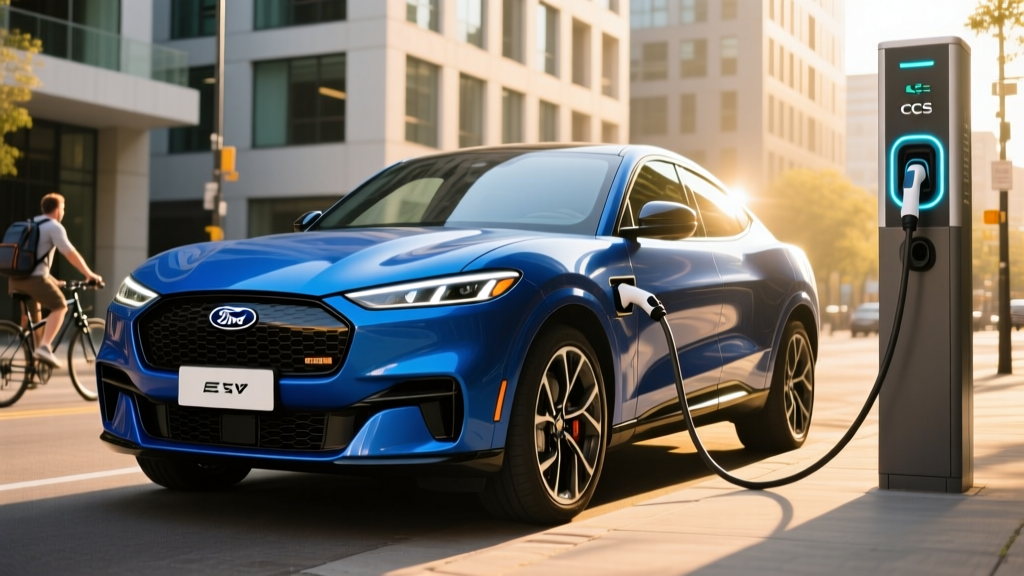
If you're searching for an electric Ford Escape, here's the reality as of the 2026 model year: Ford does not sell a battery-electric (BEV) Escape. The Escape lineup is available exclusively as a conventional hybrid (HEV) and a plug-in hybrid (PHEV). The closest all-electric alternative in Ford's lineup is the Ford Mustang Mach-E, a larger, more expensive electric crossover.
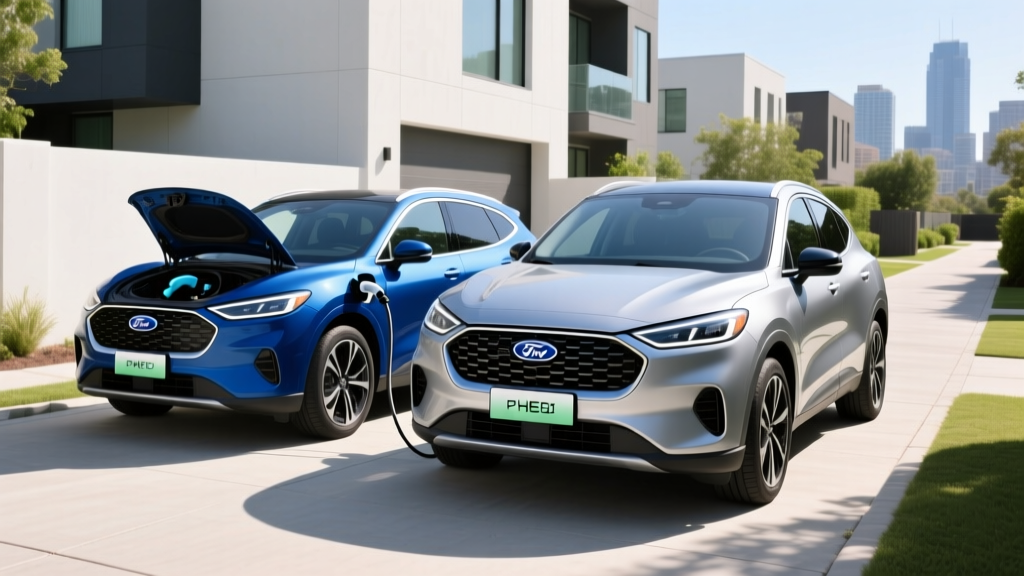
That said, the 2026 Ford Escape PHEV offers up to 37 miles of electric-only range and 105 MPGe combined, which covers many daily commutes without using a drop of gasoline. The standard Escape Hybrid achieves an EPA-estimated 42 MPG city / 36 MPG highway. Both are strong choices for buyers who want electrified efficiency without committing to a full EV. Below, we break down exactly what each powertrain delivers, what it costs to own, and how to decide which is right for you.
2026 Ford Escape Electrified Lineup: Hybrid vs. PHEV at a Glance
Ford offers two electrified Escape variants. Understanding the difference between a standard hybrid (HEV) and a plug-in hybrid (PHEV) is essential before you visit the dealer.
| Spec | 2026 Escape Hybrid (HEV) | 2026 Escape PHEV |
|---|---|---|
| Powertrain | 2.5L Atkinson-cycle I4 + electric motor | 2.5L Atkinson-cycle I4 + electric motor (larger battery) |
| Combined Horsepower | 192 hp | 210 hp |
| EPA Fuel Economy | 42 city / 36 hwy / 39 combined MPG | 105 MPGe combined (electric+gas); 40 MPG gas-only |
| Electric-Only Range | N/A (no plug) | 37 miles (EPA) |
| Battery Capacity | 1.1 kWh (small, self-charging) | 14.4 kWh usable (NMC lithium-ion) |
| Charging (Level 2, 240V) | N/A | ~3.5 hours (0–100%) |
| Charging (Level 1, 120V) | N/A | ~10–12 hours (0–100%) |
| DC Fast Charging | N/A | Not available |
| Drivetrain | FWD or AWD | FWD only |
| 0–60 mph | ~7.9 sec | ~7.5 sec |
| Starting MSRP | ~$34,995 | ~$41,495 |
| Federal Tax Credit (§30D) | Not eligible | Up to $7,500 (subject to eligibility) |
| Battery Warranty | 8 yr / 100,000 mi | 8 yr / 100,000 mi |
Sources: EPA Fueleconomy.gov, Ford.com. MSRP and specs reflect 2026 model year; verify with your dealer. Tax credit eligibility per IRS §30D rules.
Escape Hybrid vs. PHEV vs. Gas vs. Full EV: Real Cost Comparison
The core question for most buyers: which powertrain actually saves the most money over five years? Let's run the numbers with concrete assumptions.
5-Year Cost of Ownership Comparison (15,000 miles/year)
| Cost Category | Escape Hybrid (HEV) | Escape PHEV | Gas-Only Compact SUV (baseline) | Ford Mustang Mach-E (BEV) |
|---|---|---|---|---|
| Purchase Price (MSRP base) | $34,995 | $41,495 | $30,000 | $44,995 |
| Federal Tax Credit | $0 | Up to $7,500* | $0 | Up to $7,500* |
| Effective Purchase Price | $34,995 | $33,995 | $30,000 | $37,495 |
| Fuel/Energy (5 yr, 75k mi) | $6,250 | $3,800** | $9,750 | $4,500 |
| Maintenance (5 yr) | $2,800 | $2,600 | $4,200 | $1,800 |
| Insurance (5 yr avg) | $7,500 | $7,800 | $7,000 | $8,500 |
| 5-Year Total (est.) | $51,545 | $48,195 | $50,950 | $52,295 |
*Federal tax credit eligibility depends on buyer income, battery sourcing, and MSRP caps. Consult IRS.gov or a tax professional. **PHEV fuel cost assumes 70% of driving is within electric range and home charging at $0.14/kWh.
Key takeaway: The Escape PHEV delivers the lowest five-year cost among these options if you qualify for the federal credit and charge at home regularly. Without the credit or home charging, the standard Hybrid is the more straightforward value play — it requires zero behavior change and still beats a gas-only SUV on fuel.
Real-World Ownership: What the EPA Sticker Doesn't Tell You
Spec sheets are useful, but ownership happens in the real world. Here's what to expect from the Escape PHEV and Hybrid in everyday conditions.
PHEV Electric Range in Practice
The EPA rates the Escape PHEV at 37 miles of electric-only range. In mild weather (60–75°F) with mixed city/highway driving, expect to see 32–37 miles before the gas engine kicks in. However:
- Cold weather (below 32°F): Expect a 20–30% reduction, yielding roughly 25–30 miles of electric range. Battery chemistry is less efficient at low temperatures, and cabin heating draws significant energy.
- Highway speeds (70+ mph): The PHEV's electric range drops to roughly 28–32 miles at sustained highway speeds due to aerodynamic drag.
- Hot weather with A/C: Moderate impact; expect 33–36 miles.
Charging the PHEV at Home
The Escape PHEV does not support DC fast charging — this is a critical limitation for road-trip use. All charging is AC-only:
- Level 1 (standard 120V outlet): Adds roughly 4–5 miles of range per hour. A full charge takes 10–12 hours. Fine for overnight if your daily drive is under 30 miles.
- Level 2 (240V home charger): A full charge in ~3.5 hours. A basic Level 2 home station costs $500–$1,200 for the equipment plus $800–$2,500 for professional installation, depending on your electrical panel's capacity. If your panel needs an upgrade from 100A to 200A, add $1,500–$3,000.
If you live in an apartment or lack access to a dedicated parking spot with an outlet, the PHEV's value proposition shrinks considerably. You'd be relying on the gas engine most of the time, at which point the standard Hybrid makes more financial sense.
Hybrid: Zero Behavior Change
The Escape HEV requires no plug, no charging routine, and no infrastructure investment. It regenerates energy through braking and engine operation. Real-world fuel economy tends to land between 36–41 MPG combined, depending on driving style and conditions — slightly below the EPA's 39 MPG combined but still meaningfully better than a gas-only competitor at 25–28 MPG.
Common Misconceptions About the Electric Ford Escape
| Myth | Fact |
|---|---|
| "There's a fully electric Ford Escape." | As of 2026, Ford does not offer a BEV Escape. Only Hybrid and PHEV variants exist. Ford's electric crossover is the Mustang Mach-E. |
| "The PHEV charges at DC fast chargers." | The Escape PHEV has no DC fast-charge capability. It charges only via Level 1 (120V) or Level 2 (240V) AC power. |
| "The PHEV qualifies for the full $7,500 credit automatically." | Eligibility depends on your adjusted gross income (≤$150K single / ≤$300K joint), the vehicle's MSRP (must be ≤$80,000 for SUVs), and battery component/critical mineral sourcing requirements. The point-of-sale transfer option is available at participating dealers. Always verify on IRS.gov. |
| "Hybrids need expensive battery replacements." | Ford covers the hybrid/PHEV battery for 8 years / 100,000 miles. Real-world data from Toyota and Ford hybrids shows most batteries lasting 150,000–200,000+ miles with minimal degradation. Replacement cost, if needed out of warranty, is typically $2,500–$4,500. |
| "The AWD PHEV is available." | The 2026 Escape PHEV is front-wheel drive only. If you need AWD, you must choose the standard Hybrid. |
Federal Tax Credit: What PHEV Buyers Actually Qualify For
The Escape PHEV's potential $7,500 federal tax credit under IRS §30D is a major financial lever — but it's not guaranteed. Here's the 2026 eligibility checklist:
- Income cap: Modified AGI must not exceed $150,000 (single), $225,000 (head of household), or $300,000 (married filing jointly).
- MSRP cap: The vehicle's MSRP must be ≤$80,000 for SUVs. All Escape PHEV trims clear this threshold.
- Battery sourcing: A percentage of critical minerals and battery components must be sourced from the U.S. or free-trade-agreement countries. These percentages increase annually. The credit amount may be reduced to $3,750 if only one of the two sourcing requirements is met.
- Point-of-sale transfer: As of 2024, buyers can transfer the credit to the dealer at purchase, reducing the upfront cost rather than waiting for a tax refund. The dealer must be registered with the IRS.
- Final assembly: The vehicle must undergo final assembly in North America. The Escape is built in Louisville, Kentucky, satisfying this requirement.
Practical tip: Before purchasing, use the IRS's official vehicle eligibility lookup on Fueleconomy.gov to confirm the specific trim qualifies. Sourcing rules change, and a credit available in January may shift by mid-year.
Decision Framework: Which Escape (or Alternative) Is Right for You?
If / Then Buyer Guide
| If You... | Then Choose... | Why |
|---|---|---|
| Have home charging + commute under 35 miles | Escape PHEV | You'll drive most days on electricity alone, spending ~$0.04/mile on energy. The tax credit can bring the effective price below the Hybrid. |
| Can't charge at home (apartment, street parking) | Escape Hybrid (HEV) | No plug needed. 39+ MPG combined without any infrastructure. You avoid paying the PHEV premium for a battery you can't charge. |
| Need AWD for snow or rough roads | Escape Hybrid AWD | The PHEV is FWD-only. The Hybrid offers available AWD for all-weather traction. |
| Want a fully electric vehicle with 250+ miles range | Ford Mustang Mach-E or competitor | The Escape has no BEV variant. The Mach-E offers 250–320 miles EPA range and DC fast charging up to 150 kW. |
| Take frequent road trips (300+ miles) | Escape Hybrid or PHEV | Both have a gas engine for unlimited range. The PHEV's lack of DC fast charging means no advantage on long highway drives. |
| Budget is under $35,000 (effective) | Escape Hybrid | Lower base MSRP, no tax-credit dependency, and proven reliability. |
Frequently Asked Questions
Will Ford ever make a fully electric Escape?
Ford has not officially announced an all-electric Escape. The company's current EV strategy focuses on the Mustang Mach-E, F-150 Lightning, and upcoming next-generation electric vehicles built on a dedicated platform. Industry speculation suggests a future compact electric crossover could slot into the Escape's market segment, but nothing is confirmed for the 2027 model year. If a BEV Escape is essential to your plans, you'll need to wait or look at competitors like the Hyundai Ioniq 5, Chevrolet Equinox EV, or Volkswagen ID.4.
How much does it cost to charge the Escape PHEV at home?
The PHEV's usable battery capacity is approximately 14.4 kWh. At the U.S. residential average electricity rate of roughly $0.16/kWh (as of early 2026, per EIA data), a full charge costs about $2.30. That's good for up to 37 miles of electric driving — roughly $0.06 per mile. Compare that to the gas-only Escape at 28 MPG and $3.30/gallon: about $0.12 per mile. If you charge nightly and commute within electric range, annual fuel savings can reach $800–$1,200 versus a gas-only vehicle.
Is the Escape PHEV good for cold climates?
It's adequate, but with caveats. Expect electric range to drop from 37 miles to roughly 25–30 miles in sub-freezing temperatures. The gas engine will activate more frequently to provide cabin heat and maintain performance. The standard Hybrid with AWD may actually be the better cold-climate pick — you get all-wheel drive (not available on the PHEV) and don't lose "range" since the gas engine is always available. If cold-weather EV performance is a top priority, a full BEV with a heat pump (like the Mach-E or Ioniq 5) will manage winter efficiency more gracefully.
What's the difference between kW and kWh?
This is the most common point of confusion for first-time electrified vehicle buyers. kW (kilowatts) measures power — the rate at which energy flows, like water pressure in a hose. kWh (kilowatt-hours) measures energy capacity — how much is stored, like the size of a water tank. The Escape PHEV has a 14.4 kWh battery (energy capacity) and charges at up to 3.3 kW (power rate on Level 2). A full EV might have an 80 kWh battery and charge at 150 kW. Keeping these straight helps you evaluate range (kWh) and charging speed (kW) independently.
Can I use the Escape PHEV's battery to power my home?
No. The Escape PHEV does not support vehicle-to-home (V2H), vehicle-to-load (V2L), or vehicle-to-grid (V2G) functionality. Its 14.4 kWh battery is designed solely for propulsion. If bidirectional power is important to you, the Ford F-150 Lightning offers V2H capability with the appropriate home integration system.
How does the Escape Hybrid compare to the Toyota RAV4 Hybrid?
The RAV4 Hybrid is the Escape Hybrid's most direct competitor. The RAV4 Hybrid achieves 41 city / 38 hwy / 40 combined MPG (slightly better highway efficiency) and starts around $33,500. The Escape Hybrid offers slightly more city MPG (42 vs. 41) and a more car-like driving position, while the RAV4 has more cargo space (37.6 vs. 34.4 cu ft behind the rear seats) and standard AWD. Both are excellent choices; the decision often comes down to brand preference, interior layout, and dealer availability.
The Bottom Line
There is no electric Ford Escape in 2026 — but the Escape PHEV and Hybrid are legitimate electrified options that save real money at the pump. The PHEV makes sense if you can charge at home and commute within its 37-mile electric range, especially with the potential $7,500 federal credit reducing its effective price. The Hybrid is the no-compromise choice for apartment dwellers, AWD seekers, and anyone who wants efficiency without plugging in. If a true battery-electric vehicle is non-negotiable, the Ford Mustang Mach-E or a competitor like the Hyundai Ioniq 5 or Chevy Equinox EV will serve you better — at a higher starting price.