The Quick Answer: Does an Electric Ford Bronco Exist in 2026?
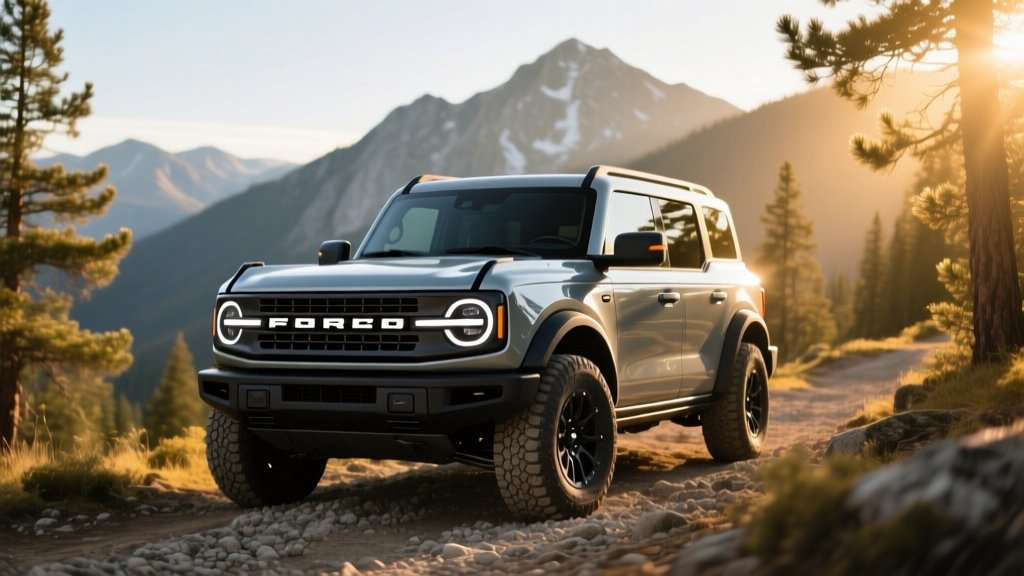
As of early 2026, Ford has not yet released a production electric Bronco. The company has confirmed an electric Bronco is in development as part of its broader EV strategy, but no official EPA range, battery capacity, pricing, or on-sale date has been published. What Ford has signaled: the electric Bronco will ride on a dedicated EV platform (likely a body-on-frame architecture shared with the next-generation electric F-150 Lightning successor), target 300+ miles of EPA range, and retain serious off-road capability. If you're searching for an "electric Bronco Ford" to buy today, the closest available options are the Ford F-150 Lightning (electric, body-on-frame, off-road capable) or the Ford Bronco Sport (gas/hybrid only). This guide breaks down what's confirmed, what's projected, and how to evaluate whether an off-road EV fits your ownership profile.
What Ford Has Actually Said About an Electric Bronco
Ford CEO Jim Farley has publicly stated that the Bronco nameplate is among the company's most valuable assets and that electrifying it is a matter of "when, not if." However, Ford's EV roadmap has shifted significantly since 2023, when the company restructured its Model e division and delayed several next-generation electric vehicles to prioritize profitability over volume.
Here's what we can piece together from Ford's public statements, patent filings, and supply-chain reporting as of 2026:
- Platform: Expected to use a new body-on-frame EV architecture, potentially shared with the next-generation F-150 Lightning and possibly the electric Ranger. This is distinct from the unibody GE1/GE2 platforms underpinning the Mustang Mach-E and Explorer EV.
- Battery chemistry: Ford has invested heavily in LFP (lithium iron phosphate) prismatic cells through its BlueOval SK joint venture with SK On, while also sourcing NMC (nickel manganese cobalt) packs for higher-energy applications. An off-road-focused SUV like the Bronco would likely use NMC for maximum energy density, though a lower-trim LFP option is possible.
- Target segment: The electric Bronco would compete directly with the Rivian R1S (EPA range up to 410 miles with the Max Pack, starting around $79,900) and potentially the upcoming electric Jeep Wrangler (Stellantis has confirmed an electrified Wrangler but hasn't committed to full BEV).
- Timeline: Industry analysts and supply-chain indicators point to a likely 2027 or 2028 model-year debut, meaning a calendar-year 2027 reveal at the earliest.
Because no official specs have been published, every range, price, and charging figure in this article is an estimate based on platform benchmarks and segment competitors. We'll flag projections clearly.
Projected Specs: How an Electric Bronco Might Stack Up
Using the F-150 Lightning (extended-range), Rivian R1S, and GMC Hummer EV SUV as engineering benchmarks, here's a reasonable projection for an electric Ford Bronco's specifications:
| Spec | Estimated / Projected | Segment Benchmark |
|---|---|---|
| EPA Range | 300–350 miles (est.) | F-150 Lightning ER: 320 mi; Rivian R1S Dual-Motor Max: 410 mi |
| Battery Capacity (usable) | 110–140 kWh (est.) | Lightning ER: 131 kWh; R1S Max Pack: 149 kWh |
| Battery Chemistry | Likely NMC | Rivian uses NMC (Samsung SDI); Lightning ER uses NMC (SK On) |
| Peak DC Fast Charge Rate | 170–250 kW (est.) | Lightning: 155 kW; R1S Gen 2: 220 kW |
| 10–80% DC Charge Time | 30–40 minutes (est.) | Lightning: ~41 min; R1S: ~30 min |
| Level 2 Home Charging | 11.5–19.2 kW (est.) | Lightning: 19.2 kW (80A circuit) |
| Horsepower | 500–650 HP (est.) | Lightning Platinum: 580 HP; Hummer EV: 830 HP |
| 0–60 mph | 3.5–5.0 seconds (est.) | Lightning: 3.8s; R1S Quad-Motor: 3.0s |
| Ground Clearance | 10–12 inches (est.) | Gas Bronco Badlands: 11.6 in; R1S: up to 14.9 in |
| Towing Capacity | 7,000–10,000 lbs (est.) | Lightning: 10,000 lbs; R1S: 7,700 lbs |
| Starting MSRP | $55,000–$70,000 (est.) | Gas Bronco: $39,630; R1S: $79,900 |
Key takeaway: A large battery pack (110+ kWh) is essentially mandatory for a body-on-frame off-road SUV to clear 300 miles EPA. That battery mass directly affects off-road dynamics, tire wear, and charging infrastructure requirements.
EV vs Gas Bronco: A Real Cost and Capability Comparison
Since the electric Bronco isn't available yet, the most useful comparison for today's buyer is between the current gas Ford Bronco and what an electric version would likely cost to own. This helps you decide whether to buy now or wait.
| Cost Category | 2026 Gas Bronco Big Bend (4-door) | Projected Electric Bronco (Mid-Trim) |
|---|---|---|
| Base MSRP | $42,630 | $60,000–$65,000 (est.) |
| Federal Tax Credit (§30D) | $0 | Up to $7,500 (if eligible — see rules below) |
| Effective Purchase Price | $42,630 | $52,500–$65,000 (est.) |
| Fuel/Energy (5 yr / 75,000 mi) | $11,250 (at 18 MPG combined, $2.70/gal) | $3,750 (at 2.5 kWh/mi, $0.15/kWh home charging) |
| Maintenance (5 yr) | $3,500 (oil, filters, brakes, spark plugs) | $1,200 (cabin filter, wipers, brake fluid — regen saves pads) |
| Insurance (5 yr avg) | $8,500 | $10,000–$11,500 (EVs typically 15–25% more) |
| Estimated Depreciation | $18,000 | $22,000–$28,000 (EV depreciation still higher, though narrowing) |
| Total 5-Year Cost | ~$83,880 | ~$89,450–$115,750 (est.) |
What this tells us: The electric Bronco's higher purchase price is the dominant cost factor. Fuel and maintenance savings of roughly $9,800 over five years are real but won't fully offset a $15,000–$22,000 price premium. The break-even point depends heavily on your local electricity rates, annual mileage, and whether you qualify for the federal tax credit.
Federal Tax Credit Eligibility: What §30D Actually Requires
If the electric Bronco launches in 2027 or 2028, its eligibility for the IRS §30D clean vehicle credit will depend on rules that may evolve between now and then. Under current 2026 law, here's what buyers must satisfy:
- MSRP cap: SUVs must have an MSRP at or below $80,000. An electric Bronco priced above this threshold would be ineligible regardless of buyer income.
- Buyer income limits: Modified adjusted gross income (MAGI) must not exceed $150,000 (single), $225,000 (head of household), or $300,000 (joint filing).
- Battery sourcing requirements: A percentage of critical minerals and battery components must be sourced from the U.S. or free-trade-agreement countries. These percentages increase annually. Ford's BlueOval SK battery plants in Kentucky and Tennessee improve the odds of compliance, but specific cell-level sourcing for an unreleased model is unknown.
- Point-of-sale transfer: Eligible buyers can transfer the credit to the dealer at purchase, reducing the out-of-pocket price immediately rather than waiting for a tax refund.
- FEOC restriction: Vehicles with battery components from a "foreign entity of concern" (primarily Chinese-owned supply chains) are disqualified.
Practical advice: Don't assume a $7,500 credit. Consult a tax professional and check the fueleconomy.gov tax credit database when the vehicle is officially released. Eligibility is determined per-vehicle, per-VIN, at time of purchase.
Off-Road EV Ownership: The Real-World Considerations Nobody Talks About
An electric Bronco's viability isn't just about specs — it's about how you'll actually use and charge it. These are the ownership realities that determine whether an off-road EV works for you.
Trail Range Is Not Highway Range
Low-speed technical off-roading (rock crawling, sand, mud) can consume energy at 2–3x the rate of highway driving due to high torque demands, soft-surface rolling resistance, and accessory loads (winch, lights). A vehicle with 320 miles EPA highway range might deliver only 80–120 miles of trail range in demanding conditions. Rivian R1S owners consistently report needing to recharge after a full day of moderate off-roading.
Charging Infrastructure Near Trails
This is the single biggest ownership friction point for off-road EVs. Most popular trailheads (Moab, Rubicon Trail, Ouray, Telluride) have limited or zero DC fast-charging infrastructure. You'll need to plan trips around charging stops, carry a portable Level 1/Level 2 EVSE for destination charging, or accept that you'll be towing a generator trailer (which defeats the purpose). Check the AFDC charging station map for your favorite trail areas before committing.
Cold-Weather Range Loss
If you wheel in winter conditions (snow trails, ice roads, mountain passes), expect 20–40% range reduction at temperatures below 20°F. Battery chemistry slows in cold, cabin heating draws 3–5 kW continuously, and the vehicle cannot use waste heat from an internal combustion engine like a gas Bronco does. A heat pump (likely standard on an electric Bronco, as it is on the F-150 Lightning) mitigates but does not eliminate this loss.
Vehicle Weight and Trail Dynamics
A 130+ kWh battery pack adds roughly 1,500–2,000 lbs compared to the gas powertrain. The electric Bronco would likely weigh 6,000–6,500 lbs. This increases tire wear (especially on rock), requires stronger suspension components, and affects approach/departure/breakover angles unless the chassis is specifically designed around the battery's low center of gravity. Ford's engineers will need to demonstrate that weight distribution advantages offset the mass penalty.
Home Charging Is Essential
Public DC fast-charging an off-road SUV daily is expensive ($0.30–$0.48/kWh at networks like Electrify America) and accelerates battery degradation. Budget $1,200–$2,500 for a Level 2 home charger installation (240V, 40–80A circuit, hardwired EVSE). If you live in an apartment or lack dedicated parking, an electric Bronco becomes significantly harder to own. This is not optional — it's the foundation of practical EV ownership.
Decision Framework: Should You Buy a Gas Bronco Now or Wait?
Buy the gas Bronco now if:
- You regularly drive off-road in remote areas with no charging infrastructure within 100+ miles
- Your budget is under $50,000 and you can't absorb a $15,000–$20,000 EV premium
- You need a vehicle this year and can't wait for a 2027–2028 launch
- You tow heavy loads (7,000+ lbs) over long distances — gas still wins on range-while-towing
- You don't have reliable access to home Level 2 charging
Wait for the electric Bronco if:
- Your off-roading is primarily day-trip distance (under 150 miles round-trip from home)
- You have home charging and want to eliminate $11,000+ in five-year fuel costs
- You want instant torque for rock crawling (electric motors deliver peak torque at 0 RPM — a genuine off-road advantage)
- You value near-silent trail driving (less wildlife disturbance, better group communication)
- You're willing to pay a premium now for lower operating costs and potential tax incentives
- You want V2L (vehicle-to-load) capability to power camp equipment, tools, or emergency backup — a feature the F-150 Lightning already offers at up to 9.6 kW
Common Misconceptions About Off-Road EVs
| Myth | Fact |
|---|---|
| "EVs can't handle water crossings." | EV battery packs are sealed to IP67/IP6K9K standards. The Rivian R1S has a wading depth of 42.9 inches — deeper than most gas SUVs. There's no air intake to hydrolock. However, saltwater exposure remains a corrosion concern for all vehicles. |
| "Electric motors don't have low-end torque for crawling." | The opposite is true. Electric motors deliver maximum torque from 0 RPM, with no need to build revs or manage a clutch. This is why electric rock crawlers can be extraordinarily precise at low speeds. |
| "Battery replacement will cost $30,000." | Current out-of-warranty pack replacements for large EVs run $15,000–$25,000, but federal law mandates battery warranties of at least 8 years/100,000 miles (with some states requiring 10/150,000). Most packs retain 85–90% capacity at 150,000 miles based on current degradation data. |
| "You can't modify an electric off-roader." | The aftermarket is already adapting. Lift kits, larger tires, skid plates, and rock sliders are vehicle-agnostic. However, adding larger tires reduces range more dramatically on an EV (every pound and every increase in rolling resistance directly cuts miles) than on a gas vehicle. |
| "An electric Bronco will be unibody and less capable." | Ford has invested in body-on-frame EV architecture for the F-150 Lightning. An electric Bronco is expected to follow this approach, retaining the solid-axle or independent rear suspension configurations that define the Bronco's trail capability. |
Frequently Asked Questions
Is the Ford Bronco Sport available as an electric vehicle?
No. The 2026 Bronco Sport is offered with a 1.5L EcoBoost three-cylinder or a 2.0L EcoBoost four-cylinder. Ford has not announced an electric Bronco Sport variant. The Bronco Sport is a unibody crossover (based on the Escape/C-Max platform), which is a different vehicle class entirely from the body-on-frame Bronco.
When will the electric Ford Bronco be available to buy?
Ford has not announced an official release date. Based on the company's revised EV timeline, supply-chain indicators, and the expected development cycle for a new body-on-frame EV platform, a 2027 reveal with 2028 model-year availability is the most realistic estimate. This is a projection, not a confirmed date.
Will the electric Bronco qualify for the $7,500 federal tax credit?
It depends on final MSRP (must be ≤$80,000 for SUVs), your income, and battery sourcing compliance at time of sale. Ford's domestic battery manufacturing through BlueOval SK improves the odds, but eligibility can only be confirmed once the vehicle's VIN-level sourcing data is submitted to the IRS. Check IRS.gov for the latest rules.
Can I tow with an electric Bronco?
Projected towing capacity is 7,000–10,000 lbs based on the F-150 Lightning's 10,000-lb rating. However, be aware that towing any trailer reduces EV range by 30–50% depending on trailer weight, aerodynamics, and terrain. A 320-mile EPA range could drop to 160–220 miles while towing at highway speeds. Plan charging stops accordingly.
What should a first-time EV buyer know before committing to an off-road electric SUV?
Three things are non-negotiable: (1) Install a Level 2 home charger before or immediately after purchase — budget $1,200–$2,500 for a licensed electrician to run a 240V/40–80A circuit. (2) Understand that EPA range is an optimistic estimate — subtract 15–25% for real-world highway driving and 20–40% for cold weather or off-road use. (3) Map the DC fast-charging infrastructure along your most common routes and near your favorite trailheads before buying. If charging access is poor in your area, a PHEV or gas vehicle remains the pragmatic choice.
How does kW differ from kWh, and why does it matter for charging?
kW (kilowatts) measures power — the rate at which energy flows into the battery, like water pressure from a hose. kWh (kilowatt-hours) measures energy — the total capacity of the battery, like the size of the tank. A 250 kW DC fast charger can theoretically add 250 kWh in one hour, but no EV battery is that large. A 130 kWh battery charging at 250 kW peak (which it won't sustain — the charge curve tapers above ~80% state of charge) might complete a 10–80% session in 30 minutes. Always look at both the peak kW rating and the 10–80% time to understand real charging speed.