The Short Answer on Electric Fire Engines
An electric fire engine in 2026 costs between $900,000 and $1.5 million upfront — roughly 1.5× to 2.5× the price of a comparable diesel pumper. Current battery-electric fire apparatus (from manufacturers like Rosenbauer, Pierce/Volterra, and E-One) carry 100–200 kWh battery packs, offer 60–100 miles of street range, and can pump for 2–4 hours on battery alone before needing grid power or a diesel backup. Departments that operate on short-call, urban routes with depot charging see the strongest total-cost-of-ownership case; rural departments with long mutual-aid runs and no en-route charging infrastructure still face real limitations.
What Is an Electric Fire Engine — and What Isn't
When fleets and taxpayers search for an "electric fire engine," they're usually referring to one of three things, and the distinction matters for budgeting:
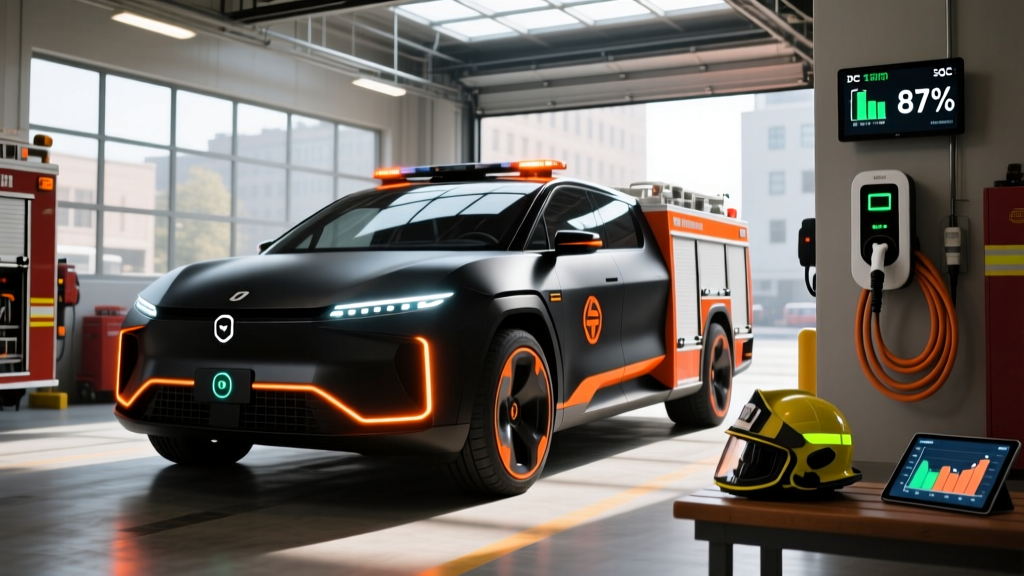
- Battery-Electric (BEV) Pumper or Ladder — fully electric drivetrain plus electrically driven pump. Examples: Rosenbauer RT, Pierce Volterra, E-One eMAX. No diesel onboard for propulsion; some retain a small diesel auxiliary for extended pumping.
- Hybrid-Electric Apparatus — diesel engine paired with an electric drivetrain or electric PTO (power take-off) for the pump. Lower upfront premium, still burns diesel on road calls.
- Electric Support/Command Vehicles — battery-electric SUVs or pickups (Ford F-150 Lightning, Chevy Silverado EV, Rivian EDV) used as chief or EMS response units. These follow consumer EV economics and qualify under different procurement rules.
This guide focuses on the first two — the Class 8 fire apparatus that municipalities actually put into service as engines and ladder trucks — with comparison data against the diesel baseline every department currently runs.
Spec Snapshot: Electric vs Diesel Pumper (2026)
| Specification | Diesel Pumper (Baseline) | Battery-Electric Pumper | Hybrid-Electric Pumper |
|---|---|---|---|
| Typical Purchase Price | $550,000–$750,000 | $900,000–$1,500,000 | $700,000–$950,000 |
| Drivetrain Energy | Diesel (50–80 gal tank) | 100–200 kWh battery (NMC/LFP) | Diesel + 30–60 kWh battery |
| Street Range | 250–400 miles | 60–100 miles (loaded) | 200–350 miles |
| Pump Duration (Battery) | N/A (diesel PTO) | 2–4 hours at rated GPM | 1–2 hours electric, then diesel |
| Refuel / Recharge Time | 15–20 min (diesel fill) | 2–6 hours (Level 2/DCFC) | 15 min diesel + overnight plug |
| Idle Emissions at Scene | High (diesel idling) | Zero tailpipe | Reduced vs conventional |
| Lifetime (Apparatus) | 15–25 years | 15–20 years (battery replacement likely at yr 10–12) | 15–20 years |
Source: Manufacturer spec sheets (Rosenbauer, Pierce Manufacturing), NFPA 1900/1901 apparatus standards, and fleet procurement records from early-adopter departments. Real-world range drops 15–30% in cold climates and under full water-tank load.
Total Cost of Ownership: 15-Year Fleet Analysis
The purchase-price gap narrows substantially when you model fuel, maintenance, and idle-hour costs over a typical 15-year apparatus lifecycle. Below is a simplified comparison for a suburban department running ~4,000 road miles/year plus 500+ idle/pump hours annually.
| Cost Category (15-Year) | Diesel Pumper | Battery-Electric Pumper |
|---|---|---|
| Acquisition | $650,000 | $1,200,000 |
| Fuel / Electricity | $135,000 (diesel @ $4.20/gal avg) | $32,000 (electric @ $0.14/kWh avg) |
| Maintenance (drivetrain) | $85,000 (engine, DEF, DPF, transmission) | $25,000 (no engine, fewer moving parts) |
| Battery Replacement (yr 12) | $0 | $90,000–$140,000 |
| Charging Infrastructure (share) | $0 | $80,000–$150,000 |
| Estimated Total | ~$870,000 | ~$1,527,000–$1,547,000 |
| Federal/State Grants Applied | $0 | –$250,000 to –$450,000 (EPA Clean Trucks, state programs) |
| Net Cost After Grants | ~$870,000 | ~$1,100,000–$1,300,000 |
Reality check: Even with grants, the battery-electric pumper remains more expensive over 15 years for most departments in 2026. The TCO case flips only when (a) diesel prices stay above $5/gal, (b) the department runs high idle hours (urban call volume), and (c) state or EPA Clean Truck grants cover 25–40% of acquisition. Departments should treat grant funding as essential, not optional, to the electric business case.
Charging Infrastructure: What a Station Actually Needs
A single electric fire engine on depot charging typically requires a 60–150 kW DC fast charger (CCS1 or NACS) plus one or two 19.2 kW Level 2 units for overnight top-offs. A four-apparatus station may need a 480V/400A service upgrade — which can cost $50,000–$250,000 depending on utility transformer proximity and trenching distance.
Charging Speed Expectations
- Level 2 (19.2 kW): Adds ~50–70 kWh in 4 hours overnight — enough to replenish a typical night-shift call load.
- DC Fast Charge (60–150 kW): Recharges a depleted 150 kWh pack from 20–80% in roughly 60–90 minutes. Charge-curve taper above 80% SoC is significant — plan for 2.5–3 hours for a full cycle.
- Opportunity Charging: Not realistic for fire apparatus outside of mutual-aid hubs. Unlike transit buses, fire engines cannot schedule mid-shift charging.
First-time buyer note: Engage your utility's commercial EV team 12–18 months before apparatus delivery. Transformer lead times in 2025–2026 routinely run 9–14 months, and station energization delays have been the single largest cause of electric apparatus sitting idle after delivery.
Common Misconceptions About Electric Fire Apparatus
| Myth | Fact |
|---|---|
| "An electric fire engine can't pump a working fire." | Current BEV pumpers deliver 1,250–1,500 GPM from electric motors for 2–4 hours. Beyond that, departments must stage a diesel relay pumper or connect to shore power. |
| "It will strand crews on a long rural run." | Legitimate concern. Mutual-aid runs beyond 40 miles one-way, with pumping on-scene, exceed current battery capacity. Hybrid-electric solves this; pure BEV does not in 2026. |
| "Federal tax credits cover it like a consumer EV." | The consumer §30D credit does not apply to Class 8 apparatus. Instead, departments rely on EPA IRA grant programs, state clean-fleet funds, and FEMA AFG/SAFER grants — each with separate eligibility. |
| "Cold weather kills the battery on winter calls." | Cold reduces usable range 20–35% and slows DC charging. Thermal management systems mitigate but don't eliminate this. Northern departments should spec 20–30% more battery than southern peers. |
| "It's just a PR purchase." | For high-idle urban departments, zero tailpipe emissions at working fires measurably reduce firefighter carcinogen exposure — a concrete health benefit, not a PR claim. |
Decision Framework: Should Your Department Go Electric?
Choose Battery-Electric If…
- Your first-due area is under 30 miles round-trip on 95% of calls.
- The station has (or can get) 480V three-phase service within 18 months.
- You have secured 25%+ grant funding for apparatus and charging.
- Reducing crew exposure to diesel exhaust at scene is a stated health priority.
- You can retain one diesel pumper as mutual-aid backup.
Choose Hybrid-Electric If…
- Your department runs long rural or mutual-aid responses regularly.
- Utility upgrades at the station are cost-prohibitive or on multi-year timelines.
- You want idle-emission reductions at scene without range risk.
- Budget allows ~$750K–$950K per unit but not the full BEV premium.
Stay Diesel (For Now) If…
- You operate in a region with extreme cold (below 0°F) and long runs.
- Grant funding is unavailable and the 2× acquisition premium breaks the capital plan.
- Your mutual-aid partners are hours from charging infrastructure.
Frequently Asked Questions
How long does an electric fire engine battery last before replacement?
Most manufacturers warrant the traction battery for 8–10 years or 80% retained capacity. In practice, fire apparatus batteries see fewer cycles than transit buses (lower daily mileage) but heavy pump-discharge loads. Budget for a battery refresh in year 10–12 at a cost of $90,000–$140,000 depending on pack size and chemistry.
Can an electric fire engine operate during a grid power outage?
Yes — the onboard battery powers the pump and truck independently of the grid. However, recharging after the event requires either restored grid power, a station generator sized for DC charging (rare), or relocation to an energized station. Departments in hurricane/wildfire zones should plan for this explicitly.
Are there any electric ladder trucks, or just pumpers?
A few manufacturers have announced battery-electric aerial platforms in the 100–110 ft class, but production deliveries remain limited as of 2026. Ladder trucks demand more energy for both propulsion and hydraulic operation, pushing pack sizes above 250 kWh — technically feasible but expensive and heavy. Pumpers are the realistic electric option today.
Does the federal §30D EV tax credit apply to fire apparatus?
No. The §30D consumer credit (up to $7,500 with MSRP and income caps per IRS rules) applies to light-duty consumer vehicles. Fire departments pursuing electric apparatus should target EPA Clean Truck grants, state clean-fleet funds, and FEMA Assistance to Firefighters Grants instead.
What's the biggest real-world surprise departments report after going electric?
Two things come up repeatedly: (1) charging-infrastructure lead times are longer and more expensive than the apparatus procurement itself, and (2) crews overwhelmingly prefer the cab environment — no diesel noise, vibration, or exhaust on-scene — which has become a recruitment and retention talking point for departments.