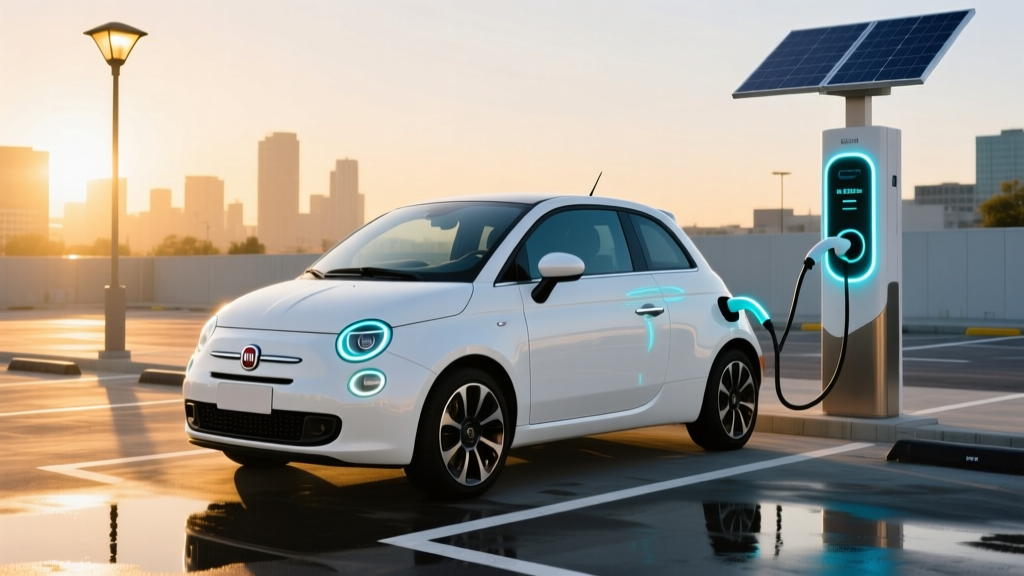
The Fiat 500e has long been one of the most affordable entry points into electric ownership, but sticker price is only the beginning. For buyers evaluating the electric Fiat 500 cost over a full ownership cycle, the math involves federal incentives, home charging economics, insurance premiums, and depreciation curves that don't always mirror their gas-powered counterparts.
This guide breaks down the real numbers behind owning a Fiat 500e for five years and 75,000 miles — the period where EVs typically prove (or fail to prove) their economic case against comparable subcompact gas cars.
Fiat 500e at a Glance: What You're Buying
Before calculating ownership costs, here's the hardware you're paying for. The current-generation Fiat 500e (reintroduced to the U.S. market) is a city-focused EV with modest range and quick urban charging.
| Spec | Fiat 500e (RED / La Prima) |
|---|---|
| EPA Range | 149 miles (RED) / 162 miles (La Prima) |
| Battery Capacity | 42 kWh gross / ~37.3 kWh usable (NMC) |
| Motor Output | 118 hp / 162 lb-ft torque |
| 0-60 mph | ~8.5 seconds |
| DC Fast Charge (peak) | 85 kW (CCS); 10-80% in ~35 min |
| Level 2 Charge Rate | 11 kW (~4.5 hrs, 0-100%) |
| EPA Efficiency | 116 MPGe combined (3.0 mi/kWh) |
| Base MSRP (RED) | ~$34,095 |
| Base MSRP (La Prima) | ~$37,595 |
| Battery Warranty | 8 years / 100,000 miles (70% capacity retention) |
5-Year Total Cost of Ownership: The Full Picture
Total cost of ownership (TCO) captures every dollar leaving your pocket over five years: purchase price (minus incentives), fuel or electricity, insurance, maintenance, and depreciation. Here's how the Fiat 500e stacks up against a comparable gas subcompact (we'll use the gas Fiat 500 or a Honda Fit-equivalent as baseline).
| Cost Category | Fiat 500e (EV) | Gas Subcompact Baseline |
|---|---|---|
| Purchase Price (after §30D credit) | $26,595* | $24,000 |
| Fuel / Electricity | $2,475 | $7,500 |
| Insurance (5 years) | $9,500 | $7,200 |
| Maintenance | $1,200 | $3,500 |
| Depreciation (est.) | $11,000 | $9,000 |
| 5-Year Total | ~$50,770 | ~$51,200 |
*Assumes full $7,500 §30D credit eligibility — see qualification rules below. Without the credit, the 500e TCO rises to ~$58,270.
Charging vs. Gas: The $/Mile Reality
The single largest operational advantage of the 500e is fuel cost — but only if you charge where electricity is cheap. Here's the math at the 500e's real-world efficiency of ~3.0 miles per kWh:
| Charging Scenario | $/kWh | Cost per Mile | 75,000-Mile Cost |
|---|---|---|---|
| Home (national avg. residential) | $0.16 | $0.053 | $3,975 |
| Home (off-peak utility rate) | $0.09 | $0.030 | $2,250 |
| Public Level 2 (avg.) | $0.30 | $0.100 | $7,500 |
| DC Fast Charging (avg.) | $0.48 | $0.160 | $12,000 |
Compare this to a gas subcompact averaging 33 MPG at $3.50/gallon: $0.106/mile, or $7,950 over 75,000 miles.
Home charging at residential rates delivers a 50-70% fuel cost reduction. But if the 500e is your only car and you rely heavily on public DC fast charging — common for apartment dwellers without home charging access — you could actually spend more on "fuel" than a gas car. This is the most misunderstood variable in EV ownership economics.
Federal Tax Credit: Do You Qualify for §30D?
The IRS §30D Clean Vehicle Credit can reduce the 500e's effective price by up to $7,500 — but eligibility depends on multiple factors that change annually. As of 2026, the rules under the Inflation Reduction Act require:
- Buyer Income Caps: Modified AGI ≤ $150,000 (single), $225,000 (head of household), $300,000 (married filing jointly)
- MSRP Cap: Vehicle base price must not exceed $55,000 for sedans/hatchbacks (the 500e clears this easily)
- Battery Component Sourcing: Increasing percentages of battery components must be manufactured or assembled in North America (phased thresholds by year)
- Critical Minerals Sourcing: Increasing percentages of critical minerals must be sourced from the U.S. or FTA partners
- Point-of-Sale Transfer: As of 2024+, you can transfer the credit to the dealer at purchase, reducing your out-of-pocket cost immediately rather than waiting for tax filing
- Final Assembly: Vehicle must undergo final assembly in North America
For buyers who qualify and use the point-of-sale transfer, the 500e RED trim drops from ~$34,095 to an effective ~$26,595 — a significant repositioning that makes it one of the cheapest new EVs available.
State, Local, and Utility Incentives
Beyond the federal credit, many buyers can stack additional incentives:
- State EV Rebates: Range from $0 (many states) to $7,000+ (e.g., California's CVRP for income-qualified buyers, Colorado's innovative income-tax-based credit). Check your state energy office for current programs.
- Utility Rebates: Many electric utilities offer $250-$1,500 rebates for EV purchase or home charger installation. Some offer time-of-use rates that cut charging costs by 40-50%.
- HOV Lane Access: States like California, Colorado, and Virginia offer single-occupant HOV lane access for EVs — a non-monetary benefit worth thousands in time savings for commuters.
- Home Charger Tax Credits: The §30C Alternative Fuel Vehicle Refueling Property Credit offers up to $1,000 (30% of cost) for home charger installation, subject to census-tract eligibility.
Insurance: The Cost EV Owners Often Overlook
EV insurance premiums run 15-30% higher than equivalent gas vehicles, and the 500e is no exception. Expect annual premiums of $1,700-$2,100 depending on your state, driving record, and coverage level — versus $1,300-$1,600 for a comparable gas subcompact.
Why the premium?
- Higher repair costs: EV battery packs and power electronics are expensive to replace after collision damage
- Specialized labor: Fewer shops are certified for high-voltage system repairs, driving up labor rates
- Total-loss thresholds: Insurers may total an EV at lower damage levels due to battery replacement costs exceeding vehicle value
- Vehicle value: The 500e's higher purchase price (pre-credit) sets a higher insured value baseline
Shop multiple insurers — some (like Tesla Insurance, Progressive, and State Farm) have developed EV-specific actuarial models that can narrow the gap. Bundling with homeowners/renters insurance often helps.
Maintenance Savings: Where the 500e Wins Clearly
This is where EV ownership economics shine unambiguously. The 500e eliminates the most common recurring maintenance items of a gas car:
| Maintenance Item | Gas Car (5yr/75k mi) | Fiat 500e |
|---|---|---|
| Oil Changes | $600-$1,000 (every 5-7.5k mi) | $0 |
| Transmission Fluid | $200-$400 | $0 (single-speed reduction gear) |
| Spark Plugs | $200-$400 | $0 |
| Air Filters | $150-$250 | $75-$125 (cabin filter only) |
| Brake Pads/Rotors | $600-$1,200 | $0-$200 (regen handles 80%+ of braking) |
| Exhaust System | $0-$500 (muffler/catalytic) | $0 |
| Coolant Flush | $200-$300 | $100-$150 (battery thermal loop, longer intervals) |
| Total (est.) | $1,950-$4,050 | $175-$475 |
Over five years, expect to spend $1,000-$1,500 on the 500e: primarily tire rotations/replacements (EVs wear tires faster due to instant torque and higher curb weight), cabin air filters, wiper fluid, and the occasional brake-fluid check. Add $200-$400 for a battery health diagnostic at the dealer if desired.
The regenerative braking system alone saves most owners $400-$800 in brake wear over 75,000 miles. Many EV owners report original brake pads lasting 100,000+ miles.
Depreciation and Resale Value: The Evolving Picture
EV depreciation has been volatile. Early EVs depreciated steeply due to battery longevity fears and rapid technology obsolescence. Recent data shows improvement, but EVs still generally depreciate faster than Toyota/Honda gas vehicles — though they now match or beat many mainstream gas brands.
For the Fiat 500e specifically:
- Expected 5-year depreciation: 45-55% of purchase price (pre-credit), meaning a $34,095 500e might resale for $15,000-$18,500
- Credit-adjusted reality: If you paid $26,595 after the §30D credit and sell for $16,000, your actual cash lost to depreciation is ~$10,600 — competitive with gas cars
- Battery health matters: A 500e with documented battery State of Health (SoH) above 85% will command a premium. Use the car's built-in battery health report or request a dealer diagnostic before selling
- Market risk: Rapid EV price cuts by Tesla and others have compressed used EV values industry-wide. The 500e's limited range (149-162 mi) may further limit resale appeal as 300+ mile EVs become standard
The smartest depreciation play: buy the 500e with the federal credit applied at point of sale, drive it for 5-8 years (well within the battery warranty), and don't obsess over resale value. The combined fuel and maintenance savings during ownership typically offset steeper depreciation.
Who Should (and Shouldn't) Buy the Fiat 500e?
- You have home charging access (garage, driveway, or workplace Level 2)
- Your daily commute is under 60 miles round-trip
- You qualify for the full §30D federal tax credit
- This is a second car or city commuter, not your only vehicle for long trips
- You live in an area with moderate winters (extreme cold further limits the 149-mile range)
- You rely exclusively on public charging (DC fast charging costs erase fuel savings)
- You regularly drive 200+ miles in a day (range is too limited for road-trip use)
- You don't qualify for the federal credit (income above caps, or vehicle sourcing doesn't qualify)
- You need a primary family vehicle with cargo space and rear-seat room
- You live in extreme-cold climates where winter range could drop below 100 miles
Frequently Asked Questions
How much does it really cost to own a Fiat 500e over 5 years?
With the full $7,500 federal tax credit and primarily home charging, expect ~$50,000-$52,000 in total cost of ownership over 5 years / 75,000 miles, including purchase price, electricity, insurance, maintenance, and depreciation. Without the tax credit, that rises to ~$57,000-$59,000. The credit is the single largest variable in the equation.
Do I qualify for the federal EV tax credit on the Fiat 500e?
Eligibility depends on your modified adjusted gross income (≤$150K single / ≤$300K married), the vehicle's MSRP (must be under $55K for hatchbacks — the 500e qualifies), battery component and critical-mineral sourcing requirements (which change annually), and North American final assembly. Check the IRS qualified vehicle list for the specific model year you're buying.
How much do I save on fuel and maintenance vs. a gas car?
With home charging at average residential electricity rates ($0.16/kWh), expect ~$4,000-$5,500 in fuel savings over 75,000 miles versus a 33 MPG gas car at $3.50/gallon. Maintenance savings add another $1,500-$2,500 over five years thanks to eliminated oil changes, fewer brake replacements, and no exhaust or spark plug service. Combined operational savings: $5,500-$8,000.
Are EVs more expensive to insure than gas cars?
Yes, typically 15-30% more expensive. For the 500e, expect annual premiums of $1,700-$2,100 versus $1,300-$1,600 for a comparable gas subcompact. Higher repair costs for battery and power electronics, specialized labor requirements, and the vehicle's higher pre-credit value all contribute. Shop multiple insurers and ask about EV-specific discounts.
How well does the Fiat 500e hold its resale value?
Expect 45-55% depreciation over five years on the pre-credit MSRP. However, because the federal credit effectively lowers your purchase price, your actual cash-at-risk from depreciation is more competitive with gas cars. Document your battery health (SoH) before selling — a strong battery report preserves value. The 500e's limited range may hurt resale appeal as longer-range EVs become the norm.
Is the Fiat 500e a good first EV?
For the right buyer — yes. If you have home charging, a short commute, and qualify for the tax credit, the 500e offers one of the lowest effective purchase prices of any new EV. Its limitations (149-mile range, modest DC charging speed) are manageable for city and suburban use. Just understand that it's a commuter car, not a do-everything vehicle.